

Via Regia – from Görlitz to Eisenach
A 1,010-kilometer walk across Germany: Jakob shares his moving journey—full of highs, lows, and helpful tips—from Görlitz to Trier.

In 2020, Jakob Engel walked from Görlitz to Trier in 45 walking days. He set off from Görlitz in August in midsummer heat and arrived in Trier on 2 October, in autumn and in the rain. Over his 1,010 kilometres he walked four official German Ways of St James one after the other – which is why his pilgrimage report is also divided into four parts:
- Part 1: Via Regia – from Görlitz to Eisenach – the part you are reading now
- Part 2: Elisabethpfad – from Eisenach to Marburg
- Part 3: Lahn-Camino – from Marburg to Lahnstein
- Part 4: Mosel-Camino – from Lahnstein to Trier
What a beautiful walk and what an experience!
As I mentioned, I started in Görlitz and walked through Bautzen, Leipzig, Freyburg, Naumburg, the Buchenwald concentration camp, and Erfurt on my way to Eisenach. From there, I followed the Elisabeth Trail through many small towns to Marburg. From Marburg to Wetzlar, the official starting point of the Lahn Camino, I walked along the Lahn Hiking Trail. From there, I continued via Weilburg, Villmar, Limburg, and Bad Ems to Lahnstein. The Mosel Camino began on the Rhine side opposite Lahnstein at Stolzenfels Castle and ran through Alken, Traben-Trabach, and Monzel to Trier. The official end of the Mosel Camino is at the tomb of the Apostle Matthias, the only apostle buried north of the Alps. My journey ended a good 2 km further on at Trier Cathedral. From the very first day of my planning, I knew that I wanted to end my journey there.
Even though I didn’t collect any stamps, I received a pilgrim’s certificate at the pilgrim’s office across from the cathedral. Thank you, Carmen, for making that possible :)
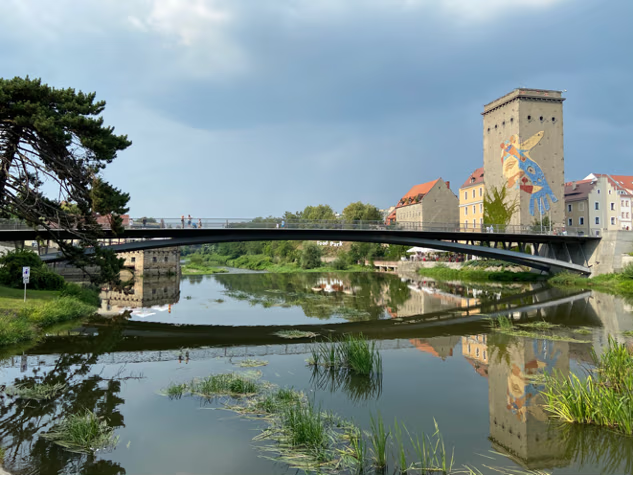
The start of the Via Regia, in the middle of the bridge over the Neisse River, on the border with Poland
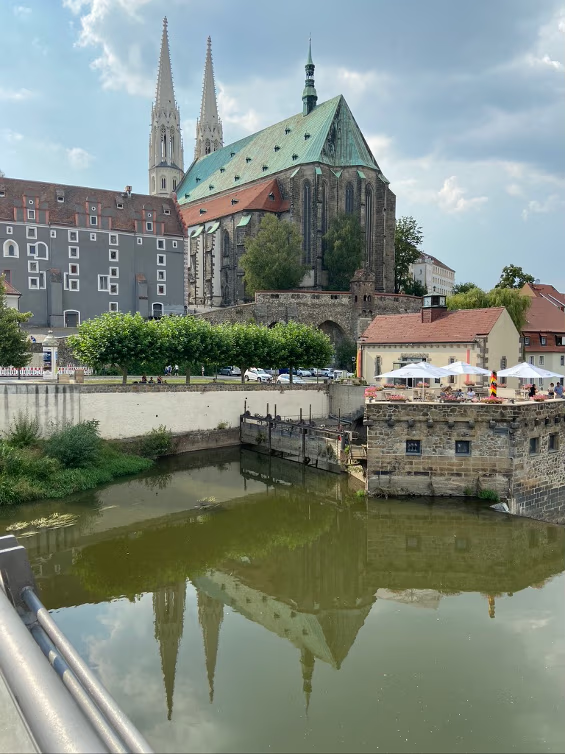
St. Peter and Paul at the start of the Via Regia
The ecumenical pilgrimage route, as the Via Regia is also known, runs mostly through wide, open fields. For the most part, the path is as flat as a pancake, largely devoid of trees, and also follows several longer paved roads. In Germany’s smallest wine-growing region, the Saale-Unstrut area, the terrain becomes a bit hillier. Near Weimar, I was able to hike up the Ettersberg, where the Buchenwald concentration camp is located. After that, the route continues on relatively flat terrain, and before reaching Eisenach, I enjoyed hiking through a forest and over a mountain, the Hörsel.

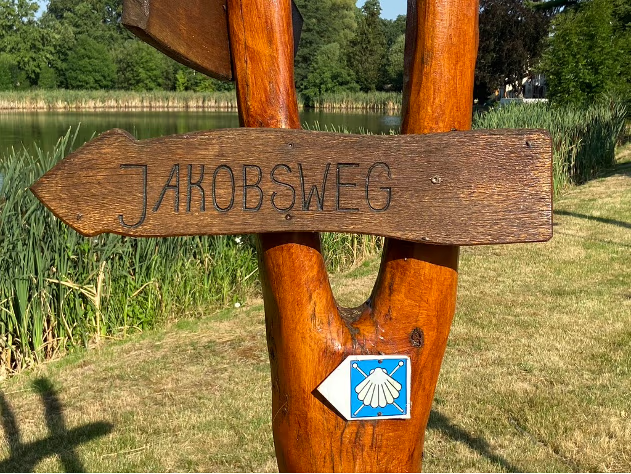

Somewhere in northern Saxony
There are many pilgrim hostels along the Via Regia. It is possible to stay in hostels along the entire route. Some of the hostels were also closed due to COVID-19. However, I had decided to stay in guesthouses. This was not only because of COVID-19 but also because most hostels require a sleeping bag and a sleeping pad. I didn’t want to carry either of those as extra weight on my back during my journey. There are plenty of guesthouses in most towns. Early on, I found that it can be a hassle to find accommodation at the last minute. In Bautzen, I wasn’t successful until my 13th call. However, this difficulty was the real exception until I reached Treis-Karden on the Moselle. After my experience in Bautzen, I always booked the guesthouses about a week in advance. Later, I learned that for some guesthouses, the effort involved in accommodating someone for just one night is too much, so they don’t accept pilgrims.

Typical landscape along the Via Regia

The Elbe
What really impressed me on the Via Regia was 1,000 years of German history. I passed by quite a few castles that are about 1,000 years old, as well as many old and beautiful churches. Naumburg Cathedral is a church that impressed me like no other. And with my pilgrim’s passport, I got in for free. This also applies to other churches, such as Merseburg Cathedral. Along the route, I kept coming across Martin Luther, especially in Erfurt and at Wartburg Castle, where he translated the Bible into German. Johann Sebastian Bach is also present everywhere. I visited St. Thomas Church in Leipzig, where he worked for many years, his birthplace in Eisenach, and the church where he was baptized.
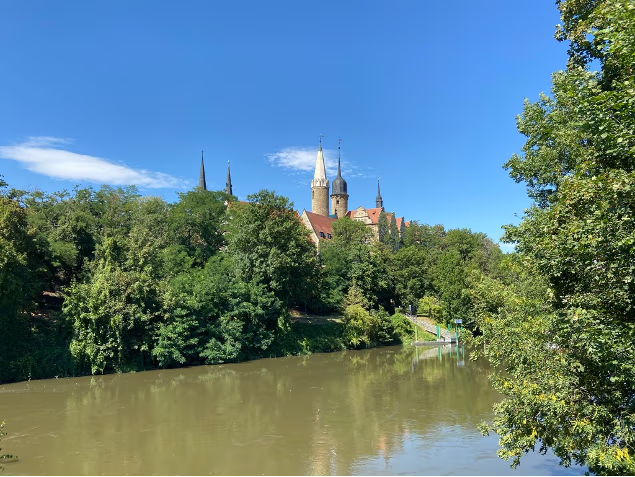
Merseburg Cathedral
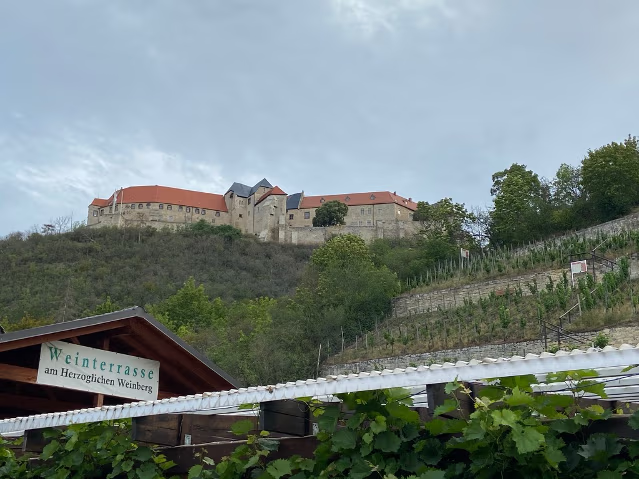
Saale-Unstrut Wine Region
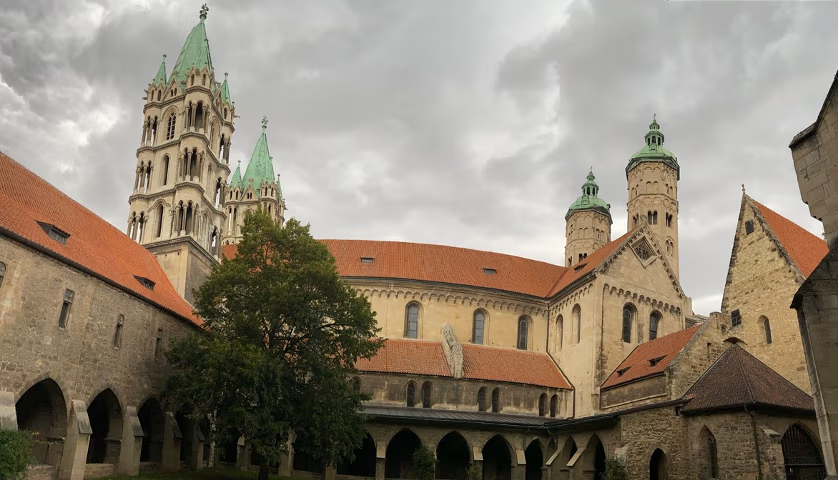
Naumburg Cathedral

Inside St. Wenceslas Church in Naumburg
Near Buttelstedt, I veered off the Via Regia. Since it was difficult to find lodging in Buttelstedt, I took the opportunity to take a bus to Weimar, a trip of about 15 minutes. There, I was able to walk in the footsteps of Goethe and Schiller. From Weimar, I walked to the Buchenwald concentration camp. This day, dedicated to recent German history, was the most exhausting of my journey. For one thing, the weather took a turn for the worse, and for another, I found the visit emotionally draining.
Until the day before my visit, the weather had been warm and summery. On the day itself, however, it was only about 16–18 degrees, cloudy, and windy. The concentration camp is situated on a prominent hilltop on the Ettersberg, and during the very well-organized, roughly two-hour guided tour, I was freezing, and I found the strong wind very exhausting. The weather, however, suited the oppressive atmosphere of the place. Despite the circumstances, I’m glad I deviated from the official Way of St. James and visited the concentration camp! Visits like this always bring home to me in a very vivid and tangible way that we must prevent something like this, in whatever form, from ever happening again.
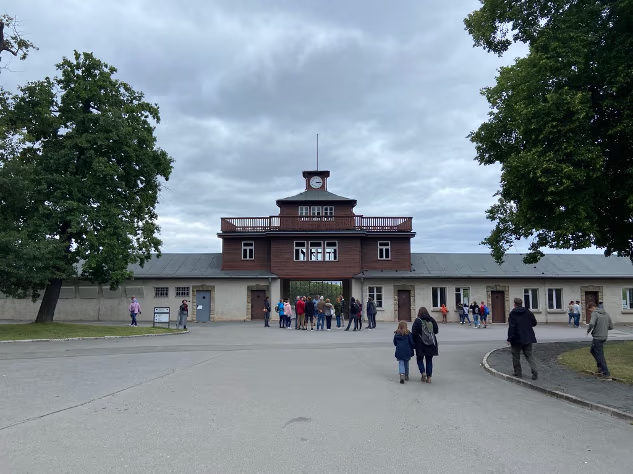
Buchenwald Concentration Camp
After Buchenwald, the temperatures were more pleasant, which made hiking easier. Erfurt was my next stop after Buchenwald—a truly beautiful city with a very pleasant and relaxed atmosphere. Before reaching Eisenach, the low mountain range I had been longing for began with the Hörsel. Here, for the first time in a long while, I was able to enjoy the forest again.

Erfurt's Krämerbrücke

Just before the exam
The Via Regia came to an end for me in Eisenach after about 400 km. Before continuing on the Elisabeth Trail, I took two days off to rest.
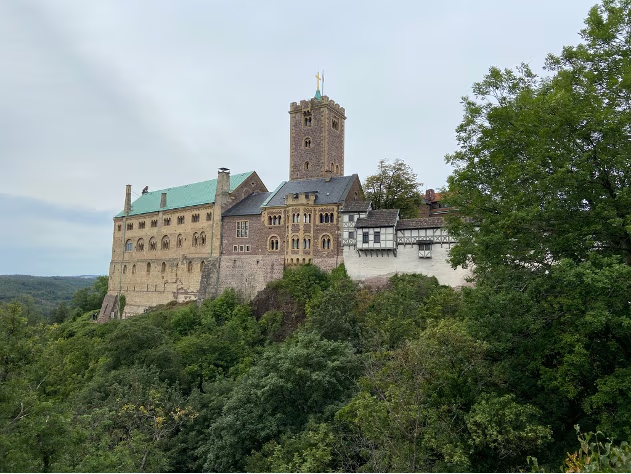
Wartburg
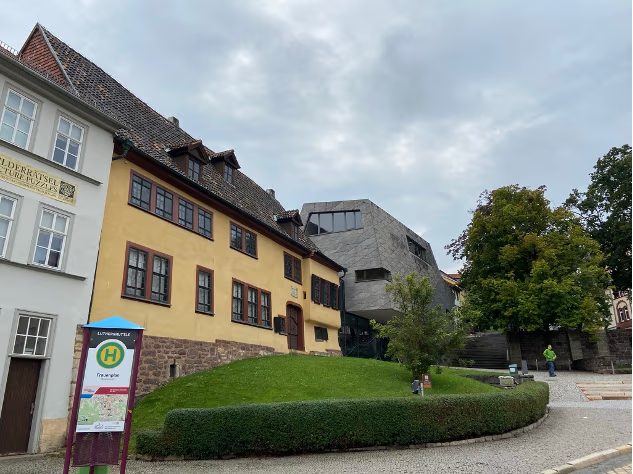
Johann Sebastian Bach's Birthplace in Eisenach
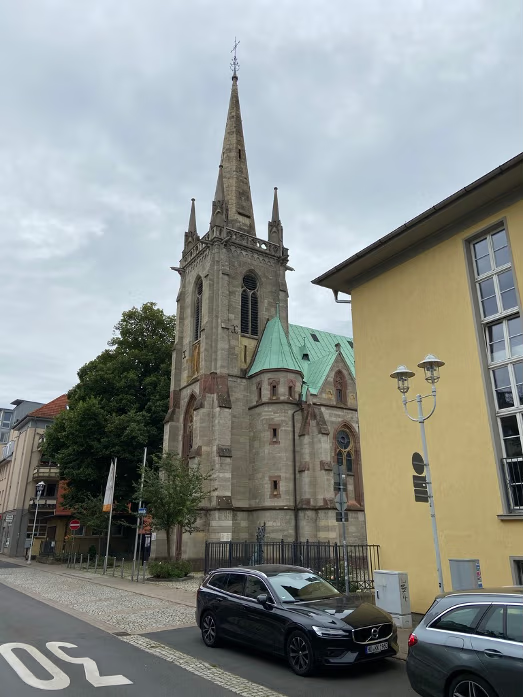
St. Elizabeth's Church in Eisenach, at the start of the St. Elizabeth Trail
Summary of the Via Regia:
The vastness of the landscape and the heat along the Via Regia were just what I needed to break away from my daily routine and broaden my horizons.
Hiking through and learning about 1,000 years of German history has given me a powerful sense of my roots and has provided a solid foundation for the path ahead!
My stops along the Via Regia/the ecumenical pilgrimage route:
- Melaune
- Bautzen
- Kamenz
- Königsbrück
- Großenhain
- Strehla
- Dahlen
- Roots
- Leipzig
- Schkeudiz (I took a short detour from the Camino de Santiago here, since the 30-plus kilometers to Merseburg seemed too long to me in over 30-degree heat)
- Merseburg
- Freyburg
- Naumburg
- Eckhardsberg
- Weimar (I was actually supposed to end my journey in Buttelstedt that day, but I couldn't find a place to stay there, so I took the bus to Weimar—a decision I'm really glad I made)
- Daasdorf am Berge (south of the Buchenwald concentration camp. I didn't get back on the Via Regia until I reached Erfurt)
- Erfurt
- Gotha
- Eisenach