

Walking in the Snow: The Camino Primitivo in Winter from Oviedo
A pilgrim's account of the Camino Primitivo in winter 2012: from Oviedo to Santiago through endless rain, storms and knee-deep snow in Asturias and Galicia.

At the end of November 2012 – just a few months after his first Camino Francés that summer – Michael walked the Camino Primitivo from Oviedo to Santiago. Instead of a golden autumn, he was met by relentless rain, thunderstorms and deep snow; he arrived in Santiago on 7 December.
After my first walk on the Camino Francés last summer, and even after coming home, my mind was still out there. So I decided to do one more walk before the end of the year. At first, the weather forecast had promised a golden autumn.
Then the weather changed drastically – first non-stop rain, then a thunderstorm and a sudden drop in temperature. Above 1,000 m, the walk led through deep snow. The trip turned out to be a budget alternative to trekking in the Himalayas.
25 November: Oviedo, the capital of Asturias
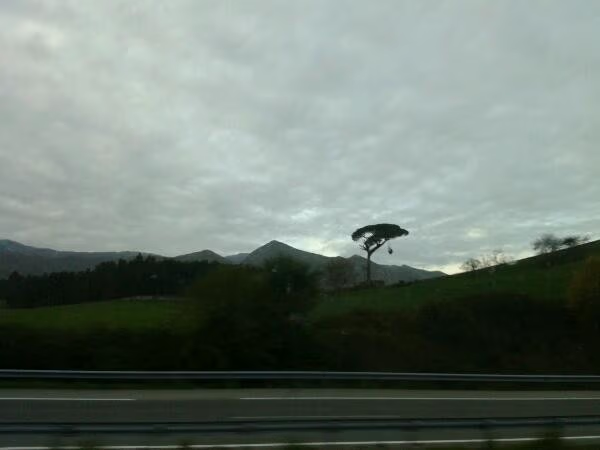
Once again I take the long-distance coach from Karlsruhe to the starting point of the Camino Primitivo – 24 1/2 hours on the road in total. The bus is mostly full of Spaniards and Portuguese who came to Germany for work and are heading back home.
One Spaniard tells me that he and the others he's travelling with had been offered a job in Frankfurt, which is why he made the long journey. Once they got to Frankfurt, they were told that, actually, nobody was needed right now – they had come for nothing. The Spaniard is travelling further than me, back to Málaga, which takes another full day by bus.
Oviedo seems to be a fairly popular tourist spot among Spaniards.
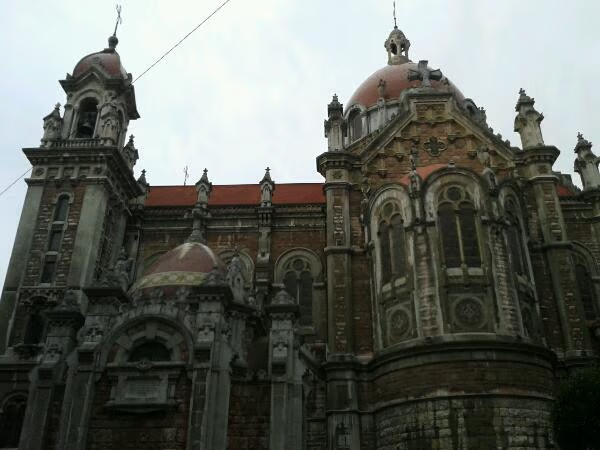
Lots of people are out and about, and there's plenty to see: countless churches, the cathedral, a monastery, loads of bars and restaurants. The centre is especially crowded with market stalls selling mostly.. shoes. And pretty cheap ones too – I could have saved myself the trouble of buying mine before the trip.

In the evening two Frenchmen arrive at the albergue. They tell me they've been walking for several days already, on the Camino del Norte from France. Hardly anyone was on that route, which is why they decided to switch to this one. In those 10 days, I'm only the third pilgrim they've met along the way.
26 November: Oviedo – San Juan de Villapañada
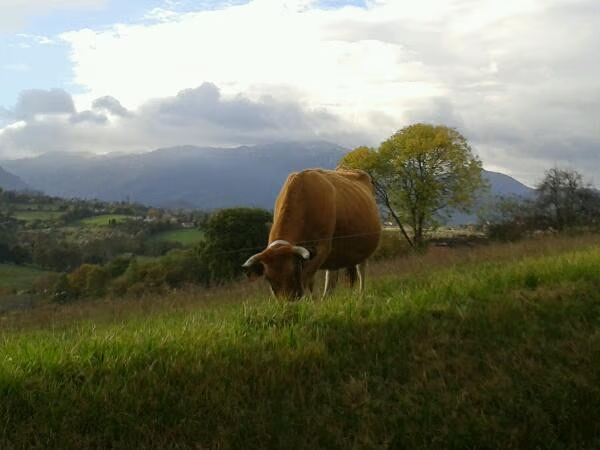
The first stage climbs in hairpin bends past cattle pastures, with snow-capped mountains in the background. An idyllic landscape, like the Austrian Alps. Here I meet the second group of pilgrims, two Spanish women – one from Madrid and one from Mallorca. They tell me that for Spaniards this region of Asturias is ‘little Switzerland’, which I find quite fitting.
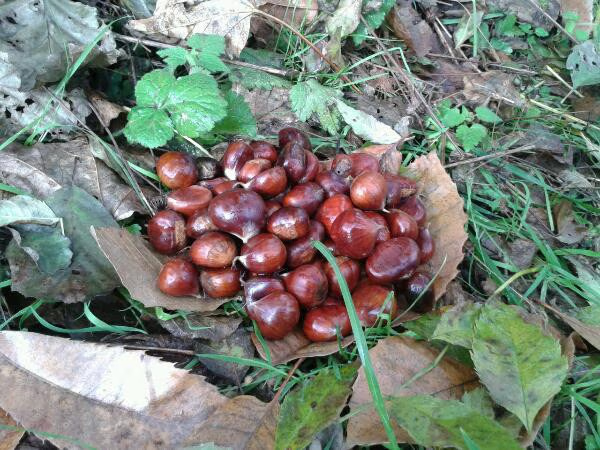
Then the path goes down to a meandering river. Along the way I find huge amounts of sweet chestnuts and gather some as I walk. In summer, on the Camino, I could sometimes live on blackberries all day long. Back then I had wondered what the ‘primitive’ pilgrim lives on in winter – question answered.
Somewhere I took a wrong turn – no waymarks for a long time. But instead of feeling lost, I get a kind of spiritual enlightenment:
Even if you don't follow the prescribed paths, as long as you know where you want to go, you're always on the right path. The Camino is everywhere. I should of course add that with GPS and the hiking map app on my smartphone, I always know whether I'm heading in the right direction or whether I'd better turn back.
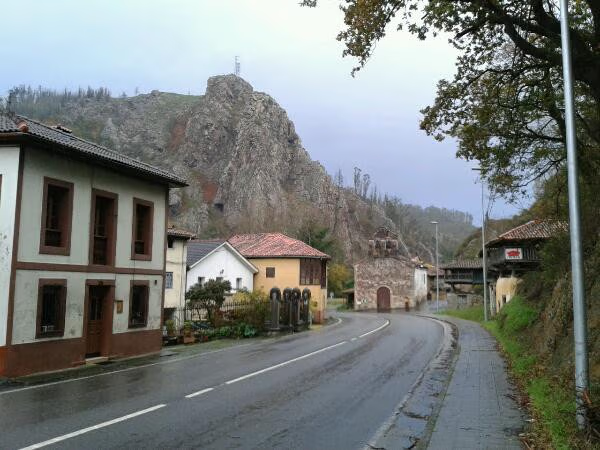
Shortly before the next larger town, Grado, the path runs between high rocks, and the increasing rain makes the afternoon a bit unpleasant. Handy that the rucksack I borrowed has a built-in rain cover, so the contents stay more or less dry.
In the evening at the albergue, which is a little off the Camino, I meet the two French pilgrims again, who had arrived some time before me.
Then the hospitalero shows up to stamp our pilgrim passports. He wants to see our guidebooks – I show him my list of albergues, that's all I have.. The hospitalero fetches a folder and shows me stage descriptions for the Camino, then writes me a list of suggested stages all the way to Santiago. He takes a lot of time over it – really helpful.
Afterwards we roast the chestnuts and share them – later, at half past nine at night, the two Spanish women turn up as well, with an extra Spanish pilgrim. By then it had been dark for 2 hours and it was pouring with rain – they had been looking for a hotel in Grado, but they were all closed because of the time of year.
It gets pretty chilly at night – the 3 Spanish pilgrims share two beds pushed together to keep warm.
27 November: San Juan de Villapañada – Bodenaya
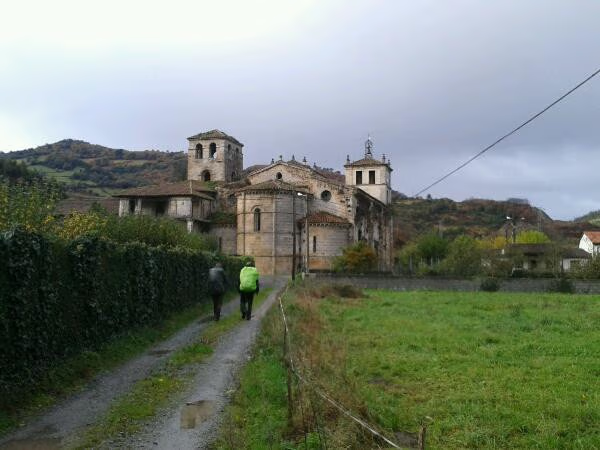
The day begins with lots of rain; the Camino mostly follows slippery clay paths, passing a monastery along the way – a few times I manage to catch myself when I slip, once I don't, and land in a deep mud puddle.
An hour later I pass a fountain, the ‘Fuente de Santiago’, where I can wash off the mud and put my clothes back on – everything's wet anyway, and while walking it dries out again between the downpours.
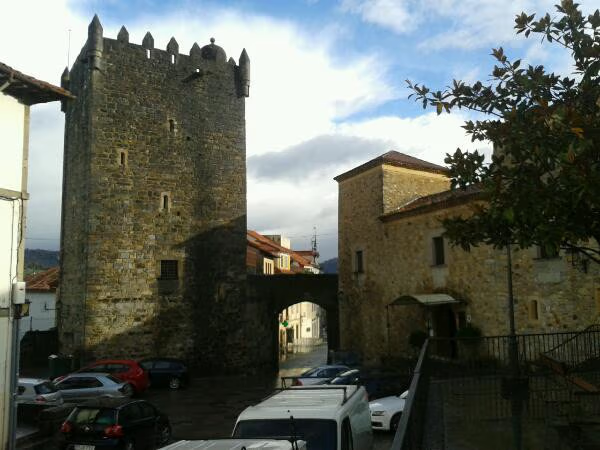
In Salas there's a set menu for 8 euros: four courses with as much seafood soup as you want, steak and chips, half a baguette, tomato salad, a slice of cake and, for your thirst, a bottle of wine.
I wonder whether they make any money at all on that menu..

For the rest of the way, heavy rain; the Camino through the forest has turned into a stream, then a long stretch partly along the country road, partly away from it, and flatter towards the end – with snow-capped mountains in the background.

At the albergue I meet the Frenchmen again, and the woman running it cooks a generous dinner for everyone. All of it, including the bed, for a voluntary donation. Shortly after ten at night the Spanish pilgrims arrive too – they took a taxi for the last stretch.
28 November: Bodenaya – Campiello, through deep snow and storms

During the night it gets freezing cold and a thunderstorm moves in, which then lasts all day, bringing heavy rain and snow. The Camino is flooded the whole way. You have to balance your way around the streams and lakes it has turned into. Or climb over barbed wire and take the detour across the fields.
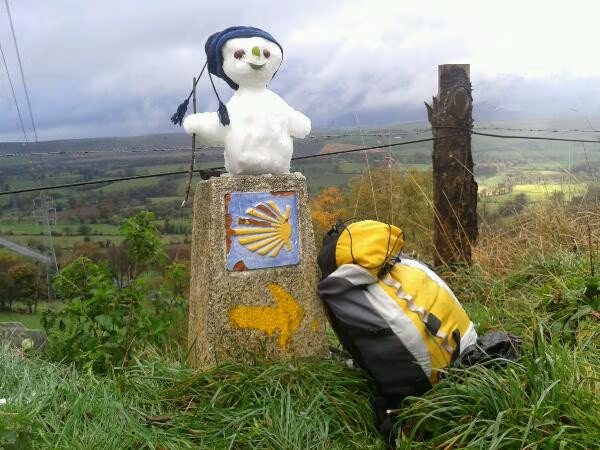
Before I started, I had imagined the winter walk as a contrast to the Camino in summer – a completely different adventure, a little-walked path, alpine hikes and tough weather as a special challenge. One wish above all mattered: enough snow to build a snow pilgrim. You can count on St James – all my wishes were fulfilled by the third day of walking.

Near Tineo the sun comes out briefly for a few minutes, then the storm clouds catch up with me again and it pours down. A few Spaniards in the village are amused that anyone would go walking in this weather.
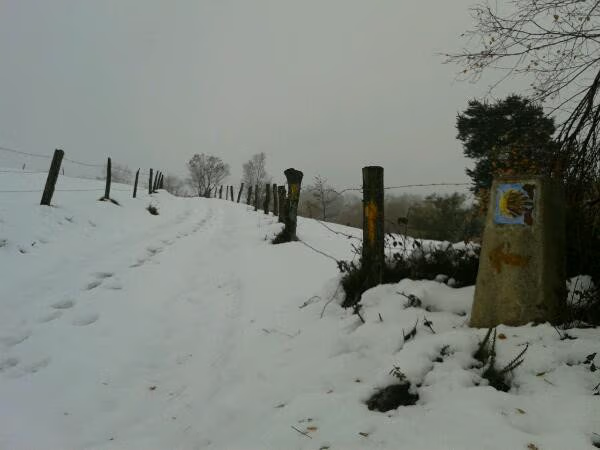
Then the path climbs to icy heights where the rain turns to snow, and the walk leads through knee-deep slush. I had wished for a bit of snow, sure, but not masses of it. For the last stretch after a junction I walk along the country road – after slipping countless times in the constant sleet, that's much more pleasant, and it's a shortcut compared with the Camino too.
29 November: Campiello – Berducedo
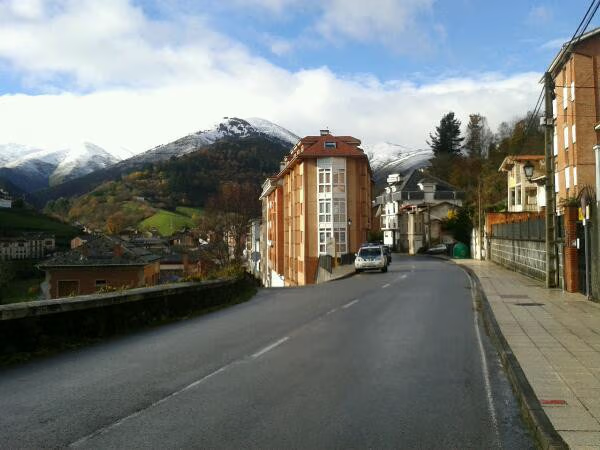
The three of us walk past cattle farms until the Camino splits into two alternative routes, one flatter and 4 km longer, the other much higher up. The hospitaleros at both of the previous albergues had urgently warned us about turning right at one point and taking the alpine route. Because of the bad weather we opt for the flatter variant here.
In Pola de Allande, one of the Frenchmen decides to take the bus for the rest of the stage because of serious knee problems.

The second Frenchman walks on ahead, quite a bit faster – I take my time, since I can't keep up with his pace anyway and there are chestnuts to gather along the way. Here I find the giant chestnuts you normally only know as imports from Turkey. And masses of them.

At first the path is quite idyllic, through rocks along a river. At some point the Camino itself becomes a river, or there are wide torrents to cross. Now I understand the name ‘Primitivo’ – here you have to build your own bridges, at least in winter. Or skilfully balance your way across. Which I don't quite manage – I slip once and both shoes fill with water.
Then comes a long climb, first a bit of snow, then more and more – using the French pilgrim's footprints makes walking easier here. At some point the path ends on the busy road.

A few metres further on, the waymark points off the road, uphill onto a snow-covered path. Not exactly walkable, but I can make out the Frenchman's footprints in the deep snow again, and this is where the Camino goes – so onwards, following the marked path. First it climbs steeply up a few hairpin bends, then straight uphill, occasionally through small clusters of bushes and fir trees.
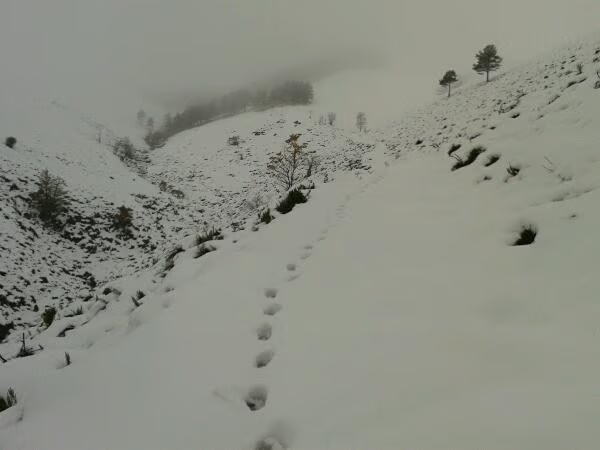
Does the path through the deep snow ever end? There's no telling where it leads. On top of that, it's getting foggier and foggier.
The footprints carry on in the direction I'm following, but none come back. That at least gives me the reassurance that the path isn't a dead end. Taking a break is impossible here – if I stand still for a few seconds, my feet start to freeze.

Don't think too much, just watch the footprints and keep going at a steady pace, kilometre after kilometre.
An enlightenment comes to me:
It's exactly this path, not the other one, that the two hospitaleros warned us about! Dangerous? More like impassable. At some point I see something metallic gleaming above me in the fog – a crash barrier! A road – so I'm not completely lost in the wilderness, and there's a chance to escape this white hell. The Camino waymarks point to the right; the Frenchman's tracks lead towards the crash barrier.

An emergency exit.
I follow the tracks – which isn't easy; even on all fours it's hard to move uphill on the steep ground. Finally I reach a road that's been cleared of snow!

Downhill along the hairpin bends – at some point the Camino crosses the road and drops steeply through deep snow. I've had enough of that – I stick to the road. When the fog lifts, there's an impressive view of the surrounding green mountains of Asturias with their snow-covered peaks. Truly stunning. I pass through Montefurado; from there it's only 10 km to my destination – or rather an easy walk on the snow-free road. The Camino runs parallel, but still through deep snow. Shortly after nightfall I arrive, relieved, in Berducedo after a somewhat strenuous walk of about 40 km, and meet the two other pilgrims again.
30 November: Berducedo – Grandas de Salime

The next stage starts with a bit of a climb. Then down along the road, later across soggy cow pastures where you can choose between walking through slush or through fresh cow dung.
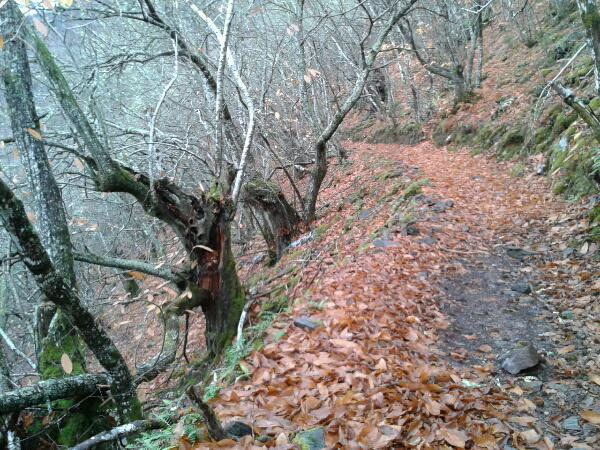
There are two of us walking; the other Frenchman isn't fit to walk today because of his knee problems and has to take the bus. We continue a long way downhill on a zigzag path through chestnut woods. Once again I let the other one walk ahead, so I have time to gather chestnuts and take photos.
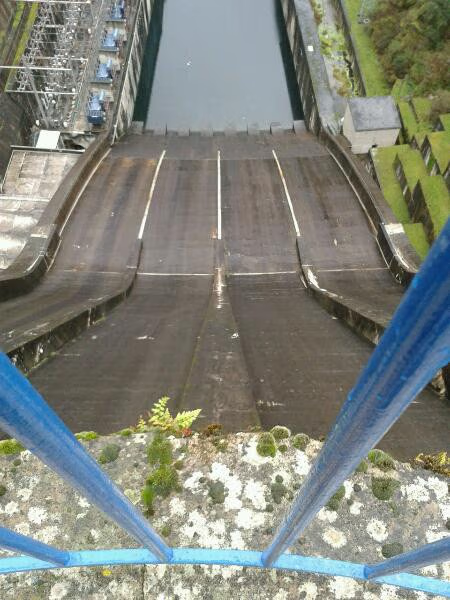
At the lowest point of the Camino there's a large reservoir; I take a few photos straight down from the dam – impressive, but above all pretty dizzying.

From here the path climbs again along the road, up endlessly long hairpin bends, until you're back up high.
A short stretch of woodland, and then it's not far to the albergue. It's fairly new and cosily furnished – the two Frenchmen have cooked rice with vegetables and fish, with a bottle of wine, and I'm welcome to join them. A very restful evening; later we try out a few bars in the village and treat ourselves to a few beers.
1 December: Grandas de Salime – Padrón, over the heights of the Puerto del Acebo

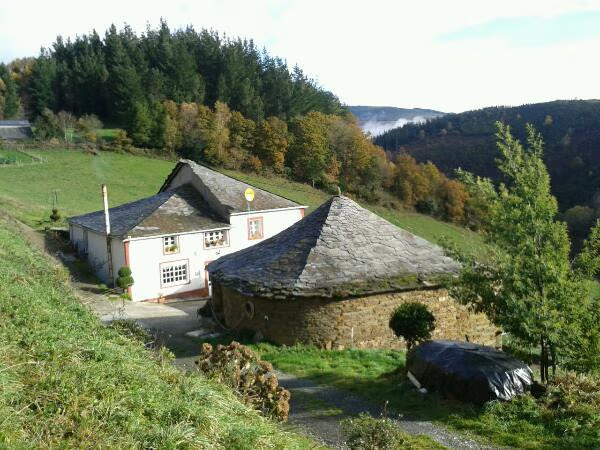
Today's stage is pretty much exactly how I had imagined the Camino Primitivo: mostly through forests, narrow footpaths past fields, and farms with chickens, turkeys and rabbits. And an idyllic mountain panorama the whole way.

What's special here, too, are the many small rustic chapels and springs dedicated to various saints and decorated with little statues. On pinboards you find lots of notes with poems, sayings or wishes. You can vividly imagine the pilgrims who were already on the road around a thousand years ago and visited these places as pilgrimage sites.
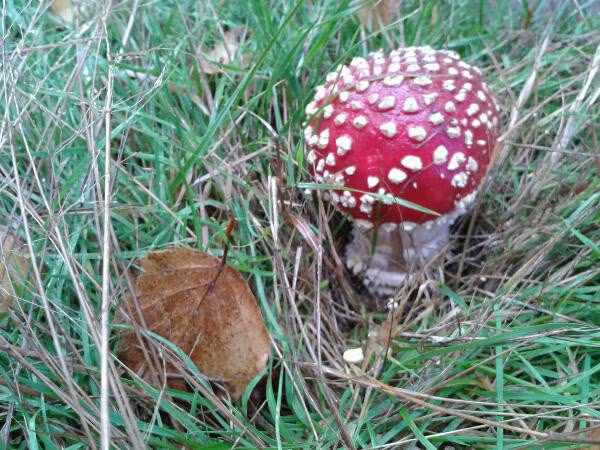
The cold, damp climate seems ideal for mushrooms here – the most common along the path are fly agarics, but there are also lots of bay boletes and porcini, among others.
That day one of the French pilgrims had already gone on ahead. The other one, who had originally meant to take the bus for this stage too because of his knee problems, I meet again in a small village – and we walk the rest of the stage together.
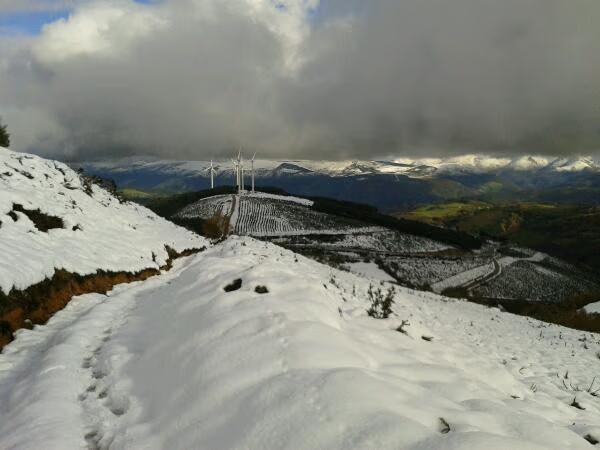
The province of Galicia
The Camino climbs again above the snow line, and there we cross the border into the province of Galicia.
After crossing the summit in sunshine, an icy wind suddenly picks up; within a few seconds the temperature drops by what feels like 15 degrees, and we carry on freezing.
In Padrón we ask a police officer the way to the albergue. Keep going until the end of the village, he says – the hospitalero is a good friend of his, that's why he knows the way. Later, at reception in the albergue, we see him again – he's the hospitalero in charge there too.
When we meet the second Frenchman, he asks whether we saw the snow pilgrim he built along the way. Sadly we had missed the snow pilgrim, because the snow on the Camino was so deep that we walked part of the way on the road instead.
2 December: Padrón – O Cádavo Baleira

During the night it turned freezing cold. In the morning all the puddles are frozen and the grass is covered in frost. The cold is ideal for walking – frozen ground is much easier going than the previously sodden path at just above 0 degrees.

The Camino again runs through lovely mountainous scenery, with some fairly steep climbs and descents.
The Frenchmen had taken the bus that day, one because of his knee problems, the other because of swollen feet. At the albergue I find them both asleep – they had bought a large amount of beer in the afternoon and at some point got sleepy. And there's still a fair supply of beer cans left, which I'm welcome to help myself to.
3 December: O Cádavo Baleira – Lugo
The other two cover this stage by bus again, because they want to make sure they can walk the last 100 kilometres no matter what. And until then they want to go a bit easy on their feet.
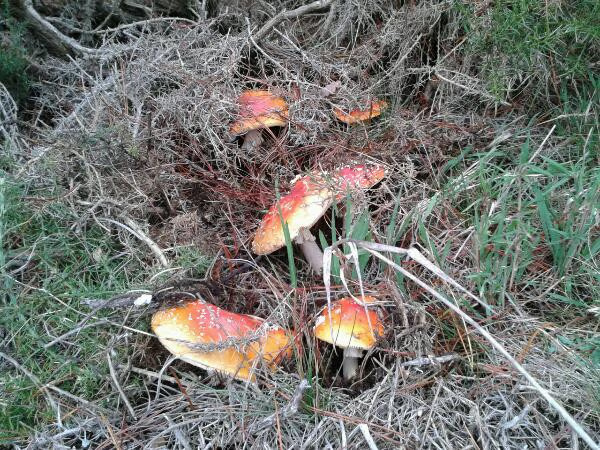
Somewhere near Castroverde I must have missed a signpost; I'm no longer on the Camino – after checking my position with the smartphone navigation, I decide to keep walking through the villages until I meet the Camino again later on. It seems to be ideal mushroom country too – on the way through the woods you see countless of them.

After all the small villages, Lugo feels like a metropolis by comparison. There's quite a lot to see here from ancient times, including Roman sights. You can walk around the city on top of the city walls. Because of the constant rain I only look at a small part of it and mainly take the opportunity to enjoy cheap Spanish food – in the restaurant closest to the albergue.
The French pilgrims want to do a bar crawl; I'm too tired for that, so I volunteer as doorman – the albergue closes at 22:00, and if you come back later, someone has to open the door from the inside. Which, in the end, means shortly before midnight. I was also able to let in a group of 3 young Spaniards who wanted to get in around 23:00 but were locked out in miserable weather.
The Frenchmen tell me later that they hadn't had weed as good as what they got hold of here in a long time. And it was a good deal cheaper than around Chamonix, where they come from.
4 December: Lugo – San Román (San Romao da Retorta)

At 7 o'clock sharp in the morning the lights switch on automatically – they seem pretty strict here too about everyone having left the albergue by 8:00.

The three of us are walking together again – we've left the mountains behind. A real relief for me, and above all for the other two, who had been struggling after all the constant ups and downs.
In a tree I see a mini pilgrim floating. On closer inspection it turns out to be an optical illusion – it's just a leaf in a fig tree that has got caught on one of the fruits.

Past nicely laid-out gardens, we finally come first to a bar with a shop, and from there one kilometre further to our accommodation – a small hut with 6 bunk beds. There are even two albergues, a public one and a private one. That's all the buildings there are, apart from a few farmhouses that make up the village.
To cook dinner, I find a few supplies in the kitchen – among other things a packet soup, wheat flour, oil and salt. So that there's enough for everyone, I try to stretch the soup with the flour – the result is surprisingly good: instead of 2 bowls it makes 6, and it doesn't even taste watered down.
5 December: San Román – Melide

The next stage is at first a fairly flat but not very varied walk. In one village the path is blocked for a while by a large herd of wandering cows.
In Spain there's a traffic rule: sheep and cows always have right of way. Which was presumably decided because most of them can't read traffic signs.

Then comes a nicer stretch over a rocky, heather-covered hill, then along a stream through a rocky landscape.
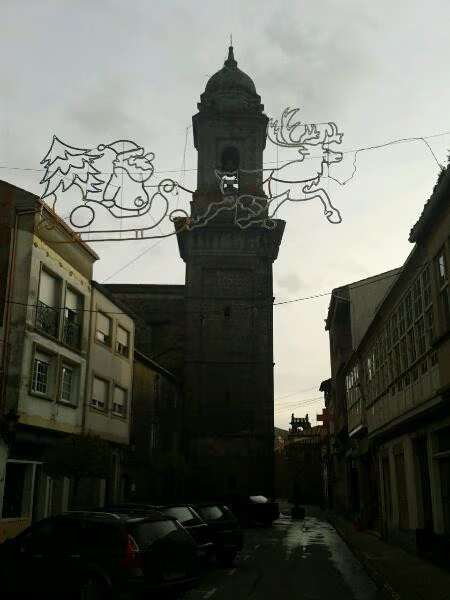
Finally you reach Melide, the town of pulperías. With a large number of fish restaurants that mainly offer octopus as their speciality.
In Melide, the Camino Primitivo joins the Camino Francés, the route walked by most pilgrims. Here we also meet new pilgrims for the first time in a while, even if there are far fewer on the road now in winter.
My fellow pilgrims have bought ingredients for cooking – there's a kitchen, but no pots, no pans, no crockery or cutlery of any kind. Frustrated, they pack the ingredients away again, to maybe use them the next day.
A Canadian pilgrim asks us whether we speak French – the two Frenchmen say yes, and she joins us. With my somewhat rusty language skills, I can join in the conversation in a small way.
In the evening we head out into town and try out various bars. As the albergue closes at 22:00, we unlock a few windows, through which we then climb back in later, shortly after midnight.
6 December: Melide – Pedrouzo

I already know the next part of the route from my summer walk, so I see little that's new. On this route, walked by far more pilgrims, it's noticeable that there are many more cafés, bars and restaurants – many of them obviously closed at the moment. The Frenchmen walk ahead again; I carry on at a normal pace, partly so I have time to take photos.

In the afternoon I take a break at a bar and treat myself to a beer – wallowing a little in nostalgia, because it was here in the beer garden in summer that I first saw the five Spanish women pilgrims.
On the last 2 kilometres I come across 3 more Spanish pilgrims. They're walking the short 100 km version at a very leisurely pace and are carrying a wineskin full of wine, which they offer me some of too. We arrive at the albergue together and register at the same time, showing our pilgrim passports. Pedrouzo is a bigger place again, where I run into the Frenchmen straight away and sit down with them in a bar. Earlier, the two of them had been able to use their ingredients for dinner in the albergue kitchen.
7 December: From Pedrouzo back to Santiago

From Pedrouzo it's only about 18 kilometres to Santiago. I still know the way from the summer – moss-covered trees, eucalyptus forests. The Canadian set off long before us; she wanted to leave at 5:30 – not wait for sunrise at 9:00 like the Frenchmen and me. St James, they say, was the first pilgrim to make the pilgrimage to Santiago.. whatever – no one even knows which of the many legends about him are true – only one thing is certain: the pilgrims' destination is one of the greatest cities in the world.

First we walk towards the cathedral, past it and on to the big square in the centre where all the pilgrims meet. We run into the Canadian there straight away, and together we head straight for the Pilgrim's Office to get our certificates. I hand over my pilgrim passport with the stamps from the Camino, and a friendly lady there issues my Compostela right away. She explains that on the certificate, which is written in Latin, my name is entered in its Latin form. I skim the document and see that my first name, ‘Michael’, translated into Latin becomes ‘Ruben’ – I found that a bit confusing, but they certainly know a lot more about it than I do.
With the Compostela, which identifies you as a genuine pilgrim, you get a free pilgrim's meal at the most luxurious hotel in town – an insider tip from a hospitalera & a tradition of the former monastery that has been kept alive – we plan to go there together in the evening.
I'm just carefully packing away my newly acquired certificate when the lady from the Pilgrim's Office calls me back – she says there's probably a problem with my pilgrim passport.
Unsettled, I wonder – is it because I'm one stamp short? For the last 100 km you need two different ones a day. Or because an important detail, the date, is missing from 2–3 of the stamps?
She asks to see the pilgrim passport again. Checking it, she says the name doesn't match the one I wrote in the list. Besides, judging by the stamps, this isn't the Camino Primitivo either.

Then – once again – enlightenment strikes: the pilgrim passport I handed over belongs to one of the Spaniards I met the day before. At the previous albergue we must have mixed them up by accident when registering.
So the pilgrim passport and the Compostela that had been issued are confiscated. If the Spanish pilgrim turns up with my passport, they tell me at the office, everyone will know what's going on. And if I come back later, I might be able to get my own pilgrim passport back.

Afterwards the two Frenchmen, the Canadian and I first go to a Mexican bar to celebrate, where every beer costs 1 euro. Later I stop by the Pilgrim's Office again and I'm in luck – the Spaniard has been there in the meantime. I get my real pilgrim passport back, along with a Compostela, which I need for the free pilgrim's meal, and go with the others to the hotel the hospitalera on the Camino had told us about.

As far as I can remember the late evening, we first celebrated with a few beers in a bar, met 4 nice Spanish women there, moved on with them to the next bar, and after that went to 3 different music clubs. Where every beer costs between 1.50 and 2 euros. And one of the Spanish women wasn't Spanish at all – she's studying in Santiago and is originally from Heidelberg. That was the only time on this trip that I met someone from Germany.
8 December: The second day in Santiago

At 10 in the morning the albergue warden kindly wakes us up – we have to leave the room and move our things aside a bit, because the cleaners need to get in.
I have quite a hangover – I had spent about 20 euros in total in the bars; at those prices you can easily work out the minimum number of beers.
The Canadian tells me that she and one of the Frenchmen had gone back earlier, at about 3 o'clock, and then had the idea of going to balance on the slackline in the park nearby. One of the Frenchmen had brought the slackline along on the Camino, but had never used it in the last 14 days because of the constant rain.
Apparently I only turned up at 5 o'clock with the other French pilgrim, when they were already back in the albergue.

The Frenchmen leave at midday; the Canadian and I spend about 5 hours in the afternoon catching up on lost sleep. In the evening we hurry to make it in time for the free pilgrim's meal at 19:00. There I see the 3 Spanish pilgrims again whom I met at the start of the Camino, just past Oviedo. The Canadian meets 2 other pilgrims from Canada whom she knows from the Camino Francés. Afterwards we go to a café with them.
9 December: Flight home – Adiós Santiago

In the morning I say goodbye to the Canadian, who is walking on to Finisterre. I go to the airport. As the plane takes off, and even more intensely just before landing in thick fog – when you can only see the runway a few metres above the ground – I get that feeling of insecurity again that I also had on my last flight home from the Camino and had never known before. Probably because for a long time you've been connected to the earth, and now you're no longer in control of how you move, but have to trust in the safety of modern technology.
Fear of flying..
The book about the winter walk
I've since written a book about the winter walk – with more details and anecdotes, and quite a bit more in-depth. Available as an e-book and as a paperback:

http://www.amazon.de/dp/151178170X
I wrote the stage-by-stage report on my smartphone along the way and uploaded it to my website pilgern-online.de, along with reports from other trips.
(For the photos, I only chose pictures in which no one apart from me can be recognised, as I don't know whether the others would agree to being published online.)
The route in Camino Ninja
You'll find the Camino Primitivo with stages, map and accommodation in Camino Ninja: Camino Primitivo.