

Town on the Camino
Alcácer do Sal
Portugal
- places to stay
- 9
- Camino
- 1
- Elevation
- 48 m
Alcácer do Sal changed sides: in 997 Almansor's infantry boarded ships here for the march on Compostela, and in 1217 the castle on the Sado became the seat of the Order of Santiago. After the longest stage of the whole Way, you will find a castle crypt, a church of Santiago with 14 azulejo panels and a stamp at the Turismo.
How long to stay?
Worth a rest day if your legs demand it, otherwise a long afternoon. Behind you are 33.8 km from Grândola, the longest stage of the whole Way, and ahead of you are 44.2 km to Vendas Novas, which you will have to split. In between stands a town full of Saint James history: the castle with the crypt beneath it, the parish church of Santiago with its azulejos, and the Senhor dos Mártires shrine where the knights of the Order lie buried. If you arrive in the afternoon, you can manage the castle hill and the river. For the crypt, the Senhor dos Mártires and a quiet evening by the Sado, a second day is worth it.
Alcácer do Sal in Ninja numbers
- 306.7 km since Faro according to Camino Ninja, with 146.1 still to go to Benfica do Ribatejo. Two thirds of the Way are done.
- 33.8 km is the stage from Grândola to here. No day on this Way is longer.
- 14 panels of blue-and-white tiles tell the life of the apostle in the Igreja de Santiago. The pilgrim guide of the tourism region knows of no more complete Saint James cycle in azulejos.
- About 2,600 years of the town's history lie stacked on top of each other in the crypt beneath the castle, from the Iron Age to the 19th century.
- 1217 is the year the town fell, on 18 October, after more than two months of siege. After that it belonged to the Knights of Saint James.
Arriving: over sand and rice to the river
The stage from Grândola is a test. The Caminho Português Central do Sul runs along long farm tracks through pastures, cork oaks and pines, and the closer you get to the Sado, the sandier the ground becomes. The only supplies on the way are at Vale de Guiso, after a good 21 km. After that the valley opens out: rice fields, storks, water birds. One pilgrim reported in the regional paper Sul Informação a huge flock of storks, otter tracks in the riverbank mud, and the fact that the last three kilometres were on tarmac with a lot of lorry traffic.
Shortly before the town, the Sado comes into play. The regional pilgrim guide of 2019 advises calling O Baracinha beforehand (+351 265 637 158): the house supports pilgrims and helps with the short river crossing, which according to the report in Sul Informação depends on the tide. Then you are standing in a white town that climbs from the riverbank up to the castle hill.
In brief: salt, port, frontier fortress
The castle hill was already settled in the Iron Age. The Romans called the place Salacia, around the middle of the first century BC it minted coins inscribed Imperatoria Salacia, and it was an important centre of the salt trade. Under the Muslims it became one of the most important Atlantic ports south of the Tagus; the castle was called Qasr Abi Danis, which became Alcácer.
In the twelfth century the town became a contested frontier fortress. Portugal conquered it in 1158, lost it to the Almohads in 1191 and only took it for good in 1217, with the help of a crusader fleet from the Rhineland and Holland. Afterwards the king handed it over to the Order of Santiago.
Changing sides: how Santiago's enemies and Santiago's knights both lived here
In the summer of 997 Almansor, the commander of the Caliphate of Córdoba, marched against Santiago de Compostela. Infantry, weapons and supplies marched to Alcácer do Sal and boarded ships here, to meet the army on the Douro. On 10 August Almansor stood before Compostela, had the town and the cathedral torn down, had the bells carried to Córdoba and spared only the apostle's tomb.
Two hundred and twenty years later, the knights of the Order that bears the apostle's name moved into the same castle. After the conquest of 1217, Alcácer was the main seat of the Order of Santiago in Portugal, until the 1230s. Next to the castle and the parish church the knights built a convent, and they buried their dead in the Senhor dos Mártires shrine, the Order's first pantheon in the country. From here they rode on south, towards the Alentejo and the Algarve, along exactly the way you have come, only in the opposite direction.
You can still see the Order's emblem in town: on the main church of Santa Maria do Castelo and, in the Igreja de Santiago, a painting of Saint James as the Moor-slayer. The port from which troops set out against Santiago in 997 became the home of his knights.
In the footsteps of the knights: what to see
The old town is steep but small. Without a rucksack you can reach everything on foot, the castle at the top, the Igreja de Santiago down by the river.
- Igreja de Santiago: The parish church in the lower town near the Sado was built in the 18th century by King João V, who as king was also Grand Master of the Order of Santiago. Plain outside with two bell towers, inside there is gilded woodcarving and azulejos: 14 blue-and-white tile panels on the life of Saint James, plus panels on the life of Mary and a painting of Santiago Matamoros. For a pilgrim this is the church of the Way, a picture story of your apostle halfway between the Algarve and the Tagus. We did not find opening hours. Address: Rua Dr. Augusto de Matos 21.
- Castle and Cripta Arqueológica: The castle of rammed earth and rubble stone has been a national monument since 1910, its towers rise up to 25 metres, and from the top you look out over town, river and rice fields. Beneath the castle and the former convent lies, since 2008, the crypt, a labyrinthine underground museum: Iron Age, Romans, Visigoths, Muslims, Middle Ages, modern times, all stacked on top of each other. After the history of this place, it is well worth seeing the layers with your own eyes. We did not find current opening hours; in 2018 it was open Tuesday to Sunday in winter. Telephone +351 265 612 058.
- Convento de Aracoeli: The former convent on the castle hill, later a Carmelite monastery until 1834, is now the Pousada. Even without staying the night, according to a travel portal from 2026, you can look at the cloister and some of the rooms such as the kitchen, refectory and chapter house. There is also a chapel of Saint James in the Pousada.
- Igreja de Santa Maria do Castelo: The Romanesque-Gothic main church next to the castle dates from the 13th century, from the time of the knights of the Order, and bears the emblem of the Order of Santiago.
- Santuário do Senhor dos Mártires: One of the oldest Christian shrines in the country, with chapels from the 13th to the 15th century. This was the Order's burial place. In 2022 archaeologists found burials from the 13th and 14th centuries in the Capela do Tesouro, very probably of knights of the Order. For a pilgrim, the place where the knights of Saint James rest. We did not find opening hours.
- Capela das Onze Mil Virgens: In the church of the former Santo António convent on the Largo de São Francisco stands a major Renaissance work, in white marble and with a dome of translucent jasper, attributed to António Rodrigues, architect under King Sebastião. We did not find opening hours.
Food and drink
On the Largo Luís de Camões, the main square, small stalls sell pinhoadas, the town's pine-nut confectionery, and crayfish from the Sado. Otherwise rice and fish belong to the town's cooking. In July the Sabores do Sado festival takes place.
Honestly
- No pilgrim hostel. There is no pilgrim or donativo hostel in Alcácer do Sal. You sleep privately, and you have to plan that in advance.
- The stage before is hard. 33.8 km, sand in the last third, only one place to stop. In summer on this Way that is a real risk. Set off early, carry enough water and call O Baracinha before you reach the river.
- The way out is a slog. Behind the town the path squeezes between the A2 motorway and the IC1 expressway, followed by long stretches alongside big private estates.
- Many doors, few opening hours. We found no reliable times for the churches. Ask at the Turismo which church is open when.
Where pilgrims sleep
In Alcácer do Sal there is no pilgrim hostel, neither municipal nor church-run. The beds are in private guesthouses and holiday flats in the old town, in a Pousada in the former convent on the castle hill, and in hotels. Book ahead, especially in season.
Ninja tips
- Stamp at the Turismo: The Posto de Turismo is the kiosk on the Largo Luís de Camões. One pilgrim reported that the member of staff unlocked again for his stamp even though he arrived late. Still, plan around opening hours.
- Call ahead from the river: If you call O Baracinha, you find out when the river crossing works. It depends on the tide, and you cannot know that on the way.
- Down first, then up: Start with the Igreja de Santiago by the river and then climb to the castle. From the castle hill you look out over the rice fields on the Sado that you walked through.
- Provisions from the Largo: The stage north is long, and the regional pilgrim guide only names cafés in Casebres after 21.6 km. Shop the evening before; the stalls on the Largo Luís de Camões also have pinhoadas.
- Split the next stage: It is 44.2 km to Vendas Novas. In Casebres the Junta de Freguesia arranges accommodation (+351 265 649 124), so call ahead.
Practical tips for pilgrims
- Turismo: Kiosk on the Largo Luís de Camões, where you get the stamp.
- Crypt: Telephone +351 265 612 058, ask about opening hours beforehand.
- Heat and water: The stages around Alcácer are long and short on shade. Fill up completely here before you head north.
- Festivals: On 24 June the town celebrates its municipal day with the Santos Populares, in July the Sabores do Sado festival, in October the Feira Nova.
Onward: between motorway and cork oaks to the north
It is 44.2 km to Vendas Novas according to Camino Ninja, too much for one day for the vast majority. The path leaves the town between the A2 and the IC1 and leads through cork oak woodland and the Vale de Reis estate with a large solar park. Alberge lies after 10.1 km, Casebres after 21.6, São Martinho after 22.6. You reach Cabrela after 30.8 km; the village lies about a kilometre off the path. The last kilometres before Casebres run almost flat on a quiet road.
What awaits you tomorrow
Casebres, a village with benches in the park, two cafés and a Junta de Freguesia that looks after pilgrim beds. The Order of Santiago left its mark on the area here too: the parish church of São Martinho was a priory of the Order. If you carry on to Cabrela, above the church portal you find the knights' sword cross again.
Deep dive: The port that changed sides
A short read, in case you want to learn more about Alcácer do Sal. About 5 minutes' reading.
Beneath the castle
When you stand at the top of the castle hill in Alcácer do Sal, you are standing on layers. Below you, in the rock and the earth beneath the old convent, lies the Cripta Arqueológica, a museum that since 2008 has shown what has been here, time upon time. The oldest traces go back to the seventh century BC, to the Iron Age. Above them lie Romans, Visigoths, Muslims, the Christian town of the Middle Ages and modern times. The town itself speaks of twenty-seven centuries.
The hill on the Sado was a good spot. The river was navigable, and by the water lay what later gave the town its name: salt.
Salacia
Phoenician traders knew the place under a name of its own. The Romans made it Salacia. Around the middle of the first century BC the town minted coins that read Imperatoria Salacia. In antiquity salt meant preservation, trade and wealth all at once, and Salacia was an important centre of that trade. Only in the third century did its port lose importance, in favour of Olisipo, today's Lisbon.
Qasr Abi Danis
The Muslims came in the early eighth century. Towards the end of the ninth century the castle fell to the Banu Danis family, and it was named after them Qasr Abi Danis, the castle of Abu Danis. From the word Qasr, castle, came the name Alcácer. The town became one of the most important Atlantic ports south of the Tagus.
In the summer of 997 this port took on a role in the history of the Camino. Almansor, the mighty commander of the Caliphate of Córdoba, marched against Santiago de Compostela. His cavalry set out from Córdoba on 3 July. But infantry, weapons, supplies and ammunition marched to Alcácer do Sal and boarded ships here, to join the army in the north, on the Douro. On 10 August Almansor stood before Compostela. He had the town plundered and the cathedral torn down. Prisoners had to carry the church's bells and doors all the way to Córdoba. Only the apostle's tomb he had spared and guarded.
A contested border
After the end of the Caliphate, Alcácer became a frontier fortress between two worlds. A first Portuguese attack failed in 1147. Around 1158 the troops of Afonso Henriques took the castle, though some sources say 1160. In 1186 King Sancho I gave it to the Order of Santiago. But in 1191 the Almohads under Yaqub al-Mansur won it back, and for another quarter of a century Alcácer remained Muslim.
The siege of 1217
In the spring of 1217 around three hundred ships sailed from Vlaardingen in Holland, crusaders mainly from the Rhineland and Friesland, bound for the Holy Land. In July they lay at Lisbon. The Bishop of Lisbon persuaded some of them to make a detour. The Frisians refused and sailed on. The others, led by Count William of Holland and Count George of Wied, sailed up the Sado while a Portuguese army came overland. With them marched the Templars, the Hospitallers and the knights of Santiago.
The siege began at the end of July or the beginning of August. A poem about the conquest tells how the attackers wanted to fill the moat with fig and olive trees and the defenders set the wood on fire. In September a Muslim relief army arrived, and on 11 September it was defeated. The clergy wrote to the Pope that the timely arrival of reinforcements had been a miracle. One chronicler even tells of an army in white robes with red crosses on their chests that appeared in the sky. That is legend, but it shows how people wanted to understand the battle. On 18 October 1217 the town surrendered. Its governor had himself baptised. In return, the Pope granted the crusaders in January 1218 the indulgence he had refused them before.
The house of the knights of Saint James
After the conquest Alcácer received a town charter in 1218 and was handed over to the Order of Santiago, this time for good. For a few decades the town was the Order's headquarters in Portugal. The knights built a large convent next to the castle and the parish church. From here they advanced further south, into the Alentejo and the Algarve, later moving to Mértola and finally to Palmela.
They buried their dead in the Senhor dos Mártires shrine outside the town. In 2022 archaeologists uncovered graves from the thirteenth and fourteenth centuries in one of the chapels, the Capela do Tesouro. They were very probably knights of the Order, men with traces of violence and of a hard life. For the first time, the archaeologists said, archaeology was bringing these knights to light.
So the same port from which troops set out against Santiago in 997 belonged, two hundred and twenty years later, to the knights of the apostle. That is no pious invention but history, and it is one of the strangest turns along the whole Way.
Monasteries, salt and a king in the Order's mantle
Later the Carmelites settled on the castle hill, in the Aracoeli convent, which lasted until 1834. Today it is a Pousada. In the eighteenth century King João V, as king also Grand Master of the Order of Santiago, had the Igreja de Santiago built down by the river. Its fourteen tile panels tell the life of the apostle. You might think the town wanted to settle an old score. Down by the Sado, salt was still being produced, and later rice was grown. In 1910 the castle was declared a national monument.
Alcácer today
When this text was written, in autumn 2026, the town had a hard year behind it. In January and February storms and flooding hit the municipality, it declared an emergency plan, and as late as June a relief campaign was collecting for those affected. The water that made Alcácer great can also harm it.
What Alcácer do Sal gives you to take along
You arrive here after the longest stage of the Way, tired and dusty, and find a town that once stood on the other side. Alcácer does not tell you that history is just. It tells you that places can change, that a port against Santiago became a house for Santiago. Perhaps that is all you take from here: that you can change direction, even after a long time.
Where to stay in Alcácer do Sal
Places to stay in Alcácer do Sal.
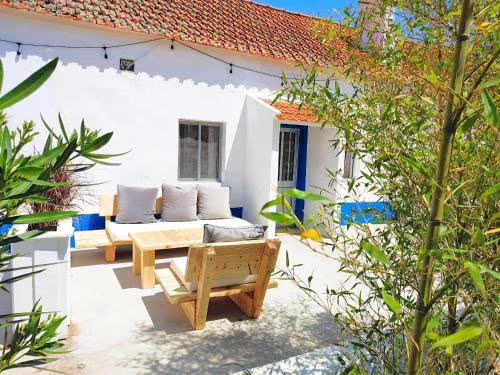 OpenReservations accepted
Visit PachaMama Community
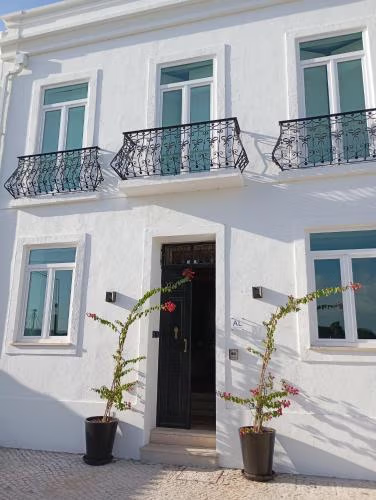 OpenReservations accepted
Villa Sado
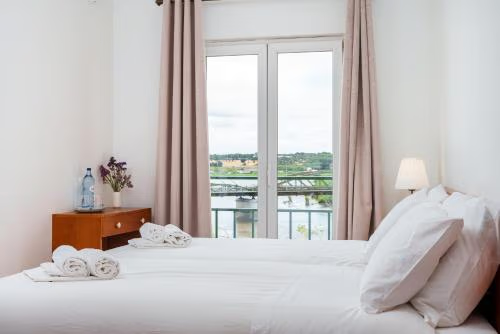 OpenReservations accepted
Hotel Salatia


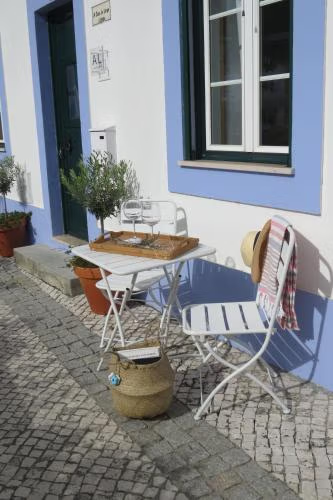


Town 17 of 24