

Town on the Camino
Bautzen
Germany
- places to stay
- 36
- Caminos
- 2
- Elevation
- 213 m
Bautzen is the town that shares: in St Peter's Cathedral Catholics and Protestants have prayed under one roof since 1524, the signs show German and Sorbian side by side, and at the Hammermühle the Saxon Way of St James parts from the Via Regia. Ahead of you lie 307.7 kilometres to Hof. A rest day before setting off is worth it.
How long to stay?
Worth a rest day, ideally before your first step. If you start here, you have time before that first step for an old town that packs a surprising amount into a small space: the divided cathedral, the leaning and the straight towers, the Wasserkunst on the Spree, the Sorbian Museum and the memorial in the former Stasi prison. That fills a day without any rush. If you come along the Via Regia from Görlitz, you have reason enough for a pause before turning south-west. Mind the closing days: the Sorbian Museum and the Museum Bautzen are closed on Mondays.
Bautzen in Ninja numbers
- 307.7 kilometres is the distance from here to Hof, according to Camino Ninja. Bautzen is kilometre zero of the Saxon Way of St James.
- 25.5 kilometres to Bischofswerda, your first stage destination. No gentle warm-up, but a proper day straight away.
- 1.44 metres is how far the top of the Reichenturm hangs out of true. Its foundation went down only 80 centimetres, and it wasn't secured until 1953/54.
- 4 organs stand in St Peter's Cathedral. With two denominations under one roof, that is almost frugal.
- 17 towers are counted in the town today, and it calls itself the "town of towers". A family even lives in the cathedral tower.
Arriving: two ways, one mill
The Saxon Way of St James begins down by the Spree, at the Hammermühle below the Alte Wasserkunst. Here it branches off the Via Regia, which comes from Görlitz as the Ecumenical Pilgrim Way and carries on westwards. The Hammermühle is the last of the town's once 21 mills. From there the path climbs up into the old town to the cathedral and then back down to the Spree, on the promenade towards Grubschütz.
The Via Regia already ran through the Gerberstraße in the Middle Ages and first crossed the Spree by a ford. Around 5,000 freight wagons are said to have passed through the town every year. So you're not the first to puff up the slope here with luggage.
In brief: Budyšin, the town on the rock
Bishop Thietmar of Merseburg mentions the fortress in 1002 as "Civitas Budusin". In Sorbian the town is still called Budyšin, and the bilingual street signs remind you at every step that Sorbs have lived here for over 1,300 years. In 1346 Bautzen joined Görlitz, Kamenz, Lauban, Löbau and Zittau to form the Upper Lusatian League of Six Towns.
The town burned several times, in 1620, 1634, 1707 and 1720, and was rebuilt in the Baroque style. In May 1813 the Battle of Bautzen against Napoleon's army raged outside its gates. In the 20th century the name became a synonym for imprisonment: the Bautzen I prison was a Soviet special camp from 1945 to 1950, and Bautzen II was a Stasi prison from 1956 to 1989.
Under one roof: the cathedral that is shared
Since 1524 Catholics and Protestants have used St Peter's Cathedral together. The town calls it the oldest and largest shared church (Simultankirche) in Germany. The Catholics have the choir, the Protestants the nave. For a long time a four-metre-high grille separated the two parts. Who holds services when is governed by a contract from the 16th century, and it has been interrupted only rarely. The house has held.
For a pilgrim setting off from this place, that is not a bad image. The Camino belongs to no single denomination. And the first room it leads you through proves that you can share a room without agreeing.
Towers and gates: what to see
The old town is small enough for a stroll without a rucksack. If you want to visit several museums, the "4 auf einen Streich" combination ticket from the Tourist Information at Hauptmarkt 1 pays off: Reichenturm, Museum Bautzen, Sorbian Museum and Alte Wasserkunst for €10 (as of 2025).
- St Peter's Cathedral (Dom St. Petri): The present late Gothic hall church dates from the 15th century, received its Baroque interior after the town fire of 1634, and the interior renovation was completed in 2015. Notice the division between the Catholic choir and the Protestant nave. Since 1921 the cathedral has been a cathedral, and since 1980 a co-cathedral of the Diocese of Dresden-Meissen. In autumn 2025 it was open Monday to Saturday from 10 to 4, Sundays from 12 to 4. You can only get up the tower through the family who live in it, and only at weekends from Easter to the second Sunday in December.
- Reichenturm: Bautzen's leaning tower, 53 metres high, 135 steps. Its tilt was first noted in 1747. Open April to October daily 10 to 5 (as of 2025).
- Alte Wasserkunst: Wenzel Röhrscheidt the Elder built the tower in 1558, and it pumped water from the Spree to 86 pipe troughs in the town. Shut down in 1965, it is now a technical museum with a view. Right below it lies the Hammermühle, your starting point. April to October 10 to 5, in winter 10 to 4, closed on Fridays, in January weekends only (as of 2025).
- Ortenburg and Sorbian Museum: The castle on the rock above the Spree was rebuilt from 1483 by the Hungarian king Matthias Corvinus, and today it houses the Saxon Higher Administrative Court. In the castle courtyard the Sorbian Museum tells you who the people are whose language you read on every street sign. Tuesday to Sunday 10 to 6, free audio guide (as of 2025).
- Taucherkirche: A small cemetery church with a curious travel history: the Marienkapelle was moved here in 1553 from the Taucherwald near Uhyst. A church that has itself moved house suits a place where you set off. Concerts have been held since 1997, mostly on the second Sunday of the month, from March/April to November.
- Bautzen Memorial (Gedenkstätte Bautzen): In the former Bautzen II prison, the memorial recalls the political prisoners of the Stasi prison. Not an easy visit, but one that stays with you. Daily 10 to 6, Fridays until 8, admission free (as of 2025).
Food and drink
You can't pass through Bautzen without eating mustard. Bautzner mustard in the small cup with the blue lid appeared in 1953, and according to the town some two million cups of the medium-hot variety go over the counter every month. At Fleischmarkt 5 there is a mustard manufactory with a small museum and tasting. For more than a bratwurst with mustard, the old town around the Hauptmarkt is well stocked. In late summer, from mid-August to early September, the town celebrates the Bautzener Senfwochen (mustard weeks).
Honestly
- The pilgrim bed is scarce. The parish's pilgrim accommodation has only six places. For two or three people that's no problem, but as a group you'll have to switch to the youth hostel or a guesthouse.
- The first day is no stroll. 25.5 kilometres to Bischofswerda. If you've just stepped off the train, don't wait until midday to set off.
- The cathedral opens late on Sundays. Not until 12 (as of autumn 2025). If you want to see it before setting off, plan that for the day before.
- The history weighs on you. In East Germany "Bautzen" was a word that inspired fear. The memorial shows why. That is as it should be, but plan something light after your visit.
Where pilgrims sleep
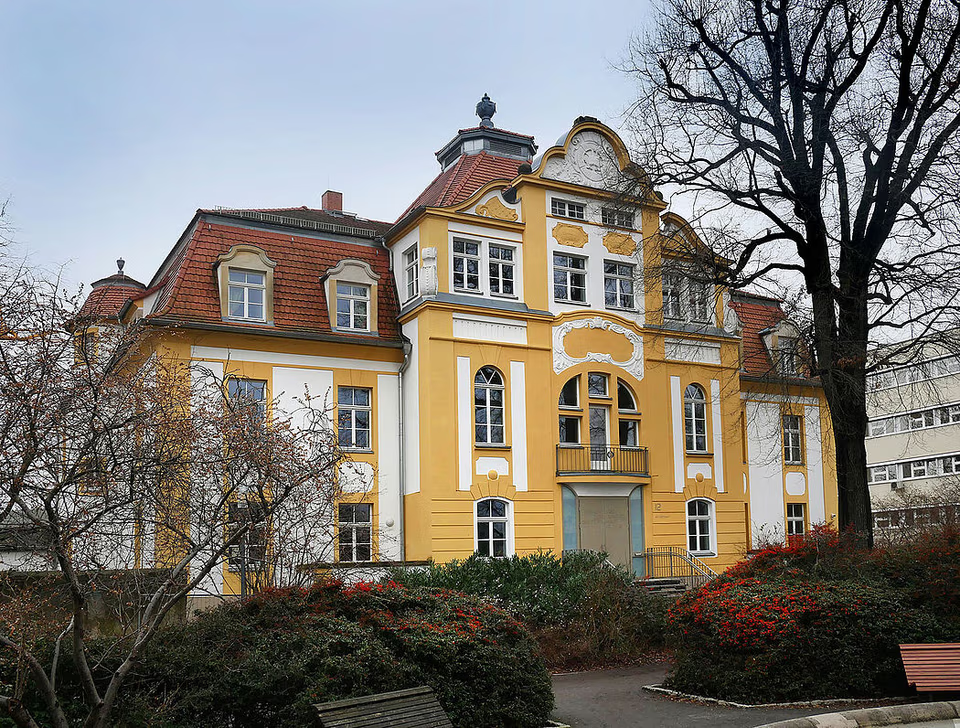
- Pilgrim accommodation in the parish hall: in the St. Petri parish hall, Am Stadtwall 12, on the edge of the old town. Six places. We haven't found a fixed price. The Protestant parish union takes enquiries about pilgrim services at ksp.bautzen@evlks.de.
- DJH Youth Hostel Bautzen "Gerberbastei": Am Zwinger 1, in an old bastion of the town fortifications. With 123 places it is the fallback when the pilgrim accommodation is full.
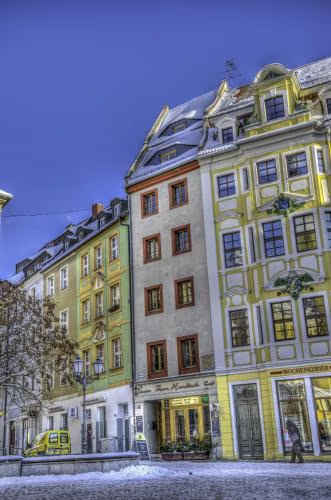
There are also guesthouses and holiday flats in the old town in every price range.
Ninja tips
- Start at the mill, not the cathedral. The official start of the Saxon Way of St James is the Hammermühle on the Spree. Go there the evening before, and in the morning you'll know where it begins.
- Midday music and vespers: On Tuesdays at 12 there is midday music in the cathedral, and on Saturdays at 5.15 pm a cathedral vespers (as of 2025). A good quarter of an hour to arrive.
- Combination ticket only if you'll manage three museums. At €10, "4 auf einen Streich" pays off from the third building. For half a day the Reichenturm is enough.
- Easter is a special time. On Easter Sunday around 1,500 Sorbian Easter riders process from the Liebfrauenkirche to Radibor. If you start in Easter week, don't miss it.
- Mustard is light. A small cup fits in any rucksack, a jar rather less so.
Practical tips for pilgrims
- Tourist Information: Hauptmarkt 1, telephone 03591 42016. The combination ticket is available here too.
- Getting here: Bautzen has a railway station on the Dresden–Görlitz line, good for a start.
- Monday: The Sorbian Museum and the Museum Bautzen are closed (except on public holidays).
- Other routes: If you don't want to head south-west, carry on along the Via Regia towards Kamenz.
Onward: out west along the Spree
From the Hammermühle the path follows the Spree along the promenade to Grubschütz (kilometre 5.0), then via Oberförstchen and Kleinförstchen to Göda (kilometre 11.1). Via Demitz-Thumitz (kilometre 19.2), where the Oberlausitzer Bergweg crosses, you reach Bischofswerda after 25.5 kilometres.
What awaits you tomorrow
Bischofswerda, a small town built almost entirely after a single day: on 12 May 1813 it burned down under Napoleonic occupation, all but a few houses. What you see today was rebuilt afterwards on the medieval layout, with a neoclassical town hall of 1818 on the Altmarkt.
Deep dive: Bautzen, the town that shares
A short read, in case you want to learn more about Bautzen. About four minutes' reading.
A rock above the Spree
When you stand at the Hammermühle and look up the slope to the old town, you see why a town grew up here. The Spree has dug deep into the granite, and up on the rock it was good to live and easy to defend. Sorbian tribes had settled in the area since the seventh century. In the year 1002 the chronicler Thietmar of Merseburg calls the place Civitas Budusin. Budusin became Budyšin, the Sorbian name that still appears on the signs beside the German one.
Down by the Spree ran the Hohe Straße, later called the Via Regia, the King's Road. A document of 1252 already speaks of the strata regia. Merchants travelled from west to east, and pilgrims too. Around five thousand freight wagons are said to have come through the town each year, and in 1431 the town bought the transit toll from Emperor Sigismund. Bautzen lived off the road, and the road needed Bautzen to get across the river.
Six towns and a king from Hungary
In 1346 Bautzen allied itself with Görlitz, Kamenz, Lauban, Löbau and Zittau. The Upper Lusatian League of Six Towns lasted until 1815 and was revived in 1991. Upper Lusatia then belonged to the Bohemian crown, and so it came about that from 1483 a Hungarian king had the castle above the Spree rebuilt: Matthias Corvinus, who ruled Lusatia at the time. The castle's Matthiasturm bears his name, and today a court sits within its walls.
One house for two
The Reformation reached Bautzen early. Since 1524 the denominations have shared St Peter's Cathedral, as the town's records have it. Other sources date the shared use a few years later, to around 1530. What is certain is that the Catholics kept the choir and the Protestants got the nave, and that a contract from the sixteenth century governs who holds services when. A four-metre-high grille long separated the two parts of the church.
You can smile at that as a compromise. But you can also see it as a feat: for almost five hundred years, two congregations who often had nothing to say to each other theologically have cleaned, heated and renovated the same room. Since 1921 the cathedral has been a cathedral, and since 1980 a co-cathedral of the Diocese of Dresden-Meissen. In the tower, eighty-three metres high, lives a family who lead visitors up on weekends.
Fire, war and prison
Bautzen burned often. In 1620 and 1634 in the Thirty Years' War, then again in 1707 and 1720. Each time the town was rebuilt, and so the old town looks mainly Baroque today. In May 1813 the Allies and Napoleon's army faced each other outside the town.
In the twentieth century the name took on a dark sound. After the war the Soviet occupying power ran a special camp in the Bautzen I prison. For the years 1945 to 1950 the town cites over two thousand seven hundred documented deaths. From 1956 to 1989 Bautzen II was a State Security prison for political prisoners. In East Germany the word Bautzen was enough to inspire fear. Today Bautzen II is a memorial, and admission is free.
Two languages on every sign
If you walk through Bautzen, you read many things twice, in German and in Sorbian. Bautzen and Budyšin. The Sorbs are a West Slavic people, and their Upper Sorbian sounds familiar to Czech and Slovak ears. Around forty thousand of them live today in Upper and Lower Lusatia, all are German citizens, and all also speak German. In 1912 they founded their umbrella organisation, the Domowina. If you want to know more, you'll find answers in the Sorbian Museum in the castle, with a free audio guide.
The churches tell of it too. The Liebfrauenkirche, first mentioned in 1293, is what the people of Bautzen call the Sorbian church. The Hussites destroyed it in 1431, and later it burned down three more times, in 1620, 1634 and 1686, and each time it was rebuilt. In the Michaeliskirche, the Protestant German and Sorbian villages around Bautzen have held their services since 1619. And on Easter Sunday the Sorbian Easter riders set off from the Liebfrauenkirche, on horseback, all the way to Radibor, to carry the Easter message onwards. Around fifteen hundred riders take part on this day.
What Bautzen gives you to take with you
You leave Bautzen on a path that parts from another. The Via Regia goes on west, while the Saxon Way of St James turns south-west, via Dresden, Chemnitz and Zwickau to Hof. Perhaps you'll take an image away from here: a cathedral where two congregations have lived under one roof for centuries, signs in two languages, a mill where two paths go their separate ways. Sharing here doesn't mean that everyone thinks the same. It means that you don't leave the room.
Where to stay in Bautzen
Places to stay in Bautzen.
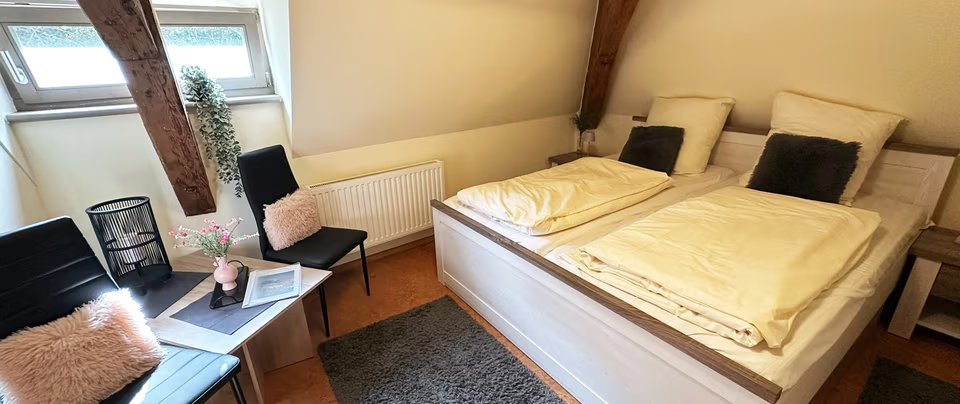 OpenReservations accepted
DJH Youth Hostel Bautzen "Gerber Bastion"
 Open
Pilgerunterkunft im Kirchengemeindehaus
Donativo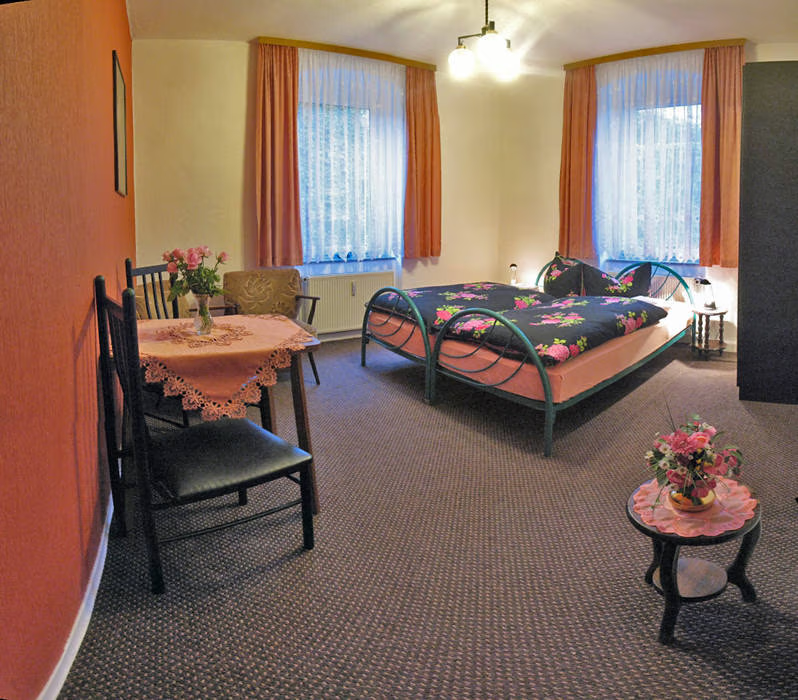 OpenReservations accepted
Pension Stadtwall Bautzen


Town 1 of 1
Continue along the Via Regia DE
Bautzen is the last popular town on the Via Regia DE.