

Stage town on the Camino
Golegã
Distrito de Santarém, Região do Centro, Portugal
- places to stay
- 9
- Camino
- 1
- Elevation
- 22 m
Golegã is the capital of the horse: a country town on the Tagus plain, 124.5 kilometres out of Lisbon, with a Manueline church and the National Horse Fair, which has been listed as national cultural heritage since October 2026. One evening is enough. For fair week in November, book early.
Right now in Golegã (as of October 2026)
- Horse fair: The Feira Nacional do Cavalo runs from 6 to 13 November 2026. That week the town is full, beds are scarce and more expensive. Book early or plan a different stage town.
How long to stay?
One evening is enough. Golegã is small and quiet, and you arrive after a good 30 kilometres of fields. The afternoon is enough for the church on the main square, a look at the studio of the photographer Carlos Relvas and a coffee facing the Manueline portal. Fair week in November is different: then Golegã is a festival of horses, riders and crowds, and an extra day can be worth it if you find a bed.
Golegã in Ninja numbers
- 124.5 kilometres lie behind you since Lisbon on the Camino Portugués Central, and 494.8 remain to Santiago.
- 87 metres of ascent was all the stage from Santarém had, over 30.9 kilometres. Here the world is flat.
- 16th century: That is how far back the Saint Martin's fair goes, from which today's horse fair grew. It has been called the Feira Nacional do Cavalo since 1972.
- 7.4 kilometres before Golegã you pass through Azinhaga, where the future Nobel laureate José Saramago was born in 1922.
- 30.5 kilometres to Tomar tomorrow, with 287 metres of ascent. Then the plain is over.
Arriving: through the fields to the main square
From Santarém you go down through the Gate of Saint James onto the plain and stay there all day: farm tracks between vineyards and maize fields, via Vale de Figueira and Azinhaga, lots of sun, little shade. At the edge of town the arrows point right into the first street. Pilgrims advise taking the next one instead: it brings you straight to the main square and the church.
In brief: a place for horses
Golegã lies on the plain of the Ribatejo, and for centuries much here has revolved around horses. A fair on Saint Martin's day is recorded as early as the 16th century. In the 18th century, under the Marquis of Pombal, tournaments and competitions for horse breeds were added, and in 1972 it got the name Feira Nacional do Cavalo. Breeders of the Lusitano, the Portuguese horse breed, meet here every November. On 2 October 2026 the fair was added to the national inventory of intangible cultural heritage. The municipality also includes Azinhaga, the village where José Saramago was born in 1922.
Capital of the horse: what to see
Everything is around the main square. We have not found verified opening hours.
- Igreja Matriz: The parish church was built in the early 16th century in the Manueline style, Portugal's late Gothic. The main portal is the jewel of the town, and inside, the main chapel has a ribbed vault. For pilgrims it is the place where, after a day on the empty plain, you arrive in a room again. From the café opposite you can look at the portal at leisure.
- Casa-Estúdio Carlos Relvas: The house and studio of the 19th-century photographer Carlos Relvas, a building of glass and iron, now a photography museum. Relvas was a landowner, an amateur bullfighter and a photographer. The entrance is in the street in front of the main square.
- The fair itself: If you come in early November, you will see the town in a state of exception, with riding tournaments, displays and festivities. That is Golegã as it sees itself.
Food and drink
Around the main square there are cafés and taverns. In their comments from 2024 and 2025, pilgrims praise a tavern that opens earlier than the others and a café with a terrace opposite the church.
Honestly
- During the fair it gets tight. In the week around Saint Martin's day, beds are scarce and prices high.
- We have not found a classic pilgrim albergue. You sleep in a private hostel or guesthouse.
- The stage before is monotonous. Fields, sun and hardly any shade, for over 30 kilometres.
- The arrows do not always take the nicest way. Both on the way in and on the way out they bypass the main square.
Where pilgrims sleep
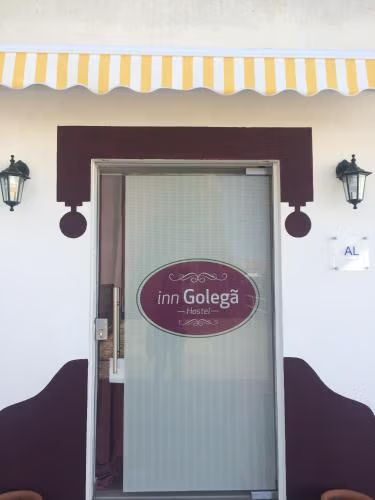
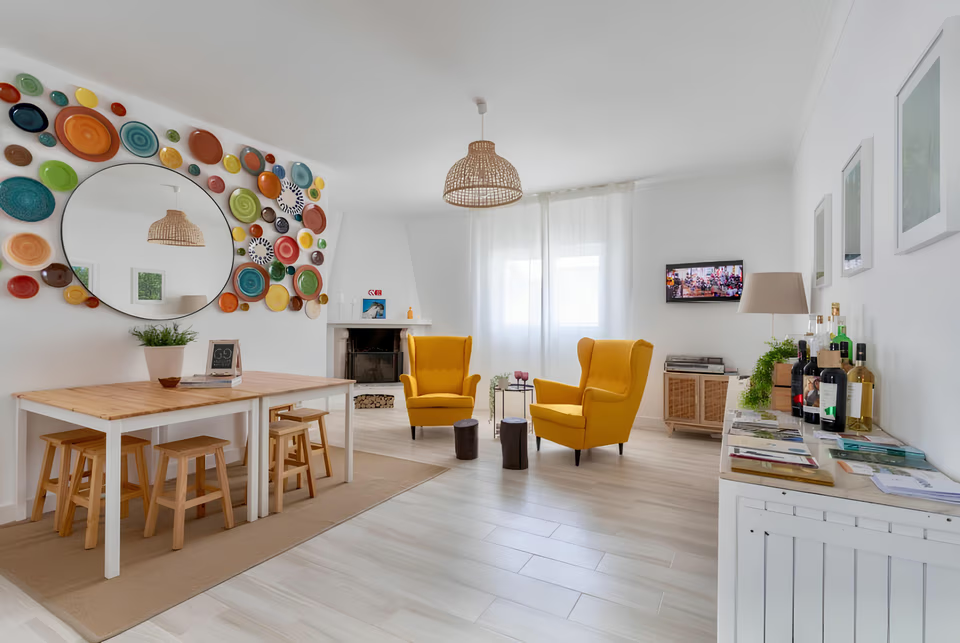
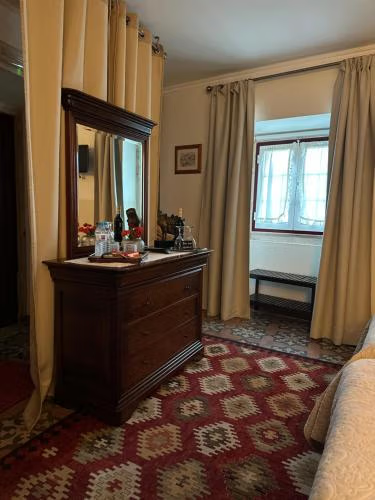
We have not found a confirmed municipal or parish albergue in Golegã. Pilgrims spread out over private houses. The Albergue Solo Duro – Casa da Tia Guida is a private albergue with a dorm and rooms; a dorm bed costs around €15 to €17 (as of October 2026). Inn Golegã is about 500 metres from the centre and the Camino, with seven rooms, a kitchen and a washing machine for a fee; check-in is by code. There are also rooms and guesthouses in several price ranges.
Ninja tips
- At the edge of town take the second street on the right, not the first. It brings you straight to the main square, the church and the photography museum.
- Leave town via the church square. In the morning the arrows send you along Rua Dom João IV. Pilgrims advise going to the front of the church, around it across the square with the bullfighter, then left, right and straight on to the N243 road.
- Book now for fair week. From 6 to 13 November 2026 Golegã is full.
- Stop briefly in Azinhaga. The village 7.4 kilometres before Golegã is the birthplace of José Saramago.
Onward: to Tomar
Beyond Golegã the landscape changes. Via São Caetano (km 130.2), past Vila Nova da Barquinha, Atalaia and Asseiceira, the way leads to Tomar (km 155.0): 30.5 kilometres with 287 metres of ascent and 254 metres of descent; the highest point is 137 metres at kilometre 139.3. After days on the plain you feel the first hills.
What awaits you tomorrow
Tomar, the town of the Templars. Above it towers the Convento de Cristo, the castle and convent of the order, and after the days on the plain it is a place where you will happily stay longer.
Deep dive: The town where the horses live
A short read, in case you want to learn more about Golegã. About one minute's reading.
A fair for Saint Martin's day
Saint Martin was a horseman. He shared his cloak with a beggar from the saddle, and in many countries his feast in November was a market day. In Golegã a Saint Martin's fair is recorded as early as the sixteenth century.
Tournaments and a new name
In the eighteenth century, under the Marquis of Pombal, the market became a competition. There were riding tournaments and prizes for the best horse breeds. In 1972 the fair got the name it bears today: Feira Nacional do Cavalo, the National Horse Fair. On the second of October 2026 the Portuguese heritage institute added it to the inventory of intangible cultural heritage.
A village and a writer
The municipality includes Azinhaga, a village you walk through shortly before Golegã. José Saramago was born there in 1922 and received the Nobel Prize in Literature in 1998. He grew up in Lisbon, but he kept coming back to the plain of his grandparents.
What Golegã gives you
When this text was written, in autumn 2026, Golegã was getting ready for its fair week. For you the town may be just one night between two long stages. But you walk on like Martin, only without a horse, and with everything you own on your back.
Where to stay in Golegã
Places to stay in Golegã.
 OpenReservations accepted
Inn Golegã
 ClosedReservations accepted
Galagana Charm House
 OpenReservations accepted
Casa do Largo - Golegã - Turismo de Habitação


Services in Golegã
What you can find in town before the next stage.
- Café
- Shop
- Tobacco
- Medical clinic
- Pharmacy
- Fountain
- Train station
- Restaurant
Source: © OpenStreetMap contributors · updated January 2026
Town 5 of 43