

Town on the Camino
Llanes
Asturias, Spain
- places to stay
- 13
- Caminos
- 2
- Elevation
- 15 m
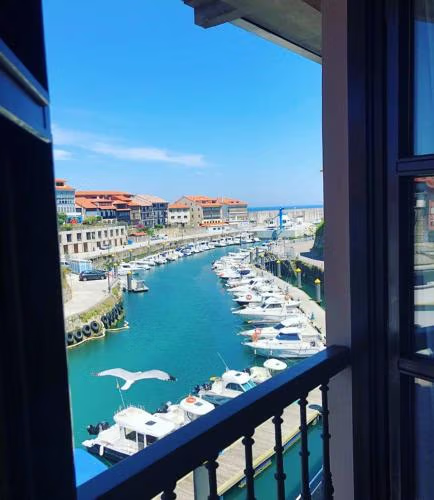
Llanes is the harbour town the Camino del Norte heads for after a day along the rocky coast: walls and a round tower from the 13th century, a basilica with a relief of Saint James and pilgrims, colourful cubes on the harbour wall. A rest day is worth it here, and there are several hostels.
How long to stay?
Worth a rest day. After 25.2 kilometres along the coast, Llanes is a good place to catch your breath. The old town is small but packed: wall, tower, basilica, mansions, plus the harbour with the cubes and the clifftop path Paseo de San Pedro. On a second day you have time for the beaches, and the next stretch to Ribadesella is a long 29.5 kilometres. If you have to move on, you can see the essentials in an afternoon.
Llanes in Ninja numbers
- 449.1 kilometres are still ahead of you to Santiago. That means you have almost half of the Camino del Norte behind you.
- 1225 is the year King Alfonso IX of León granted the town its charter.
- 2001 to 2006 were the years in which the Basque artist Agustín Ibarrola painted the concrete blocks at the harbour, the "Cubos de la Memoria".
- 29.5 kilometres take you tomorrow to Ribadesella, past a string of small beach villages.
Arriving: along the coast
From Colombres the route first follows the main road to Pendueles. After that you can switch to the coast: beaches, cliffs and, near Vidiago, the Bufones de Arenillas, holes in the limestone through which the sea pushes water and spray upwards in heavy swell. Via Andrín and Cué you come down into Llanes. The route runs through the old town, mostly a pedestrian zone, and past the railway station.
In brief: a town with a wall and a harbour
King Alfonso IX of León granted Llanes a charter in 1225, and from then on the town bore the title "Muy noble y leal villa". Remains of the town wall and the round Torreón date from the 13th century; the tower has five levels, has been a national monument since 1876 and now houses the tourist office. Outside the wall in the 14th century stood a pilgrim hospital, to which the chapel of San Roque belonged. Later, emigrants who had grown rich in the Americas brought money back; the Casino of 1910 is their building. Today the old town is protected as a heritage ensemble.
Art at the harbour
On the harbour wall of Llanes lie large concrete blocks meant to keep the sea at bay. Between 2001 and 2006 Agustín Ibarrola painted them in bold colours and shapes, turning them into the "Cubos de la Memoria", the cubes of memory. Today they are the best-known image of the town. Walk over the breakwater in the evening and then up onto the Paseo de San Pedro, a grassy path on the cliff above the sea.
Through the old town: what to see
Everything is a few minutes' walk apart.
- Basílica de Santa María del Conceyu: The large medieval church combines Romanesque and Gothic. Look at the arches of the portal: on one archivolt the apostle Saint James and pilgrims are depicted. We have not found opening hours.
- Torreón and town wall: The round 13th-century tower is the emblem of Llanes, along with remains of the wall.
- Capilla de San Roque: The chapel belonged to a 14th-century pilgrim hospital outside the wall.
- Cubos de la Memoria: The painted concrete cubes on the harbour wall.
- Paseo de San Pedro: A grassy path on the cliff with a wide view over the coast.
- Casino and Palacio de los Gastañaga: The Casino of 1910 was paid for by emigrants; the palace is one of the mansions of the old town.
Food and drink
Llanes has plenty of bars and restaurants around the harbour and the old town. A pilgrim website praises its pintxo bars as a good stop on the way between Bilbao and Gijón.
Honestly
- No municipal or parish hostel. The cheapest bed costs €16 in the youth hostel, and for that you need a hostelling card.
- The two pilgrim hostels close in winter; from November to February only hostels and guesthouses remain.
- The next day is long. 29.5 kilometres to Ribadesella; if you are tired, split the stage at one of the beach villages.
Where pilgrims sleep
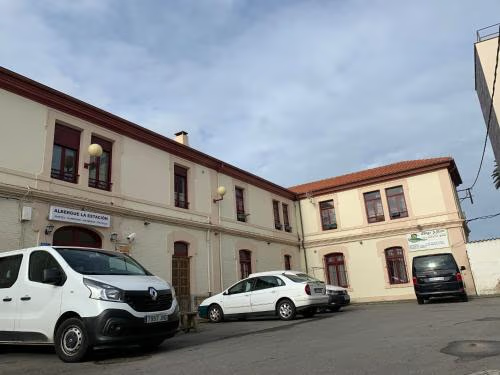
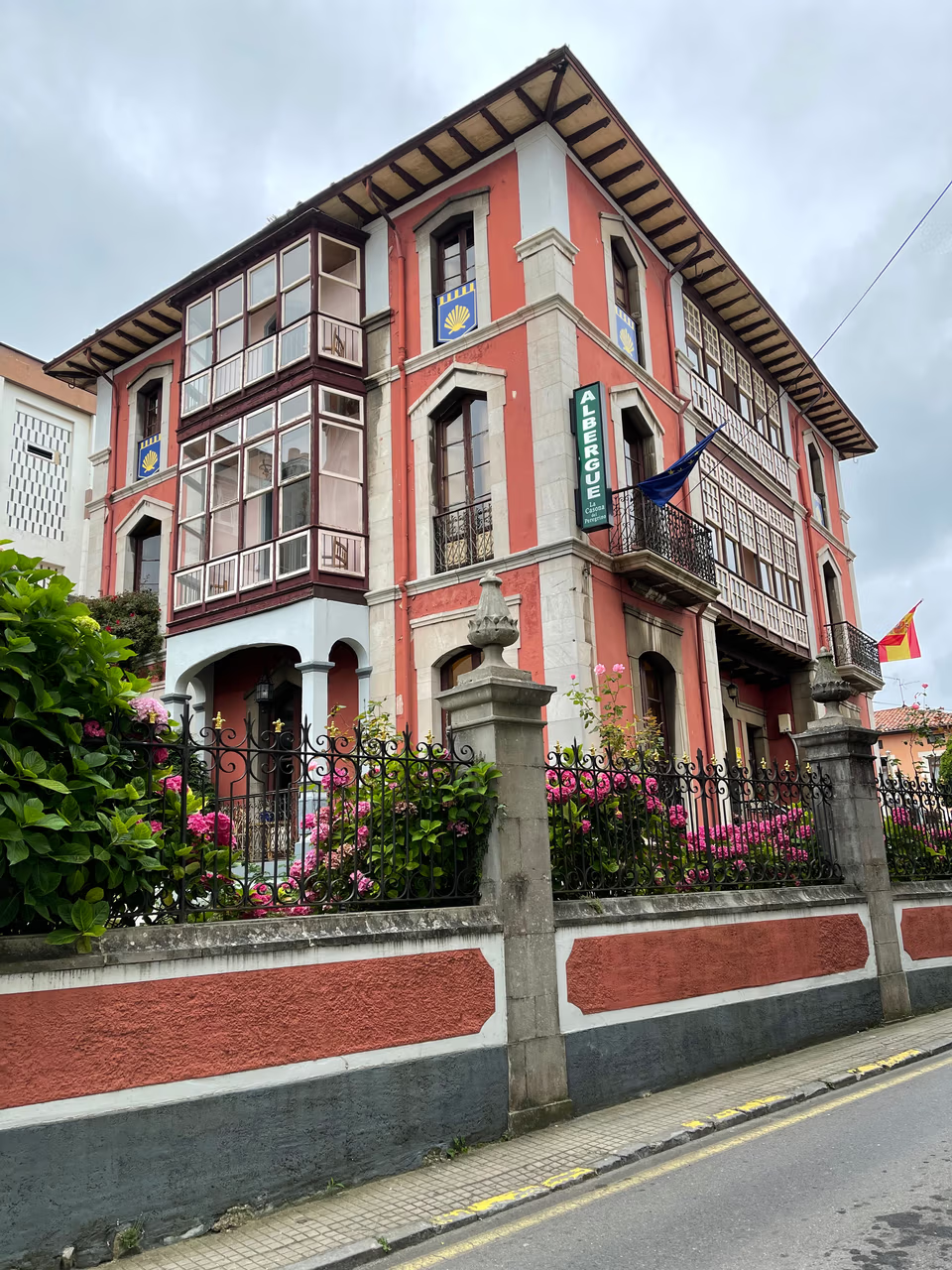
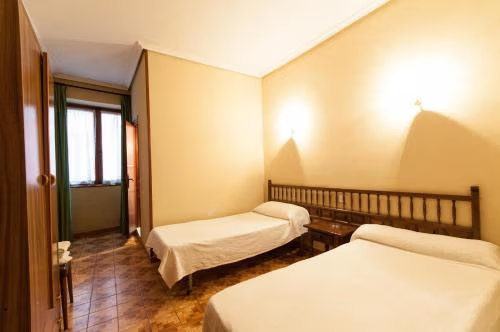
Two hostels cater for pilgrims: the Albergue La Estación next to the railway station, a dormitory bed for €18 to €21, and the Albergue La Casona del Peregrino in the centre, dormitory €18 to €20, also with single and double rooms. According to a hostel website both are open from March to the end of October (as of October 2026). Open all year are the Albergue Hostel Llanes from €23 and the Juventudes youth hostel from €16 with breakfast, for which you need a hostelling card. There is no municipal or parish hostel.
Ninja tips
- Go up to the Paseo de San Pedro at sunset. From the cliff you can see the town, the harbour and the cubes.
- Take the coastal path before Llanes if the weather allows. At the Bufones de Arenillas you can see, in a swell, how the sea pushes up through the rock.
- Plan a detour to Gulpiyuri tomorrow if you have time. Near Naves there is a small beach in the middle of a meadow, about 100 metres from the sea, which flows in underground; reachable only on foot, and a travel website recommends low tide.
Practical tips for pilgrims
- Shopping and pharmacy: There are supermarkets and a pharmacy in town.
- Tourist office: in the Torreón.
- Rail: Llanes has a station on the coastal line.
Onward: beach by beach to Ribadesella
The route leaves Llanes at the station, crosses the railway line and leads to Poo. Then the small coastal villages follow one after another: Celorio, Barro, Niembro, Naves and Nueva de Llanes. To Ribadesella it is 29.5 kilometres with 551 metres of ascent; the highest point, at 111 metres, lies beyond Piñeres.
What awaits you tomorrow
Ribadesella lies at the mouth of the Sella. Before that you have a whole day of beaches and small coastal villages ahead of you.
Deep dive: A town between wall and sea
A short read, in case you want to learn more about Llanes. About three minutes' reading.
The charter
In the year 1225 King Alfonso the Ninth of León granted the town of Llanes a charter. It grew into a fortified harbour town with a wall and a round tower that still stands today. It has five levels, and since 1876 it has been a national monument. Today the tourist office is inside, and anyone asking the way is standing in a building from the thirteenth century.
Pilgrims outside the wall
Pilgrims passed by here back then too, on their way west along the coast. For them there was a hospital outside the wall in the fourteenth century. The chapel of San Roque belonged to it. And in the town's great church, the basilica of Santa María del Conceyu, the stonemasons carved the apostle Saint James with pilgrims into an arch of the portal. The people who lived here knew the strangers with staff and shell.
The cubes of memory
Centuries later, emigrants who had grown rich in the Americas brought money to the town and built a casino and mansions. And at the beginning of this century a painter came and painted the concrete blocks that protect the harbour. He called them the cubes of memory. When you walk over them in the evening, your steps become part of it too.
Where to stay in Llanes
Places to stay in Llanes.
 ClosedReservations accepted
Albergue La Estación
 OpenReservations accepted
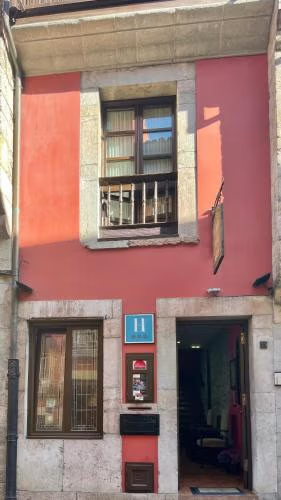
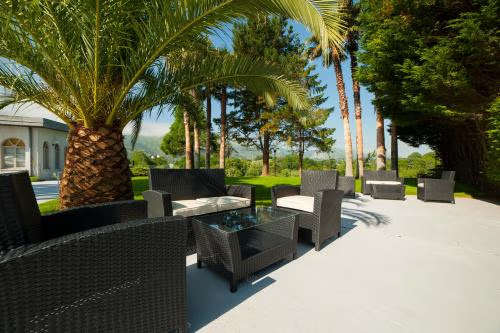
Hotel Alonso
 ClosedReservations accepted
Albergue La Casona del Peregrino
Services in Llanes
What you can find in town before the next stage.
- Café
- Shop
- Tobacco
- Medical clinic
- Pharmacy
- Fountain
- Train station
- Restaurant
Source: © OpenStreetMap contributors · updated February 2026
Town 27 of 49