

Town on the Camino
Luarca
Asturias, Spain
- places to stay
- 11
- Caminos
- 2
- Elevation
- 8 m
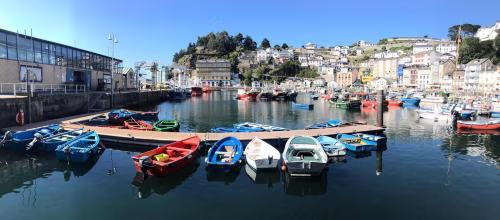
Luarca is the white fishing town on the west coast of Asturias: a harbour between two headlands, on one of them a cemetery above the cliffs where the Nobel laureate Severo Ochoa is buried. 252.7 kilometres before Santiago, a short day ends here. An afternoon is enough, but an evening at the harbour belongs to it.
Right now in Luarca (as of October 2026)
- Almuña municipal albergue closed: The public hostel in the suburb of Almuña is only open from Holy Week to 27 October. Now the private Albergue Villa de Luarca remains in Luarca; in the off-season, ask in advance.
How long to stay?
An afternoon is enough, but take the evening. From Cadavedo you arrive early after 16 kilometres. Then you have time for the harbour, the climb to the Atalaya with its chapel, lighthouse and cemetery, and the lanes of the old fishermen's quarter. The town is not quite enough for a rest day, but more than enough for a fine evening.
Luarca in Ninja numbers
- 252.7 kilometres are left from here to Santiago on the Camino del Norte.
- 16.0 kilometres lie behind you since Cadavedo, a short day after the waves of the coast.
- 8 metres above the sea lies the town; tomorrow you climb to 184 metres.
- 1905 Severo Ochoa was born here; in 1959 he received the Nobel Prize in Medicine.
- 2014 saw the Albergue Villa de Luarca open, on the ground floor of an old villa.
Arriving: across the Esva into the white town
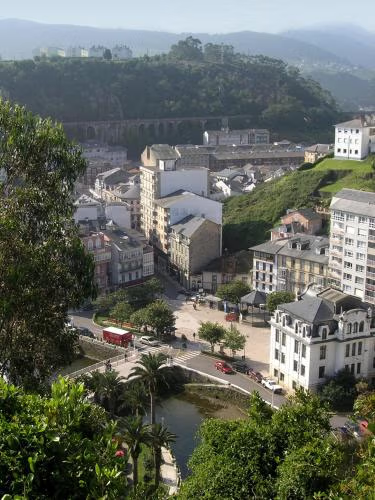
The day from Cadavedo leads down to the mouth of the Esva at Canero and back up via Barcia. In the suburb of Almuña lies the municipal albergue, a good two kilometres before the centre. Then you go down into the bay of Luarca, whose white houses gave the town the nickname „Villa Blanca de la Costa Verde“.
In brief: fishermen, pirates and a Nobel Prize
Luarca has always lived from the sea. In the fishermen's quarter of Cambaral stands the Mesa de Mareantes, where the fishermen decided whether the boats could put out. On the headland of the Atalaya there was a lookout against pirates; today a chapel, a lighthouse and the cemetery stand there. The legend of the Puente del Beso also dates from the time of the pirates: a pirate called Cambaral is said to have fallen in love with the governor's daughter, and after their kiss on the bridge both were beheaded.
The town's most famous son is Severo Ochoa, born on 24 September 1905 in Luarca. In 1959 he received the Nobel Prize in Medicine together with Arthur Kornberg, for research into the synthesis of RNA and DNA. He died in 1993 in Madrid and lies buried in the cemetery of his home town above the sea.
White houses, blue water: what to see
- Atalaya with chapel, lighthouse and cemetery: On the headland above the harbour lies one of the most beautiful cemeteries on the Cantabrian coast, high above the cliffs. Severo Ochoa is buried here. For pilgrims it is the place where you fall silent after a day by the sea.
- Harbour and Barrio del Cambaral: The old fishermen's quarter with the Mesa de Mareantes and the Puente del Beso, around which the pirate legend is woven.
- Mirador de El Chano: At the other end of town stands the white-and-red Ermita de San Roque. From here you see Luarca best.
- Palacio de los Marqueses de Ferrera: Protected as a cultural asset since 1995, today the municipal library and cultural centre.
Honestly
- Only one albergue in town. The Albergue Villa de Luarca is private and has 22 beds. The municipal albergue is a good two kilometres before the centre in Almuña and is closed from late October to Holy Week.
- No kitchen in the albergue. There is a microwave and a fridge; for meals you go to a restaurant.
- The giant squid museum is outside town. You can only reach the Parque de la Vida in La Mata by car.
Where pilgrims sleep
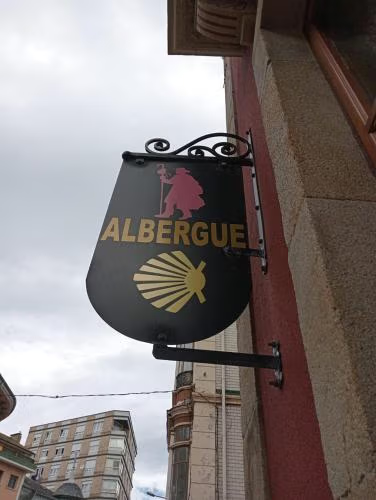
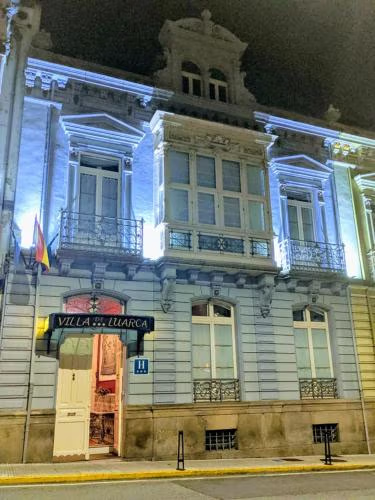
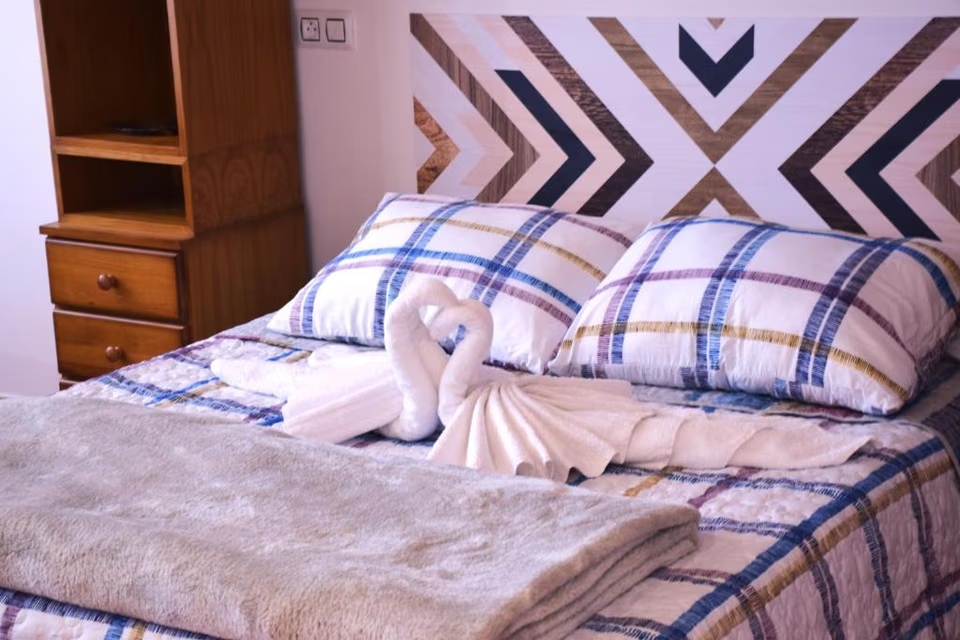
The Albergue Villa de Luarca is right in the middle of town on the ground floor of a villa on Avenida Álvaro de Albornoz. It is private, has 22 beds in one dormitory, opens at noon and closes at 10:30 pm. It is open all year; in the off-season you should call ahead. The public albergue of the municipality is in Almuña, a good two kilometres before the centre, right on the path, with 22 beds, no reservations, from Holy Week to 27 October. Besides that, Luarca has many small hotels and apartments, including at the harbour.
Ninja tips
- Sleep in Almuña when it is open, and walk the last two kilometres into town in the evening without your backpack; a town bus only runs on weekdays.
- Climb up to the cemetery when the sun goes down. From the Atalaya the harbour lies below you.
- Walk through the Barrio del Cambaral. That is where the Mesa de Mareantes stands, and you will find the Puente del Beso.
Practical tips for pilgrims
- Accommodation along the way: On the stage to Navia, smaller places such as Outur and Villapedre also have rooms.
Onward: across the plateau to Navia
Beyond Luarca the path climbs via La Ronda and Outur onto the plateau, at 184 metres the highest point of the day. Then it goes via Bao y Barayo, Villapedre, Piñera, Villaoril and La Colorada to Navia: 20.4 kilometres with 445 metres of ascent and 439 metres of descent. If you keep going, you reach La Caridad after 30.6 kilometres.
Deep dive: The white town and its scientist
A short read, in case you want to learn more about Luarca. About two minutes' reading.
A town by the water
Luarca lies in a narrow bay, framed by two headlands. The houses are white, the water in the harbour is turquoise, and everything in the town revolves around the sea. In the fishermen's quarter of Cambaral stands a stone table, the Mesa de Mareantes. Here the seafarers decided whether the weather allowed them to put out. On the headland opposite they used to keep watch for pirates.
The kiss on the bridge
The town's best-known legend tells of the pirates. A buccaneer called Cambaral fell in love with the governor's daughter. On a small bridge the two kissed, and there they were killed together. Whether it happened that way, nobody knows. The bridge is still called Puente del Beso, the bridge of the kiss.
What Luarca gives you
Severo Ochoa was born in Luarca in nineteen hundred and five. In nineteen fifty-nine he received the Nobel Prize in Medicine, and in nineteen ninety-three he died in Madrid. He lies buried in the cemetery on the headland, above the harbour of his childhood. Whoever goes far may come home. That too is a thought for the Way.
Where to stay in Luarca
Places to stay in Luarca.
 OpenReservations accepted
Albergue de Peregrinos Villa de Luarca
 OpenReservations accepted
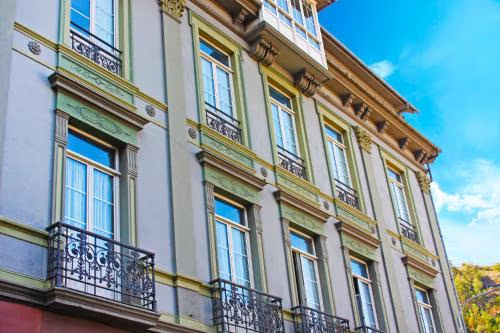
Hotel La Colmena
 OpenReservations accepted
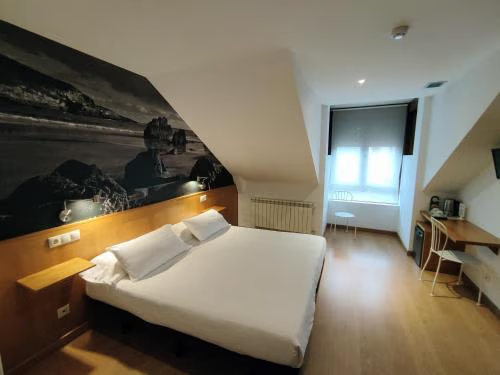
Hotel Dabeleira

Services in Luarca
What you can find in town before the next stage.
- ATM
- Café
- Shop
- Tobacco
- Pharmacy
- Fountain
- Post office
- Train station
- Bus station
- Restaurant
Source: © OpenStreetMap contributors · updated February 2026
Town 35 of 49