

Stage town on the Camino
Nájera
La Rioja, Spain
- places to stay
- 15
- Camino
- 1
- Elevation
- 492 m
Nájera is a royal town between red cliffs on the Río Najerilla, 29.6 kilometers past Logroño. The monastery of Santa María la Real holds kings of Navarre, Castile and León, and behind the altar opens the cave where, according to legend, it all began. An afternoon is enough, just not on a Monday.
How long to stay?
An afternoon is enough, just not on a Monday. The old town is small and wedged between river and rock face, and the monastery is the reason to stay. Plan two hours for it. According to all the information we found, it is closed on Mondays; if you arrive then, you see Nájera only from the outside.
Nájera in Ninja numbers
- 29.6 kilometers since Logroño, with the Alto de San Antón at 667 meters as the highest point.
- 585.4 kilometers are still left from here to Santiago on the Camino Francés.
- 1052 is the year King García Sánchez III founded the monastery of Santa María la Real.
- More than 30 tombs stand in the monastery's royal pantheon.
- 20.8 kilometers to Santo Domingo de la Calzada tomorrow.
Arriving: across the river, under the cliffs
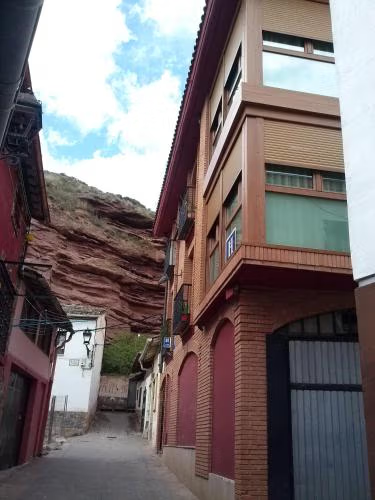
Beyond Navarrete and Ventosa the path goes over the Alto de San Antón and then down to Nájera. You reach the old town over the bridge across the Najerilla, named after Saint Juan de Ortega; the present bridge dates from 1866, its predecessor from the 12th century. Right after it, on the left at the riverbank, lies the municipal albergue. Behind the houses, red sandstone walls rise, riddled with ancient caves. The town's name comes from Arabic: Naxara, “between rocks.”
In brief: a capital in the rock
In the 11th century Nájera was the capital of the Kingdom of Navarre. In 1052 King García Sánchez III founded the monastery of Santa María la Real, the burial place of his family. In 1079 it passed to the Benedictines of Cluny. In the 16th century the monastery had its heyday, with the Cloister of the Knights and the choir stalls. Then Napoleon's troops came and did severe damage, and in the 19th century the monastery served as a hospital, prison, school, theater and even a bullring. In 1889 it became a national monument, and since 1895 Franciscans have lived here.
The cave behind the altar
According to legend, King García was hunting with his falcon when it followed a partridge into a cave in the rock face. The king crawled in after it and found there an image of Mary, a burning lamp, a bell and lilies. On this spot he had the monastery built. The cave still exists: it lies at the foot of one of the three church naves, and you enter it from the church. In front of it kneel the king and his wife Estefanía as figures at prayer. Nájera is a town that does not stand in front of the rocks, but begins within them.
Between the rocks: what to see
Everything lies in the old town, a few minutes from the path.
- Monasterio de Santa María la Real: The present monastery church stands over a Romanesque church of the 11th century. Under the choir lies the royal pantheon with rulers from Navarre, Castile and León, and in one chapel the tomb of the Dukes of Nájera. The finest piece is the tomb of Blanca of Navarre from the 12th century, one of the finest Romanesque tomb sculptures in Spain. There are also the walnut choir stalls from the early 16th century and the Claustro de los Caballeros, the Cloister of the Knights, built 1517 to 1528, in which nobles are buried. For you as a pilgrim, the cave is the core: here began the story that brought the kings to this place. Opening hours according to the tourism website (undated): Tuesday to Saturday 10:00–13:00 and 16:00–19:00, Sundays 10:00–12:30 and 16:00–18:00. We found no current admission price.
- Iglesia de Santa Cruz: The church, with origins in the 11th century, keeps relics, among others of Saint Prudentius, the patron saint of the Rioja. Here is the pilgrim Mass, Monday to Saturday at 20:00 (source undated, check on site).
- Museo Najerillense: Archaeology, art and daily life of the Najerilla valley. Tuesday to Saturday 11:00–14:00 and 17:00–20:00, Sundays 11:00–14:00.
- The rock walls: The artificial caves above the town served for defense until the 10th and 11th centuries. Whether they are accessible today, the sources say differently; you see them best from the riverbank.
Food and drink
Nájera lies in the middle of the Rioja, and wine is an everyday matter here. You find restaurants and bars in the old town, and a supermarket in town. If you come in May: on the last Sunday of the month the town celebrates the Fiesta del Pimiento Riojano, the festival of the Rioja pepper.
Honestly
- The monastery is closed on Mondays. It is the main reason to stop here, and on Monday it drops out.
- The stage from Logroño is long. 29.6 kilometers in one go. If you do not want to go that far, sleep in Navarrete, after 12.6 kilometers.
- Opening hours are hard to verify. The information we found carries no date. Ask at the albergue.
Where pilgrims sleep
The Albergue de peregrinos de Nájera lies right after the bridge on the left at the riverbank, on the Plaza de Santiago, in the former Red Cross building. It belongs to the town and is run by the Fraternidad Internacional del Camino de Santiago with volunteer hospitaleros, since 2004, renovated in 2021 and 2022. Open all year, check-in from 14:00, one large dormitory, a few euros with a fitted sheet (as of September 2026). You cannot reserve, the credencial is required, and luggage from transport services is not accepted. Besides it there are several private hostels in the old town, such as the Puerta de Nájera on the riverbank or the Las Peñas, usually for €10 to 15.
Ninja tips
- Do not come on a Monday if the monastery matters to you. If you would arrive on a Monday, you can split the stage in Navarrete and be in Nájera on Tuesday.
- Go into the cave. It is the origin of the monastery and the town, and you enter it directly from the church.
- Do not send your luggage to the municipal albergue. It does not accept transported luggage; if you send luggage, you need a private place to stay.
- Walk along the river in the evening. The promenade on the Najerilla with a view of the red rocks is the most beautiful place in town after the monastery.
When it rains
For a gray afternoon Nájera has three roofs:
- Santa María la Real: Tuesday to Saturday 10:00–13:00 and 16:00–19:00, Sundays 10:00–12:30 and 16:00–18:00.
- Museo Najerillense: Tuesday to Saturday 11:00–14:00 and 17:00–20:00, Sundays 11:00–14:00.
- Iglesia de Santa Cruz: Pilgrim Mass Monday to Saturday at 20:00.
Practical tips for pilgrims
- Stamp: at the albergue.
- Festivals: April 28 San Prudencio, June 24 to 30 San Juan and San Pedro, mid-September the biggest festival, for Santa María la Real. The town is full then.
- Shopping: supermarket in town; for the stage to Santo Domingo there are bars in Azofra and Cirueña.
Onward: up to Santo Domingo
The path leaves Nájera through fields and vineyards to Azofra (km 196.2). After that it climbs steadily to Cirueña (km 205.6), at 746 meters the highest point of the day, and then falls gently to Santo Domingo de la Calzada (km 211.5). In total 20.8 kilometers, 378 meters up, 231 down, with no steep stretches.
What awaits you tomorrow
Santo Domingo de la Calzada, the town of the saint who built pilgrims a bridge and a hospital, and the cathedral where a living rooster and hen are kept.
Deep dive: The royal town in the rock
A short read, in case you want to learn more about Nájera. About three minutes' reading.
Between rocks
Whoever stands by the river in Nájera sees a red wall behind the roofs. The Arabs called the place Naxara, between rocks, and that is still its name today. Early on, people cut caves into the rock, which served for defense until the tenth and eleventh centuries. Above stood a castle of Muslim origin.
The king and the falcon
In the eleventh century Nájera was the capital of the Kingdom of Navarre. King García Sánchez the Third is said to have been hunting here when his falcon followed a partridge into a crevice in the rock. The king climbed in after it and found a figure of Mary, a burning lamp, a bell and fresh lilies. So the legend tells it. What is documented is that in 1052 García founded a monastery at this spot, which he named Santa María la Real and made the burial place of his house. In 1079 King Alfonso the Sixth of Castile handed it to the monks of Cluny, who also had their houses elsewhere along the Way of Saint James.
Tombs and choir stalls
Over the centuries kings and queens from Navarre, Castile and León had themselves buried here, later the Dukes of Nájera. The most beautiful tomb is that of Blanca of Navarre from the twelfth century, a masterpiece of the Romanesque. In the sixteenth century the monastery had its heyday: between 1517 and 1528 the Cloister of the Knights was built, along with the choir stalls of walnut.
Decay and return
Napoleon's troops badly damaged the monastery. After the dissolution of the monasteries in the nineteenth century it stood empty and became whatever a town happened to need: hospital, prison, school, theater, bullring. In 1889 it became a national monument, and in 1895 Franciscans moved in, who keep it to this day.
What Nájera gives you
When this text was written, in the autumn of 2026, Nájera was a small town in the Rioja that had once been a capital. The kings lie under the choir, but at the beginning stands a cave in the rock, into which a king had to crawl on his knees. You arrive here tired after almost thirty kilometers. Perhaps that is the right attitude for this town.
Where to stay in Nájera
The places pilgrims rate highest in Nájera come first.
- Top #1
 OpenReservations accepted
Albergue El Peregrino Najerino
- Top #2
 ClosedReservations accepted
Albergue Puerta de Nájera
- Top #3
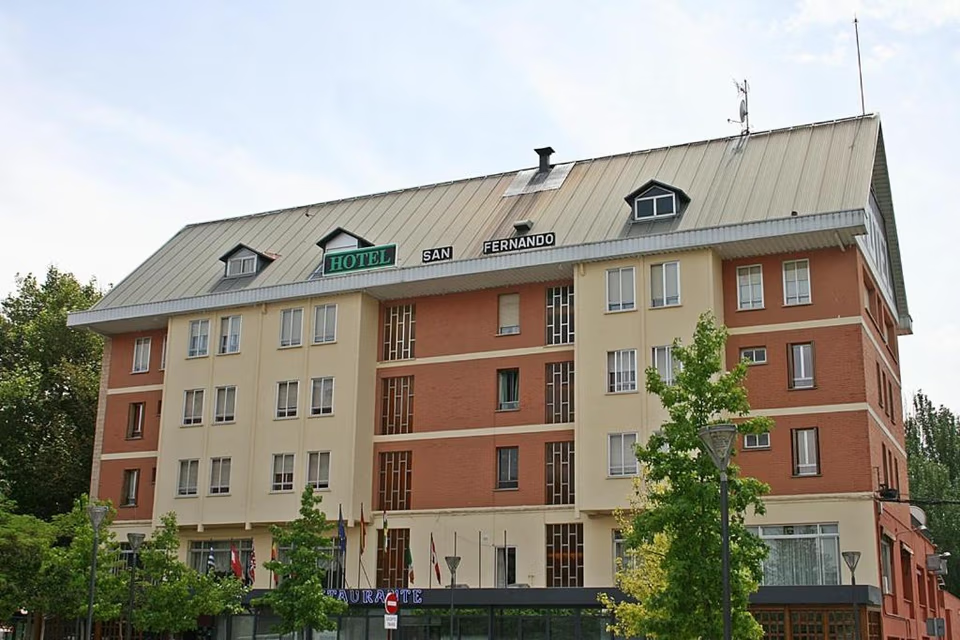 OpenReservations accepted
Cityexpress Hotel Fernando III Nájera


Services in Nájera
What you can find in town before the next stage.
- ATM
- Café
- Shop
- Medical clinic
- Pharmacy
- Fountain
- Post office
- Train station
- Bus station
- Restaurant
Source: © OpenStreetMap contributors · updated November 2025
Town 13 of 49