

Town on the Camino
Vendas Novas
Portugal
- places to stay
- 4
- Camino
- 1
- Elevation
- 148 m
Vendas Novas is a rest stop, and has been for centuries: an inn on the road from Lisbon to Évora grew into a town, in 1728 João V had a palace built here in less than a year as a station for a royal journey, and today travellers stop for the bifana. Take one with you; it is 32.9 km to Branca.
How long to stay?
An afternoon is enough. Vendas Novas is a town for resting, not for sightseeing. The king's palace is now a barracks, the chapel and museum can only be seen at certain times or by appointment, and the rest is a sober small town on the national road. What fills the afternoon: a look at the palace and the royal fountain, a bifana and an early night. Tomorrow one of the longest stages of the Way awaits.
Vendas Novas in Ninja numbers
- 350.9 km since Faro according to Camino Ninja, with 101.9 still to go to Benfica do Ribatejo. The last hundred is at the door.
- About 3,000 bifanas a day are sold by the town, according to a Câmara estimate of 2017, almost a million a year. You can raise the statistic by one tonight.
- Less than a year is what the builders needed in 1728 for King João V's palace. Built for a royal journey, it still stands today.
- 32.9 km to Branca, and according to the regional pilgrim guide there is nothing to eat along the way.
Arriving: through eucalyptus and cork oaks
It is 44.2 km from Alcácer do Sal, so you usually come from Casebres (22.6 km) or from Cabrela (13.4 km, the village lies about a kilometre off the path). Beyond Casebres, the Caminho Português Central do Sul leads for about three and a half kilometres through dense eucalyptus, then through pines, a stretch on the road and finally over the Herdade da Palhavã estate on sandy tracks through cork oaks. A pilgrim wrote in the regional paper Sul Informação that he liked precisely this section with its streams and herds, and complained about the stretches of tarmac before it. The regional pilgrim guide warns that it can get hot.
If you start in Casebres and don't mind a one-kilometre detour, stop in Cabrela: the guide recommends a bifana there and the Filhós de Cabrela, a fried pastry. On the façade of the village church, whose door bears the year 1704, you can see the sword cross of the Order of Santiago.
In brief: a town born from an inn
The name says it: a venda is a roadside rest stop. Halfway between Lisbon and Évora an inn appeared, and the town grew from it. When exactly is disputed: the Comunidade Intermunicipal do Alentejo Central names the late 16th century and credits the first Duke of Bragança, while the regional pilgrim guide speaks of the 17th century.
For a long time Vendas Novas was part of Montemor-o-Novo. In 1913 the place became a small town (vila), in 1962 a municipality of its own, in 1993 a city (cidade). Since 1861 the military has shaped the centre: the artillery sits in the king's palace.
A stop on the way: what to see
Palace, chapel and fountain lie in the centre, on the Avenida da República and behind the market hall.
- Palácio das Passagens: In 1728 King João V had the palace built in less than a year, as a station for a journey of the court. According to tradition it was the journey to the double wedding on the Spanish border, where in January 1729 on a bridge over the Caia between Elvas and Badajoz the princesses of the two royal houses were exchanged. A whole palace for a passing-through: even then Vendas Novas was a rest stop, only a very expensive one. Since 1861 the artillery has been at home here, formerly the Escola Prática de Artilharia, today the Regimento de Artilharia n.º 5. In the garden in front, a visitor centre shows guns, and entry is free.
- Capela Real: The palace chapel was built at the same time, probably to plans by the court architect Custódio Vieira, for the king and his guests. Inside are a painting of Nossa Senhora da Conceição from the 17th century and blue-and-white azulejos from the 1750s. The chapel lies inside the barracks, and a visit needs an appointment, according to the museum. Telephone +351 265 809 800.
- Museum of the Artillery: Ammunition, firing equipment, uniforms and mementos of well-known artillerymen, with a focus on the First World War. The opening hours we found contradict each other (weekends only, or daily with a lunch break), so call beforehand: +351 265 809 800.
- Chafariz Real: Behind the market hall stand the two long stone basins of the royal fountain of 1728. They were built for the workers and animals of the palace building site. A fitting place for a pilgrim: here, almost three hundred years ago, the king's builders drank. We did not find out whether the water is drinkable today.
Food and drink
Vendas Novas is known across the whole country for its bifanas: pounded pork in a bread roll, to a recipe that every casa guards as a secret. It all began in a café on the Estrada Nacional 4, which runs through the town. Where exactly the bifana comes from has not yet been researched, the mayor said in 2017. Twelve to fifteen places live almost entirely off it. In May the town holds its own Feira da Bifana.
Honestly
- No pilgrim hostel. There is no pilgrim or donativo hostel in Vendas Novas. You sleep in private guesthouses or hotels and should book.
- The palace is a barracks. The most beautiful building in town belongs to the army. Without an appointment you mostly see it from outside.
- The town is a road town. Vendas Novas lives on the national road and from the traffic. It is not an old-town stroll like Alcácer do Sal.
- The Turismo was closed. When the authors of the regional pilgrim guide came through, the tourist office was shut. Don't count on a stamp there and ask in a café or church.
- Tomorrow is hard. 32.9 km to Branca, of which according to the pilgrim guide almost nine are on the N251-1 road, and no place to stop in between.
Where pilgrims sleep
In Vendas Novas there is no pilgrim hostel, neither municipal nor church-run. The beds are in private guesthouses and hotels, so book ahead.
Ninja tips
- Buy two bifanas. One for tonight, one for tomorrow's lunch. The regional pilgrim guide expressly advises buying provisions in Vendas Novas for the stage to Branca, because there is nothing until Branca.
- Stamp in a café: On this Way innkeepers stamp too. One pilgrim reported a place on the stage to Vendas Novas with its own pilgrim stamp, made specially for the purpose.
- Sort out cash and shopping here: Vendas Novas has a post office, a bank with a cash machine and a supermarket. Until Branca you will find none of these.
- Filhós in Cabrela: If you come from Casebres, the kilometre detour to Cabrela is worth it, for a break with a bifana and filhós and for the Order's cross on the church.
Practical tips for pilgrims
- Turismo: in the old windmill, open Tuesday to Sunday according to an undated travel portal. Check on the spot, the pilgrim guide found it closed.
- Supplies: Post office (CTT), bank with cash machine, supermarket.
- Festivals: Feira on the third Sunday in May, town festival on 20 May, municipal holiday on 7 September.
Onward: along the pine road to Branca
It is 32.9 km to Branca according to Camino Ninja, 33.6 to Fazendas das Figueiras, 50.3 to Santo Estêvão. For almost nine kilometres the path follows the N251-1 between maritime pines, passes the Palácio do Vidigal, the hunting lodge that King Carlos I had built in 1896 (privately owned), crosses the Ribeira de Canha and the Ribeira de Lavre and circles a hidden airstrip on a sandy track. For a bed in Branca, turn to the Junta de Freguesia (+351 243 606 116), and call ahead.
What awaits you tomorrow
Branca, a village in the municipality of Coruche, with cafés, post office, bank and a small, new church of Nossa Senhora da Conceição. Coruche calls itself the world capital of cork and, according to the pilgrim guide, produces about a tenth of Portuguese cork. With Branca you have arrived in the Ribatejo.
Deep dive: A palace for a passing-through
A short read, in case you want to learn more about Vendas Novas. About 2 minutes' reading.
An inn by the road
Vendas Novas translates as "the new vendas", and a venda is a roadside rest house. Halfway between Lisbon and Évora, on a road that had always carried travellers, an inn appeared. Some say it dates from the late sixteenth century and goes back to the first Duke of Bragança, others place it in the seventeenth. What is certain is that a town grew up around this inn, one that belonged to Montemor-o-Novo for centuries.
The king on the road
In 1728 the rest stop received a royal visit. King João V had a palace built here, in less than a year, as a station for a journey of the court. According to tradition it was the journey to a double wedding. In January 1729 the royal houses of Portugal and Spain met on a bridge over the Caia, between Elvas and Badajoz. The Spanish infanta Mariana Victoria married the Portuguese heir to the throne, the Portuguese infanta Barbara married the Spanish heir. With the palace came a chapel and a fountain where the builders and their animals drank.
Cannons instead of coaches
After the king came the military. Since 1861 the artillery has sat in the palace, for a long time as the Escola Prática de Artilharia, today as a regiment. Around the middle of the nineteenth century the railway also arrived. While building the line to Beja, workers found a prehistoric treasure in a hill, including two trapezoidal plates with geometric patterns. Since 1862 they have lain in the British Museum in London. In 1913 Vendas Novas became a small town, in 1962 a municipality of its own, in 1993 a city.
The bifana
And then there is the bifana. Nobody knows exactly when it became in Vendas Novas what it is today. All that is certain is that it began in a café on the national road and that motorists still stop to eat it, even since the motorway has drawn off part of the traffic. Innkeepers from Vendas Novas have opened bifana places all over the country.
What Vendas Novas gives you to take along
Vendas Novas is a place that lives from stopping. A king had a house built here for his journey, travellers, soldiers and motorists have stopped here. You are the next in this long line. Take what every traveller got here: something warm, a roof and strength for the road.
Where to stay in Vendas Novas
Places to stay in Vendas Novas.
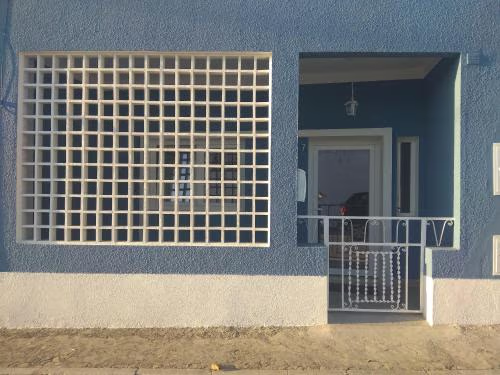 OpenReservations accepted
Casa Fisher
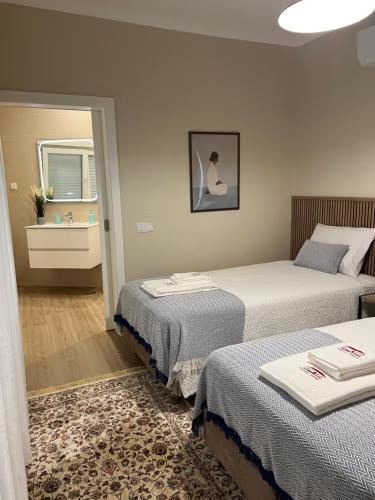 OpenReservations accepted
Alojamento Infantes
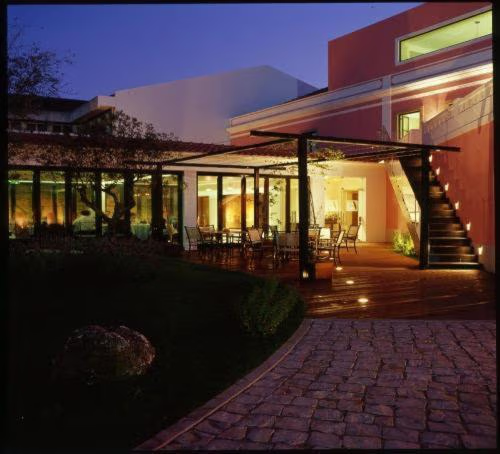 OpenReservations accepted
Hotel Acez

Town 19 of 24