

Camino Mallorca
47 kilometres from the Santuari de Lluc through the UNESCO World Heritage landscape of the Serra de Tramuntana down into Palma's old town — Mallorca's own Camino, recognised by the cathedral chapter of Santiago in July 2021. At the finish there is no cathedral but a harbour: from here the ferry sets off for the mainland.
- 01At a glance
- 02Overview
- 03Other names
- 04Ideal for — and not so much for
- 05Route & landscape
- 06Stages, terrain & difficulty
- 07Spain's youngest Camino ends at a quay — and that is precisely what's historic
- 08Highlights along the way
- 09The first night of August
- 10How pilgrims reach this route
- 11Carrying on?
- 12Preparation & practicalities
- 13What this route costs
- 14Getting there
At a glance
- Start / Finish: Santuari de Lluc, Escorca (Serra de Tramuntana) / Palma de Mallorca, Església de Sant Jaume
- Length: 47 km
- Duration: 2 days
- Elevation: ↗ 231 m / ↘ 685 m
- Stages: 2
- Country: Spain — Mallorca (Balearic Islands); currency euro
- Waymarking: under construction — between Inca and Lluc the GR 222 marking helps, elsewhere use a GPS track (official route presented 10/2025, signposting planned from 2026)
- Responsible body: the Consell de Mallorca
- Recognition: cathedral chapter of Santiago de Compostela, July 2021 (as the "Camí de Lluc")
- Compostela: no — 47 km do not meet the 100 km rule; this route is the beginning, not the end
- Connection: by ferry to Barcelona onto the Camino Catalán
- Best time: March to May and October to November
Overview
The Camino Mallorca is the first stage of a very long journey: 47 kilometres from the Santuari de Lluc, Mallorca's Marian sanctuary at a good 500 metres in the Serra de Tramuntana, down through wine villages and almond groves to the Gothic church of Sant Jaume in the old town of Palma — and there, to the water. Because that is the point of this route: its destination is not a shrine but a harbour. From Palma the ferry sets off for the mainland, and Santiago de Compostela is then still some 1,200 kilometres away. Since July 2021 the route has been officially recognised by the cathedral chapter of Santiago as the Camí de Lluc — Mallorca has its own Camino.
Along the way, two days give you a surprising amount of island: the old paved pilgrim path Camí Vell de Lluc through the UNESCO World Heritage landscape of the Serra de Tramuntana, the route's only serious descent (467 metres over nine kilometres), then the Raiguer with the vineyards of Binissalem, the potters' villages of Marratxí and finally Palma's old town. And once a year, on the first night of August, several thousand Mallorcans walk the same corridor in the opposite direction — more on that below.
Other names
On Mallorca this route is called the Camí de Lluc — that is the name in the recognition issued by the cathedral chapter of Santiago in July 2021. You will also read Camí de Sant Jaume de Mallorca and Camino de Santiago de Mallorca, in official language "ruta jacobea des de Mallorca", in the German press simply the Mallorcan Way of St James. The name Camino Mallorca, under which we list it, is our own Camino Ninja designation: it tells you at once where you are — but you will not find it on any signpost on the island. Ask locally for the Camí de Lluc.
Two names should not be confused with the route: the Camí Vell de Lluc is only the section from Caimari up to the sanctuary — barely nine kilometres, the most beautiful stretch, but just a stretch. And Des Güell a Lluc a peu is not a route but a night pilgrimage that once a year uses much of the same corridor. There is also a second recognised trail on the island: the Camí Lul·lià, 30 kilometres from the Santuari de Cura to Palma, named after Ramon Llull.
Ideal for — and not so much for
This route is ideal if you have two days and still want to walk something whole: an island from the mountain side to the sea, a single serious section, villages with a railway station, a bar and a bakery in the evening — and at the end a harbour that delivers the continuation ready-made. Ideal, too, as a dress rehearsal: if you have the Camino Francés in mind and want to test pack, boots and two consecutive days, this is an honest trial run with flight connections. And if you like cultural density, you get a Marian sanctuary with 750 years of documented history, a way of the cross conceived by Antoni Gaudí and a boys' choir that has been singing since 1531.
Honestly, though, it is not for you if you expect a fully waymarked network and a chain of hostels. The official route was only presented in October 2025 and continuous signposting was announced for 2026 — until then you need a GPS track and a plan B. There is as yet no classic pilgrim hostel on the route; Ca n'Arabí in Binissalem has been announced as the first since 2024, nothing more. And in July or August, don't set off in the afternoon: Palma reaches average August highs of 32 degrees — there is a reason Mallorca's great pilgrimage starts at 11 pm.
Route & landscape
The route starts at the top. The Santuari de Lluc sits at a good 500 metres in the Serra de Tramuntana — a UNESCO World Heritage Site since 2011, and specifically a cultural landscape: what is honoured is not the scenery but what people have built into this water-poor mountain range — terraces, watercourses, mills, dry-stone walls. For the first nine kilometres you walk on a piece of it: the Camí Vell de Lluc drops as a paved old road 467 metres down to Caimari; the Consell de Mallorca had it restored in 2021 with the same dry-stone technique ("pedra en sec") that earned the landscape its World Heritage title — and describes the company you keep here historically: "pilgrims, shepherds, colliers and bandits".
Down below it turns friendly and flat. You cross the Raiguer, the strip at the foot of the mountains: almond, carob and olive trees, and from Binissalem the vineyards — the DO Binissalem became Mallorca's first protected designation of origin in 1990. Via Selva, Biniamar and Lloseta you reach the wine town, continue through Consell and Santa Maria del Camí, then through the potters' villages of Pòrtol and Sa Cabaneta in the municipality of Marratxí, and finally, past the Pont d'Inca, into the old town of Palma. The finish is the parish church of Sant Jaume, one of the city's oldest: a chapel in the 13th century, the present Gothic building begun in the early 14th. From there it is a few minutes to the harbour.
Stages, terrain & difficulty
The route divides neatly into two days; in 2024 the organising bodies themselves set Binissalem as the stage destination — the planned first pilgrim hostel is there, and so is the train. Officially surveyed so far are only the mountain sections (Consell de Mallorca: Caimari–Lluc 8.895 km, Inca–Caimari 6.24 km); the remaining stretches are calibrated to our total of 47 kilometres. Exactly one piece is serious: the descent from Lluc to Caimari, graded "moderate" by the Consell. Everything after that is easy walking — plenty of quiet farm tracks, with stretches of road in between for as long as the final route is not yet built.
- Santuari de Lluc → Binissalem (23.5 km) — down the Camí Vell de Lluc, 8.9 kilometres and 467 metres of descent to Caimari (all the seriousness of this route lies in the first two hours), then via Selva, Biniamar and Lloseta into the wine town of Binissalem.
- Binissalem → Palma (23.5 km) — through Consell and Santa Maria del Camí, via the potters' villages of Pòrtol and Sa Cabaneta in Marratxí, past the Pont d'Inca into the old town to the Església de Sant Jaume.
A practical consolation for both days: railway line T1 runs almost parallel and stops at Pont d'Inca, Marratxí, Santa Maria, Consell-Alaró, Binissalem, Lloseta and Inca — if you run out of steam, your emergency exit stands literally beside the trail.
Spain's youngest Camino ends at a quay — and that is precisely what's historic
Let's say it before someone else does: this route has no medieval traces of St James. No pilgrim hospices, no scallop finds, no medieval road network to Santiago — the research here returns an honest blank. The Jacobean dedication is a creation of our own day: in 2018 the friends of the Camí de Santiago de Mallorca inaugurated kilometre zero at the Santuari de Lluc, around 2019 their president Jaume Alemany — a prison chaplain in Palma and honorary canon of the cathedral of Santiago — filed the application, and in July 2021 the cathedral chapter of Santiago de Compostela officially recognised the Camí de Lluc with its 47 kilometres. Since then things have moved fast: first section inaugurated in April 2024, official route presented in October 2025, signposting from 2026. You are walking a Camino younger than most smartphones.
And yet something very old about it is right: the direction. This route does not lead to a shrine but away from one — from the island's Marian sanctuary to the harbour, to the ship. That is exactly how island pilgrims have always reached Santiago: on foot to the quay first, then across the water. Mallorca's earliest Santiago pilgrim known by name showed the way — Ramon Llull, born in Palma in 1232, went on pilgrimage to Rocamadour and Santiago de Compostela in 1265; he dictated it himself in 1311 in his "Vida coetània". Whoever arrives today at the church of Sant Jaume and glances at a ferry ticket is not repeating a marketing idea but a 750-year-old movement: a Mallorcan Camino begins on land and continues by sea.
There is just one illusion this route takes from you right at the start: it does not earn you the Compostela. The Pilgrim's Office requires "at least 100 continuous kilometers on the same route" — 47 kilometres on an island do not count as an ending; they count as a beginning. The stamps of the ten municipalities in your credencial document where your journey started. That is less than a certificate — and somehow more.
Highlights along the way
- Santuari de Lluc — Mallorca's Marian sanctuary, documented since 1268 ("un llegat testamentari a favor de l'obra de Santa Maria de Lluc"), cared for by the Missionaries of the Sacred Hearts since 1891.
- Mare de Déu de Lluc — the island's black Madonna, described in a 1499 inventory in two words: "De color"; crowned Queen and Patroness of Mallorca in 1884 before some 12,000 people.
- Es Blauets — the sanctuary's boys' choir, founded in 1531 by Prior Gabriel Vaquer; around 40 children in blue cassocks sing at the Masses at 11:45 and 16:45, Monday to Friday.
- Camí dels Misteris del Rosari — rosary way conceived by Antoni Gaudí, executed by Joan Rubió and Guillem Reynés, with fifteen bronze reliefs by Josep Llimona; 20 minutes uphill from the monastery to where the Madonna was found.
- Museu de Lluc — since 1952, eight rooms from archaeology to painting, including 236 works by Josep Coll Bardolet.
- Camí Vell de Lluc — the old paved pilgrim path from Caimari; according to the sanctuary, seven stone crosses for the Seven Joys of Mary were erected along it at the end of the 14th century; restored in dry-stone technique in 2021.
- Salt de la Bella Dona — the ravine on the mountain road above Caimari, named after the legend of the woman pushed into the depths by her jealous fiancé — and found praying in the sanctuary.
- DO Binissalem — Mallorca's first protected wine origin since 1990, main grape Manto Negro; three of the five DO municipalities lie on the route.
- The potters' villages of Pòrtol and Sa Cabaneta — Marratxí's workshops for the traditional siurells and earthenware.
- Església de Sant Jaume, Palma — the finish: Gothic church of St James, a chapel in the 13th century, the present building begun in the early 14th.
The first night of August
Once a year this corridor becomes a procession — in the opposite direction. Des Güell a Lluc a peu starts on the first night of August at 11 pm on Plaça Güell in Palma and climbs 43 kilometres with 700 metres of ascent to Lluc; the arrival cut-off is 11:30 on Sunday morning. It began on 18 July 1974: around thirty friends walked from the Bar Güell to the monastery to thank the Virgin. The landlord was called Tolo Güell, and his pub idea became Mallorca's biggest living pilgrimage tradition — in 1993 the Spanish royal couple inaugurated kilometre zero, the 50th edition in 2024 drew some 8,000 people, 2026 saw over 6,000, for the first time with adapted minibuses for 58 people with reduced mobility. Tolo Güell died in March 2020; his bar no longer exists, the square bears his name. The motto of the 52nd edition: "48 km que no s'expliquen. Es viuen."
For you as a pilgrim this means two things. First: on the first weekend of August your route is in a state of exception — refreshment posts in Consell, Binissalem and Selva, a participant limit of 7,500, and not a bed to be had in Lluc. Second, and this is the real lesson: the Mallorcans walk this route at night because August does not allow it by day. Take it as climate advice from 50 vintages of locals — come in spring or autumn, or walk in the dark like they do.
How pilgrims reach this route
There is no feeder trail onto an island — you arrive by plane or by ship. Palma airport (PMI) counted over 33 million passengers in 2024 and has year-round connections across Europe; bus A1 takes you in about 20 minutes to the Estació Intermodal on Plaça d'Espanya. From there you take the T1 train to Inca and bus 312 up to the Santuari de Lluc — all within the TIB fare network.
Lluc can nevertheless be reached on foot, via the island's two great long-distance trails: the GR 221 ("Ruta de Pedra en Sec", 137 km, fully approved since October 2024) comes from La Trapa in the west and ends at the Son Amer mountain refuge just above the monastery; the GR 222 ("Ruta Artà–Lluc") approaches from the east, and its open stages Inca–Caimari and Caimari–Lluc coincide with our route. Three trails meet in Lluc — and only one of them goes on to Santiago.
Carrying on?
Palma is not the destination, Palma is the harbour — that is what this route is made for. From the quay it is still some 1,200 kilometres to Santiago, and the ferry replaces none of your pilgrim steps, but it does replace the planning: classically you take the ship to Barcelona (Baleària, 7–8 hours, from around €40, as of September 2026) and join the Camino Catalán, which takes you via Montserrat westwards and eventually onto the Camino Francés. If you would rather cross further south, sail to Valencia (from around €43) for the Camino del Levante, or to Dénia (from around €76) and onwards on the Ruta de la Lana.
And if you want to stay on the island first: the second recognised Mallorcan trail, the Camí Lul·lià, runs 30 kilometres from the Santuari de Cura to Palma — named after Ramon Llull, the man who led the way in 1265 as Mallorca's earliest Santiago pilgrim known by name.
Preparation & practicalities
Two things you settle in advance; they cannot be fixed en route. First, the beds in Lluc: the Hostatgeria in the monastery has 81 rooms and 39 apartments, all en suite (info@lluc.net, +34 971 871 525); far more pilgrim-like is the Refugi de So n'Amer of the Consell de Mallorca just above — 52 beds in six dormitories, advance booking on +34 971 517 109 obligatory. On the route itself there is as yet no pilgrim hostel; Ca n'Arabí in Binissalem has been announced since 2024 but was last unconfirmed — plan the middle night as a normal hotel booking in Binissalem or Inca. Gaps like these are planned away beforehand, not on the trail.
Second, navigation: the official route was presented in October 2025, signposting was announced for 2026. Between Lluc and Inca the GR 222 marking helps; in the flatlands you need a GPS track. The credencial comes from the Associació d'Amics del Camí de Santiago de Mallorca — its president Jaume Alemany says he issues around a thousand a year — and each of the ten municipalities on the route has its own stamp. The best time is March to May and October to November; in high summer walk early or not at all (Palma in August: average high 32 degrees). And if you sleep in Lluc: at 16:45 Es Blauets sing the Mass — the best end of a walking day this route has to offer.
What this route costs
Mallorca is not cheap ground, but the route is short. The biggest item is the night in Lluc: the Hostatgeria starts at around €83 per room (a booking-portal price — the sanctuary itself publishes no prices, and there is no pilgrim rate), the Refugi de So n'Amer costs €14 per person in the dormitory (under 16: €9), plus breakfast €5.50, dinner €9.50, packed lunch €8. For the middle night in Binissalem or Inca reckon with €60–100 for a simple double room. All prices as of September 2026.
The rest is small change: train and bus in the TIB network cost single-digit euros, the Museu de Lluc lists €4 admission (a price the sanctuary itself flags as dating from 2011 — expect more). For the onward journey: ferry Palma–Barcelona from around €40, Palma–Valencia from around €43, Palma–Dénia from around €76 (as of September 2026).
Getting there
To the start: Fly to Palma (PMI), take bus A1 to the Estació Intermodal on Plaça d'Espanya, from there the T1 train to Inca and bus 312 (Muro–Inca–Selva–Caimari–Lluc) up to the monastery. The railway is also your companion: the T1 stops at Pont d'Inca, Marratxí, Santa Maria, Consell-Alaró, Binissalem, Lloseta and Inca — almost every stage town.
From the finish: From the church of Sant Jaume you are minutes from the Estació Intermodal (bus A1 to the airport) and from the harbour — where the ferries leave for Barcelona, Valencia and Dénia.
- Flights: Palma de Mallorca (PMI), year-round from all over Europe
- Local rail/bus: tib.org — T1 train Palma–Inca, bus 312 Inca–Lluc, airport bus A1
- Ferry to the mainland: balearia.com — Palma to Barcelona, Valencia and Dénia
- To Lluc on foot: GR 221 (Ruta de Pedra en Sec) from the west, GR 222 (Ruta Artà–Lluc) from the east
Partners
Partners for Camino Mallorca
Camino Ninja is cooperating with official partners. For this camino the partners are:
 Associació d’Amics del Camí de Santiago de BalearsThe St James association of the Balearic Islands: in 2021 it won recognition of the Camí de Lluc by the cathedral chapter of Santiago and launched the route with Mallorca's municipalities.View partner
 FELIB – Federació d'Entitats Locals de les Illes BalearsThe federation of municipalities and island councils of the Balearic Islands: together with the islands' St James association it presented the Way of St James from Lluc to Palma in 2024.View partner

Get your pilgrim credential and shell
Everything you need for the Camino Mallorca, shipped to your door.
Visit Camino Shop
Other Caminos
Ansbacher Jakobsweg
Ansbacher Jakobsweg
From Weihenzell via Ansbach, Feuchtwangen, Dinkelsbühl, Ellwangen and the Ostalb to Ulm and Oberdischingen: 9 stages, monasteries, imperial cities and the watershed between the Kocher and the Brenz.
ReadAppenzeller Weg
Appenzeller Weg
52.6 km from Rankweil across the Rhine to St. Peterzell: St. James Chapel (1464), 163 Years of the Wedding Trail, connection to the Via Jacobi. Stages, costs, how to get there.
Read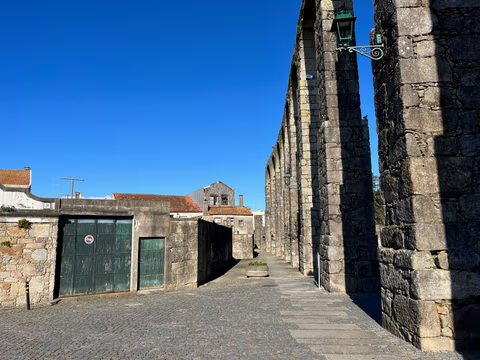
Aqueduct Trail – A path running along the Vila do Conde Aqueduct
From the Coastal Trail to the Camino Central: 12.9 km along the aqueduct from Vila do Conde to São Pedro de Rates. Route, stage, hostels, costs—explained honestly.
Read
