

Camino Aragonés: through the Pyrenees to Puente la Reina
Pilgrim's account of the Camino Aragonés: eight stages from Somport via Jaca, San Juan de la Peña and the Monastery of Leyre to Puente la Reina.

Peter Kirchmann walked the Camino Aragonés from the Somport Pass via Jaca, San Juan de la Peña and the Monastery of Leyre to Puente la Reina, where the route joins the Camino Francés. In his account he describes the eight daily stages through the Pyrenees and Navarre – with tips on getting there, accommodation and detours.
Through the Pyrenees on the Aragonese Way
On foot along the 1,000-year-old Way of St James through the beautiful mountain world of the Pyrenees.
A wonderful and impressive route right through the heart of the Pyrenees. The Camino leads from Somport along the Río Aragón, through medieval villages, past important monasteries and cultural monuments. After 7 days and 164 km, the route joins the Camino Francés at Puente la Reina.
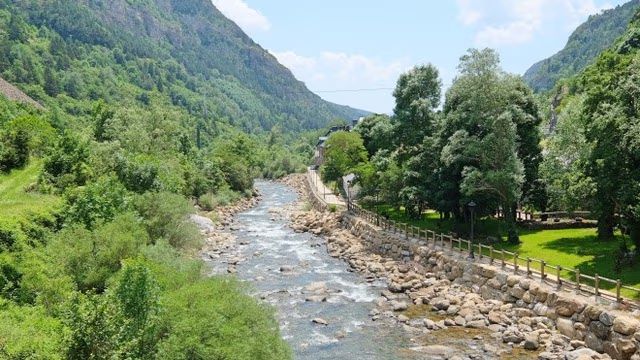
Getting there
Via Spain: fly to Madrid, then take the train via Zaragoza to Jaca. Alternatively, you could fly to Pamplona and take the bus from there to Jaca.
Via France: fly to Pau, take the train to Oloron-Sainte-Marie and then the bus up to the Somport Pass.
Day 1: Somport – Canfranc Pueblo (approx. 13 km)
We took the bus from Jaca up to the top of the Somport Pass in the morning. Up here, at 1,632 m, the ancient Romans once stood and gazed down into the valley. It's considered one of the oldest crossings of the Pyrenees between France and Spain. Incredible to stand up here – a dream come true! What a magnificent view! This is where the Camino Aragonés begins, a very good alternative starting point to Saint-Jean-Pied-de-Port.
We want to ease ourselves into the rhythm of walking, so we planned about 13 km for the first day. The Camino leads through the quiet, lonely mountain landscape. Past the ruins of the ancient Santa Cristina pilgrim hospital, the path heads steadily downhill.
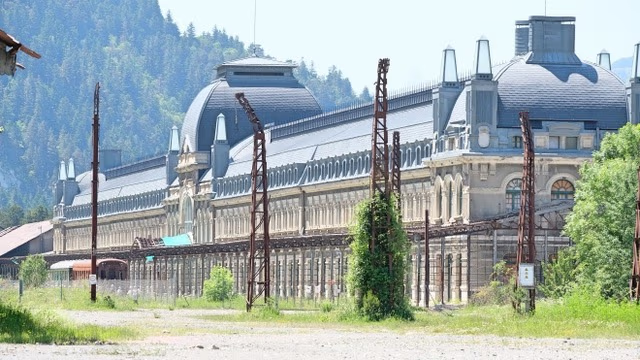
In the middle of the mountains stands one of the largest railway stations in Europe, Canfranc-Estación, built in 1928. Today it has lost its importance and is just the terminus of a regional line. Here we drink our first “café con leche”. Our knees, feet and muscles are slowly getting tired – just a few more kilometres and we've made it.
At last we arrive in the village of Canfranc. It's about time, because now we're really exhausted and all we're looking forward to is a shower, a quick meal and then sleep. We spend the night in the simple pilgrim hostel, which is in “mountain hut style”.
Day 2: Canfranc – Jaca
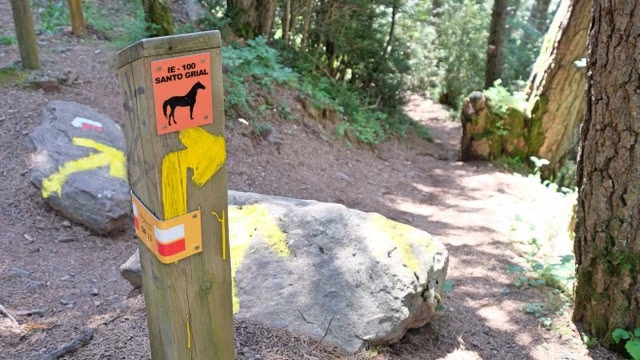
In the morning, the next stage takes us out of the village and past the Trinidad church. Over a typical medieval pilgrim bridge, the path continues along rocky trails to Villanúa. Besides the yellow arrows of the Way of St James, you keep seeing the red-and-white waymarks of the Spanish GR 65-3. Or the newly marked “Santo Grial” route, which links the original Romanesque monuments for all you Knights Templar fans.
Towards evening we arrive in Jaca. This medieval town was the birthplace of the County of Aragon. The cathedral dates from the 11th century. To get to the pilgrim hostel, you go straight through the pedestrian zone. We decide to stay in a cosy little hotel tonight, also right in the centre. Highly recommended for dinner: the tapas bar “La Tasca de Ana” – simply delicious!
Day 3: Jaca – San Juan de la Peña
Today it's a very early start, a good breakfast and plenty of provisions to take along. The sunrise accompanies us out of town. We want to walk the side route to San Juan de la Peña. Note: the only place to stay is the hotel in the new monastery.
The climb over the first “mountain ridge” is a test of patience, and sure enough we get lost. Still, it's absolutely worth it – a great experience of nature. Lush vegetation, oak and pine forests and countless butterflies in the air.
The route takes a lot of time and also physical fitness. In Atarés we were able to refill our water bottles on the village square and have a short siesta. The last few kilometres were once again a test of patience for our dwindling strength.
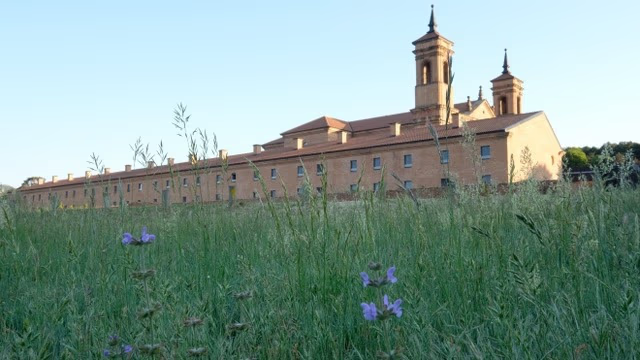
Stunning views of the Pyrenees make up for the hardships. Having finally arrived at the new monastery, we checked into the hotel “Hospedería San Juan de la Peña” and went for dinner.
Day 4: San Juan de la Peña – Arrés
One of the most beautiful stages. Getting up early in the morning and photographing the sunrise at the “Balcón de los Pirineos” was something really special for me. Merging with nature and the majestic view, all alone. After breakfast, the next highlight straight away:
Monasterio de San Juan de la Peña. In a spectacular location beneath an overhanging rock, this is where the Holy Grail was hidden in the early Middle Ages (so they say). A cloister well worth seeing completes the atmosphere of this wonderful place.

The descent that follows, via Santa Cruz de la Serós to Santa Cilia de Jaca, is a long, drawn-out stretch. Still completely fascinating. We took a break here. After that, the path partly runs right alongside the blue-green Río Aragón.
The last section winds up the hillside in endless bends to the medieval village of Arrés, which is well worth seeing. Time seems to have stood still here. We are exhausted and glad to finally see the hostel. From afar we're greeted with a friendly “Hola Peregrinos”. My favourite hostel on the Camino Aragonés. In the evening, don't miss the sunset – the view is worth it.
Day 5: Arrés – Ruesta (approx. 27 km)
Another day through endless landscapes. After a shared breakfast, we set off early with the other pilgrims. Make sure you take enough water – there are few places to refill along the roughly 27 km route. If this stage is too long for you, you can also stay at the pilgrim hostel in Artieda.
The path leads through the heartland of the former Kingdom of Aragon. Wide wheat fields define the scenery.

In Artieda we take a generous lunch break and have a proper meal in the restaurant of the Albergue de Artieda before walking on to Ruesta. Ruesta is a strange place that was abandoned after the dam was built. In the Middle Ages, Ruesta was once an important fortress on the border with Navarre. Today a pilgrim hostel is still running there, and it's the only place to stay.
Day 6: Ruesta – Sangüesa – Monastery of Leyre
From Ruesta, the pilgrim path first climbs the hill before the Camino descends steadily to Undués. Another very scenic stretch, with wide views over the mountains and hills. Again, it's a good idea to carry enough water.
Sangüesa is a medieval town that quickly became a very important town for the Kingdom of Navarre in the 12th century. Normally you would stay here in the pilgrim hostel and continue the next morning to Izco and Monreal. We decide to take a different route. We really want to go to the Monasterio San Salvador de Leyre and the next morning walk through the Foz de Lumbier nature reserve to Izco and Monreal.

The Monasterio de Leyre is truly unique – this detour is worth it! We attended the monks' evening service and in the morning also listened to their Gregorian chant. We took an extra rest day here to enjoy the atmosphere.
From the monastery there's a unique view of the reservoir and the hills opposite. Dinner was very good. We also had a good bottle of red wine and stayed at the hotel “Hospedería de Leyre”.
Day 7: Leyre – Foz de Lumbier – Monreal
Today's route leads through the fantastic Foz de Lumbier nature reserve. First you walk through the tunnel of a former railway line. Once your eyes have adjusted to the brightness after the tunnel, it feels as if you've landed in another world.
Below you can hear the rushing of the river, on whose bank we took a break. Here you can watch countless birds of prey up close as they nest in the rocks and circle over the valley. A truly special natural spectacle.
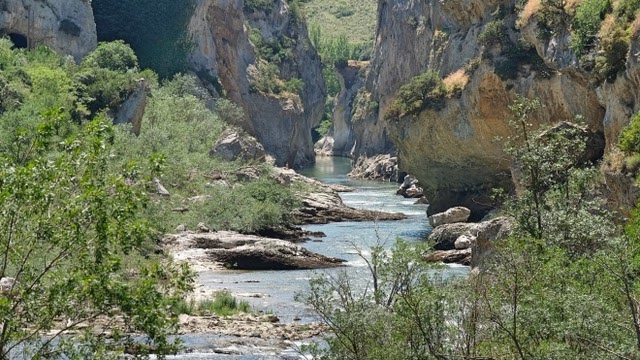
At the other end of the gorge, another tunnel leads back out into the open countryside and, near Izco, back to the main route coming from Sangüesa. You can also stay here in the inconspicuous hostel if the day's walk is getting too long. Otherwise, the last kilometres to Monreal again pass through lonely landscapes. On the left, Monreal's local mountain soon comes into view, until after another hour's walk the first houses finally appear. Exhausted but happy, we spend the night in the simple, clean pilgrim hostel.
Day 8: Monreal – Puente la Reina (30 km)
The last day once again starts with an early wake-up. A long stretch lies ahead of us. No big changes in elevation, but at 30 km still quite a challenge. Very beautiful views and small villages as far as Tiebas, where we were able to take a good break.
In the village of Enériz we had another siesta before admiring, in Eunate, what for me is one of the churches most worth seeing.
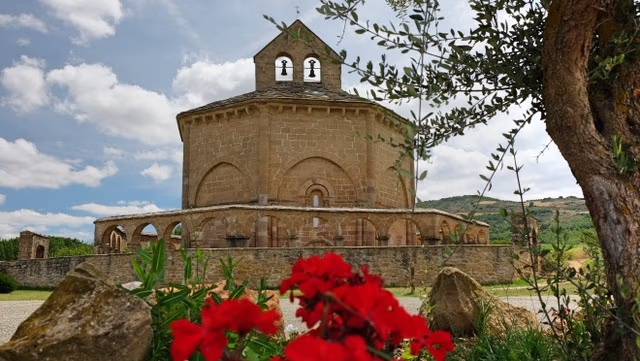
In the middle of a field stands the octagonal “Templar church” of Santa María de Eunate. The last kilometres lead to Puente la Reina, where we stayed in a lovely hotel before heading home the next day.
Conclusion
The Camino Aragonés is still one of the most authentic Ways of St James, and for me Somport is a very good alternative as a starting point. With its modest but sufficient infrastructure, the route has preserved much of the original feeling of my first Camino 25 years ago.
This article was written by Peter Kirchmann.
The route in Camino Ninja
You'll find the Camino Aragonés with stages, map and accommodation in Camino Ninja: Camino Aragonés.