

Stage town on the Camino
Barcelos
Distrito de Braga, Região do Norte, Portugal
- places to stay
- 15
- Caminos
- 2
- Elevation
- 39 m
Barcelos is the town of the rooster that crowed for a pilgrim: over a fourteenth-century bridge you enter the old seat of the counts, where the stone cross of the legend stands in the palace ruins. Every Thursday since 1412 the market has filled the Campo da Feira. An afternoon is enough, because tomorrow brings 33 kilometres.
How long to stay?
An afternoon is enough, and on Thursdays the morning too. The highlights are close together between the bridge and the Campo da Feira: the palace ruins with the rooster cross, the Igreja Matriz, the old pilgrim hospital inside the town hall and the church of the Senhor da Cruz. Two or three hours will do, and at 19:00 there is the pilgrim blessing. There's no real reason for a rest day, especially as a long stage awaits tomorrow. Only if you arrive on a Wednesday should you stroll through the market on Thursday.
Barcelos in Ninja numbers
- Around 189 kilometres separate Barcelos from Santiago, according to Camino Ninja. Porto lies 55 kilometres behind you.
- 614 years old is the Thursday market in 2026. It has been held since 1412, 92 years longer than the miracle of the cross, whose church now stands on its square.
- Around 700 years the bridge over the Cávado has stood, built between 1325 and 1328. Pilgrims still use it every day.
- 19:00 every day: pilgrim mass with pilgrim blessing in the Igreja de Santo António.
- 33 kilometres to Ponte de Lima, according to Camino Ninja.
Arriving: over the pilgrims' bridge
The stage from São Pedro de Rates is just under 17 kilometres according to Camino Ninja; from Vairão it's around 30. After Pedra Furada, at the stone with the hole next to the parish church, the route runs on the EN 306 main road as far as Pereira. Via Carvalhal you reach Barcelinhos on the south bank of the Cávado and the Capela da Senhora da Ponte, with the remains of a foot-washing basin for pilgrims.
Then you cross the medieval bridge. Above the river stand the ruins of the counts' palace and the Igreja Matriz. At the entrance to town is the Casa da Azenha, an old water mill and a support point for pilgrims since 2015. The route climbs between the Solar dos Pinheiros and the Matriz, passes the town hall and runs along the Rua Direita, marked with scallop shells, to the Largo da Porta Nova.
In brief: the town of the counts
In 1298 King Dinis made Barcelos Portugal's first county. Under Count Pedro, his illegitimate son and a poet, work began on the Igreja Matriz. After the Battle of Aljubarrota in 1385 the title went to the commander Nuno Álvares Pereira, and through his daughter to the king's son Afonso, who built the walls and the palace and became the first Duke of Bragança. For pilgrims there was the Hospital do Espírito Santo in the fourteenth century, now part of the town hall. The town calls itself a living museum of the Camino.
A rooster crows for a pilgrim
Barcelos' most famous story is about one of you. A pilgrim from Galicia is on his way to Santiago and spends the night in Barcelinhos. He is accused of a crime and sentenced to the gallows. He is allowed one last audience with the judge and finds him at dinner, in front of a roast rooster. The pilgrim calls on Santiago: as surely as he is innocent, this rooster will crow. The judge laughs at him. But as the pilgrim is hanged, the rooster stands up and crows. The judge rushes to the gallows, and the pilgrim is alive, because the knot was badly tied.
In a second version it's a father and son, and Santiago himself holds the boy up on the gallows. Either way, the pilgrim later returns and has a stone cross put up, for Santiago and the Virgin. That cross, the Cruzeiro do Galo, now stands in the Paço dos Condes. And the rooster on the plate became the colourful Galo de Barcelos, Portugal's unofficial emblem.
In the rooster's footsteps: what to see
Everything is on your route or a few steps from it. We couldn't find reliable opening hours for the churches and the museum.
- Ponte Medieval and Capela da Senhora da Ponte: The Gothic bridge was begun in 1325 and probably finished by 1328, when the chapel at its south end was founded. It is a national monument and a pilgrim route every day. The foot-washing basin in the chapel shows that people here were thinking of pilgrims centuries ago.
- Paço dos Condes and Cruzeiro do Galo: Count Afonso had the palace built above the river in the first half of the fifteenth century. Today only walls and a tall chimney remain, and between them lies the open-air Museu Arqueológico; admission was free when last reported. What you're looking for is the Cruzeiro do Galo, fourteenth century according to the town: on one side you see the rooster, the hanged pilgrim and Santiago, on the other the Virgin and Saint Benedict, the town's patrons. The original behind every colourful rooster in the shops.
- Igreja Matriz: The main church was begun in the second half of the fourteenth century under Count Pedro, whose coat of arms sits on the portal. Inside, six pillars carry three naves under a timber roof, the walls are lined with eighteenth-century blue-and-white azulejos, and the Chapel of the Blessed Sacrament holds a Virgin from the fourteenth. Right next door is the town hall with the Hospital do Espírito Santo, where pilgrims were cared for in the Middle Ages.
- Templo do Senhor Bom Jesus da Cruz: In December 1504, so it is said, a cross of black earth appeared in the ground of the market square. From 1704 this church was built over the spot to plans by João Antunes and consecrated in 1710. Beneath the granite dome, about ten metres across, gilded altars and eighteenth-century azulejos gleam. In early May it is the heart of the Festa das Cruzes, when carpets of petals cover the floor.
- The Thursday market: Since 1412 there has been a market every Thursday on the Campo da Feira, now Campo da República, with pottery, linen, tools, crafts and regional produce. The route passes the square.
- Torre da Porta Nova: The only surviving tower of the town walls was a prison until 1932. Since 2013 it has told the story of the rooster and the town, and from the top you look out over the roofs.
Food and drink
The speciality is, of course, roast rooster. Then come the Minho classics: rojões of pork, papas de sarrabulho, bacalhau, octopus and river lamprey, washed down with Vinho Verde from the Loureiro grape. Pilgrims praise the grill houses serving chicken. For something sweet there's bolo das Cruzes and laranjinhas doces.
Honestly
- Before town you're on the main road. Between Pedra Furada and Pereira there's no alternative to the EN 306. Walk in single file and wear something bright.
- The legend is borrowed. The tale of the innocent hanged man saved by Santiago is already in the Codex Calixtinus in the twelfth century, set in Toulouse. The rooster belonged first to Santo Domingo de la Calzada on the Camino Francés. Barcelos gave the story its own stone cross.
- The town hostel divides opinion. The Albergue Cidade de Barcelos got solid marks until summer 2026, but in October 2026 also sharp criticism for cleanliness and a lack of warmth.
- Tomorrow is long. It's 33 kilometres to Ponte de Lima, with a steep climb to Portela de Tamel, 130 metres of ascent in just over two kilometres.
Where pilgrims sleep
- Albergue da Residência do Senhor do Galo: the municipal hostel in Barcelinhos, down by the Cávado next to the bridge. €10 (as of October 2026), no reservations. Pilgrims praise the location, the fully equipped kitchen, the covered courtyard and the friendly volunteers.
- Albergue de Peregrinos Amigos da Montanha: the modern association hostel in Barcelinhos with one large dormitory, €10 (as of 2026). There are only disposable sheets and no blankets, so bring your sleeping bag.
- Albergue Cidade de Barcelos: the association hostel on Rua Miguel Bombarda, about 400 metres from the old town. 26 places in small rooms, by donation, open all year, with kitchen and courtyard.
Private hostels charge roughly €15 to €29 for a dorm bed. Nine kilometres beyond town, in Portela de Tamel, the municipal Casa da Recoleta costs €5.
Ninja tips
- Blessing at seven: The Capuchins of the Igreja de Santo António celebrate the pilgrim mass with pilgrim blessing every day at 19:00.
- The rooster in the original: Don't buy a rooster until you've seen the Cruzeiro do Galo. Only then will you understand why a pilgrim hangs from a gallows on the cross.
- Look for shells: On the Rua Direita scallop shells show you the way, and on the Casa dos Lopes de Amorim scallop shells are worked into the first-floor windows.
- Split the stage: Many stay in Vitorino dos Piães, just over 21 kilometres on according to Camino Ninja. For a really short day there's the Casa da Recoleta in Portela de Tamel.
- Arrive on a Wednesday: Then on Thursday morning your way out of town takes you right past the market.
- Evenings by the river: If you sleep in Barcelinhos, you can take your dinner down to the riverbank, with a view of the bridge.
Practical tips for pilgrims
- Credencial: The Albergue Cidade de Barcelos and the Albergue do Senhor do Galo issue credenciais.
- Support point: The Casa da Azenha at the entrance to town is the pilgrims' help point, with route information and a place to rest.
- Tourist office: Largo Dr. José Novais, in winter Monday to Friday 9:30 to 17:30, Saturday 10:00 to 17:00, closed Sundays (as of May 2026).
- Shopping: Buy food for the long stage the evening before.
Onward: through wine country to Ponte de Lima
From Barcelos you follow the Camino Portugués Central along the Avenida da Liberdade and across the Campo 5 de Outubro out to Vila Boa. According to Camino Ninja you reach Portela de Tamel, with its chapel and a wayside cross bearing St James symbols, after just over 9 kilometres, Balugães after just over 15, Vitorino dos Piães after just over 21 and Ponte de Lima after 33 kilometres. The gradients are mostly moderate, apart from the climb before Portela de Tamel. A variant leads via Abade de Neiva to a twelfth-century Romanesque church.
What awaits you tomorrow
Tomorrow you cross the Ponte das Tábuas over the Neiva and pass, in Balugães, the Santuário de Nossa Senhora da Aparecida, site of the first documented Marian apparition in Portugal, in 1702. At the end waits Ponte de Lima, one of the capitals of Vinho Verde. There too you enter town over a medieval bridge, and the pilgrim hostel is beyond the bridge.
Deep dive: The rooster, the count and the cross of earth
A long read, in case you want to learn more about Barcelos. About fifteen minutes' reading.
At the foot of the bridge
Before you enter Barcelos, you are standing in Barcelinhos, on the south bank of the Cávado. Here stands a small chapel, the Capela da Senhora da Ponte, the chapel of Our Lady of the Bridge. It was founded in 1328, and it still holds the remains of a basin in which pilgrims' feet were washed. The town calls it a sign of the Jacobean tradition. So if you arrive here today with sore feet, you are not the first person someone wanted to help at this spot.
Then you cross the bridge. According to contemporary documents it was begun in 1325. It was probably finished by 1328, because a chapel at the bridgehead would hardly have made sense if no one was crossing the river. The bridge is Gothic, with pointed granite arches, and some stones still show Gothic lettering. Large wedge-shaped cutwaters protect the piers against the current. The bridge opened up new roads, the town's market grew in importance, and the hill above the river filled with churches and palaces. Ever since, pilgrims bound for Santiago have walked exactly here, just as you are now.
A name from the river
No one knows for certain where the name Barcelos comes from. An old tale speaks of a boat that ferried people across the river before the bridge was built and was supposedly called Barca Coeli, the boat of heaven. Others think of a tribe, the Barcínios. Neither is proven, but the boat of heaven suits a town you enter across a river.
What is certain is that Barcelos is old and became important in the twelfth century. Afonso Henriques, the first king of Portugal, gave the place a charter, and later kings confirmed it. King Manuel the First renewed it on 7 August 1515. And in 1298 King Dinis did something that shaped Barcelos for centuries: he made it Portugal's first county.
The count who wrote family trees
One of the counts of Barcelos was a son of the king, though an illegitimate one. Pedro was born in 1285 and died in 1354. He received large estates from his father, but he became caught up in the civil conflicts of his time, angered the king and went into exile in Castile. When he returned, he withdrew from court and devoted himself to books.
He wrote songs in Galician-Portuguese, the old shared language from which today's Galician and Portuguese both grew. He wrote the Livro de Linhagens, a great book of noble lineages, and he probably compiled a chronicle of Spain from 1344. He is buried far away, in the monastery of São João de Tarouca. But in Barcelos he left a building: under him, in the second half of the fourteenth century, work began on the main church. His coat of arms still sits on the arches of its portal.
The commander and the duke
In 1385 Portugal defeated the Castilians at Aljubarrota, and King João the First rewarded his commander Nuno Álvares Pereira with, among other things, the county of Barcelos. Nuno is still a hero figure in Portugal. Later he entered a Carmelite convent, and in 2009 he was canonised.
His daughter Brites married a son of the king, Afonso. Through this marriage the county passed to him, and Afonso became the first Duke of Bragança, founder of the house that later gave Portugal its kings. Afonso gave Barcelos a town wall and a palace. The Paço dos Condes was probably built in the first half of the fifteenth century, high above the river, right next to the main church. A museum guide from 1935 notes French influence in the tall windows and chimneys. When the draughtsman Duarte d'Armas drew Portugal's border fortresses for the king around 1507, the palace stood complete.
The dukes, however, did not stay. They moved to Guimarães, to Chaves, to the Alentejo, and the palace stood empty. The earthquake of 1755 badly damaged it, and according to the museum guide of 1935 it collapsed in January 1800. What remains are walls, window openings and a single tall chimney rising into the sky. The Archaeological Museum moved into this ruin. It has no roof, and that is exactly what makes it special: gravestones, coats of arms, Romanesque capitals and wayside crosses stand under the open sky, like a stone memory of the county.
The counts' church
Next to the ruin stands the Igreja Matriz, dedicated to the Assumption of Mary. When exactly it was built is disputed among specialists. Some place it in the fourteenth century, others in the fifteenth. The town itself says it was begun in the second half of the fourteenth century under Count Pedro, and presents it as a transition from Romanesque to Gothic.
Under King Afonso the Fifth, in the fifteenth century, it became a collegiate church, with its own chapter of clergy. That lasted into the nineteenth century. When the collegiate chapter ended, its library vanished too, and no one knows where it went.
The facade is plain. A pointed portal with capitals on which small scenes are told, above it a Gothic rose window, beside it a sturdy bell tower. Inside, three naves open up under a timber roof, carried by six pillars. The walls are lined with blue-and-white tiles from an eighteenth-century Lisbon workshop. The chancel was remodelled in the early sixteenth century, as an inscription records. In the Chapel of the Blessed Sacrament you'll find two figures of the Virgin, one Baroque and one from the fourteenth century. The older one is as old as the bridge you came across. The church's present appearance owes a great deal to a restoration in the 1950s.
Opposite stands the Solar dos Pinheiros, a noble house from 1448 with two tall towers, one of the few surviving medieval residences in Portugal. The Pinheiro family is buried in a chapel of the Matriz. In front of the church stands the pillory from the late fifteenth century. So within a few metres all the powers of the old town sit side by side: the duke, the church, the nobility and the court.
A hospital for pilgrims
A few steps further on stands the town hall. Inside it is a fourteenth-century building, the Hospital do Espírito Santo, the Hospital of the Holy Spirit. It served as a station for pilgrims on their way to Santiago, and next to it stood the chapel of Santa Maria. The Gothic portal of the hospital chapel was later moved to the Capela de São Francisco, a sixteenth-century church. So at least the doorway of the medieval pilgrim hospital has remained visible.
The town remembers two pilgrims who passed through. In the fourteenth century it was Queen Isabel, the saint, widow of King Dinis. She made a pilgrimage to Santiago after her husband's death in 1325, the same year work began on the bridge here. In the sixteenth century a bishop of Jerusalem came through Barcelos, whose journey was recorded by a priest named Confalonieri. Beyond these mentions, we have found nothing more about the two visits.
The legend of the rooster
Now to the rooster. The story is told in several versions, and a Portuguese encyclopaedia gives two of them.
In the first, a pilgrim from Galicia is on his way to Santiago. He spends the night at a hostel in Barcelinhos, on the other side of the bridge. A crime has been committed in Barcelos, the culprit was never found, and now someone points at the stranger. The pilgrim is sentenced to the gallows. Before the execution he asks to speak to the judge. The judge is just sitting down to dinner and about to carve a roast rooster. The pilgrim insists on his innocence and asks for help from Santiago, to whom he has entrusted himself. As surely as he is innocent, he says, this rooster will crow before the day is over. And the rooster crows. When they run to the gallows, the pilgrim is still alive, the rope hanging loose around his neck, and he is set free.
In the second version there are two pilgrims from Galicia, father and son. An innkeeper's wife falsely accuses the boy of theft, and he is sentenced to the gallows. The father pleads with the judge. The judge, annoyed at being disturbed at his meal, says: if this roast rooster crows three times, the boy is innocent. The rooster crows. The judge sets off running but arrives too late, the boy is already hanging. Yet he is not dead, for Santiago has held him up.
In both versions the rescued pilgrim later returns to Barcelos and has a stone cross erected, a monument to Santiago and the Virgin Mary. And this is where it gets exciting, because this cross really exists.
The cross at the gallows site
The Cruzeiro do Galo now stands in the Archaeological Museum, in the ruins of the Paço dos Condes. It is said to have been put up on the spot where the gallows of Barcelos once stood. The town dates it to the fourteenth century. It is a work of folk art, with carved scenes. On one side you see the rooster, the hanged pilgrim and Santiago. On the other side stand the Virgin and Saint Benedict, the patron saints of the town.
A local historian wrote that, in the judgement of weighty experts, this cross was the origin of the rooster of Barcelos. If that's true, the cross with the pilgrim on the gallows and the rooster came first, and from this image grew the figure that now stands in every souvenir shop in Portugal. When you stand in front of the stone, you are looking at the beginning of a story that conquered a whole country.
Where the story really comes from
The honest question is: is this a story from Barcelos? The answer is: only partly.
The tale of the innocent hanged pilgrim whom Santiago keeps alive is very old. It appears in the Codex Calixtinus, the great pilgrims' book from the middle of the twelfth century. There it is German pilgrims, father and son, and the story is set in Toulouse; the text itself places it in the year 1090. The Spanish historian Tomás Ramírez Pascual has argued that a manuscript from Santo Domingo de la Calzada is probably even older, from the first quarter of the twelfth century. There the same story appears twice, once with German pilgrims in Toulouse and once with an English boy hanged in Triacastela.
There is no rooster yet in these early versions. It only appears around 1300, and in Santo Domingo de la Calzada on the Camino Francés. There they tell how the judge said the boy was as alive as the roast rooster and hen on his plate, whereupon both flew up. A first written record is a papal bull from Avignon of 1350, which promises an indulgence to all who venerate the rooster and the hen in the cathedral of Santo Domingo. If you have already walked the Camino Francés, you may have heard the live rooster crowing in its coop in the cathedral there.
Ramírez Pascual describes how such miracles travelled from shrine to shrine and were each attributed to the local saint. The Barcelos story belongs to this family. When it was first told here, we don't know. The town places the cross in the fourteenth century, a language-learning site gives the sixteenth century for the legend, and neither is proven. Tellers don't agree on Santiago's role either. One English-language pilgrim guide says that in Barcelos the apostle doesn't explicitly intervene at all, unlike in Spain. Yet on the cross itself Santiago stands beside the hanged man.
Perhaps this is the loveliest answer: pilgrims brought this story with them. They carried it from Toulouse over the Pyrenees to Santo Domingo, and from there, by some route or other, all the way to the Cávado. Barcelos kept it and gave it a face of its own. Seen that way, the rooster of Barcelos is itself a pilgrim.
How the rooster got its colours
The black rooster with red hearts, colourful dots and a red comb is much younger than the cross. Barcelos has long been a centre of pottery. In the villages of Galegos Santa Maria and Galegos São Martinho, in Areias and other places in the municipality, clay figures are made, the bonecos de Barcelos, some painted, some glazed. The Museu de Olaria in town holds around ten thousand pieces. The best known of these artists was Rosa Ramalho, and the town was still lending out a figure of hers in 2026.
Who first shaped the rooster in its present form is uncertain. A travel blog names a craftsman called Domingos Côto in the twentieth century, with the cautious addition supposedly. What is documented is that in 1935 the rooster represented Portugal at an exhibition of Portuguese folk art in Geneva. In the years of the Estado Novo, the dictatorship, the state promoted folk art as an image of the country, and the rooster became a symbol of Portugal. Today it stands for honesty, justice and good luck, and many families have one at home. Since 2013 the tower of the Porta Nova, the last remnant of the town wall and a prison until 1932, has told the story of the rooster and the town as an interpretation centre.
There is a certain irony in this. A prison tower tells of an innocent man who was almost executed. And a dictatorship turned a story about a wrongful verdict into a national symbol.
A cross of black earth
The second great story of Barcelos is also a miracle, but one the town tells about itself. In December 1504 a cross of black earth appeared in the ground of the market square, the Campo da Feira. No one could explain it. A small chapel was soon built over it.
Two hundred years later, in 1704, work began on the same square on a church to plans by João Antunes. He came from Braga, had become royal architect in 1699, and his main work is the church of Santa Engrácia in Lisbon, today the National Pantheon. In 1710 the Templo do Senhor Bom Jesus da Cruz was consecrated. It is a centrally planned building of granite and white lime, very much in the style of the north, with a heavy granite dome about ten metres across. Inside gleam gilded altars, and on one of them stands the image of the Senhor da Cruz from the sixteenth century. The eighteenth-century tile pictures were designed by João Neto, a tile painter from Lisbon.
The days of the crosses in May
The cross of 1504 gave rise to one of the most important festivals in the region, the Festa das Cruzes, the Festival of the Crosses. It is celebrated every year in early May over several days, and 3 May is the municipal holiday. Then carpets of petals cover the floor of the church, and the festival is opened from the balcony of the Templo.
In 2026 it ran from 30 April to 3 May. There was a battle of flowers, concerts by the river and the procession of the Finding of the Holy Cross, the religious heart of the festival. Galician bagpipers paraded through the streets. And the fireworks are called fogo de Santiago, the fire of Santiago, in 2026 for the first time with two hundred drones. The municipality calls the festival the great pilgrimage of the Minho. If you are here in early May, you won't miss it.
Thursdays since 1412
Next to the Templo lies the square where the cross appeared, and every Thursday since 1412 there has been a market on it. It is older than the miracle, it has outlived the dukes' palace, and it is one of the oldest open-air markets in Portugal. Here you'll find pottery, linen, livestock, tools, furniture and clothing, crafts and regional produce.
For pilgrims the market is a stroke of luck if it falls on the right day. The route passes the square, so you can look as you walk and carry on. In 2026 the municipality halved the traders' stall fees.
The pilgrims return
Today the town has once again adapted to pilgrims. In 1934 Capuchin friars took over the Igreja de Santo António, and there, every evening at 19:00, there is the pilgrim mass with the pilgrim blessing. Since 2015 the old water mill Casa da Azenha at the entrance to town has been a support point for pilgrims. The hostels of Barcelinhos stand exactly where the legend has its pilgrim spend the night, at the foot of the bridge. On the Rua Direita scallop shells point the way through the old town, and on one house scallop shells are worked into the windows. In December 2025 there was even a Christmas dinner for pilgrims, the Ceia de Natal do Peregrino.
What Barcelos gives you
Barcelos is not a big town, and you'll probably stay only one night. But it tells you a story that concerns you. A stranger with a backpack arrives in a town that doesn't know him, and people are quick to judge. He has no proof, no one to speak for him, only his word. And then a rooster crows.
Whether or not you believe in miracles, the legend says something true about being on the road. Whoever goes on pilgrimage is always a stranger, dependent on the trust of others. Barcelos turned that experience into a stone cross, a festival and a symbol a whole country knows. When you walk out across the market square tomorrow morning, where more than five hundred years ago a cross of earth appeared, perhaps take just this with you: that you listen to the stranger before you judge him.
Where to stay in Barcelos
The places pilgrims rate highest in Barcelos come first.
- Top #1
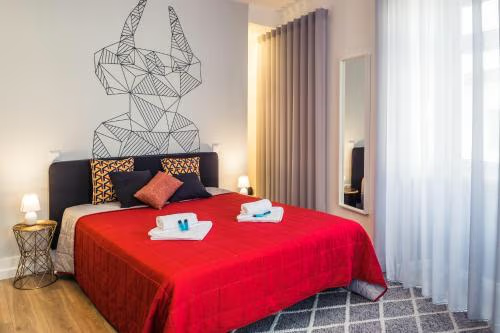 OpenReservations accepted
In Barcelos Hostel & Guest House
- Top #2
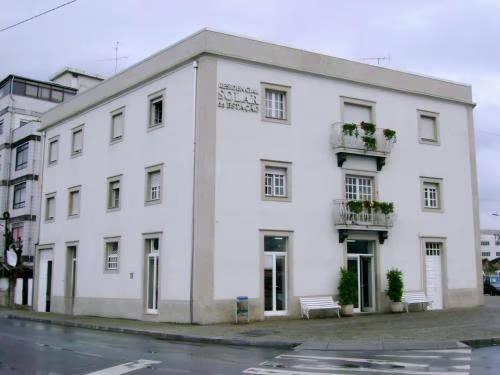 OpenReservations accepted
Residencial Solar da Estação
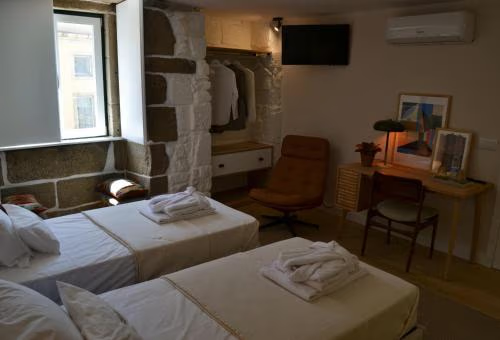
- Top #3
 OpenReservations accepted
Residencial Kuarenta&Um


Services in Barcelos
What you can find in town before the next stage.
- ATM
- Café
- Shop
- Medical clinic
- Pharmacy
- Fountain
- Post office
- Train station
- Bus station
- Restaurant
Source: © OpenStreetMap contributors · updated January 2026