

Town on the Camino
Cariño
Spain
- places to stay
- 4
- Camino
- 1
- Elevation
- 14 m
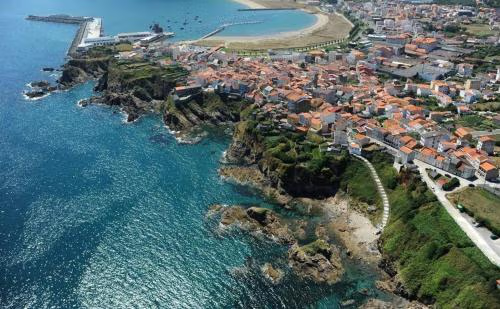
Cariño is the harbour at the foot of the Serra da Capelada: a fishing town with colourful houses in the O Campo quarter, a fish auction in the afternoon and canning factories that once made the town big. Right behind it waits Cabo Ortegal, and tomorrow you climb the highest cliffs of the tour. Today is a harbour evening.
How long to stay?
An afternoon is enough. Cariño is a stage town, not a destination in itself, and the best of the place lies on tomorrow's way anyway: you reach Cabo Ortegal the next morning after a few kilometres. Use the afternoon for a walk through the old fishermen's quarter, the harbour and the Praia da Concha. Sleeping early is worth it, because the stage over the Serra da Capelada to Santo André de Teixido is the hardest of this section.
Cariño in Ninja numbers
- 165.0 kilometres lie between Ribadeo and Cariño, according to Camino Ninja, and there are still 107.0 kilometres to Ferrol.
- 17.6 kilometres is the distance from Cuiña near Ortigueira to here, according to Camino Ninja, and 20.4 kilometres to Santo André de Teixido.
- 4.4 kilometres beyond the town stands the lighthouse at Cabo Ortegal, according to Camino Ninja, right on the way.
- 3,661 people lived in the municipality of Cariño on 1 January 2025, which has been independent only since 1988.
Arriving: on the shore of the ría
From Ortigueira the way leads north along the shore of the Ría de Ortigueira. On the way, above the water, lie the remains of the Castelo do Casón, an old watchtower, about 1.8 kilometres off the path. Then the bay of Cariño opens up with harbour, breakwater and town beach. The ría between Cariño and Ortigueira is a bird protection area, a Ramsar wetland and part of Natura 2000; in winter waterbirds gather here.
In brief: sardines, salt and Catalans
The name Cariño already appears in documents of the 10th century. For a long time there was little more here than a small harbour with a chapel of Saint Bartholomew, a few huts for foreign sailors and the first salt pans. In the 19th century Catalan entrepreneurs came, and with them the factories: at the start of the century there were two sardine salting works, around 1925 about twelve businesses for canned goods, marinades and salted fish. The municipality grew from 679 inhabitants in the middle of the 19th century to over 2,000 around 1925. The big houses of the factory owners still stand, and canning is still done by hand today. Politically Cariño long belonged to Ortigueira; only in 1988 did it become a municipality of its own.
Harbour and cape: what to see
Cariño is not a place of monuments but of the sea. The most important points lie in the town and on your way tomorrow.
- Barrio de O Campo: The old fishermen's quarter at the harbour is the heart of Cariño. Sailors' houses up to four storeys high in strong colours, balconies full of geraniums, narrow lanes and small squares stretch to the rocks between the Praia da Concha and the Punta Gabeira. The town began here, around the vanished chapel of Saint Bartholomew. Just walk through without a plan, it is small enough.
- Igrexa de San Bartolomeu: The neo-Gothic parish church in the centre was finished in 1923, a little higher up than the old chapel at the harbour. Its bell has a story: it comes from the steamer Miramar, which ran aground on the cliffs of Cabo Ortegal at the start of the 20th century. When it rings, you hear a piece of shipwreck. We found no opening times.
- Harbour and fish auction: From Monday to Friday the catch is auctioned in the harbour in the afternoon. For you as a pilgrim that is the right moment to watch how the town lives. In the evening people fish for squid at the harbour. On Fridays there is a weekly market on the Praza Roja.
- Praia da Concha: The biggest beach of the municipality lies in the middle of the town, about 750 metres of fine white sand with showers. A promenade with wooden walkways connects it with the Praia da Basteira. After a long day along the ría this is the place to put your feet in the water.
- Ermida de San Xiao do Trebo: A small white chapel with a bell gable, a hórreo and the spring Fonte dos Cabritos, built with stones from a Roman and early medieval settlement. According to Camino Ninja it lies 2.6 kilometres beyond the town, right on the way. On the last Saturday in January all of Cariño goes up to the romería.
- Cabo Ortegal: The red-and-white lighthouse of 1984 stands 4.4 kilometres beyond Cariño, right on the way. In front of it the rocks of Os Aguillóns rise from the sea, and according to local description the Cantabrian Sea ends here and the Atlantic begins. The rock at the cape is among the oldest of the Iberian Peninsula, more than 1.16 billion years old. Plan time for it tomorrow morning, not this evening with tired legs.
Food and drink
Cariño eats what comes from the harbour. Typical are Sardiña lañada, salted and dried sardines, and Caldeirada de raia, a stew with ray; the town dedicates a festival of its own to both at the end of July. Add fish and seafood from the ría and veal from the area. Before carnival people bake Chaolas, a sweet pastry. Bars and restaurants are around the harbour and in the centre. You should not skip a supermarket this evening: between Cariño and Teixido, according to Camino Ninja, there is no village on the way.
Honestly
- There is no pilgrim hostel here. You sleep in a hostal, pension or hotel, so at single-room prices.
- The town is plain. If you expect a historic centre with stone palaces, you will be disappointed. Cariño is a working harbour with a breakwater; its charm lies in the fishermen's quarter and at the cape.
- The calm before the climb counts for more than any programme. Tomorrow you go from sea level to the cliffs of Vixía Herbeira, over 600 metres high.
Where pilgrims sleep
There is no pilgrim hostel in Cariño. You stay in hostales, pensions and hotels in the town. The next accommodation ahead is in Santo André de Teixido, 20.4 kilometres away, and there the choice is very small. So don't book in Cariño too late, and check in the app beforehand what is open.
Ninja tips
- Go to the harbour in the afternoon. The fish auction runs on weekday afternoons, after which the town goes quiet.
- Buy provisions today for the whole day. Between Cariño and Teixido, according to Camino Ninja, there is no village on the way, and Teixido is a pilgrimage village with souvenir shops.
- Start early for Cabo Ortegal. Morning light over Os Aguillóns is the finest start to this stage.
- Watch for animals at the cape. Gulls, shags and storm petrels breed on the cliffs; in spring and autumn migratory birds pass by, and with luck dolphins too.
- Mind the wind. On the ridges of the Capelada a dense cloud often hangs in a north-east wind, taking away the view even on sunny days.
Practical tips for pilgrims
- Festivals: Romería San Xiao do Trebo on the last Saturday in January; Carmen on 15 and 16 July with a boat procession on 16 July (public holiday); San Bartolomeu from 23 to 26 August, public holiday on 24 August. On these days beds become scarce.
- The carnival of Cariño is said to be the biggest in the north of Galicia.
- The tourist office is open only in summer.
Onward: over the Capelada to Santo André de Teixido
Beyond Cariño you first go to the chapel of San Xiao do Trebo and to Cabo Ortegal, then the way climbs up into the Serra da Capelada. It is 20.4 kilometres to Santo André de Teixido, according to Camino Ninja, on the Camino del Mar.
What awaits you tomorrow
The most spectacular stage of the whole way. After Cabo Ortegal you climb to the ridge of the Capelada, where half-wild horses and cattle graze. About 15 kilometres beyond Cariño the way passes the Garita da Herbeira, a stone lookout hut above the Vixía Herbeira, whose cliffs, at a good 600 metres, are among the highest in Europe. Then it goes past the memorial to Flight 777 and down to Santo André de Teixido, the great pilgrimage site of Galicia.
Deep dive: A harbour at the end of the Cantabrian Sea
A short read, in case you want to learn more about Cariño. About one minute's reading.
A chapel, a few huts
At the beginning stood a small chapel of Saint Bartholomew right at the harbour. Around it sailors who came to fish built huts for their nets, and next to it the first basins appeared in which sardines were salted. In the eighteenth century the chapel was well appointed, a hundred years later it fell into disrepair. In the twenties of the last century it became the fishermen's store, and later it disappeared altogether.
The factories
The nineteenth century brought entrepreneurs from Catalonia, and with them industry. From two salting works there were, around the year 1925, about a dozen factories for canned goods and salted fish. A heavy storm in 1887 damaged some of them, but the town kept growing, from a few hundred people to over two thousand. The big houses of the manufacturers still tell of it today.
A bell from the sea
When the new parish church was finished in 1923, it received a special bell. It comes from the steamer Miramar, which had run aground on the cliffs of Cabo Ortegal at the beginning of the century. A place that lives from the sea rings its masses with a piece the sea left it.
Where to stay in Cariño
Places to stay in Cariño.
 Open
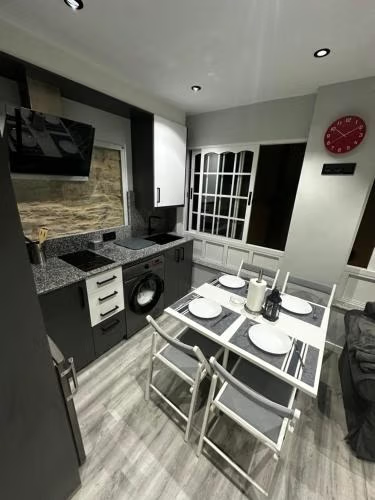
Pensión Restaurante Cantábrico
 OpenReservations accepted
Hostal Restaurante La Cepa
 OpenReservations accepted
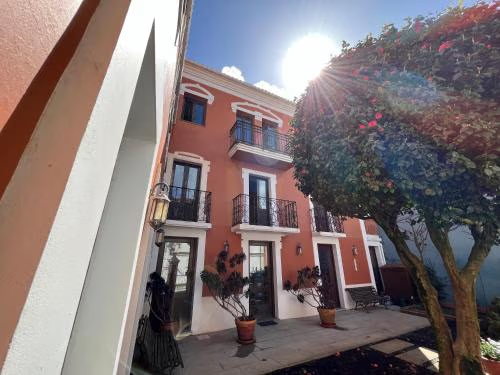
As Cañotas
Town 13 of 17