

Town on the Camino
Cee
A Coruña, Galicia, Spain
- places to stay
- 11
- Camino
- 1
- Elevation
- 6 m
Cee is where, after three stages inland, you finally reach the sea: beyond Hospital you see the Atlantic for the first time at the Cruceiro da Armada, then the way drops steeply to the Ría. It is still 12.9 kilometers to Fisterra. There is no public pilgrim hostel, but plenty of private ones.
How long to stay?
One evening is enough. Cee is a lively small town on the Ría, not a museum town. You arrive after a long, lonely stage, head for the promenade, eat fish and sleep. If you are here on a Sunday, you get the weekly market as a bonus. A rest day is not worth it, especially with Fisterra so close.
Cee in Ninja numbers
- 74.4 kilometers lie behind you since Santiago, on the Camino a Fisterra.
- 14.3 kilometers from Hospital, where the ways to Fisterra and Muxía part, to here, with 518 meters of descent.
- Around 250 meters of altitude you lose on the last three kilometers before the town. Your knees will feel it.
- 12.9 kilometers to Fisterra, a good 16 to the end of the route at the cape.
Arriving: the sea from above
Beyond Hospital the way climbs onto an open, empty plateau. You pass the 18th-century chapel of Nosa Señora das Neves, which has a spring, and the chapel of San Pedro Mártir. Just beyond, a 50-meter path branches off to the right to the Cruceiro da Armada: this is where medieval pilgrims first saw the sea, and you see it too, with Monte Pindo, the Ría de Corcubión and Cape Fisterra. Then it goes down short and steep, first over rock, then on asphalt, all the way to the Ría.
In brief: a village that got a school
In the 12th century Cee was a small farming village. Today it is the largest municipality in the area and has everything you need. One man shaped the town: Fernando Blanco de Lema, a philanthropist who founded two schools at the end of the 19th century. The Instituto Fernando Blanco still stands, surrounded by a botanical garden, and since 2001 the foundation has shown the old instruments from the physics and biology classrooms in the former girls' school. The parish church of Santa María da Xunqueira dates from the 16th century; French troops damaged it in the War of Independence, and it was rebuilt in the 19th century. According to legend the Virgin appeared here in the reeds, Galician xunqueira, hence the name.
The first sea: what to see
The most important sight comes before you arrive. In the town itself there is little, but it is good.
- Cruceiro da Armada: The stone cross at the edge of the plateau, 50 meters off the path, is the point of the first view of the sea. After days among woods and pastures, the whole bay suddenly lies below you. Take the detour, it costs two minutes.
- Capela de San Pedro Mártir: The chapel on the plateau above Cee was still home to a hermit in 1741. Next to it stands a spring whose water, according to tradition, helps against rheumatism and sore feet. After 14 kilometers from Hospital, this is not a bad moment to try it.
- Igrexa de Santa María da Xunqueira: The Gothic of seafarers, plain, with a main chapel and vault from the building period in the 16th century. What counts for you is the story of the reeds that gave the town its Virgin. We did not find opening hours.
- Praia da Concha and the promenade: The town beach lies in the middle of the town on the waterfront promenade. This is where you sit down after the descent and look out over the Ría, which you cross tomorrow on the way to Corcubión.
- Museo Fundación Fernando Blanco: The old girls' school with 19th-century teaching aids, musical instruments and art. We did not find opening hours; ask at the tourist office.
Food and drink
Cee lives from the sea: octopus, caldeiradas with ray, conger eel or haddock, grilled sardines. Every Sunday there is a market in the center with fruit, vegetables, fish and bread. In summer, at the end of August, the town celebrates a cockle festival.
Honestly
- There is no public hostel. All hostels in Cee are private. The nearest donation-based hostel lies beyond Corcubión, a good four kilometers further on.
- The descent is hard. Around 250 meters of altitude over three kilometers, first stony, then asphalt. Careful when wet.
- Before that, nothing for a long time. Between Hospital and Cee we found no supplies except the spring at the chapel of Nosa Señora das Neves.
Where pilgrims sleep
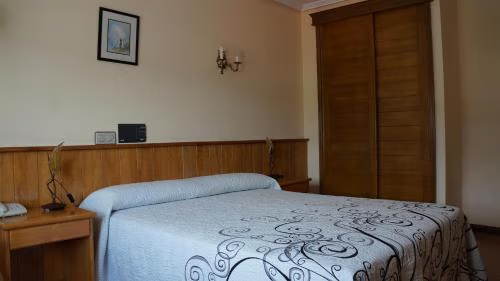
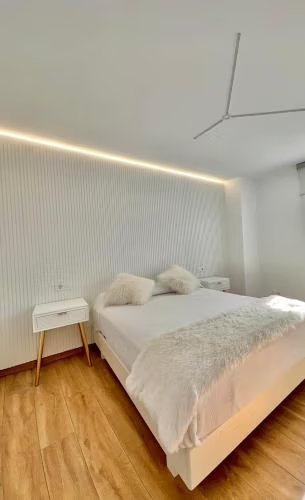
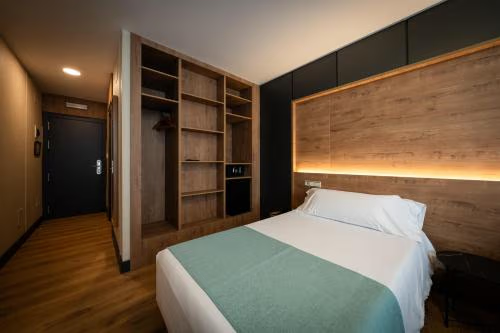
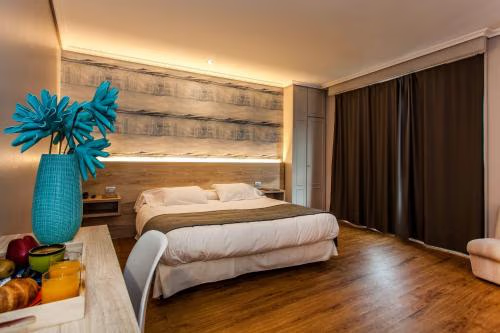
There is no hostel run by the Xunta, the municipality or the parish in Cee. Instead you can choose between several private hostels (as of October 2026): In the old town, right on the way, are A Casa da Fonte (€16) and Tequerón (€17). At the entrance to the town you find Moreira (€17), Talieiro (€16–18) and O Bordón with 24 places in one dormitory from €15, open all year, with a kitchen and a free transfer to the center for dinner. Booking is possible at the private houses.
Ninja tips
- Fill your bottle in Hospital. After that there is no confirmed supply for 14 kilometers, only the spring at the chapel of Nosa Señora das Neves.
- Walk the 50 meters to the Cruceiro da Armada. The turn-off is just past San Pedro Mártir on the right, is a dead end and is easy to miss.
- Poles for the descent. The last three kilometers are the steepest of the whole way to the sea.
- Sleep in the old town if you want to set off early. The houses at the entrance to the town are almost a kilometer before the center.
- Sunday is market day. Then you can buy fresh supplies here for the way to Fisterra.
Practical tips for pilgrims
- Stamp: in the hostels.
- Bus: Monbús runs daily to Santiago, Autocares Vázquez to A Coruña. If you end your way here, it is easy to get back from Cee.
- Tourist office: Praza Domingo Antonio de Andrade, tel. 981 745 100.
- Festivals: On 25 and 26 July Cee celebrates the Feast of the Apostle, and from 13 to 16 August its Virxe da Xunqueira.
Onward: via Corcubión to Fisterra
You walk along the Ría to Corcubión (km 76.9), 2.5 kilometers, almost flat. From there the way climbs over steps and paving to O Vilar; the crossing of the AC-445 road there is dangerous, three lanes without a crossing. After that come roadsides with traffic, the beaches of Estorde and Sardiñeiro, a forest path with the first view of Fisterra and finally the long beach of Langosteira. To Fisterra it is 12.9 kilometers with 315 meters of ascent and 308 meters of descent; the highest point, at 114 meters, lies beyond Corcubión.
What awaits you tomorrow
Corcubión, 2.5 kilometers beyond Cee: the smallest town in the province, a protected old town and a Gothic church where the way begins right away. Beyond it Fisterra, the end of the world.
Deep dive: Where the land tips into the sea
A short read, in case you want to learn more about Cee. About three minutes' reading.
The moment at the cross
For three stages since Santiago you have walked through the interior of Galicia, through woods, pastures and villages, over the Xallas valley and across an empty, windy plateau. Then at the edge of this plateau stands a stone cross, the Cruceiro da Armada. From here the pilgrims of the Middle Ages saw the sea for the first time. Below you lie the bay, the mountain Pindo, the Ría, and far out the cape you are walking toward.
The hermit and the spring
Just before it stands the chapel of Saint Peter Martyr. In the year 1741 a hermit still lived there. Next to the chapel a spring flows, and the people of the area say its water helps against rheumatism and against sore feet. Whether it is true, nobody can say. But it is lovely that on the very last slope before the sea there is a spring for feet.
The town on the water
Below lies Cee, in the twelfth century a farming village, today the largest municipality in the area. The church of Our Lady of the Reeds dates from the sixteenth century. French soldiers damaged it in the war against Napoleon, and the inhabitants rebuilt it in the nineteenth century. At the end of that century a rich son of the town, Fernando Blanco de Lema, gave Cee two schools. In the girls' school stand the instruments with which children here once learned physics and biology.
What Cee gives you
Cee is not a stop you photograph. It is the place where your way changes direction, from land to water. When this text was written, in autumn 2026, there was no public pilgrim hostel here, but every evening people with backpacks on the promenade, looking out at the Ría. Tomorrow you will be at the end of the world. Tonight you are at the sea for the first time.
Where to stay in Cee
The places pilgrims rate highest in Cee come first.
- Top #1
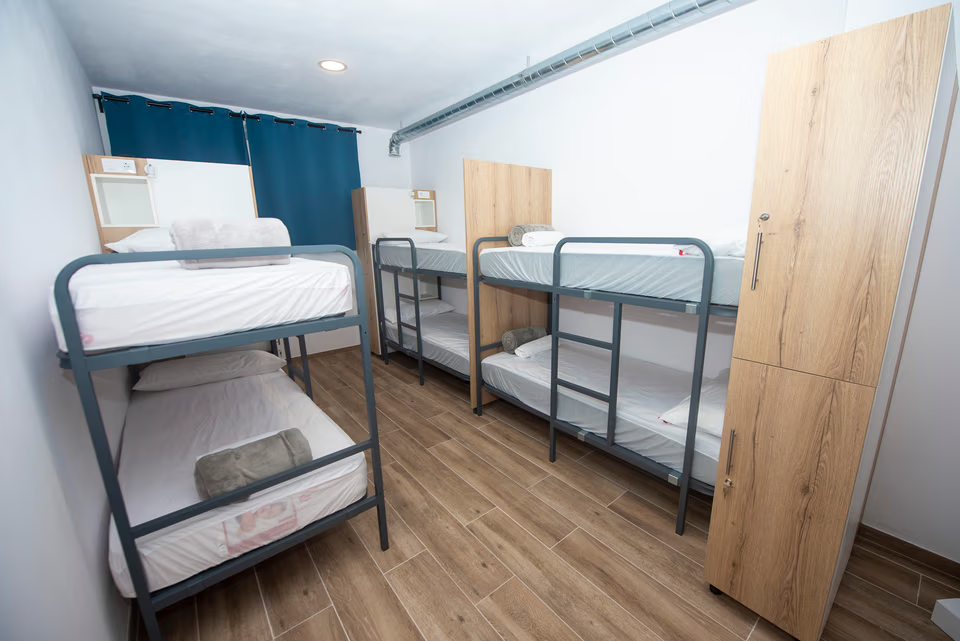 OpenReservations accepted
Albergue Talieiro
- Top #2
 ClosedReservations accepted
Albergue Moreira
- Top #3
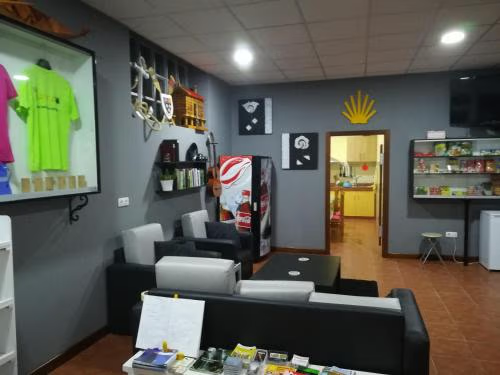 OpenReservations accepted
Albergue O Bordón


Services in Cee
What you can find in town before the next stage.
- ATM
- Café
- Shop
- Tobacco
- Medical clinic
- Pharmacy
- Fountain
- Post office
- Train station
- Bus station
- Airport
- Restaurant
Source: © OpenStreetMap contributors · updated November 2025
Town 5 of 7