

Town on the Camino
Celorico da Beira
Portugal
- places to stay
- 5
- Camino
- 1
- Elevation
- 481 m
Celorico da Beira lives off its stores: according to legend, a trout saved the besieged castle, and today the town is the capital of Serra da Estrela cheese. After 23.9 kilometres of descent from Guarda, an afternoon is enough for the castle, the church and the cheese, and then it is another 18.8 kilometres to Trancoso.
How long to stay?
An afternoon is enough. You arrive after 23.9 kilometres from Guarda, most of them downhill, and still have time to climb the steps up to the castle, walk the walls and look into the main church. That leaves the evening for the cheese Celorico is known for. There is nothing more to see in this small town that would justify a rest day. Tomorrow the last stage of the Via Nascente awaits you, only 18.8 kilometres to Trancoso.
Celorico da Beira in Ninja numbers
- 23.9 kilometres is the distance from Guarda to here, according to Camino Ninja. According to a pilgrim website, you lose a good 500 metres of height on the way, from about 1,025 down to about 485 metres.
- 18.8 kilometres remain to Trancoso. Then the Via Nascente is over, after 661.2 kilometres since Tavira.
- 1923 is the year the castle was declared a national monument. In 1835 the municipality had still considered pulling it down.
- Since 1766 Celorico has celebrated its town patron saint Santa Eufémia, around 16 September.
Arriving: down to the Mondego
The day begins in Guarda with the long descent along a Roman road to Ramalhosa. After that you see the Mondego, pass the river beach of Aldeia Viçosa and carry on via Rapa, Vale de Azares and Aldeia da Serra. Celorico lies at the foot of the Serra da Estrela, and almost half of the municipality belongs to the nature park. When the town appears with its castle, you have seen it all in no time: around the castle hill crowds the old Santa Maria quarter with Manueline windows and houses from the 16th century. Compared with yesterday's mountain air, you are back down here, at around 500 metres.
In brief: a castle on the edge of the Beira
The castle hill was probably already a settlement of the Lusitanians and later of the Romans. Afonso Henriques took it from the Moors for good in the 12th century. Under him and Sancho I the castle got its present form: Trancoso, Celorico and Linhares da Beira then formed a line between the Christian north and the Muslim south. In 1189 troops from León besieged the castle. The garrison from Linhares came to help by night and fell on the besiegers from behind, the defenders broke out at the same moment, and the Leonese withdrew.
In 1385 the garrisons of Celorico, Trancoso and Linhares together beat the Castilians in the Battle of Trancoso. In 1762 Spanish troops took the castle almost without resistance, and in 1810 and 1811 it served the French as headquarters, until the Anglo-Portuguese army under Arthur Wellesley drove them out. After that it fell into decay. Of the town wall that once protected the narrow lanes, only the clock tower is left.
The trout in the castle courtyard
The story everyone here knows is set in the thirteenth-century war between brothers, King Sancho II and his brother Afonso III. Afonso besieged the castle, but its commander Fernão Rodrigues Pacheco stayed loyal to the deposed Sancho and would not hand it over. The supplies ran out. Then, so the legend goes, an eagle flew over from the Mondego and dropped a trout into the castle courtyard. Pacheco saw a sign from heaven in it. He had the fish prepared with the last of the flour and sent it to Afonso in his camp, with the message that hunger would never force the castle to surrender. Afonso believed the defenders had stores enough, and left.
Eagle and trout are still in Celorico's coat of arms today. It is the story of a bluff: whoever has nothing left shows the last thing as if there were plenty more. For a pilgrim on the second-to-last day it is a nice reminder that sometimes a single fish is enough to keep going. And that Celorico is famous today for the opposite, a full store of cheese, is part of the punchline.
Around the castle hill: what to see
Everything lies close together around the castle hill, and two spots you will pass tomorrow morning on the way out of town. We found opening times for none of them.
- Castelo de Celorico da Beira: You climb up by the Escadas do Castelo. The castle has an irregular oval ground plan on a steep rock, two towers in the north-east, a large tower in the south-east that was probably the keep, and a broad wall-walk that you reach by narrow stone steps. You can walk the castle courtyard and the walls and look out over the Mondego valley. Honestly, the view is the best part of it, there is not much more. But up here is where Pacheco stood with his trout.
- Igreja de Santa Maria: The main church on the Largo de Santa Maria is said to stand on the site of an earlier mosque. The façade dates from the 13th century, the chancel and sacristy from the 17th. We did not find Mass times.
- Solar do Queijo: In the old town hall, with the royal coat of arms and the town's own on the façade, there is now a small museum and a room for tastings of local cheese and cured meats. If you eat only one thing in Celorico, eat it here. We did not find opening times or prices.
- Torre do Relógio: The clock tower is the last thing left of the wall around the town. It has been restored and is now a cultural space. When and for what purpose it was built is not known, and local legends have grown up around that.
- Ponte da Lavandeira and Necrópole de São Gens: Both lie on tomorrow's way. You leave Celorico over the bridge and cross the Mondego. The regional pilgrim guide says it lies on the Roman road to Mérida, a travel portal calls it medieval, even though people call it “Ponte Romana”. A short stretch of Roman paving has survived nearby. A few metres further on are the rock-cut graves of São Gens, carved into the stone in human shape and used between the 6th and the 14th century. Whoever walks here walks on a road that is older than any Camino.
Food and drink
Celorico calls itself the capital of Queijo Serra da Estrela. The cheese is made only from the milk of the Bordaleira sheep of the Serra da Estrela and was chosen as one of the seven wonders of Portuguese gastronomy. A pilgrim website also expressly advises trying it here. The big cheese fair, the Feira do Queijo, has taken place in February or March for more than four decades. If you come in November, you miss it, but not the cheese.
Honestly
- The castle is mostly a view. A pilgrim website writes that it is worth it for the view, otherwise there is little to see. That is true. Go up anyway, for the trout.
- Beds are scarce. There is no pilgrim hostel, and a travel portal also notes that there is little accommodation in the town. Book ahead.
- The regional pilgrim guide names no stamp point. Ask at your accommodation or in the church.
- We could not find opening times for anything. Neither for the churches nor for the Solar do Queijo. Do not count on everything being open.
Where pilgrims sleep
There is no pilgrim hostel in Celorico, whether municipal, church-run or donation-based, and no youth hostel either. What remains are a few private rooms and pensions; a simple pension south-west of the castle is considered decent and cheap by a pilgrim website. If you cannot find a bed, you can walk on to Trancoso, which makes 42.7 kilometres in one day from Guarda.
Ninja tips
- Try the cheese where it comes from. You can taste it at the Solar do Queijo, and the town lives from it.
- Look for the coat of arms. You can see the eagle and the trout in Celorico's coat of arms. Whoever knows the legend understands it at once.
- Take your time at the bridge tomorrow morning. The Ponte da Lavandeira, the stretch of Roman paving and the rock-cut graves of São Gens lie right at the start of the stage to Trancoso. Pilgrims mention the rock graves in their reports of this stage.
- Take a look at Sacadura Cabral. At the Miradouro Sacadura Cabral there is a statue of the aviator who came from Celorico.
Practical tips for pilgrims
- Supplies: Cafés, shops, a supermarket and a pharmacy. This is where you buy for the last stage, because according to a pilgrim website there are no services in Fiães.
- Festival: Around 16 September the town celebrates Santa Eufémia, since 1766.
- Weather: From autumn to spring it often rains, in summer it gets to around 30 degrees.
Onward: the last stage to Trancoso
Tomorrow you leave Celorico over the Ponte da Lavandeira and the Mondego. After 5.3 kilometres the Via Nascente leads through Forno Telheiro with its Manueline pillory and a railway station, after 12.6 kilometres through Fiães and after 18.8 kilometres to Trancoso. According to a pilgrim report the stage has little difference in height, and you arrive by lunchtime. In Trancoso the Via Nascente ends, and the Camino Torres leads on from there towards Santiago.
What awaits you tomorrow
Trancoso, the end of the Via Nascente. Pilgrims describe town walls and towers, a good castle and a well-preserved old centre. In 1385 the people of Celorico fought here side by side with those of Trancoso against Castile. Tomorrow you arrive with a lighter pack: the way from the south will be done.
Deep dive: A fish against hunger
A short read, in case you want to learn more about Celorico da Beira. About three minutes' reading.
Where you stand
When you stand on top of the castle wall, you see the Mondego valley. From there, so they say, the eagle came. Celorico is a small town, but it has a story you can take home with you, because it is so short that it fits in a trouser pocket.
A line of castles
In the twelfth century a frontier ran through these hills. In the north lay young Christian Portugal, in the south the land of the Moors. Afonso Henriques took Celorico, and under him and his son Sancho the First the castle was extended, together with Trancoso and Linhares, a chain of stone. The three castles helped one another. When in 1189 troops from León besieged Celorico, the garrison from Linhares came in the night and attacked the enemy from behind. Caught between two groups, the besiegers withdrew.
The commander and the eagle
About fifty years later came the siege the town still tells of today. Portugal had two kings, Sancho the Second and his brother Afonso. Sancho had been deposed, but the commander of Celorico, Fernão Rodrigues Pacheco, kept faith with him. Afonso besieged the castle, and inside, food ran short. Then, so the legend goes, an eagle dropped a trout into the castle courtyard. Pacheco had it prepared with the last of the flour and sent it to the besieger, with a message: hunger would never force him to surrender. Afonso believed the castle was well supplied, and left. Whether it happened like that, nobody knows. But the people put the eagle and the trout in their coat of arms, and that says what mattered to them about this story.
From decay to monument
The castle saw many more wars, in 1385 against Castile, in 1762 against Spain, in 1810 the French. After that it fell into decay, and in 1835 the municipality considered pulling it down. It stayed standing, and in 1923 it became a national monument. Today a different store is the pride of the town: the cheese made from the milk of the sheep of the Serra da Estrela.
What Celorico gives you
On the second-to-last evening of the Via Nascente your food bag may be as empty as the commander's pantry. The trout reminds you that sometimes you do not need much to keep going. A bite, a sign, a bit of courage. Tomorrow it is another 18.8 kilometres.
Where to stay in Celorico da Beira
Places to stay in Celorico da Beira.
 OpenReservations accepted
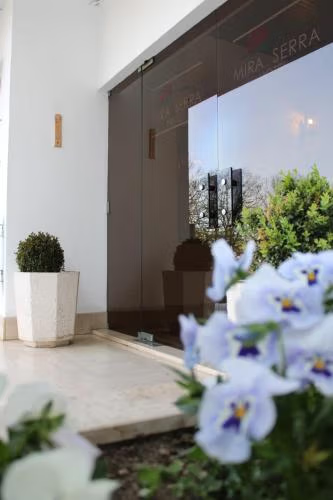
Lavanda Hotel Mira Serra
 OpenReservations accepted
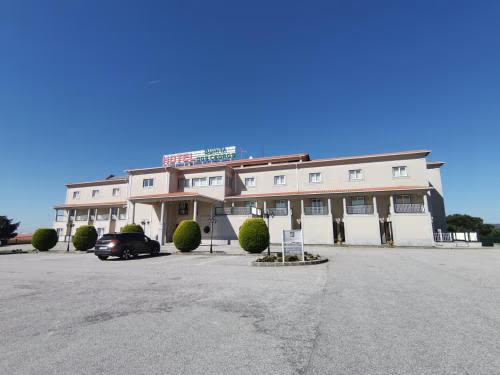
Hotel Quinta dos Cedros
 OpenReservations accepted
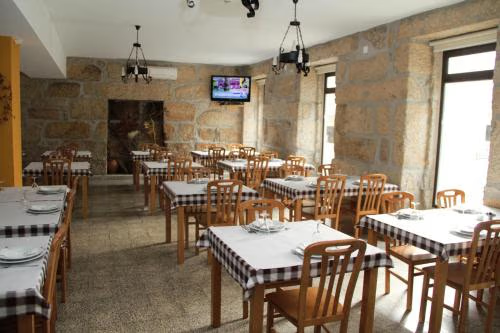
Residencial Parque
Town 24 of 25