

Town on the Camino
Flor da Rosa
Portalegre, Portugal
- places to stay
- 3
- Camino
- 1
- Elevation
- 304 m
Flor da Rosa is a village with a church that looks like a fortress: Álvaro Gonçalves Pereira, prior of the Hospitallers and father of Nuno Álvares, began building it in 1356 and had himself buried here. A break is enough, best taken the afternoon before from Crato, because the monastery opens late in the morning.
How long to stay?
A break is enough, half an hour to an hour. Flor da Rosa lies only 2.1 kilometres beyond Crato, and from here you still have 16.8 kilometres to Alpalhão. The monastery opens at 9:30 a.m. on weekdays and at 10 a.m. at weekends, too late for many for an early start. If you sleep in Crato, walk over the afternoon before without your rucksack and take your time for the church and cloister.
Flor da Rosa in Ninja numbers
- 2.1 kilometres is the distance from Crato to here according to Camino Ninja, the shortest gap between two places in this part of the Via Nascente.
- 16.8 kilometres still lie ahead to Alpalhão, with Vale do Peso after 7.0 kilometres.
- 1356 is when the order's seat was officially established here and construction of the great church on the defensive wall began.
- 32 children the founder is said to have had, although his order forbade marriage. One of them was the later saint Nuno Álvares Pereira.
- 1910 is when the monastery became a national monument.
Arriving: from the order's town to the order's monastery
From Crato to Flor da Rosa it is a walk of 25 to 30 minutes on the Via Nascente. In Crato the order of the Hospitallers had its seat, here stood its monastery, and here lies the man who brought the order's seat south. The village itself is known for its pottery: jugs and bowls made from the clay of Flor da Rosa are very heat-resistant and keep water cool.
In brief: a rose for Rhodes
In 1341, a year after the Battle of Salado, the king allowed the prior Álvaro Gonçalves Pereira to buy estates for the chaplains of a chapel of Our Lady that he had founded here. The chapel became a fortified residence with towers, around 1356 the order's official seat, and a great church was built against the defensive walls. By the 1380s the complex was largely finished. The founder was buried, as he had wished, in a tomb of Estremoz marble. Where the name comes from is not certain. One historian thinks it possible that it recalls Rhodes, the order's seat at the time: "rhodon" is Greek for rose.
In the 16th century a chapter house, a new cloister, a refectory and dormitories were added. From the 18th century the monastery fell into decay, and at the end of the 19th century part of the church collapsed. Restoration began in 1940, and since 1995 it has been a pousada, converted by the architect João Luís Carrilho da Graça.
Prayer behind battlements: what to see
- Mosteiro de Santa Maria de Flor da Rosa: The church is a Gothic fortified church with tall, battlemented towers, a narrow nave, a broad transept and almost no decoration. It is regarded as the best example of a fortified church in Portugal. The founder's tomb lies at the entrance. For you as a pilgrim it is a place where you can see how closely prayer and defence lay together in the Middle Ages. According to one description, the entrance hall and cloister are freely accessible, while you see the inside of the church through a grille. It is open Monday to Friday 9:30 a.m.–12:30 p.m. and 2:00–5:30 p.m., and on Saturdays, Sundays and public holidays 10 a.m.–1 p.m. and 2:30–6 p.m. (as of November 2026). Telephone: +351 245 997 341.
- Pottery of Flor da Rosa: The village is known for its earthenware, jugs, small casks, bowls and pitchers that are very fire-resistant and keep water cool. Whether and where you can visit a workshop, we have not found out.
Honestly
- No pilgrim bed. In the monastery there is a pousada, a hotel, and next to it two private houses. If you want to sleep cheaply, stay in Crato, 2.1 kilometres back, or walk on 16.8 kilometres to Alpalhão.
- In the morning you often stand in front of a closed door. If you set off from Crato at seven o'clock, you are here before it opens.
- You may only see the church through the grille. Do not plan on a tour of the nave.
- Between here and Alpalhão there is no shop. According to one pilgrim guide, Vale do Peso has only a bar and a restaurant. Buy your supplies in Crato.
Ninja tips
- Make Flor da Rosa an afternoon trip from Crato. There and back is 4.2 kilometres without a rucksack, and the next morning you simply walk past.
- Look at the tomb at the entrance. The man in it was prior of an order, a fighter at Rhodes and father of the commander who secured Portugal's independence at Aljubarrota in 1385.
- Beyond Vale do Peso there is a rest area. According to one pilgrim guide, there is a picnic spot just behind the village.
Onward: to Alpalhão
From Flor da Rosa you walk 7.0 kilometres to Vale do Peso and then another 9.8 kilometres to Alpalhão, 16.8 kilometres in all. In Alpalhão the way from Valencia de Alcántara ends and meets the Via Nascente.
Deep dive: A church with battlements
A short read, in case you want to learn more about Flor da Rosa. About two minutes' reading.
A prior from Rhodes
When you stand in front of this church, the first thing you see is the towers with their battlements. It looks like a castle, and that was deliberate. It was built by Álvaro Gonçalves Pereira, prior of the Hospitallers in Portugal. He had joined the order as a child and had fought the Turks on its galleys off the island of Rhodes. Rhodes was then the seat of the order. Perhaps that is why this village bears its name: Rhodes means "the rose" in translation.
A monastery as a fortress
In 1340 Álvaro fought at the Battle of Salado. A year later he founded a chapel of the Mother of God here, and around it a fortified residence grew. Around 1356 Flor da Rosa became the order's official seat, and a great church was built against its walls. It is narrow, tall and almost bare. Prayer and defence share the same walls here. Álvaro wanted to be buried here, and so it happened, in a tomb of Estremoz marble, through which many pilgrims on this way passed a few days earlier.
The father of a saint
Although his order forbade marriage, Álvaro is said to have had thirty-two children. One of his sons was Nuno Álvares Pereira, born in 1360. He led the Portuguese to victory at Atoleiros and at Aljubarrota and so secured the country's independence. At the end of his life he entered the Carmelite order. In 2009 he was canonised. Another son, Pedro, also a prior, fell at Aljubarrota on the side of Castile, against his brother.
What Flor da Rosa gives you
A father who was knight and monk at once. A son who became a commander and a monk. A church that is a castle. Perhaps that is the question this place asks you: what must you protect yourself against, and for what do you leave the door open?
Where to stay in Flor da Rosa
Places to stay in Flor da Rosa.
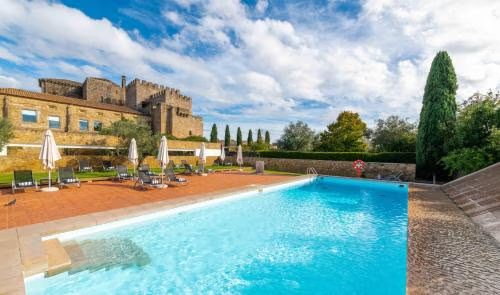 OpenReservations accepted
Pousada Mosteiro do Crato
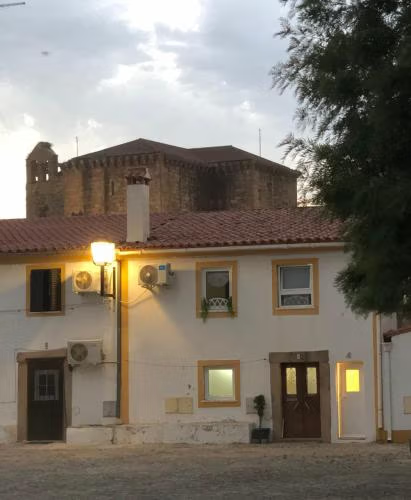 OpenReservations accepted
Charming House Secret Rose
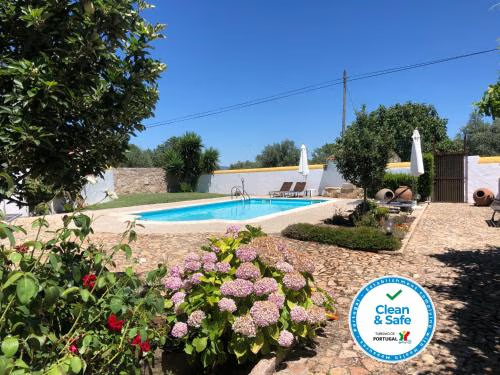 OpenReservations accepted
A Flor Da Rosa
BreakfastWi-FiTVAnd more
Town 15 of 25