

Town on the Camino
Crato
Portalegre, Portugal
- places to stay
- 6
- Camino
- 1
- Elevation
- 271 m
Crato was the seat of the Knights Hospitaller in Portugal: the town belonged to the order from 1232, and from the 14th century its head bore the title Prior do Crato. In 1662 Spanish troops destroyed the castle. An afternoon is enough, and the best part of it is the walk to Flor da Rosa, 2.1 kilometres further on.
How long to stay?
An afternoon is enough, but use it for Flor da Rosa. It is only 15.9 kilometres from Alter do Chão, so you arrive early. In town itself you will quickly have seen the square with the Varanda do Grão-Prior, the main church and what is left of the castle. The monastery of Flor da Rosa lies 2.1 kilometres further along the way, and in the morning it opens only when most pilgrims want to be long gone. So walk over in the afternoon, without your rucksack.
Crato in Ninja numbers
- 409.3 kilometres since Tavira, according to Camino Ninja. 251.9 remain to Trancoso.
- 15.9 kilometres was today's walk from Alter do Chão, a short stage.
- 1232 is the year King Sancho II gave the Hospitallers the territory of Crato, on condition that they fortify and settle it.
- 29 October 1662: On this day Spanish troops took Crato, tore down the fortifications, and a fire consumed the archive of the priory.
- 18.9 kilometres lie between you and Alpalhão tomorrow, and according to one pilgrim guide there is no shop on the way.
Arriving: in the land of the knights
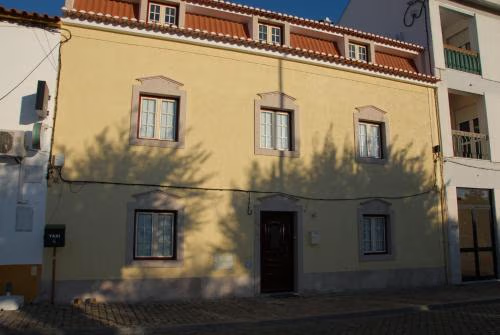
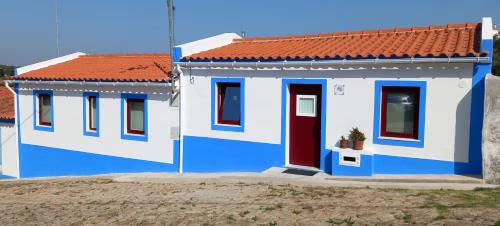
From Alter do Chão you walk 15.9 kilometres north on the Via Nascente, with no village in between. Crato welcomes you with white houses whose edges are painted a strong yellow. Watch the paving: here and there the eight-pointed cross of the Hospitallers is set into it, the knights who later became known as the Order of Malta. This land was theirs.
In brief: the seat of an order
In 1232 the Hospitallers received the territory and, in the same year, gave the town a charter of settlement. By 1248 at the latest the church stood. Around the middle of the 14th century the order moved its Portuguese headquarters from Leça near Porto to Crato and nearby Flor da Rosa. From then on its head was called Prior do Crato. The first was Álvaro Gonçalves Pereira, father of the commander Nuno Álvares Pereira.
In 1440 Queen Leonor withdrew into the castle, in a dispute over the regency. The troops of the regent Pedro besieged her, and on 17 January 1441 Crato fell. In 1525 the gate was rebuilt for the wedding of King João III and Catherine of Austria. In the war after 1640 the castle was turned into a bastioned fortress; in 1662 Juan José de Austria took it and destroyed it. The remains have been protected since 1982.
The cross in the paving
For centuries Crato was ruled by neither a mayor nor a bishop, but by a knightly order that had been founded in the Holy Land to care for pilgrims. That is the thread that ties you to this place. The order fought, administered and built, and it produced men who became great in Portugal's history. Álvaro Gonçalves Pereira had joined the order as a child, had fought the Turks at Rhodes and became prior. Although the order forbade marriage, he is said to have had 32 children. One of them was Nuno Álvares, the victor of Atoleiros and Aljubarrota, a saint since 2009. The father is buried in Flor da Rosa; tomorrow morning you walk past his grave.
Knights and priors: what to see
Crato is small, and everything lies in the old centre. We did not find opening or service times for the church or the castle.
- Varanda do Grão-Prior: This 16th-century loggia is the landmark of Crato. It belonged to the palace of the grand priors, possibly designed by the architect Miguel de Arruda. It stands on the Praça do Município, opposite the Casa do Largo, and the pillory stands on the same square. For you it is the place where you can see how the priors showed off their rank.
- Castelo do Crato: The order began the castle after 1232, and it was later turned into a bastioned fortress. After 1662 it fell into ruin. What survives is a guardhouse, the cistern, two ruined towers and remains of the bastions; the north bastion with twelve casemates was recently restored.
- Igreja Matriz: The main church is closely tied to the Order of Malta. A church stood here by 1248 at the latest, as the gravestone of an order commander proves.
- Ponte Velha: A granite bridge over the Ribeira do Chocanal, about 100 metres from the town. It is considered medieval, perhaps with Roman arch elements.
Honestly
- There is no pilgrim hostel in town. The only pilgrim accommodation we know of lies outside (see below).
- Little is left of the castle. If you expect a fortress like the one in Marvão, you will find remains. The most exciting thing in Crato is the history, not the wall.
- The monastery opens too late for the morning. If you only reach Flor da Rosa as you walk on, you often stand in front of a closed door.
- Tomorrow there is no shop until Alpalhão. According to one pilgrim guide, Vale do Peso has only a bar and a restaurant, and, contrary to older information, no shop.
Where pilgrims sleep
We did not find a municipal, church or association hostel in Crato. Maria Isabel takes in pilgrims, about 10 kilometres from Crato according to one pilgrim guide; one pilgrim placed the house in Gáfete. Clarify by phone where exactly it is and how to get there. In town itself there are private guesthouses.
Ninja tips
- Walk to Flor da Rosa in the afternoon. The monastery opens in the morning at 9:30 or 10 a.m. In the afternoon it is open until 5:30 p.m. on weekdays, and until 6 p.m. at weekends and on public holidays (as of November 2026). Without a rucksack you need 25 to 30 minutes to get there.
- Buy your supplies here for tomorrow. Crato has a cash machine, post office, grocery shop, pharmacy and doctor's surgery; no shop follows until Alpalhão.
- Look for the cross in the paving. The eight-pointed cross of the order keeps turning up in the streets if you look down.
- There is a festival in summer. Since 1984 the Festival do Crato has taken place every summer, as a fair of crafts and food, with concerts. We did not find the date for 2027.
Onward: via Flor da Rosa to Alpalhão
After 2.1 kilometres on the Via Nascente you reach Flor da Rosa with the monastery of the Hospitallers. Another 7.0 kilometres later comes Vale do Peso, and after 18.9 kilometres in total Alpalhão, where the way from Valencia de Alcántara joins. Camino Ninja describes the Alentejo section of the Via Nascente together with Turismo do Alentejo e Ribatejo.
What awaits you tomorrow
Alpalhão is a crossroads: here the pilgrims from Spain who have come via Marvão and Castelo de Vide meet your way. In the village there is a 16th-century granite cross, and small crosses are scratched into old doorposts. After a day of knights' crosses, it is a quiet counterpart.
Deep dive: The Knights of the Hospital
A short read, in case you want to learn more about Crato. About two minutes' reading.
An order for pilgrims
When you walk through Crato, you walk through a place that belonged to an order founded for people like you. The Hospitallers arose in Jerusalem to look after pilgrims who came to the Holy Land sick and exhausted. Only later did they become warriors as well. In 1232 King Sancho the Second gave them the land around Crato. They were to fortify it and bring people here. In the same year the order gave the town a charter of settlement.
The prior's seat
For a long time the order in Portugal sat in Leça, north of Porto. Around the middle of the fourteenth century it moved south, to Crato and nearby Flor da Rosa. The man who drove this forward was Álvaro Gonçalves Pereira. He had fought on the order's galleys off Rhodes and was present at the Battle of Salado in 1340. From him on, the head of the Hospitallers in Portugal was called Prior do Crato. The title became so well known that it was also borne by a man who reached for the crown in 1580: António, a grandson of King Manuel the First. He lost to Philip the Second of Spain.
Besieged, taken, destroyed
Crato lay close to the border, and it felt it. In 1440 Queen Leonor, the widow of King Duarte, took refuge here, in a dispute over the regency. The regent's troops besieged the town, and in January 1441 it fell. In 1531 an earthquake damaged the medieval buildings. Then came the war of independence from Spain. On the twenty-ninth of October 1662 a Spanish army under Juan José de Austria took Crato, razed the walls, and a fire burned the archive of the priory. Much that had been written down over centuries was lost.
What Crato gives you
Of the order's power, ruins remain, a loggia and a cross in the paving. But the reason it existed has remained too: to take in people on the road. If you find a bed somewhere this evening, that is a very old idea that once ruled here.
Where to stay in Crato
Places to stay in Crato.
 OpenReservations accepted
Casa do Coreto
 OpenReservations accepted
Casa dos pais
 OpenReservations accepted
Retiro da cegonha

Town 14 of 25