

Town on the Camino
Freiberg
Germany
- places to stay
- 28
- Camino
- 1
- Elevation
- 410 m
Freiberg is the silver town on the Saxon Way of St James: around 1168 a silver find in a forest village made it the richest town in the Margraviate of Meissen. The silver is still there today in the cathedral with its Golden Portal and in four Silbermann organs, one of them in the Jakobikirche. After that it is only 15.5 kilometres to Oederan.
How long to stay?
An afternoon is enough, but give yourself the morning after. You arrive from Grillenburg after 18.9 kilometres, and the next day it is only 15.5 kilometres to Oederan. That is your chance: through the Old Town in the evening, into the cathedral in the morning, which opens at 11 am from November to April and as early as 10 am from May to October. If you love stones, the terra mineralia alone takes an hour and a half to two hours, and you should then plan a whole day. It is closed on Mondays.
Freiberg in Ninja numbers
- 118.4 kilometres behind you since Bautzen, according to Camino Ninja, with 189.6 still ahead of you to Hof. That puts you well over the first third.
- Four Silbermann organs stand in the town: two in the cathedral, one in the Petrikirche, one in the Jakobikirche. In the silver town, Silbermann plays.
- 2,574 pipes has the great cathedral organ that Gottfried Silbermann built from 1711 to 1714.
- 1765 is when the Bergakademie (mining academy) was founded, today the oldest still-existing mining-science university in the world.
- 72 metres is the height of the Petrikirche tower. Until 1905, tower watchmen lived up there and watched over the town.
Arriving: out of the forest and into the silver town
Behind you lies the Tharandter Wald with Grillenburg; ahead, via Naundorf, Falkenberg, Conradsdorf and Tuttendorf, the first traces of mining come into view. One route description leads from Conradsdorf past old adit entrances up to the Reiche Zeche, an old silver mine, and treats you to your first view of the town there.
In the Old Town the Saxon Way of St James leads you past the cathedral through the centre and on to Schloss Freudenstein. The Old Town consists of an upper and a lower town and is a protected monument; Petersstraße, Erbische Straße and Burgstraße are pedestrian zones. Since 6 July 2019 Freiberg has been part of the UNESCO World Heritage Site Ore Mountain Mining Region. If you come by train, the station is about 15 minutes' walk south of the Obermarkt.
In brief: a forest village meets silver
Around 1168, silver was found in the forest village of Christiansdorf in the valley of the Münzbach. The first Berggeschrey followed, the frenzy that drew miners from everywhere, and the village became Freiberg. The town became the largest in the Margraviate of Meissen, and its mint made the margraves, later electors and kings of Saxony, rich.
For more than 700 years Freiberg lived off silver. The end came in 1913, because the price of silver had fallen. Lead, zinc and tin were still mined until 1969, and the smelters are still working today. What remains is a town at home in science and church music: the Bergakademie, where Abraham Gottlob Werner and Friedrich Mohs taught, and the organs of Gottfried Silbermann.
Silver that sounds
What is special about Freiberg is how consistently the town has turned its silver into sound. Gottfried Silbermann built four organs here between 1711 and 1735, and all four still stand. If you are lucky with the calendar, you can hear them for nothing: from May to the end of October the 1735 Petri organ plays on Wednesdays at 12 noon, and from May to the end of September the 1717 organ of the Jakobikirche on Fridays at 12 noon, each for about half an hour (as of November 2026).
For pilgrims the Jakobikirche has a charm of its own: it bears the name of your saint on the way. The present church is neo-Gothic and was built in 1890 to 1892 as a replacement for the old building; Friedrich Ladegast carried Silbermann's organ across into the new church at that time. The organ builder's name is a coincidence, the concentration in the silver town is not.
Under the silver roof: what to see
The most important places are close together. Everything can be done on foot, even with tired legs.
- Dom St. Marien (cathedral): The late Gothic hall church on the Untermarkt is the reason many people never forget Freiberg. The Golden Portal on the south side was built around 1225 as the main portal of the Romanesque predecessor church, a picture book in stone with biblical figures; it was called the "gulden thure" in 1524 because it once shone in colour. Inside are the Tulpenkanzel (tulip pulpit) from the early sixteenth century, the Bergmannskanzel (miners' pulpit) of 1638, the great and the small Silbermann organ, and the Wettin burial place with the Moritz Monument of 1563 and angels playing real Renaissance instruments. From November to April it is open Mon–Sat 11 am–4 pm, Sundays from about 11:30 am; from May to October Mon–Sat 10 am–5 pm. Admission €5, cathedral tour €7, tour with organ music €8 (as of November 2026). You can hear Silbermann on the tour with organ music: in winter on Sundays at 11:30 am, in summer additionally on Wednesdays at 2 pm.
- Jakobikirche: The church of your patron saint is neo-Gothic, but has older furnishings and Silbermann's organ of 1717. On Saturdays at 3:30 pm there is a tour of about half an hour for €3 (as of November 2026). If you are missing a stamp somewhere on the way, ask here first; whether there is one, we haven't reliably found out.
- Petrikirche and Petriturm: On the highest point of the Old Town, a Romanesque basilica stood even before 1190. The 72-metre tower with its Baroque cap shapes the skyline; the great bell was cast in 1487. The church carries the badge "Verlässlich geöffnete Kirche" (reliably open church): in winter Mon–Fri 11 am–4 pm, Sat 11 am–1 pm, closed from Christmas Eve until early February. Tower tours run from November to March Wed–Sun 2–4 pm on the hour, none in January (as of November 2026). For a pilgrim, the view from above is the best map for the next morning.
- Schloss Freudenstein with terra mineralia: Elector August had the palace built in 1572, and today the TU Bergakademie shows minerals from all over the world here. You pass it on the Way anyway. Open Tue–Fri 10 am–5 pm, Sat, Sun and public holidays 10 am–6 pm, last admission about an hour before closing (as of November 2026). Allow an hour and a half to two hours.
- Obermarkt and Rathaus: The town hall with its clock tower dates from 1410. The Obermarkt hosts the weekly market, and in Advent the Christmas market with the Bergparade (miners' parade) by torchlight.
Food and drink
- Freiberger Eierschecke: It looks different from the Dresden one and tastes different. Bakeries and cafés in the Old Town have it, among others on the Untermarkt right by the cathedral.
- Meißner Gasse: The lane in the lower town is considered the pub strip. Just right for the evening after a long forest stage.
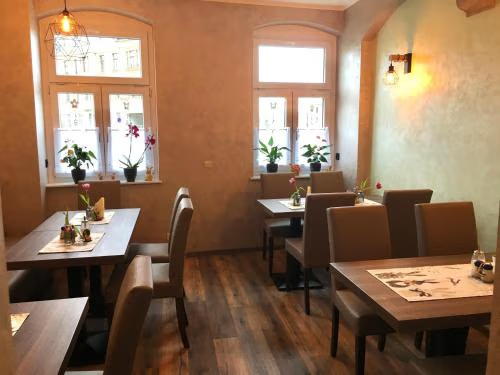
- Old Town: You will find places to eat in every price range in the Old Town, right on the Way.
Honestly
- In winter the midday organs fall silent. The free midday concerts run only from May to the end of October (Petri) and to the end of September (Jakobi). In November you are left with the cathedral tour with organ music on Sunday at 11:30 am.
- The cathedral opens late. From November to April only at 11 am, on Sundays around 11:30 am. If you want to set off early, you will only see it from outside. The short stage to Oederan makes it easy to stay anyway.
- Monday is a bad day for minerals. The terra mineralia is closed on Mondays, and so is the Stadt- und Bergbaumuseum (town and mining museum).
- Petrikirche in hibernation. From Christmas Eve until early February it is closed, and in January there are no tower tours.
- The station is out of town. If you get on or off the train here, allow about 15 minutes to the Obermarkt.
Where pilgrims sleep
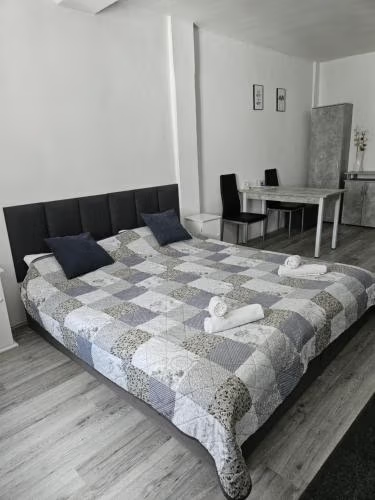
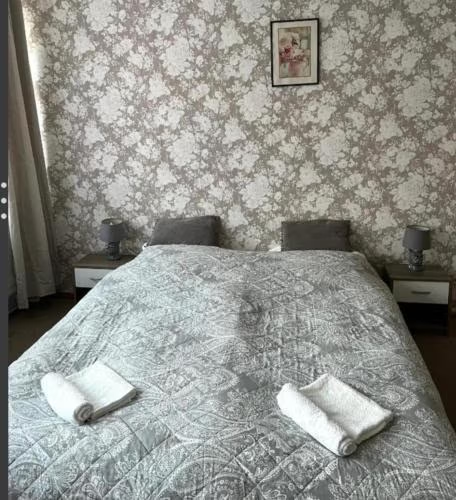
There is no pilgrim hostel with regular operation in Freiberg, but the Catholic parish takes in pilgrims. In our data you will find the Pfarrhaus der katholischen Pfarrei (Familie Stahl) (parish house of the Catholic parish) and the Katholische Pfarrei St. Johannes der Täufer. Be sure to register beforehand; contact is via the website of the Catholic church in Freiberg.
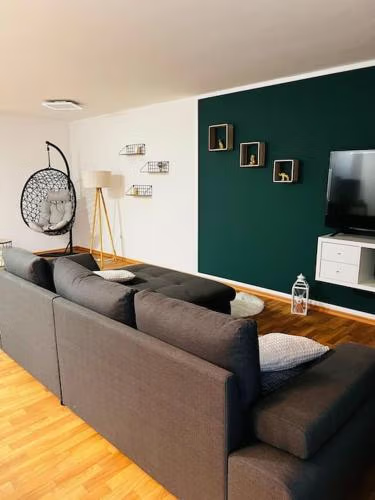
In addition there are a few private pilgrim quarters that take in pilgrims for a night; here too the rule is: call ahead. Guesthouses and holiday flats are plentiful in the Old Town.
Ninja tips
- Leave yourself the morning. It is only 15.5 kilometres to Oederan. Cathedral first, then the Way: even if you start around midday, you will be there by late afternoon.
- Wednesday is Freiberg's pilgrim day. From May to October at 12 noon, midday music on the Petri organ, free of charge, followed at 12:30 or 12:45 pm by the tower tour.
- On Fridays you hear the patron. From May to September the Silbermann organ of the Jakobikirche plays at 12 noon, likewise free of admission.
- Book the cathedral organ on purpose. The normal visit is silent. If you want to hear Silbermann, take the tour with organ music for €8 (as of November 2026).
- Petriturm instead of a town map. From the top you see where you are heading tomorrow and understand the layout of the upper and lower town.
- In Advent the evening is worth it. Then there is the Christmas market on the Obermarkt, with the Bergparade by torchlight.
When it rains
- Dom St. Marien: in winter Mon–Sat 11 am–4 pm, Sundays from about 11:30 am (as of November 2026).
- terra mineralia in Schloss Freudenstein: Tue–Fri 10 am–5 pm, Sat, Sun and public holidays 10 am–6 pm (as of November 2026).
- Stadt- und Bergbaumuseum, Am Dom 1: Tue–Sun 10 am–5 pm, admission until 4:30 pm.
- Petrikirche: in winter Mon–Fri 11 am–4 pm, Sat 11 am–1 pm (as of November 2026).
Practical tips for pilgrims
- Tourist information: at Schloßplatz 6, right by Schloss Freudenstein and so on the Way.
- Train: Freiberg (Sachs) station lies south of the Old Town, with RE 3, RB 30 and S 3. Handy if you want to start here or cut a stage short.
- Churches: The Petrikirche is reliably open, the cathedral charges admission, and the best way to see the Jakobikirche is on the Saturday tour or at the midday music.
- Sunday: The Petrikirche is open for every service, and the cathedral only opens on Sundays around 11:30 am.
Onward: via Oberschöna to Oederan
The next stage is a short one. After 7.1 kilometres you reach Oberschöna, then Kirchbach, and after 15.5 kilometres from Freiberg Oederan lies ahead of you. If you want to go further, it is on to Chemnitz, which is 41.1 kilometres from Freiberg, too much for most people in one day.
What awaits you tomorrow
Oederan is the little sister: a small town with an open town church on the Way of St James and a Silbermann organ of 1727, the fifth on your way since Freiberg. And there, too, is the Klein-Erzgebirge, a park with models at a scale of 1:25. By the way, it was founded in Freiberg in 1933.
Deep dive: How silver became sound
A short read, in case you want to learn more about Freiberg. About 4 minutes' reading.
A find in the forest
When you walk across the Untermarkt, you are standing on the ground of a story that begins with a chance event. Around 1168 there was a forest village here called Christiansdorf, in the valley of the Münzbach, founded in the course of the colonisation of the land. Then silver was found there. What followed the Saxons call the Berggeschrey: the news ran through the land, and miners, merchants and craftsmen streamed in. The village became a town, and the town was called Freiberg.
It grew fast. Freiberg became the largest town in the Margraviate of Meissen and an important trading place. The mint struck the silver, and the silver made the lords of the land rich, first the margraves, later the electors and kings of Saxony.
A portal in stone, called golden
Around 1225, in the midst of this wealth, a portal was built at the Marienkirche that to this day counts among the great works of late Romanesque art in Europe. It was the main portal of the Romanesque basilica that stood where the cathedral stands today. The figures tell biblical stories, a picture book in stone. Originally the portal was brightly painted. In 1524 it was called the gulden thure, the golden door, and so it has remained. In 2025 Freiberg celebrated the eight-hundredth birthday of the Golden Portal with two festival weeks.
The cathedral itself, as you see it today, is younger. Between 1484 and 1501 the late Gothic hall church was built. At the beginning of the sixteenth century the Tulpenkanzel was added, a free-standing pulpit. In 1638 came the Bergmannskanzel. Its very name says whom the town owed its wealth to.
Princes in the choir, angels with instruments
In the choir of the cathedral lie the princes. The Wettins, who ruled over Saxony, chose Freiberg as their burial place. The monument for Elector Moritz was made in 1563. With it belong angels, created in 1592 and 1594, who hold real Renaissance instruments in their hands. If you look closely, you notice that in this town music belonged to faith long before Silbermann.
The organ builder with the fitting name
Gottfried Silbermann came to Freiberg at the beginning of the eighteenth century. From 1711 to 1714 he built the cathedral's great organ, with three manuals, forty-four stops and 2,574 pipes. Facing it stands a smaller organ from his workshop. In 1717 followed the organ of the Jakobikirche, for which the elector had given permission a year earlier, and in 1735 the organ of the Petrikirche, his largest with two manuals.
The organ of the Jakobikirche has been moved. When the old church had to give way to a neo-Gothic building between 1890 and 1892, the organ builder Friedrich Ladegast carried it across into the new church and altered it in the process. Later generations have undone much of that. So in the church that bears the name of James, there sounds an instrument that is older than its walls.
The tower on the highest point
The Marienkirche is not the oldest church in the town. Even before 1190 a Romanesque basilica, the Petrikirche, stood on the highest point of the centre. Remains of it can still be seen in the chancel. Its west tower with the Baroque cap is seventy-two metres high and defines the image of the town when you come from the east or leave westwards the next morning.
From the fifteenth century until 1905 the town's tower watchmen lived at the top of the tower. Above them hang the bells. The great one was cast by Oswald Hilliger in 1487, and it weighs three thousand eight hundred and fifty kilograms. The small one was added in 1570, cast by Wolf Hilliger, the grandson. Two generations of the same family thus still ring out over the same roofs.
In the eighteenth century the church got a new interior. After 1728 Johann Christian Feige the Elder made the pulpit and the organ case into which Silbermann set his work in 1735. Between 1974 and 1986 the congregation converted the space into a community centre, designed by the artist Friedrich Press. Anyone who goes in today finds a church that is at once very old and astonishingly young.
The end of silver
In 1765 the Bergakademie was founded in Freiberg. Today it is the oldest still-existing university of its kind in the world. Abraham Gottlob Werner taught here, and also Friedrich Mohs, after whom the hardness scale of minerals is named.
But silver lost its value. In 1913 Freiberg ended silver mining, because with falling prices the ore no longer paid. After the Second World War lead, zinc and tin were still mined until 1969. The smelters in which ores are processed are still running today. On 6 July 2019 UNESCO added the Ore Mountain Mining Region, with Freiberg, to the World Heritage list.
What Freiberg gives you
When this text was written, in autumn 2026, the silver under Freiberg had been no business for more than a hundred years. What is left of it cannot be weighed in the hand: a portal that has been telling stories for eight hundred years, and organs that have been sounding for three hundred. A pilgrim carries little. Perhaps Freiberg is the right place to realise that the most valuable thing a town made of its wealth is nothing you own, but something you hear.
Where to stay in Freiberg
Places to stay in Freiberg.
 Open
Privatquartier Frau Müller
Donativo- Open
Pfarrhaus kath. Pfarrei (Familie Stahl)
Donativo - Open
Kath. Pfarrei St. Johannes der Täufer
Donativo
Town 7 of 15