

Town on the Camino
Freixo de Espada à Cinta
Portugal
- places to stay
- 7
- Camino
- 1
- Elevation
- 460 m
Freixo de Espada à Cinta is the first stage town of the Caminho Leon de Rosmithal, 19.7 kilometres after the start on the Douro at the Spanish border: a border town above the Douro with a seven-sided castle tower, a 16th-century hall church and carved granite windows. Here the Bohemian pilgrims entered Portugal in 1466.
Right now in Freixo de Espada à Cinta (as of November 2026)
- Waymarking: Freixo has already signposted its section with yellow arrows, shells and information boards; many municipalities further on have not yet, but the route is due to be signposted in all municipalities by March/April 2027.
How long to stay?
An afternoon is enough. You arrive after almost 20 kilometres and more than 600 metres of climbing, and the old town is small: castle tower, main church, a few lanes with carved windows and the silk museum. You can see all that calmly in an afternoon. Tomorrow brings the longest stage of the route, 31.3 kilometres to Torre de Moncorvo, so better get to bed early.
Freixo in Ninja numbers
- 19.7 kilometres lie behind you since the start on the Douro, 241.5 are still to go to Braga on the Caminho Leon de Rosmithal.
- 7 sides has the castle tower, the Torre do Galo, and each one is a different length. It is 25 metres high.
- 1512 was the year King Manuel I gave the town a new charter, in the century in which the great main church was also built.
- 31.3 kilometres is tomorrow's walk to Torre de Moncorvo, the longest stage of the whole route.
Arriving: across the plateau
From the start on the Douro at the Spanish border you have climbed out of the valley onto the plateau, via Poiares and past the high point of the stage, 641 metres at kilometre 14.1. After that the route descends gently to Freixo at 460 metres. You can see the castle tower above the rooftops from far away. The chronicle of the Bohemian delegation called the stretch from the Douro to here a "caminho muy áspero", a very rough road.
In brief: a sword on an ash tree
Locals explain the name with a legend that exists in several versions: always a sword hangs on an ash tree, "freixo" in Portuguese. Sometimes it was a knight after fighting the Moors, sometimes King Dinis, who stuck his sword into the tree and learned the town's name in a dream. Next to the main church stands an old ash tree said to be that very tree.
Freixo was a border town and was fought over accordingly: in 1211 troops from León devastated the town, and in 1236 the townspeople withstood a siege. Freixo received town rights in 1248 from Afonso III and again in 1512 from Manuel I. In the summer of 1466 the Bohemian knight Jaroslav Lev of Rožmitál, called "Leon de Rosmithal" in Portugal, and his companions passed through here after crossing the Douro: for them, Portugal began in Freixo.
Granite and silk: what to see
Everything lies within a few minutes' walk of the castle.
- Torre do Galo: The seven-sided tower, 25 metres high, is what remains of the medieval castle; its sides are all of different lengths. In the 17th or 18th century a bell tower was added on top. According to a travel blog the tower is open daily from 8:00 to 17:00 (as of January 2026), and from the top you look across the rooftops to the hills by the Douro.
- Igreja Matriz: The 16th-century main church stands on the site of a medieval church and is a national monument. It has elaborately worked portals, vaults in the chancel and panel paintings from the school of the painter Grão Vasco in gilded carving. Next to it stands the old ash tree of the legend.
- The windows of the old town: In many lanes doors and windows have carved granite frames. Wealthy merchants paid for them in the 16th century, and on some stones Jewish symbols are carved. Keep your eyes up as you walk.
- Museu da Seda e do Território: The museum in the old 16th-century prison tells the story of the area, from rock art to silkworm breeding, which has been practised here since the 17th century. We have not found opening hours.
- Casa Junqueiro: The family home of the poet Guerra Junqueiro (1850–1923), who was born here, is now a museum.
Honestly
- No pilgrim hostel. There is no pilgrim bed in Freixo; you sleep in a hotel or on a country estate nearby.
- Tomorrow's stage is long. 31.3 kilometres with 726 metres of ascent and 789 metres of descent to Torre de Moncorvo, with only Mós in between.
- The Douro is not on the route. The best views over the gorge, for example at Penedo Durão, and the river beach at Congida are off the route; without a car you will hardly reach them.
Where pilgrims sleep
There is no pilgrim hostel in Freixo de Espada à Cinta. In town and around it there are a hotel, a residencial and several guesthouses and country houses among almond groves and vineyards; you will find them further down this page. Book ahead.
Ninja tips
- Look out for the windows. The carved granite frames are spread all over the old town. If you look for them, you see Freixo with different eyes.
- Stock up for tomorrow. It is 31.3 kilometres to Torre de Moncorvo with only one village, Mós, at kilometre 15.6.
- The almond blossom. In February and March the almond trees around Freixo are in flower, the best time for this section.
Onward: to Torre de Moncorvo
The route crosses the plateau to Mós (15.6 kilometres, 526 metres of ascent), where a stretch of medieval paved road and castle remains await, and then another 15.7 kilometres on to Torre de Moncorvo. Altogether it is 31.3 kilometres with 726 metres of ascent and 789 metres of descent; the high point is 731 metres beyond Mós at kilometre 41.3, the low point 327 metres at kilometre 31.7.
What awaits you tomorrow
Torre de Moncorvo, a small town with a Renaissance church that has been a basilica since 2022, and a mountain full of iron ore. On the way you take a break in Mós, a village that received its charter in 1162 and still lies along a straight medieval street.
Deep dive: The gate to Portugal
A short read, in case you want to learn more about Freixo de Espada à Cinta. About three minutes' reading.
A place on the border
Freixo de Espada à Cinta lies where Portugal reaches furthest east, above the gorge of the Douro. On the other side of the river Spain begins. That has shaped the town's history. In the year 1211 troops from León devastated the settlement, and in the year 1236 a Castilian prince stood before the walls and had to withdraw again. The kings of Portugal knew what they had in this place and gave it town rights, walls and a market.
The tower with seven sides
Of the castle, mainly the tower has survived, the Torre do Galo. It has seven sides, and no two are the same length. It rises twenty-five metres above the rooftops, and in the seventeenth or eighteenth century it was given a belfry on top. In the nineteenth century the castle courtyard became a cemetery. Only in the nineteen-eighties was the tower thoroughly secured.
Merchants and silk
In the sixteenth century Freixo did well. Merchants had their houses decorated with carved windows and doors of granite, and on some stones Jewish symbols can still be seen today. The great main church was built in this period too. Later came silk: since the seventeenth century silkworms have been bred here, and in the eighteenth and nineteenth centuries mulberry trees were planted for them by the tens of thousands.
The Bohemians arrive
In the summer of 1466 an unusual company came to Freixo: a Bohemian baron with forty companions and fifty-two horses, on their way to Santiago. They had crossed the Douro by boat and complained about the rough road. For them Freixo was the gate to Portugal. For you it is too: here you have the first stage behind you, left the river below you, and ahead lie the plateaus of Trás-os-Montes.
Where to stay in Freixo de Espada à Cinta
Places to stay in Freixo de Espada à Cinta.
 Open
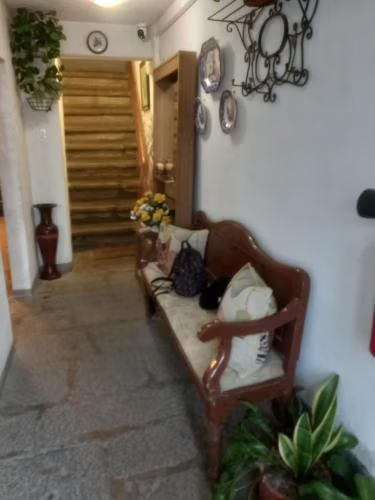
Casa da Avó Maria, Largo de Santo António, n 97395AL
 Open
Fatibel
 Open
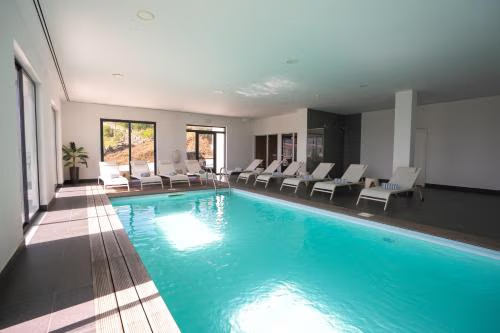
Hotel Freixo Douro Superior


Town 1 of 16