

Town on the Camino
Genève
Switzerland
- places to stay
- 27
- Caminos
- 4
- Elevation
- 404 m
Geneva is both end and beginning: after 443.8 kilometres from Konstanz the Via Jacobi ends here, and at Saint-Pierre Cathedral the Via Gebennensis to Le Puy begins. Since 2022 bronze scallop shells set into the pavement have guided you through the city. The cathedral where Calvin preached is worth a rest day.
How long to stay?
Worth a rest day. For most pilgrims Geneva is a threshold: some arrive here and travel home, others start here or walk on into France. Either way a day without a backpack is worthwhile. The cathedral with its towers and excavations fills a morning, the old town around it the rest. If you are walking on, you can collect your credencial and the first stamp of the Via Gebennensis here at leisure. Budget for it: Geneva is expensive.
Geneva in Ninja numbers
- 443.8 kilometres lie behind you since Konstanz on the Via Jacobi, if you set out from there.
- 347.6 kilometres from here on the Via Gebennensis to Le Puy-en-Velay.
- 41 bronze scallop shells have been set into the ground in Geneva since November 2022, plus 25 in Carouge. Each one points to the next.
- Almost 100,000 people walk the Via Jacobi every year, the president of the Swiss Friends of St James estimated in 2022. There is no exact count.
- 150 steps lead up the north tower of the cathedral.
Arriving: past the United Nations to the cathedral
The last stage from Nyon is 29.2 kilometres long. It leads via Commugny and Coppet to Versoix and Genthod, then via Chambésy and Pregny into the city. In Pregny stands the Château de Tourney, where Voltaire lived from 1758 to 1760. You pass the grounds of the United Nations, go down through Sécheron to the Rhône, across Cornavin and the Rhône island and up into the old town to the cathedral. From the shore on, look out for the bronze shells in the ground: they bring you reliably to your goal.
In brief: a bishop's church turns Protestant
A church stood on the old town hill as early as the 4th century, built on a Roman sanctuary. Around 1160 Prince-Bishop Arducius de Faucigny began the Gothic new building, which was consecrated in 1288. On 10 August 1535 the city council suspended the Mass. Since then Saint-Pierre has been the main church of the Reformed Church of Geneva; John Calvin preached here. The rood screen, side chapels and images were removed; only the stained glass remained. Calvin's successor Theodore Beza was buried in the cathedral in 1605.
End and beginning: where the routes meet
Geneva is the point where the Swiss Ways of St James hand over to France. The Via Jacobi from Konstanz and Rorschach ends here. From the cathedral the Via Gebennensis begins, leading in 14 to 15 days to Le Puy-en-Velay, where it joins the Via Podiensis; today it is walked mainly by Germans, Swiss and French. If you come along the south shore of the lake, you reach Geneva on the Via Gebennensis from Saint-Gingolph. And if you want to go to Lyon, take the Via Lugdunum. Pilgrims owe the visibility of this junction to the Amis du Chemin de Saint-Jacques: on their initiative the bronze shells were laid in November 2022, paid for by donors who received a symbolic pilgrim staff as thanks. The shells lead from Versoix through the city and via Compesières to the border at Bardonnex.
Around Saint-Pierre: what to see
Almost everything a pilgrim should see in Geneva lies on the old town hill. Take your time over the cathedral.
- Saint-Pierre Cathedral: A Gothic building from the 12th and 13th centuries behind a neoclassical columned façade that was only added in 1752 to 1756. Inside, what the Reformation removed is missing, the rood screen, side chapels and images; the stained glass survived. This is where you get your credencial and first stamp for the Via Gebennensis. We have not found verified opening hours.
- Chapel of the Maccabees: The side chapel was built from 1397 to 1405 and repainted in neo-Gothic style in the 1890s. It is colourful, the counterpart to the plain nave. Its organ from 1888 was restored in 2021.
- The towers: 150 steps lead up the north tower. On some full-moon nights the "Nocturnes de Saint-Pierre" also open the towers in the evening.
- Archaeological site: Beneath the cathedral you can walk through the excavations. Here lies the tomb of an Allobrogian chieftain from the 1st century BC. If you want to understand why people have been building up here for two thousand years, start here.
- The bronze shells: Not a museum, but your signpost. The first one lies on the right bank at the end of the Pont du Mont-Blanc. Follow them, and the next morning you will find your way out of the city without a map.
Honestly
- Geneva is expensive. A dormitory bed costs around €45–55 (approx. CHF 42–51), a hotel room usually more than €100. We have not found a pilgrim hostel at pilgrim prices.
- The cathedral is not a place of St James. It has been Reformed since 1535, and its images of saints have gone. We have found no traces of St James in the cathedral; only his shells lie in the pavement outside.
- The last stage drags. The 29.2 kilometres from Nyon end with suburbs, the UN grounds and city traffic. If you want to arrive rested, split it in Commugny.
- Stamping times are unclear. We have not reliably found when exactly the cathedral stamps credencials. Don't plan your stamp for late in the evening.
Where pilgrims sleep
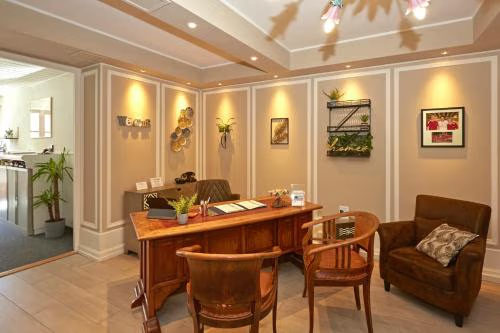
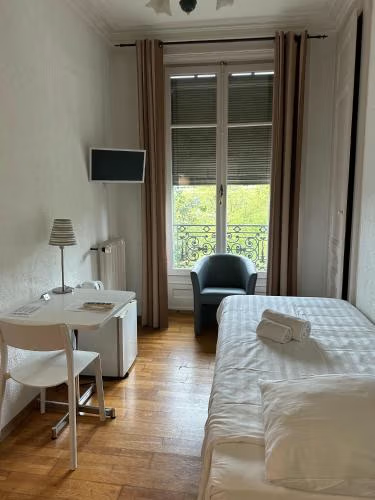
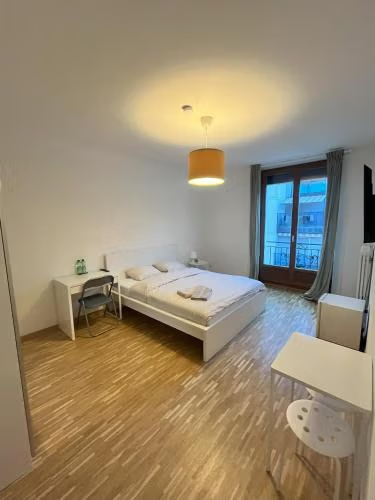
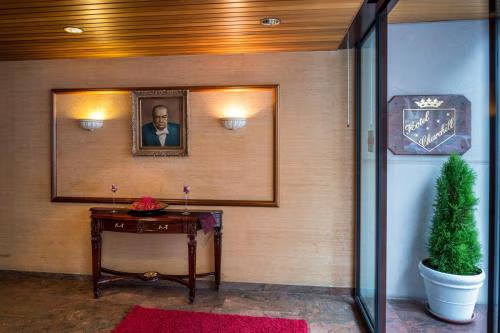
Closest to the cathedral is Home St-Pierre (Petershöfli) on the Cour de Saint-Pierre, with dormitory beds and a few rooms; from there you set off in the morning right at the cathedral. There are also two hostels with dormitories, the Geneva Hostel and the City Hostel Geneva, both on the right bank of the Rhône. A dormitory bed costs around €45–55 (approx. CHF 42–51) (as of October 2026). We have not found a donativo or parish hostel in Geneva. Book ahead.
Ninja tips
- Follow the shells. The triangular bronze shells point to the next one with their tip. You need no map through the whole city as far as Carouge.
- Get your stamp on the day you arrive. Then you can set off early the next morning without waiting for the cathedral to open.
- Split the last stage in Commugny. From there it is 17.7 kilometres to the cathedral, and you have time for the city.
- Climb the tower. From the top you can see where you are going: south into the country the Via Gebennensis passes through.
- Watch for the full moon. On some full-moon nights the towers open in the evening, a quiet farewell to Switzerland or a beginning in France.
Practical tips for pilgrims
- Credencial: In the cathedral you get your credencial and the first stamp of the Via Gebennensis. If you come from Switzerland, you will usually already have one.
- Getting here and away: Cornavin station lies on the way into the old town; trains leave from there to all of Switzerland and to France.
- Border: Beyond Carouge and Compesières you reach the French border. Carry ID.
- Currency: In Geneva you pay in francs. Euros are often accepted, but your change comes in francs.
Onward: via Carouge into France
From the cathedral the route leads through Carouge, with the church of Sainte-Croix, out to Compesières. There stands a commandery of the Knights of St John that has existed since the 14th century and once housed pilgrims, a good first stop on the Via Gebennensis. Then you reach the border stream of the Arande and France. It is 347.6 kilometres to Le Puy-en-Velay.
Deep dive: The city that abolished pilgrimages
A short read, in case you want to learn more about Geneva. About three minutes' reading.
A hill above the river
Before there was a cathedral, there was a hill above the Rhône. Even before the Romans, the Allobroges lived on it, a Celtic people who controlled shipping on the river from here. Beneath the cathedral today lies the tomb of one of their chieftains from the first century before Christ. The Romans built a sanctuary on the hill, and between 350 and 375 the first church rose in its place. Ever since, people have been building, demolishing and rebuilding here, for almost two thousand years.
The bishops' church
Around 1160 Prince-Bishop Arducius de Faucigny began the church you see today. Construction took over a century, and it was consecrated in 1288. Geneva was then a bishop's city like Lausanne, and its cathedral was full of altars, images and chapels. One of them, the Chapel of the Maccabees, was built by a cardinal between 1397 and 1405 as a burial chapel. Pilgrims who travelled from the north to Santiago in the Middle Ages passed through a Catholic city with a richly decorated church.
The break
In August 1535 the city council suspended the Mass. Soon afterwards John Calvin came to Geneva, and the city became the centre of the Reformation that was later called the Protestant Rome. In the cathedral the rood screen, side chapels and images were removed. Only the stained glass remained. The new teaching had no place for pilgrimages and relics. Calvin preached from the pulpit of this church, and his successor Theodore Beza was buried here in 1605. Two hundred years later, from 1752 to 1756, a façade with columns and a pediment like an ancient temple was set in front of the Gothic church. That is how it still looks today: Rome outside, Geneva inside.
The return of the pilgrims
When the Via Jacobi in Switzerland and the Via Gebennensis in France were waymarked again, Geneva became their hinge. In November 2022, on the initiative of the Swiss Friends of St James, the city set forty-one bronze shells into its streets, and twenty-five more were added in Carouge. At the inauguration the mayor said that the world was moving ever faster and betting on quantity and accumulation, and that walking was a tribute to simplicity. In the summer of 2026 a Spanish expert on the Camino described the Via Gebennensis as a dream of a route that begins at Geneva Cathedral.
What Geneva gives you
You stand in a church that once declared pilgrimages unnecessary, and in it you collect the stamp for a pilgrimage. There is no contradiction here that you need to resolve. Geneva took away the images and left you the shells. When this text was written, in autumn 2026, they showed people from many countries the way out of the city every morning. Whether you are arriving here or setting out: the tip of the next shell already points onward.
Where to stay in Genève
Places to stay in Genève.
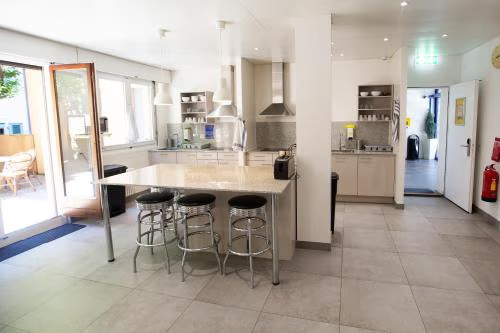 OpenReservations accepted
City Hostel Geneva
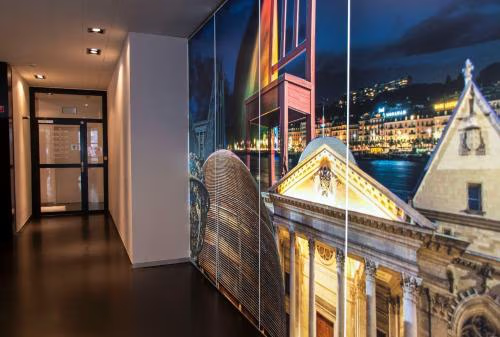 OpenReservations accepted
Geneva Hostel
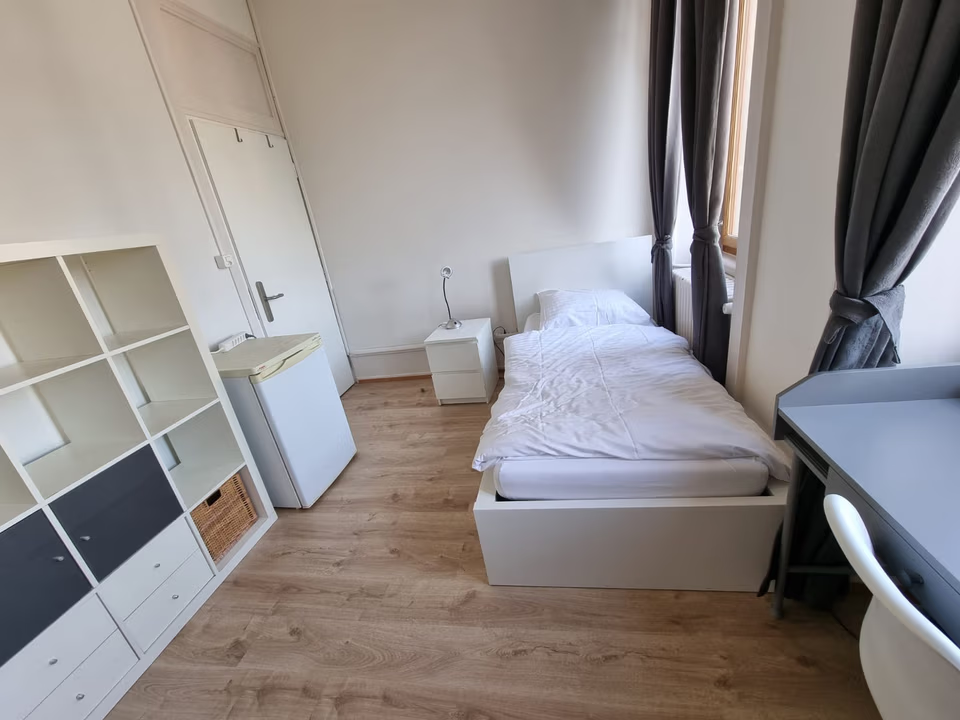 Open
Petershöfli – Home St. Pierre
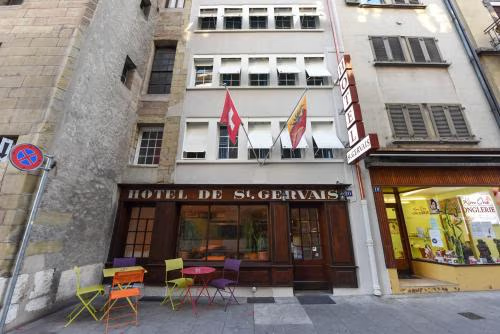
Services in Genève
What you can find in town before the next stage.
- ATM
- Café
- Shop
- Tobacco
- Medical clinic
- Pharmacy
- Fountain
- Post office
- Train station
- Bus station
- Airport
- Restaurant
Source: © OpenStreetMap contributors · updated April 2026
Town 1 of 1
Continue along the Via Gebennensis
Genève is the last popular town on the Via Gebennensis.