

Town on the Camino
Getaria
Gipuzkoa, Basque Country, Spain
- places to stay
- 11
- Caminos
- 2
- Elevation
- 33 m
Getaria is a fishing town on a headland, 5.1 kilometres after Zarautz: Juan Sebastián Elcano was born here, the man who in 1522 completed the first voyage around the world, and here a Gothic church stands so crookedly on the rock that its floor slopes upward. For most pilgrims it is a long mid-morning stop. The hostel is up at the edge of town.
How long to stay?
An afternoon is enough, but most people just make a long stop. From Zarautz you are here in a good hour, which is too little for a stage. Still, allow at least an hour: for the church of San Salvador, the harbour and the view of the rock they call "the mouse" here. If you arrive in the afternoon, say after a long stage from San Sebastián, the Balenciaga museum gives you enough for an evening too.
Getaria in Ninja numbers
- 5.1 kilometres from Zarautz to here, through vineyards and with 213 metres of ascent.
- 798.5 kilometres still lie ahead of you to Santiago on the Camino del Norte.
- 1522 was the year Getaria's Juan Sebastián Elcano returned from the first circumnavigation of the world, with only 18 survivors.
- Until the 15th century the rock off the town was an island. Today Getaria stands on the strip of sand in between.
- €14 is the admission to the Balenciaga museum; in the last hour before closing it is free at the ticket desk (as of October 2026).
Arriving: through the vines to the sea
After Zarautz you have two options: the promenade by the sea along the main road, or the path over the hill with the chapel of Santa Bárbara. The DB route climbs to 179 metres through the Txakoli vineyards and then drops to Getaria. If you come along the road, you have to climb back up to the Camino after the town. If you come along the path, you walk down into town and back up again afterwards. The detour into the old town is worth it.
In brief: a town on a headland
Until the 15th century Getaria was an island off the coast; sand and silt joined it to the land. The old town stands on the narrow strip in between, and behind it rises Monte San Antón, called "el Ratón", the mouse, because of its shape. In the 14th century the Gothic church of San Salvador was built, and at the end of the 14th century the first general assemblies of the province of Gipuzkoa met here. Two men the world knows came from Getaria: the navigator Juan Sebastián Elcano and the fashion designer Cristóbal Balenciaga, born in 1895 as the son of a fisherman and a seamstress.
The first to sail around the world: what to see
Getaria is small; everything lies between the church and the harbour.
- San Salvador: The Gothic church from the 14th century stands on sloping rock. That is why its floor is tilted, and you feel the incline as you walk in. A tunnel runs through the rock beneath the church; the church was once part of the town wall. At the end of the 14th century the representatives of Gipuzkoa gathered here for the first time. We have not found mass times.
- Elcano at the harbour: Juan Sebastián Elcano was born in Getaria. In 1522 he brought back the expedition that Magellan had started and on which Magellan died. Emperor Charles V granted him a coat of arms with the words "Primus circumdedisti me": you were the first to encircle me. His statue looks out over the harbour. For you as a pilgrim, a thought for the next 800 kilometres: he, too, had to arrive for it to count.
- Monte San Antón: The rock behind the harbour is now a nature park. From the pier you can see why it is called "the mouse".
- Cristóbal Balenciaga Museoa: The museum is built around the designer's childhood home and shows more than 1,600 pieces. Even if you have no interest in fashion, the building is worth seeing. In October it is open Tuesday to Sunday 10:30 to 18:00, from November to February Wednesday to Sunday 10:30 to 17:00; admission €14, reduced €9, free in the last hour (as of October 2026).
Food and drink
Getaria lives from the sea and from wine. Fish is still landed in the harbour every day; grilled turbot and anchovies are the speciality. All around grow the vines of Getariako Txakolina, the local wine. The fishermen are said to have helped build the chapel of Santa Bárbara above Zarautz, paid in Txakoli. We have not checked restaurant prices.
Honestly
- Few beds for pilgrims. There is one pilgrim hostel at the edge of town; otherwise guesthouses and hotels from about €65.
- The climb after the town is short but steep. From Calle Herrerieta it goes up to San Prudentzio. Take it slowly.
- Don't get stuck too long. If you have a long breakfast in Getaria and visit the museum, the harder half of the way to Deba is still ahead of you.
Where pilgrims sleep
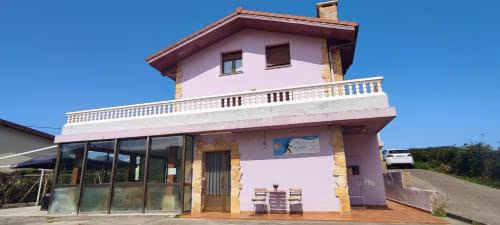
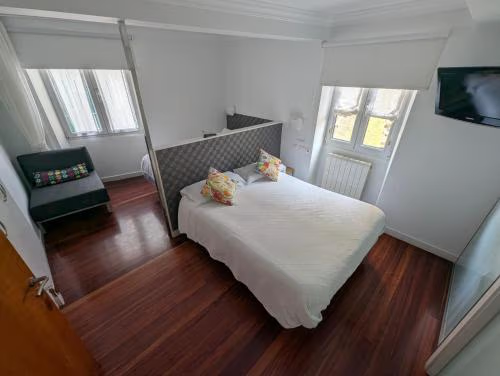
The town's pilgrim hostel is the Albergue Akarregi, formerly called Kanpaia. It lies at the upper edge of town on the road to San Prudentzio, right on the Camino, and has 24 dorm places at €20 to €30 (as of October 2026). It is privately run. There is also the Hostel Getaria in the middle of town and several guesthouses and small hotels. There is no public or donation hostel in Getaria.
Ninja tips
- Have your second breakfast in Getaria. After a good hour of walking you are here, and the harbour is the finest place for a break all day.
- Go into the church and watch your feet. The rising floor is the experience, not the furnishings.
- Use the last museum hour. If you stay overnight in Getaria, you get into the Balenciaga museum for free in the last hour before closing, if you get your ticket at the desk.
- Refill your water in Askizu. There is a fountain at the church of San Martín.
Practical tips for pilgrims
- Fiesta: On 6 August Getaria celebrates San Salvador, its patron.
- Water: There are fountains at the chapel of San Prudentzio, about 300 metres off the path, and at the church in Askizu.
Onward: via Askizu to Zumaia
After Getaria you climb steeply up to San Prudentzio, past the hostel and along country roads to Askizu (km 99.9) with its Gothic church of San Martín de Tours from the 16th century. The highest point is 126 metres, then it goes down to the mouth of the Urola. To Zumaia it is 5.4 kilometres with 160 metres of ascent. From there to Deba another 12.4 kilometres with a good 500 metres of climbing follow.
What awaits you tomorrow
Zumaia, after just under an hour and a half: pilgrims used to wait there at a chapel of Saint James for the boat across the river. Behind the town the rock layers of the coast stand steeply in the sea, a book of more than a hundred million years.
Deep dive: The island that grew onto the land
A short read, in case you want to learn more about Getaria. About three minutes' reading.
A church on crooked ground
Getaria stands on a strip of land that used to be sea. Until the fifteenth century the rock of San Antón lay as an island off the coast. Then the gap filled with sand, and the old town grew on that strip. As early as the fourteenth century the church of San Salvador was built here. Because it stands on sloping rock, its floor rises. Beneath it a passage runs through the stone, because the church was part of the town wall. At the end of the fourteenth century the representatives of the towns of Gipuzkoa met in it for the first time for a joint assembly.
A man comes back
Juan Sebastián Elcano was born in Getaria. He sailed with the fleet that Ferdinand Magellan led westward to find a route to the Spice Islands. Magellan died on the way. Elcano brought the last ship back to Spain, in the year 1522, after three years at sea. Of the men who had set out, only eighteen returned. The emperor gave Elcano a coat of arms with the words: you were the first to encircle me.
A boy from the fisherman's house
A good three hundred and seventy years later, in 1895, Cristóbal Balenciaga was born in Getaria. His father was a fisherman, his mother a seamstress. He became one of the most influential fashion designers of the twentieth century. The museum that bears his name today is built around the house of his childhood.
What Getaria gives you
Elcano was not the one who planned the voyage. He was the one who arrived. You are standing here at the beginning of a way of almost eight hundred kilometres, and no one knows today how it will end for you. Getaria reminds you that arriving is an achievement too, and that the earth sometimes moves: an island became land. A fisherman's boy became famous. You walk on, one stretch after another.
Where to stay in Getaria
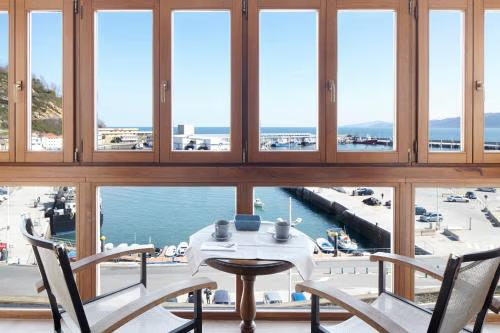
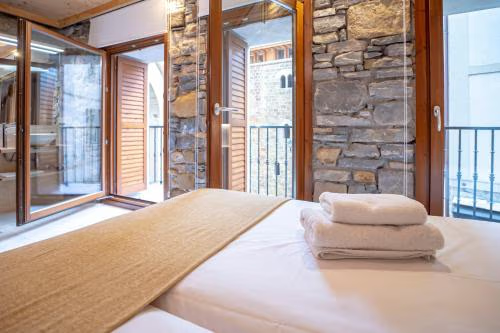
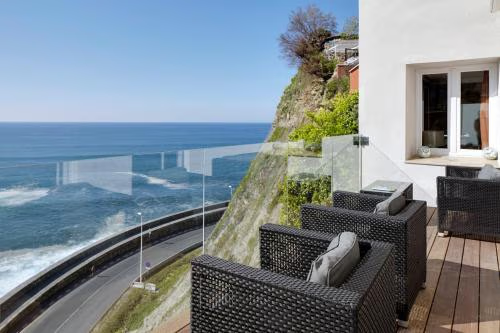
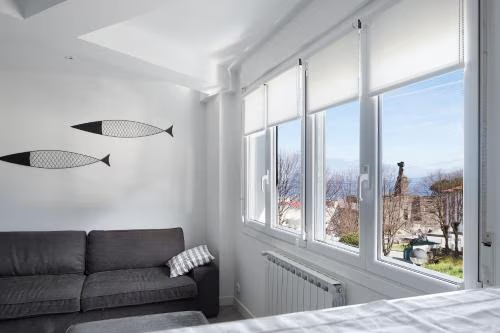
Places to stay in Getaria.
 ClosedReservations accepted
Albergue Akarregi (formerly Kanpaia)
 OpenReservations accepted
Hostel Getaria
 OpenReservations accepted
Pensión Iribar
Services in Getaria
What you can find in town before the next stage.
- Café
- Shop
- Tobacco
- Medical clinic
- Pharmacy
- Fountain
- Post office
- Train station
- Restaurant
Source: © OpenStreetMap contributors · updated February 2026
Town 6 of 49