

Stage town on the Camino
Grado
Asturias, Spain
- places to stay
- 4
- Camino
- 1
- Elevation
- 76 m
For most pilgrims, Grado is the first evening on the Camino Primitivo, 26.4 kilometres from Oviedo: a market town where the pilgrim route crosses the old Roman road, the Camín Real de la Mesa. Market days are Wednesday and Sunday, and the hostel runs on donations and seals your credencial with wax. An afternoon is enough.
Right now in Grado (as of October 2026)
- Hostel closing: The municipal hostel Villa de Grado is open from 1 March to 31 October. From November, only private options remain for the night, or you walk on to Cornellana, where the monastery hostel is open all year.
How long to stay?
An afternoon is enough. Grado is a small country town whose old centre dates mostly from the 18th and 19th centuries. You arrive after a long first stage full of ups and downs, and the town is quickly explored: a palace, a baroque chapel, a few Indiano villas and the market square. If you arrive on a Wednesday or Sunday, keep the morning free for the market and set off later.
Grado in Ninja numbers
- 26.4 kilometres are behind you since you left Oviedo, with 707 metres of ascent and 872 metres of descent. The first day on the Camino Primitivo is no stroll.
- 282.3 kilometres remain from here to Santiago.
- 16 beds in the municipal hostel. In July 2025, 486 pilgrims slept there, and it was full almost every night.
- 2 market days a week, Wednesday and Sunday. The market here is centuries older than the pilgrim boom.
- 40 metres above sea level is the lowest point of the stage, just before town by the Nalón.
Arriving: across the Nalón
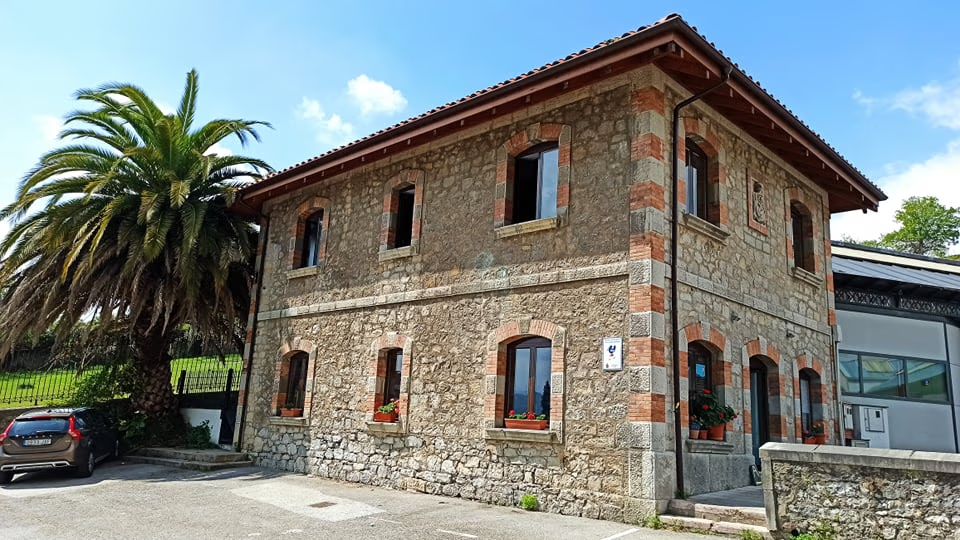
From Oviedo the way leads via Escamplero and Premoño down into the Nalón valley. In Peñaflor you cross the river on an old bridge; the bar is before the bridge, and you can refill water there. After that it is about three more kilometres on quiet tracks to Grado. The hostel is central, in the former canteen building of the livestock market, close to the old town and the bars.
In brief: a market at the crossroads
The founding of the town is attributed to King Alfonso X in the 13th century, and the few remains of the town wall date from that time; the walls are documented in writing in 1386. Grado grew up around its market. Here the pilgrim route crosses the Camín Real de la Mesa, an old Roman road. Later, noble families such as the Miranda-Valdecarzana built their palaces, and in the 19th century emigrants returning from the Americas, the Indianos, added their villas and gardens.
The market town: what to see
Everything is a few minutes from the market square.
- The market: Wednesdays and Sundays on Plaza General Ponte, a tradition going back centuries. For pilgrims it is the best place to stock up on supplies; it sells local produce, such as Asturian Afuega'l Pitu cheese.
- Palacio de Miranda-Valdecarzana: A town palace from the 15th century, heavily remodelled in the 18th. Today it is a cultural centre with the only library in Spain specialising in poetry. Right next to it is a book-swap tree, by the remains of the old town wall.
- Capilla de los Dolores: The third Marqués de Valdecarzana had this 18th-century baroque chapel built as a funerary chapel. It is considered a landmark of the Camino through Grado. We have not found opening hours.
- Palacio de la Marquesa de Fontela: This 18th-century palace now houses the information centre of the Comarca Camín Real de la Mesa, a good first stop if you have questions about the town.
- El Capitolio: One of the most striking Indiano villas in Asturias, with impressive gardens. You see it from outside.
Food and drink
Grado has bars, restaurants and supermarkets, plus the market on Wednesday and Sunday. A local sweet is tocinillo de cielo, an egg-yolk pudding.
Honestly
- The hostel fills up fast. 16 beds for one of the main stages of the Primitivo, no reservations: arrive after 17:00 in summer and you often find the door closed.
- At night you are locked in. The hostel opens at 14:00 and closes at 22:00; after that nobody gets in or out.
- The first stage is harder than expected. The constant up and down saps your strength, and at the end you sit in a town that is more practical than pretty.
- Much of what is worth seeing can only be seen from outside. The chapel and villas are usually closed.
Where pilgrims sleep
The Albergue de peregrinos Villa de Grado belongs to the town and has been run since 2016 by the Fraternidad Internacional del Camino de Santiago with volunteer hospitaleros. It has 16 beds in one dormitory; you give a donation and breakfast is included. You cannot book, and you need a credencial and a sleeping bag. Walkers have priority over cyclists, and the hostel does not accept backpack transport. It is open from 1 March to 31 October (as of August 2026).
Privately, there is the Albergue La Quintana with just over 30 beds and a few rooms, a bed for around €15 to €18, March to October (as of 2025/2026). There are also guesthouses and hotels. If you still have energy, you will find a small hostel about three kilometres further uphill in San Juan de Villapañada.
Ninja tips
- Arrive before 16:00. Most pilgrims arrive between 16:00 and 17:00. Come earlier and your bed is safe.
- Ask for the wax seal. The hospitaleros in Grado have revived the old sealing-wax stamp and seal your credencial with hot wax. You rarely get a stamp like that.
- Shop on market day. On Wednesdays and Sundays there is local produce, for the long stage to Salas.
- Refill your water in Peñaflor. Just before Grado, at the bridge over the Nalón, is the last bar before your destination.
Practical tips for pilgrims
- Supplies: ATM, pharmacy, medical care, supermarkets, bakery and butcher are in town.
- Credencial: Required at the hostel, where you also get your stamp.
- Festivals: The Fiesta de las Flores falls on the Sunday after Easter and the six following Sundays; the town is busy then.
Onward: up to Villapañada
Right after Grado the way climbs steeply to San Juan de Villapañada (km 29.2) and on up to 364 metres. Then it drops into the Narcea valley, via La Rodriga to Cornellana (km 37.1) with its 11th-century monastery, and finally climbs to Salas (km 48.4). The stage is 22.0 kilometres long, with 921 metres of ascent and 746 metres of descent.
What awaits you tomorrow
Salas, a small town whose tower, palace and collegiate church form a single ensemble. In the church lies the man who founded the University of Oviedo, in an alabaster tomb. On the way, in Cornellana, you pass a monastery founded by a king's daughter in 1024.
Deep dive: Where two roads cross
A short read, in case you want to learn more about Grado. About three minutes' reading.
A place made of roads
Grado lies where the Nalón valley opens out and two old roads meet. One is the pilgrim route, leading west from Oviedo over the mountains to Galicia. The other is the Camín Real de la Mesa, a road from Roman times. Where roads cross, people meet, and where people meet, a market grows. That is how the story of Grado is told, and that is how the town still looks today.
The market and the wall
The founding of the town is attributed to King Alfonso the Tenth, in the thirteenth century. From that time come the remains of a wall first mentioned in writing in the year 1386. Inside that wall the market grew, and it still takes place today, on two days a week, Wednesday and Sunday. It sells local produce, including Afuega'l Pitu cheese. The market is older than almost everything you see in the town.
Nobles, Indianos and pilgrims
Later, noble families settled here. The Miranda-Valdecarzana built a palace in the fifteenth century and a baroque funerary chapel, the Capilla de los Dolores, in the eighteenth. In the nineteenth century the Indianos came back, emigrants who had grown rich in the Americas, and built themselves villas with gardens. The townscape you see today comes mostly from those two centuries.
But the pilgrims remained a constant. They have been passing through Grado for centuries, and the town is therefore known as hospitable. Since 2016 there has been a municipal hostel, run by volunteer hospitaleros, and they have revived an old custom: they seal the credencial with hot wax, the way important documents were once sealed.
What Grado gives you
Grado is the first evening on a route that will get much harder. Here you learn what the Primitivo asks of you: leave early, watch your strength, carry supplies. And perhaps you take something else from this market town. A road is more than the distance between two places. It is also where you meet others.
Where to stay in Grado
The places pilgrims rate highest in Grado come first.
- Top #1
 ClosedReservations not accepted
Albergue de peregrinos Villa de Grado
KitchenMicrowaveBreakfastAnd more - Top #2
 OpenReservations accepted
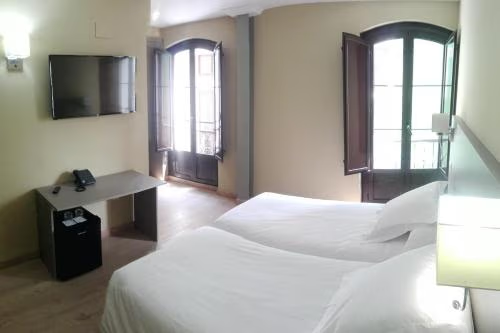
Hotel Areces
- Top #3
 ClosedReservations accepted
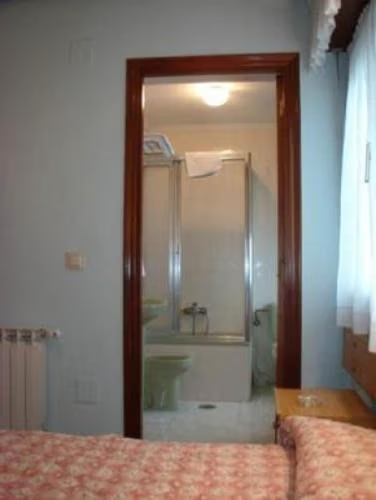
Albergue La Quintana
Services in Grado
What you can find in town before the next stage.
- ATM
- Café
- Shop
- Tobacco
- Medical clinic
- Pharmacy
- Fountain
- Post office
- Train station
- Restaurant
Source: © OpenStreetMap contributors · updated November 2025
Town 2 of 17