

Town on the Camino
Hondarribia
Gipuzkoa, Basque Country, Spain
- places to stay
- 12
- Camino
- 1
- Elevation
- 1 m
Hondarribia is the most beautiful detour at the start of the Camino del Norte: a walled old town at the mouth of the Bidasoa, about a kilometre and a half from the Way as the crow flies. The Camino only skirts the outskirts and the little chapel of Santiagotxo. If you arrive by boat from Hendaye or have an evening to spare, go up.
How long to stay?
An afternoon is enough, as a detour from Irún. There is no pilgrim hostel in Hondarribia; the beds in the old town are hotels and guesthouses. If you sleep in Irún, come over in the afternoon; if you cross by boat from Hendaye, you can start walking from here. An afternoon is plenty for the walls, the church, the castle and the Calle Mayor.
Hondarribia in Ninja numbers
- About 1.4 kilometres as the crow flies lie between the old town and the Camino del Norte. The Way itself stays on the outskirts and runs through the Arkolla district.
- 1203 was the year Hondarribia, as one of the first towns in Gipuzkoa, received a royal charter.
- Six gold ducats were donated by Juan Sebastián Elcano in 1526 to the chapel of Guadalupe. It is the oldest mention of the sanctuary you will pass tomorrow.
- About 7 minutes is the crossing by boat from Hendaye. It runs all year, roughly every 15 minutes (as of February 2025).
- 1978 was the year the figure of St James was stolen from the Santiagotxo chapel, the "black Santiago".
Arriving: from the water or from the edge of town
There are two ways into Hondarribia. If you are on the French side in Hendaye, take the small boat across the mouth of the Bidasoa; it leaves from the marina in Hendaye and docks at the Paseo Butrón in Hondarribia. The tourist office describes the Camino from there through the La Marina district with the Magdalena church out to the Santiagotxo chapel. If you sleep in Irún, on the other hand, you pass the edge of town without seeing the old town, and you have to make the detour on purpose.
In brief: a town under siege
Hondarribia lived from trade in the Bay of Biscay and from whaling; even the medieval town seal shows a whaling scene. As a border town it was attacked again and again. In 1476 it held out, in 1521 it did not. In 1638 troops of Louis XIII besieged the town, and it held out once more. Afterwards a large part of the houses had to be rebuilt. The following year the citizens vowed to walk in procession every 8 September up to the sanctuary of Guadalupe on the mountain, and they still do. In 1794 revolutionary France took the town; after that the fortifications were gradually dismantled, but never completely.
For pilgrims there is one story worth knowing: in the 15th century Queen Isabella had the Bidasoa crossing watched because Frenchmen were entering the country disguised as pilgrims. So the scallop shell was already a passport back then, and already it was being misused.
Behind the walls: what to see
Everything lies inside the old walls, and a walk around takes little time.
- Puerta de Santa María and the walls: The south gate is the classic way into the old town. The walls and bastions date largely from the 16th century, when the border town was strengthened. For pilgrims it is the moment you understand how fiercely contested this border was, one you cross today without any checks.
- Iglesia de Nuestra Señora del Manzano: The late Gothic parish church was begun at the end of the 15th century, with three naves and a Renaissance façade to the west. This is the right place for a moment of silence before setting off. We did not find opening hours.
- Castillo de Carlos V: The castle from the mid-16th century stands right next to the church; an earlier building is documented as early as around 1200. The imperial coat of arms above the entrance dates it. Today it is a parador; as a pilgrim you will usually see it from outside.
- Calle Mayor: The main street of the old town with the town hall, the Casa Casadevante and the Palacio Zuloaga. Walk slowly downhill and read the coats of arms on the houses.
- Ermita de Santiago (Santiagotxo): The little 15th-century chapel of St James in the Arkolla district lies right on the Camino. There is Mass on Sundays and holidays, and according to the tourist office a nearby farmstead keeps the key. Its figure of St James, the Santiago Beltz, was stolen on 15 December 1978.
Honestly
- The Way bypasses the old town. If you only follow the arrows, you see almost nothing of Hondarribia. The detour costs time, and that before a hard first stage.
- No pilgrim bed. There is no pilgrim hostel; the places to stay in the old town are hotels and guesthouses, priced accordingly.
- The boat costs money and has limits. In winter it runs shorter hours, roughly 10:15 to 18:00 (as of February 2025). If you reach Hendaye late, walk over the bridge to Irún.
Where pilgrims sleep
There is no pilgrim hostel in Hondarribia. The nearest is the Irún pilgrim hostel (donation, no reservations), then the small Santa Ana hostel in Pasai Donibane at the end of Jaizkibel. In the old town itself there are guesthouses and hotels, double rooms mostly from about 60 euros (as of October 2026).
Ninja tips
- The boat as a border crossing: If you start in Hendaye, you can take the boat instead of the bridge. It costs around 2 euros, bicycles a little more; tickets are sold on board (as of February 2025).
- Be in town on 25 July: On St James's Day the fishermen's guild in Hondarribia performs the Kutxa ritual.
- Guadalupe in the morning: The sanctuary sits about 200 metres above the bay. From there you see Hondarribia, Hendaye and Irún at a glance, and there is the last fountain before Pasai Donibane.
- Ask about the key to Santiagotxo: Outside Mass times the chapel is usually locked; the tourist office can help on +34 943 643677.
Onward: up to Guadalupe
From the Santiagotxo chapel the Way climbs steeply to the Santuario de Guadalupe, then runs for a long stretch along the slope of Jaizkibel. About 15 kilometres beyond the edge of town you reach Pasai Donibane, where a small boat takes you across the bay, and after another 8.6 kilometres San Sebastián. From here it is 848.7 kilometres to Santiago.
Deep dive: The town that keeps a vow
A short read, in case you want to learn more about Hondarribia. About three minutes' reading.
Whales and a charter
Hondarribia was a town with its own rights early on. In 1203 it received a royal charter as one of the first places in Gipuzkoa. Its people sailed to trade in the Bay of Biscay and hunted whales, and the old town seal shows exactly that. A town on the sea, at the mouth of a border river, was rich and vulnerable at the same time.
A border that must be guarded
Because Hondarribia lay on the border, it was fortified, besieged and conquered. In the fifteenth century Queen Isabella had the crossing over the Bidasoa controlled, because Frenchmen were disguising themselves as pilgrims to get into the country. In the sixteenth century the bastions were built, and the castle that bears the name of Emperor Charles the Fifth. In 1521 the town fell; in 1638 it withstood a siege.
The vow of Guadalupe
After that siege the citizens promised to celebrate the victory every year with a procession to the chapel of Our Lady of Guadalupe on the mountain. Since 1639 they have walked up on 8 September. The chapel's feast day even moved from March to September for it. The chapel itself is older: back in 1526 the seafarer Juan Sebastián Elcano gave it six gold ducats, a few years after he had completed the first circumnavigation of the world.
What Hondarribia gives you
If you set off from Irún tomorrow morning, you will climb to the same sanctuary this town walks to every year. A town that has kept a promise for almost four hundred years is a good neighbour for the start of a long journey. You have probably promised yourself something too. It doesn't have to last that long. But as far as Santiago would be nice.
Where to stay in Hondarribia
Places to stay in Hondarribia.
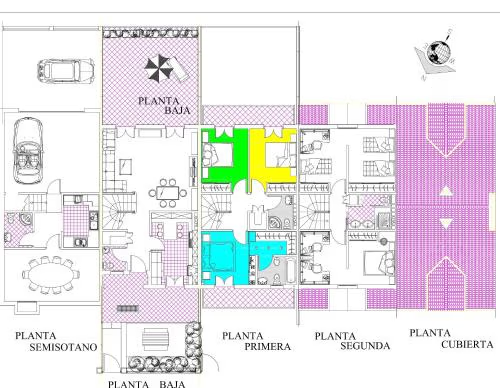 OpenReservations accepted
Bordatxiki
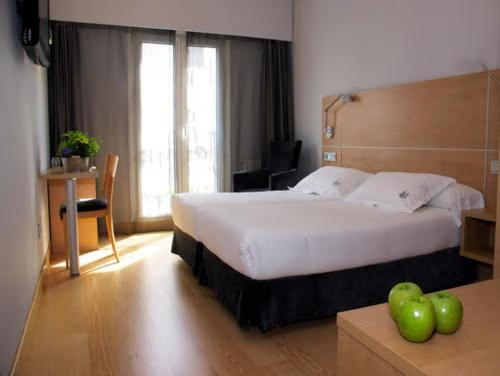 OpenReservations accepted
Hotel Jauregui
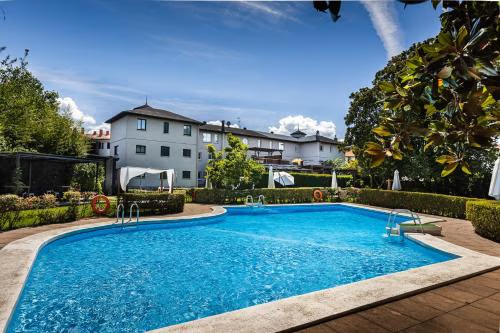 OpenReservations accepted
Hotel Rio Bidasoa


Services in Hondarribia
What you can find in town before the next stage.
- ATM
- Café
- Shop
- Tobacco
- Medical clinic
- Pharmacy
- Fountain
- Post office
- Train station
- Bus station
- Airport
- Restaurant
Source: © OpenStreetMap contributors · updated February 2026
Town 2 of 49