

Town on the Camino
Lausanne
Switzerland
- places to stay
- 24
- Caminos
- 3
- Elevation
- 370 m
Lausanne is where two great pilgrim routes cross: the Via Jacobi meets the Via Francigena to Rome here. Above the city stands the cathedral, consecrated by the Pope in 1275, and every night since 1405 a watchman has called the hour from its tower. The city has no pilgrim hostel; an afternoon and an evening are enough.
How long to stay?
An afternoon is enough, but stay until 10 pm. For a pilgrim, what counts in Lausanne is above all the cathedral, and you can see it in an afternoon. The reason to stay comes at night: at 10 pm the night watchman calls from the tower, and you can climb up with him. For a rest day Lausanne is expensive, and the only pilgrim bed is closed at weekends.
Lausanne in Ninja numbers
- 367.4 kilometres lie behind you since Konstanz. To Geneva, where the Via Jacobi ends, it is another 76.4 kilometres.
- 906 metres was the highest point of the stage from Moudon, in the Jorat forest. Lausanne lies at 492 metres, and you still have to walk down to that at the end.
- 1275 was the year Pope Gregory X consecrated the cathedral, with the German king Rudolf I in attendance. In 2025 Lausanne celebrated 750 years.
- Since 1405 a night watchman has called every hour from the bell tower between 10 pm and 2 am, every night of the year.
- Around 15,000 pilgrims on the Via Francigena from Canterbury stopped in Lausanne in 2023, according to a motion in Lausanne's city council in June 2026.
Arriving: down through the forest into the city
The stage from Moudon is 29.8 kilometres long and first climbs via Montpreveyres into the Jorat forest, where there was once a pilgrim hostel. After Epalinges it goes downhill: through the Flon gorge, past the Vivarium and the small lake of Sauvabelin, over the Le Signal viewpoint into the old town and past the Palais de Rumine to the cathedral. Expect almost 800 metres of descent on this stage. If you are tired: from Epalinges the M2 metro runs down to Ouchy on the lake.
In brief: a bishop's city turns Protestant
Lausanne was a bishop's seat, and you can still see it: the bishops' residence dates back in its core to the 11th century, the Château Sainte-Marie to around 1400. In 1536 Bern conquered the Vaud, and the cathedral became Reformed. Its colourful paintings vanished under whitewash, and the Bernese bailiffs sat in the castle until 1798. Only the restorations of the 20th century brought the colours back.
The voice from the tower
Every night at 10 pm someone calls out over the city from the cathedral's bell tower: "C'est le guet, il a sonné dix", this is the watch, it has struck ten. It goes on until 2 am, hour after hour, without interruption since 1405. Originally the guet kept a lookout for fire; today it keeps a tradition alive. In 2021 a woman took on the role for the first time. For you as a pilgrim this is a rare chance: from 10 pm you can go up the 40-metre tower with the watch. According to Lausanne Tourisme, you call +41 21 312 74 91 from 10:15 pm to arrange it (as of February 2025).
From the cathedral to the lake: what to see
Lausanne lies on a slope, and the route takes you through the city from top to bottom. Focus on the cathedral; everything else lies along the way.
- Notre-Dame Cathedral: Begun in 1170 and essentially finished by 1235, one of the great Gothic churches of Switzerland. Look out for the rose window in the transept from the 13th century, the painted south portal and the choir stalls, considered the oldest in Switzerland. It was consecrated to Mary and has been Reformed since 1536. Since 2025 it has new interior lighting. We have not found verified opening hours.
- Escaliers du Marché: The stairway leads from the cathedral down into the old town, and the Via Jacobi uses it to leave the cathedral hill towards Morges.
- Église Saint-François: The church on the square of the same name has choir stalls from the 14th century. From Place Saint-François the route heads out to the west.
- Vidy: Down by the lake, the park holds the ruins of the Roman settlement, the Saint-Lazare chapel of 1460 and, since 1915, the headquarters of the International Olympic Committee. The youth hostel is here too, right on the route.
Honestly
- There is no pilgrim hostel. In June 2026 a motion in the city council noted that pilgrims in Lausanne are "left to fend for themselves". The four beds of the Saint-Amédée parish are not enough, and they are closed at weekends.
- Lausanne is expensive. Hotels quickly cost well over €100 a night. Plan a bigger budget here than in the countryside.
- The city is steep. There are more than 100 metres of altitude between the cathedral and the lake, which you walk down the next morning.
- You arrive tired. The stage from Moudon has almost 800 metres of ascent and as much descent. Split it if you can, for example in Montpreveyres.
Where pilgrims sleep
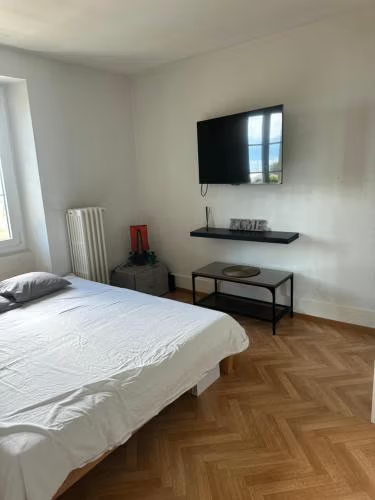
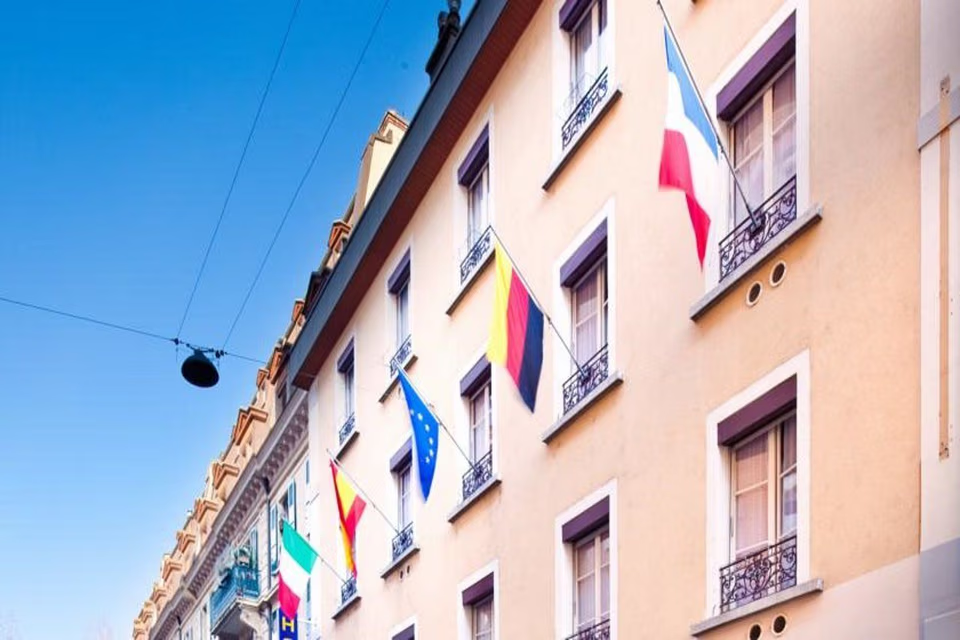
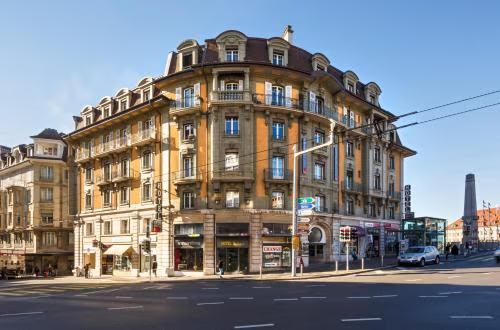
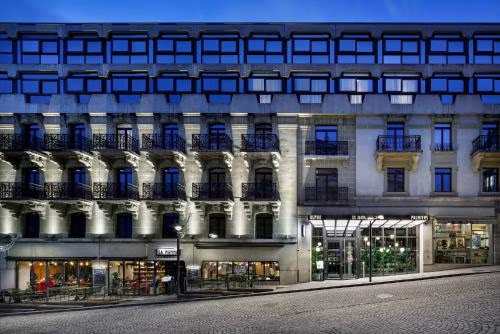
The only real pilgrim accommodation is at the Saint-Amédée parish in the Bellevaux district in the north of the city: four beds, around €20 (approx. CHF 19), closed at weekends (as of June 2026). Otherwise there is the Auberge de Jeunesse de Lausanne in Vidy, which has the advantage of lying right on the route to Morges. There are also hotels, guest rooms and a campsite, but nothing at pilgrim prices. The city council is to look into whether pilgrims could stay more cheaply in future; nothing has been decided yet (as of June 2026).
Ninja tips
- Sign up for the night watch. If you are up there at 10 pm, you hear the call up close. Phone from 10:15 pm on +41 21 312 74 91.
- Take the metro when your knees give out. The M2 runs from Epalinges right through the city to Ouchy on the lake.
- Walk the lakeside route to Morges. From Ouchy there is a variant along the shore via the mouth of the Chamberonne to Saint-Sulpice, quieter than the streets through Malley.
- Sleep in Vidy. The youth hostel lies by the lake and on the route to Morges, so you save yourself the walk through the city in the morning.
- Greet people in French. Since Fribourg you have crossed the language border; in Lausanne "Bonjour" gets you further than "Grüezi".
Practical tips for pilgrims
- Two routes: Lausanne lies on the Via Jacobi and on the Via Francigena, which runs from the Jura south to the Great St Bernard and on to Rome.
- Places to sleep on the way: The Lausanne–Rolle stage is 29.5 kilometres long. You will find accommodation in Saint-Sulpice after 7.2 and in Morges after 13.2 kilometres.
- Local transport: Bus 5 and the M2 metro connect Epalinges, the old town and Ouchy.
Onward: west along the lake
From Place Saint-François the route heads out through Malley to Vidy and the lake. After about 7 kilometres you reach Saint-Sulpice, a former Cluniac priory with an 11th-century tower and 14th-century wall paintings. It is 13.2 kilometres to Morges, with 85 metres up and 205 down, almost all of it flat along the shore.
What awaits you tomorrow
Morges, a Savoyard foundation of 1286 with a castle by the water and a harbour that at the end of the 17th century was the most important trading port on Lake Geneva. In spring more than 100,000 tulips bloom there.
Deep dive: The watchman of Lausanne
A short read, in case you want to learn more about Lausanne. About two minutes' reading.
A church above the city
Anyone who comes to Lausanne on the Via Jacobi walks down out of the Jorat forest and finally stands before the cathedral, high above the lake. Lausanne was a bishop's city, and this church was its centre. The church you see today was begun in 1170. Two master builders worked on it one after the other, and by around 1235 it was essentially finished, with a porch and two towers, one of which was never completed.
A pope and a king
In October 1275 Pope Gregory the Tenth came to Lausanne to consecrate the church to the Virgin Mary. At his side stood Rudolf of Habsburg, the new King of the Germans. For the bishop's city on Lake Geneva it was a high point. Inside, the church was painted in bright colours, and its south portal glowed. The travelling master builder Villard de Honnecourt had already drawn the great rose window of the transept in his sketchbook decades earlier.
The voice in the night
In 1405 the city began to keep a night watch on the bell tower. The watchman was to keep a lookout for fire. Every hour he called into the night that he was awake and that the bell had struck. This watch has never been broken since, not even by the Reformation. To this day someone stands on the tower every night from ten in the evening until two in the morning and calls out the hour. Since 2021 it has also been a woman.
The Reformation
In 1536 the Bernese took the Vaud, and the Reformation came with them. A new space for worship was set up in the cathedral, and the colourful walls were whitewashed. The bishops lost their city, and the bailiffs from Bern moved into the Château Sainte-Marie. Only in the twentieth century did restorers uncover the old colours again, including on the south portal.
What Lausanne gives you
You come to Lausanne as a pilgrim and are one of many passing through: some are heading to Santiago, others to Rome, and the city has no house of its own for either. But it has its watchman. When this text was written, in autumn 2026, he had been calling out the hour every night for more than six hundred years, for people who were long asleep. Perhaps that is this city's message to someone who sets off early: someone is awake, even if you cannot hear them.
Where to stay in Lausanne
Places to stay in Lausanne.
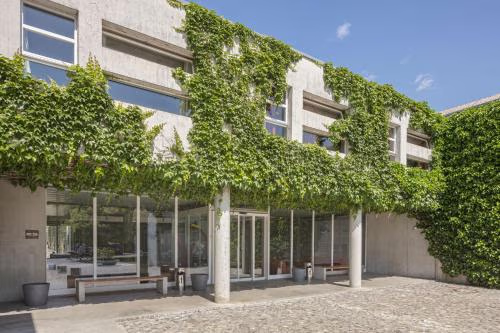 OpenReservations accepted
Auberge de Jeunesse de Lausanne
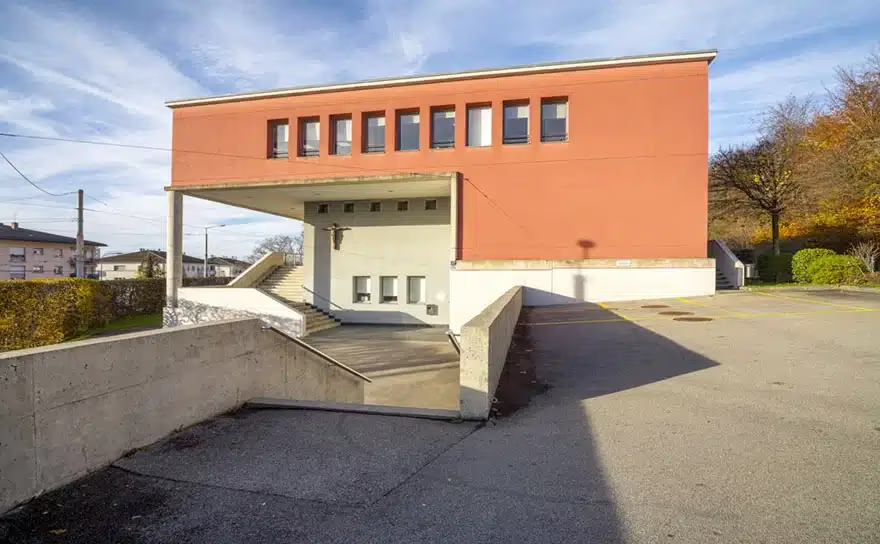 Closed
Paroisse Saint Amédée
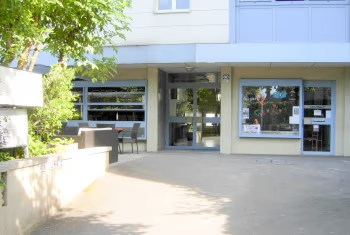 OpenReservations accepted
B&B Ada-Logements Lausanne
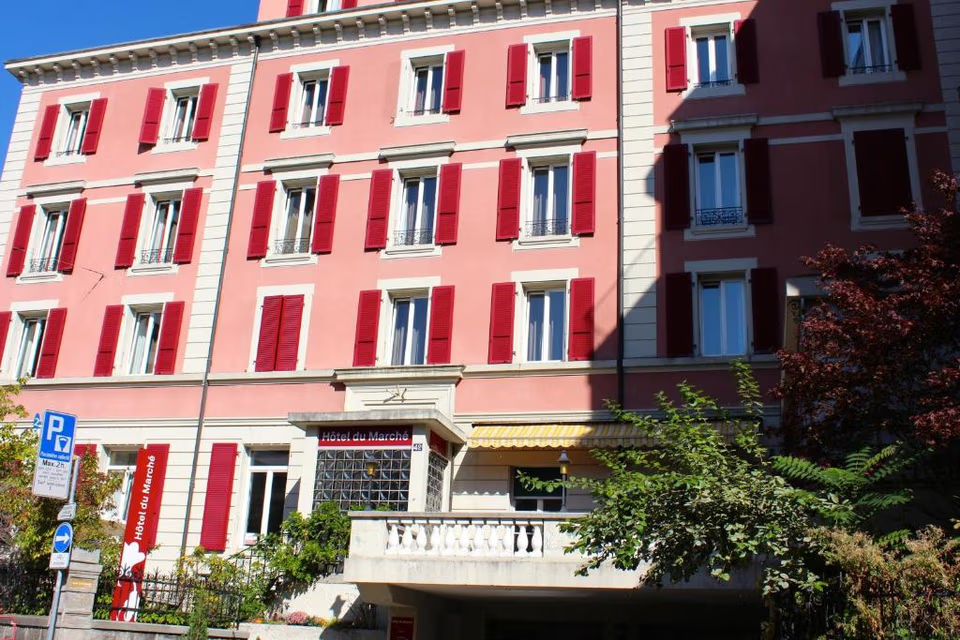
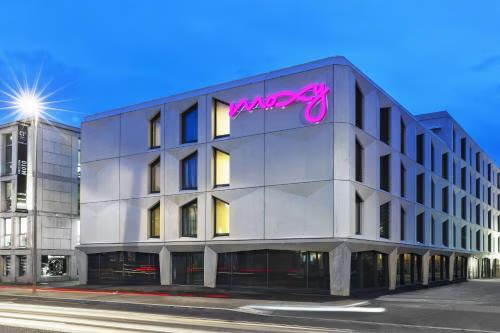
Services in Lausanne
What you can find in town before the next stage.
- ATM
- Café
- Shop
- Tobacco
- Medical clinic
- Pharmacy
- Fountain
- Post office
- Train station
- Bus station
- Airport
- Restaurant
Source: © OpenStreetMap contributors · updated April 2026
Town 1 of 1
Continue along the Via Francigena CH
Lausanne is the last popular town on the Via Francigena CH.