Town on the Camino
Loulé
Portugal
- places to stay
- 10
- Camino
- 1
- Elevation
- 172 m
Loulé is your first evening stop on the Camino de Faro, 23.4 kilometers past the cathedral. The town carries a lot: a church that belonged to the Order of Santiago from 1298, a bell tower on a minaret, and a Madonna that eight men carry at a run up the hill every year. An afternoon is enough; there is no pilgrim hostel.
Right now in Loulé (as of October 2026)
- Archaeological collection closed: The archaeological department of the Museu Municipal in the castle is "temporarily closed," according to the museum; the castle itself stays open. Call ahead: 289 400 885.
- Capital of Culture? Loulé is bidding to be Portuguese Capital of Culture 2028. The decision comes on December 9, 2026.
- Mãe Soberana 2027: Festa Pequena on Easter Sunday, March 28, 2027, Festa Grande two weeks later on April 11, 2027. On those days the town is full and the procession is the event of the year.
How long to stay?
An afternoon is enough. Church, castle, chapel and market hall lie within a few hundred meters of each other, and your route runs right through them. If you still have energy in the evening, walk up to the sanctuary of the Mãe Soberana on the hill. Staying longer is only worth it on a Saturday for the farmers' market, or around Easter, when the Madonna is carried into town. A rest day after the first stage is rarely needed anyway.
Loulé in Ninja numbers
- 23.4 kilometers are behind you since the cathedral of Faro; the highest point was at kilometer 16.3, at 291 meters, beyond Santa Bárbara de Nexe.
- 413.7 kilometers remain to Porto de Muge on the Tagus, where the Camino de Faro meets the Camino Portugués Central.
- 18 meters: that is how close the Camino Ninja map passes the portal of the Igreja Matriz, and 24 meters from the castle wall. You cannot miss anything in Loulé.
- Eight men carry the Mãe Soberana at a run up the slope to her chapel every year after Easter.
- €1 to €2 tourist tax per night, since November 2024: €1 from November to March, €2 from April to October.
Arriving: through the town, not past it
From Goncinha the route climbs the last two kilometers, a good 50 meters of ascent, and enters the town from the south. Then something happens that is rare on this route: the Camino Ninja map takes you right past the portal of the Igreja Matriz de São Clemente, across the Largo by the castle, past the Ermida de Nossa Senhora da Conceição and a few steps from the market hall. The bus station is 150 meters off the route, the church of São Francisco 200. If you book your night in the old town, you have no detour in the morning.
If you are arriving by train, you should know: the "Loulé" station on the Linha do Algarve is about 5 kilometers south of the town. From Faro, Vamus Algarve buses take about 40 minutes to the bus station on Rua de Nossa Senhora de Fátima, five minutes on foot from the market and the castle.
In brief: al-'Ulyà, the High One
Loulé was never a Roman town. Excavations in the old town in 2024 and 2025 did turn up Roman remains from the 2nd to 4th century, but only a small farm, not a town. The town was founded by the Moors, who called it al-'Ulyà, the High One. In the 12th century it was a fortified small town with rammed-earth walls, a public bath and a mosque, probably where the main church stands today.
In 1249 King Afonso III took the castle, together with Paio Peres Correia, Master of the Order of Santiago. The church was dedicated to Saint Clement, whose feast is on November 23; according to tradition, that was the day of the conquest. In December 1298, São Clemente passed to the Order of Santiago through an exchange between King Dinis and the Master. The earthquakes of 1722 and 1755 brought down towers and sections of wall, and the town rebuilt. Since 1906 Loulé has celebrated the oldest carnival in the Algarve, and in 2008, during a holiday program for schoolchildren, the Islamic bath was rediscovered beneath a manor house.
What Loulé carries
On Easter Sunday Loulé carries its Madonna into town. Nossa Senhora da Piedade, officially "Mãe Soberana" since 2016, leaves her chapel on the hill and moves into the church of São Francisco. Two weeks later, on the third Sunday of Eastertide, an open-air Mass is celebrated at 16:00 on the square by the monument to Duarte Pacheco. Then eight men in white trousers, the "Homens do Andor," take the heavy litter on their shoulders and run with it up the steep slope to the Ermida. The crowd pushes and shouts "Viva a Mãe Soberana," and at 23:30 there are fireworks. Around 1,000 pilgrims came on foot in 2026. It is regarded as the biggest Marian celebration south of Fátima.
The chapel she is carried to has stood up there since 1553; we know this from the visitations of the Order of Santiago in 1565. The order that accompanies you to Santiago carried this town for four centuries: it conquered it, received its main church in 1298 and was still inspecting its chapels in the 16th century. And this evening you feel your backpack for the first time. That fits.
What Loulé carries: what to see
Everything lies on the route, except the sanctuary. Take the hours before dinner. - Igreja Matriz de São Clemente: The Gothic main church from the second half of the 13th century stands on the site of the mosque; the base of its bell tower is considered by researchers to be an Almohad minaret from the 12th century, while the top of the tower came after the earthquake of 1755. Three naves, side chapels from the 16th century, a gilded high altar from the 18th century. For you, the date 1298 counts: from then on the church belonged to the Order of Santiago, and its sword is said to be visible above the main portal, so look. After a restoration it has been open again since September 2022, with a small museum in the side wing where the mantle and crowns of the Mãe Soberana are kept. We found no reliable opening hours; the sources say "mornings" and "at Mass times," Sunday 12:00 and Saturday 18:00. - Castle and Museu Municipal: Of the Moorish castle, three towers and a section of rammed-earth wall remain, and you can walk the wall walk; the battlements were added in the 1940s. The Order of Santiago moved in here in 1249. On the ground floor of the Alcaidaria, the town museum has been housed since 1995, with a mid-20th-century Algarve kitchen. Tuesday to Saturday 10:00–13:30 and 14:30–18:00, €1.62 (as of October 2026); closed Sundays and Mondays. The archaeological department is currently closed, the castle is not. - Ermida de Nossa Senhora da Conceição: Plain outside, inside azulejos from floor to ceiling and a gilded altar. Built from 1656 as thanks for Portugal's regained independence, as the inscription at the door says. The special thing lies beneath you: the chapel stands on an Islamic town gate, and its foundations are visible in the floor. You pray above the threshold of the Moorish town. We found no opening hours. - Banhos Islâmicos: The public bath from the 12th and 13th centuries is the first archaeologically documented Islamic bath in Portugal, open to visitors since May 2022 beneath the manor house of the Barreto family. Tuesday to Sunday 10:00–12:30 and 13:30–18:00, admission was free in 2022, and we found no current price. The only museum in town that opens on Sundays. - Mercado Municipal: The market hall of 1908 in neo-Arabic style with four gates and red domes. Monday to Saturday from 7:00, so also before you set off; on Saturdays a farmers' market until 13:00 in the streets around it, with dried figs, almonds, carob and honey. This is where you buy provisions for the Serra, where there is little. - Santuário da Mãe Soberana: The small Ermida of 1553 with ceiling paintings by Diogo de Sousa e Sarre, and next to it the modern sanctuary of 1995, stand on the hill 1.2 kilometers as the crow flies northwest of the Matriz, steeply uphill, with a view over the town. Tuesday to Sunday 9:00–17:00; Mass on Saturdays at 10:00, on Sundays at 17:00 in winter and 18:00 in summer. The first pilgrimage walk of your route, if you still feel like it after 23 kilometers. - Igreja de São Francisco: The church from the second half of the 18th century, 200 meters from the route, houses the Mãe Soberana in the two weeks after Easter. Tuesday to Friday 10:00–12:30 and 15:00–17:00.
Food and drink
The classic of Loulé is the Folhado de Loulé, puff pastry with egg cream and sugar, lighter than a pastel de nata, invented in the early 20th century by a housemaid, or so the town tells it. You get it at Café Calcinha on the Praça da República, in front of which the folk poet António Aleixo sits in bronze. To go with it: galinha cerejada, chicken with rice, cataplanas from the town's copper workshops and, from the hinterland, chickpea stew, black-pork sausage and a medronho, the schnapps from the strawberry-tree fruit, which will keep you company in the Serra tomorrow.
Honestly
- No pilgrim hostel. You sleep in guesthouses and hotels, plus the tourist tax. For the first evening of a Camino, that is sobering.
- Sunday and Monday are weak. Museum and castle Tuesday to Saturday, market Monday to Saturday, tourist office only on weekdays according to visitors. If you arrive on a Sunday, you have the baths; if you arrive on a Monday, the market.
- The main church can be closed. There are no reliable opening hours; in the afternoon you may well stand in front of a locked door.
- The stamp is not sorted out. A stamp point for pilgrims in Loulé is documented nowhere, so you have to ask.
- Waymarking gets thinner from here. Pilgrims reported missing arrows on the route in 2026; download the map offline.
Where pilgrims sleep
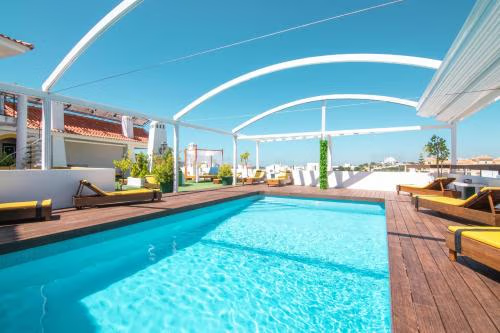
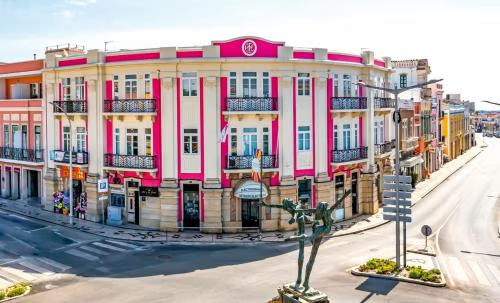
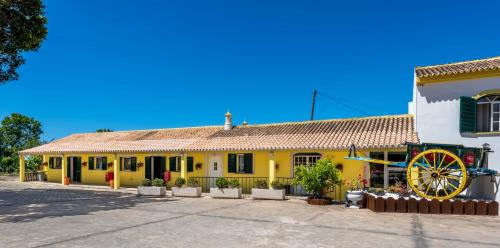
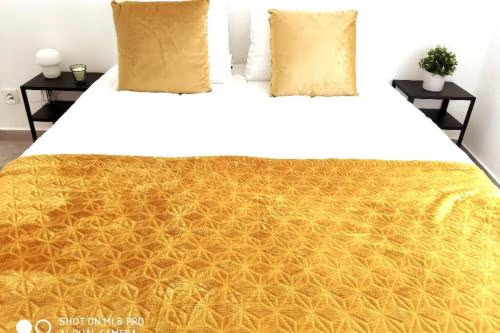
We found no pilgrim hostel in Loulé, whether municipal, church-run or donativo. A hostel with a dormitory existed in 2022 east of the old town and is now also run as a guesthouse; whether it still has dorm beds, we do not know. Otherwise you sleep in guesthouses and small hotels, ideally inside the old town so that you stand right on the route in the morning. Book ahead, and factor in the tourist tax of €1 to €2 per night.
Ninja tips
- Ask in the sacristy for the stamp. There is no list of stamp points on this route. The tourist office at Avenida 25 de Abril 7 stamps the tourism pass of the N2 and therefore has a stamp, but according to visitors only Monday to Friday.
- Buy your provisions for the Serra here. The market hall opens at 7:00. Between Loulé and Salir we have found no shop documented, and after that the Serra do Caldeirão begins.
- Look at the floor in the Conceição. The foundations of the Islamic gate lie beneath the chapel.
- Look for the sword above the portal of the Matriz. It is said to be the emblem of the Order of Santiago, to which the church belonged from 1298. If you find it, you have the first Saint James evidence of your route.
- To the sanctuary before 17:00. The Santuário closes at 17:00; if you arrive in Loulé at 16:00, you will not make the climb in time. Then tomorrow morning or not at all.
- Take the bus, not the train. If you are interrupting your walk here: the station is 5 kilometers outside town, the bus station in the middle of it.
When it rains
In Faro, December brings on average 90 millimeters of rain over seven rainy days, November 75 (IPMA 1991–2020); we have no figures of our own for Loulé. - Banhos Islâmicos: Tuesday to Sunday 10:00–12:30 and 13:30–18:00. - Museu Municipal in the castle: Tuesday to Saturday 10:00–13:30 and 14:30–18:00, €1.62. - Market hall: covered, Monday to Saturday 7:00–15:00. - Igreja de São Francisco: Tuesday to Friday 10:00–12:30 and 15:00–17:00. - Casa Memória do Século XX: Tuesday to Saturday 10:00–13:00 and 14:00–18:00, free admission.
Practical tips for pilgrims
- Credencial: You cannot get one in Loulé. The Associação Espaço Jacobeus sends it online for €3.20 plus postage (as of September 2026); order it before you start in Faro.
- Compostela: The route from Faro is not one of the six state-certified Caminos of Portugal (as of January 2026). For the Compostela, all that counts in the end is that your credencial documents the last 100 kilometers.
- Tourist tax: €1 per night from November to March, €2 from April to October, from age 16, five nights at most.
- Getting here and taking a break: Vamus Algarve buses from Faro, about 40 minutes, less frequent on weekends. Station 5 kilometers outside town.
- Sunday: Market hall and museum closed, baths and sanctuary open.
Onward: via Tôr to Salir
The route leaves Loulé to the north, past the Igreja São Francisco. It is 20.0 kilometers to Salir with 418 meters of ascent and 346 meters of descent: first down to 114 meters, then over Aldeia da Tôr (km 33.1) with the old bridge over the Ribeira de Algibre, whose origin is said to be Roman and which was renewed in the Middle Ages, and up to 319 meters, before it goes down to Salir (km 43.4, 244 m). We have found no shop documented along the way. Beyond Salir the Serra do Caldeirão begins; at Alganduro (km 49.5) you are at 404 meters.
What awaits you tomorrow
Salir, a village beneath an Almohad castle that fell in 1249 in the same campaign as Loulé. From the castle hill you see the Rocha da Pena, the limestone crag to which, according to legend, the Moors retreated before the troops of Paio Peres Correia. The small museum in the castle is currently closed, the view is not. Beyond it, things grow lonely: the Serra do Caldeirão is the reason you shopped in Loulé today.
Deep dive: The town that carries its Madonna up the hill
A read, in case you want to learn more about Loulé. About eight minutes' reading.
In front of the Matriz, after the first stage
When you stand in front of the main church of Loulé, you stand at a place that has changed hands three times. Beneath the bell tower you see, researchers suspect the base of a minaret from the twelfth century. Above it, after 1249, the Christians built a Gothic church. And in 1298 the king handed this church to a knightly order that bears the same name as the goal of your journey: the Order of Santiago. Your first evening on the Camino de Faro is therefore also the first place where Saint James left traces, not as a pilgrim saint, but as a lord.
The High One
The name of the town is Arabic. Al-'Ulyà means the High One, and anyone coming up from Faro today understands why: Loulé lies at 172 meters on the edge of the Barrocal, the zone of limestone hills between the coast and the mountains. There was no Roman town here, even though people long assumed there was. When archaeologists opened up the streets of the old town in 2024 and 2025, they did find Roman walls from the second to fourth century, but only those of a small farm, six hundred years older than the town. The town itself was founded by the Moors. In the twelfth century it was surrounded by a rammed-earth wall, about 940 meters long, which enclosed an area of five hectares. There was probably a mosque on the site of today's church, a public bath with warm and cold rooms, and a cemetery outside the walls, where a small garden next to the church lies today.
The bath is the town's most recent discovery. In 2006, in a manor house from the fifteenth century, an excavation began that was meant as a holiday program for schoolchildren. Beneath the floor a hammam came to light, with an almost complete floor plan, the only one of its kind in Portugal. Since May 2022 you can visit it. Loulé is a town where you have to look down.
The order arrives
In 1249 Afonso the Third conquered the rest of the Algarve. At his side stood Paio Peres Correia, a Portuguese who led the Order of Santiago, based in Castile, and had directed the campaigns in the south since 1242. The castle of Loulé fell, and the mosque became the church of Saint Clement, whose feast is celebrated on the twenty-third of November. Whether the conquest really happened on that day cannot be proven; it is the kind of date one likes to make fit afterwards. In 1266 the town received its charter, in 1269 a second one for the Moorish quarter in the south, because the old inhabitants stayed.
In December 1298 King Dinis exchanged properties with the Master of the order, and the church of São Clemente passed to the Order of Santiago. From then on the parish priests of Loulé were men of the order, and its visitors came regularly to inspect churches and chapels. From one such visitation in 1565 we know that the chapel of Nossa Senhora da Piedade on the hill outside the town was built in 1553. The order did not only shape the history of this town, it also wrote it down.
Earthquakes and rebuilding
In 1722 and 1755 the earth shook. The second quake, which destroyed Lisbon, brought down towers and large parts of the wall in Loulé and damaged the main church. The town rebuilt, as it was used to doing: the bell tower received its present crown, the chapel on the hill a new main altar, completed between 1760 and 1764. The battlements of the three castle towers, which look so medieval today, were only added in the 1940s. Whoever sees something old in Loulé mostly sees something that has been repaired many times.
In the nineteenth and twentieth centuries the town grew beyond its walls. In 1873 the town gate was torn down, and in 1908 a section of wall to make way for the new market hall. The market hall in Moorish style, with four gates and red domes, has been the heart of the town ever since, and since 1906 the carnival, the oldest in the Algarve, has moved through the avenue every year.
The Madonna who is carried up
What sets Loulé apart from all other towns of the Algarve happens on two Sundays in spring. On Easter Sunday the figure of Nossa Senhora da Piedade, since 2016 with the title Mãe Soberana, Sovereign Mother, is carried from her chapel on the hill into the town, to the church of São Francisco. There she stays for two weeks. On the third Sunday of Eastertide, at four in the afternoon, an open-air Mass is celebrated on the square by the monument to Duarte Pacheco, the engineer and minister who came from Loulé. Afterwards eight men in white trousers and capes lift the litter with the figure onto their shoulders. They do not walk. They run. Up the steep slope to the chapel, with the heavy litter, while the crowd pushes and shouts. At half past eleven at night the fireworks rise.
It is regarded as the biggest Marian celebration south of Fátima. In 2026 around one thousand pilgrims came on foot to be there. The cult goes back to the sixteenth century, and when you visit the chapel you see the ceiling paintings by Diogo de Sousa e Sarre, one of the most important painters of the Algarve of his time. Next to it, since 1995, stands a modern sanctuary, because the small chapel had long since ceased to be big enough for the crowd.
What Loulé gives you to take along
Tomorrow you walk on with the backpack that has grown heavy for the first time today. Loulé shows you that carrying can be a form of faith, even if you do not believe: eight men, one litter, a steep slope, and a whole town running behind. The church you walk past has belonged since 1298 to the order whose name accompanies you to the end of the way. When this text was written, in the autumn of 2026, Loulé still had no pilgrim hostel and no fixed stamp. Perhaps you will be one of those by whom people here one day take their bearings.
Where to stay in Loulé
Places to stay in Loulé.
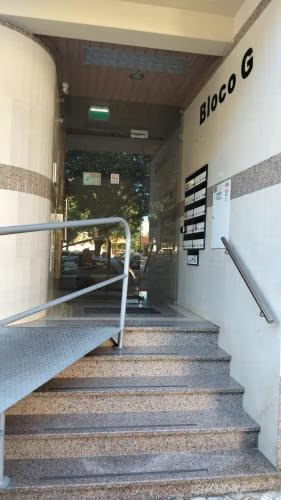 OpenReservations accepted
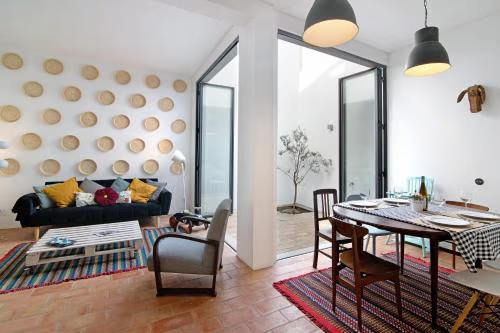
Q1 Blueroom Sofia's Happy Apartment
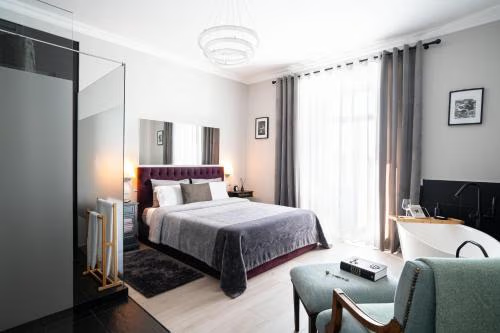 OpenReservations accepted
Downtown Loulé
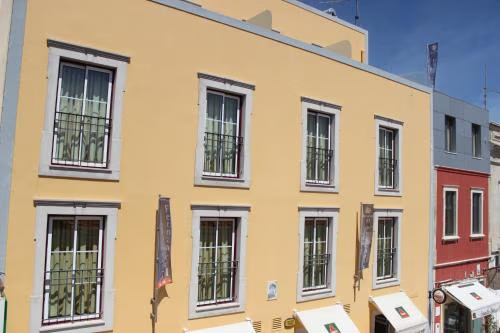 OpenReservations accepted
Dom Fernando II