

Stage town on the Camino
Palas de Rei
Lugo, Galicia, Spain
- places to stay
- 35
- Camino
- 1
- Elevation
- 566 m
Palas de Rei is the gathering place before Santiago: the Codex Calixtinus already knew it as the second-to-last stage stop, and at the edge of town medieval pilgrims met to walk the last 68 kilometers together. Today the map says 67.5. The town itself is plain, one evening is enough, and two public albergues will take you in.
How long to stay?
One evening is enough. Palas de Rei is a country town on the road, not a museum. The church of San Tirso with its Romanesque portal is quickly seen, the rest is albergue, dinner, sleep. If you have time, spend it on the way instead: on the detour to Vilar de Donas, before you arrive.
Palas de Rei in Ninja numbers
- 67.5 kilometers are left from here to Santiago. In the 12th century the Codex Calixtinus gave 68 and found the stretch "moderada", moderate.
- 725 meters high was today's highest point at Ventas de Narón, between Portomarín and here.
- 24.7 kilometers are behind you today from Portomarín, with 636 meters of ascent.
- 1 kilometer before the center lies the second public albergue, Os Chacotes, right on the path.
- 14.9 kilometers are left tomorrow to Melide, the shorter part of a stage that many extend to Arzúa.
Arriving: past the albergue, down the stairs
From Lestedo and A Brea you come over gently rolling land. One kilometer before the center you pass Os Chacotes, the large public albergue at the edge of town. Then you go into the Rúa do Cruceiro, past the church of San Tirso, and down a flight of stairs into the center, where most of the other albergues are. If you are heading for Os Chacotes, you have already arrived.
In brief: the royal palace nobody has found
According to tradition, the name comes from "Pallatium regis", the palace of the Visigothic king Witiza, who reigned from 702 to 710. A legend says he killed Favila here, the father of Pelayo, who later began the Christian reconquest. The palace is not documented. The road is: the Roman connection to Lucus Augusti, today's Lugo, ran here, and in the Middle Ages the Camino de Santiago brought the town its best time. The Codex Calixtinus mentions Palas several times and makes it the end of the second-to-last stage before the apostle's tomb.
The gathering place before Santiago
At the edge of town, in the parish of O Carballal, lies the Campo dos Romeiros, the field of the pilgrims. Here in the Middle Ages the pilgrims who had found or lost each other on the way gathered to walk the last stretch to Santiago together. Today's path leaves Palas de Rei exactly there.
That still fits today. From Sarria on the path is full, and in Palas de Rei it thickens once more: groups, school classes, pilgrims with a small day pack and pilgrims who have been on the road since Saint-Jean sleep here under the same roofs. You don't have to join anyone. But when you set off tomorrow morning, you won't be walking alone.
The gathering place: what to see
There is little in the town itself, more is worth seeing on the way before.
- San Tirso: The parish church is modern, but its portal is Romanesque, from the 12th century. It stands at the entrance to town right on the path, so you pass it anyway. We did not find opening hours.
- Vilar de Donas: The Romanesque church from the 13th century belonged to a monastery of the Order of Santiago, the knightly order that bears the name of your destination. Inside you find Gothic wall paintings in the apse, tombs with the coats of arms of the order's knights and a Gothic canopy from the 15th century, the only freestanding one in Galicia. It has been a national monument since 1931. It is not on the path: the detour branches off between Portos and Lestedo, about 2.5 kilometers there and the same back. We did not find opening hours, so ask the day before in Portomarín or at your albergue.
- Castelo de Pambre: Gonzalo Ozores de Ulloa built the castle around 1375, and it withstood the Irmandiños uprising of 1467, when many castles in Galicia fell. Square plan, four corner towers, a keep, a chapel. It lies off the path in the municipality; we did not find reliably how far.
Food and drink
Palas de Rei lives from pilgrims, so there are many bars with raciones, pilgrim menus and grocery shops, a bakery and a butcher. We did not find a specialty of the town itself.
Honestly
- The town is unremarkable. A through road, new buildings, little that is old. If you expect a pretty small town after Portomarín, you will be disappointed.
- The best part lies before it. Vilar de Donas is the art-historical highlight of this section, but it can only be reached with a detour of five kilometers.
- Many albergues close in winter. Between December and March only the public ones are sure to be open.
- It is crowded. Palas de Rei is a classic stage destination for everyone who starts in Sarria.
Where pilgrims sleep
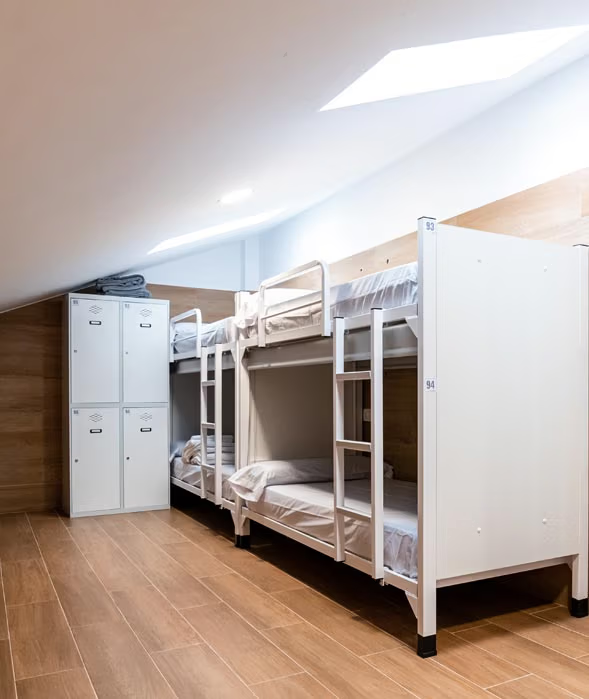
Palas de Rei has two albergues of the Xunta de Galicia, both open all year and for €10 (as of October 2026). The Albergue de peregrinos Os Chacotes lies one kilometer before the center right on the path and is the last to fill up in high season. The Albergue de peregrinos de Palas de Rei is central on the Avenida Compostela, but clearly smaller. In addition there are private albergues for €15 to 20 (as of October 2026), such as San Marcos next to the church of San Tirso. Most private ones open from March or Holy Week until October or November.
Ninja tips
- Go to Os Chacotes when everything is full. The large public albergue before town is usually the last one to run out of beds. The way into the center is only one kilometer.
- Do the detour to Vilar de Donas in the morning. If you only reach Portos in the afternoon, you arrive late and may find no bed.
- Collect the two stamps. San Tirso and the albergues stamp; on the last 100 kilometers you need two per day.
- Plan tomorrow to Arzúa or Melide. It is 14.9 kilometers to Melide, 29.1 to Arzúa. If you sleep in Melide, you split the two days more evenly.
Practical tips for pilgrims
- Supplies: ATM, pharmacy, grocery shop, bakery in town.
- Health center: Phone 982 380 176, emergency 061.
- Taxi: 982 374 103.
- Bus: Autobuses Freire stops in front of the town hall, toward Santiago and Lugo. Phone 982 220 300.
- Festivals: San Tirso on January 28, Ecce Homo in mid-September.
Onward: down to Melide
The path leaves Palas de Rei at the Campo dos Romeiros and partly descends gently: via San Xulián do Camiño (km 712.1), Ponte Campaña (713.3), Casanova (714.5) and O Coto (717.2) to Leboreiro and down to Furelos with its bridge, where you are at your lowest at 408 meters. Then it climbs briefly to Melide. It is 14.9 kilometers to Melide, 298 meters of ascent and 407 meters of descent. If you keep going, it is 29.1 kilometers in total to Arzúa.
What awaits you tomorrow
Melide, where the Camino Primitivo from Oviedo joins the Camino Francés. From there the pilgrims of both paths walk together, and the town is famous for something you should try there.
Deep dive: The last 68 kilometers
A short read, in case you want to learn more about Palas de Rei. About three minutes' reading.
A palace that perhaps never existed
Palas de Rei means royal palace, and tradition even knows which king is meant: Witiza, the second-to-last king of the Visigoths, who reigned from the year 702 to 710. He is said to have lived here, and here he is said to have slain a duke named Favila, the father of Pelayo, with whom a few years later Christian Asturias began. Nobody has found the palace. Perhaps the name is older than the story that was later told about it.
The road was there first
What is certain is that a Roman road ran here, leading to the city of Lucus Augusti, today's Lugo. Later the road of the pilgrims was added, and it brought the town its best time. The Codex Calixtinus, the pilgrim guide from the twelfth century, mentions Palas de Rei several times and makes it the end of the second-to-last stage. For the last stretch to the apostle's tomb it gives sixty-eight kilometers, and its author calls it moderate. The map of Camino Ninja today measures sixty-seven point five. In nine hundred years the path has become half a kilometer shorter.
The field of the pilgrims
At the edge of town lies a place called Campo dos Romeiros, the field of the pilgrims. Here, so it is told, the pilgrims gathered in the Middle Ages to walk the last piece together. People did not like to walk alone into the city of the apostle. There were robbers, there were swindlers, and there was the joy people wanted to share. Whoever had lost themselves on the way found each other again here.
What Palas de Rei gives you
When this text was written, in autumn 2026, the Camino still left Palas de Rei exactly at this field. Tomorrow morning you walk past the spot where pilgrims have been waiting for each other for centuries. Perhaps you are waiting for nobody. Perhaps somebody is waiting for you. Both are fine. Only the direction is the same for everyone.
Where to stay in Palas de Rei
The places pilgrims rate highest in Palas de Rei come first.
- Top #1
 ClosedReservations accepted
Albergue Mesón de Benito
- Top #2
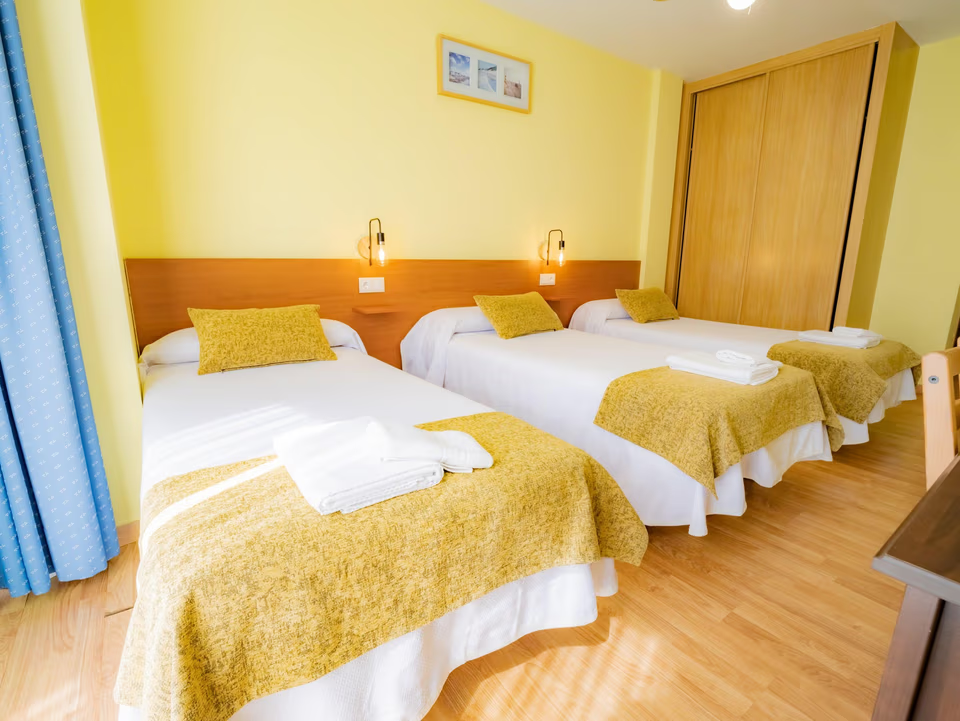 OpenReservations accepted
Pensión Palas
- Top #3
 ClosedReservations accepted
Albergue A Casina di Marcello


Services in Palas de Rei
What you can find in town before the next stage.
- ATM
- Café
- Shop
- Tobacco
- Medical clinic
- Pharmacy
- Fountain
- Post office
- Restaurant
Source: © OpenStreetMap contributors · updated November 2025
Town 43 of 49