

Stage town on the Camino
Pontedeume
A Coruña, Galicia, Spain
- places to stay
- 14
- Camino
- 1
- Elevation
- 3 m
Pontedeume is where your first day on the Camiño Inglés ends, 29.5 kilometres from Ferrol: you enter town over a bridge that already stood here in 1380, then around 850 metres long, with a chapel and a pilgrim hospital. It was built by the Andrade family, whose tower still rises above the ría. An afternoon is enough.
How long to stay?
An afternoon is enough, but take it. The old town is small and steep, and two hours see you through it: the bridge, the Andrade tower, the church of Santiago, a few lanes. You only need more time for the Fragas do Eume, one of Galicia's great old forests. They lie about ten minutes upriver by car, not an afternoon walk from here. If you want to see them, plan a whole day.
Pontedeume in Ninja numbers
- 29.5 kilometres lie behind you since Ferrol, your first day on the Camiño Inglés. With 615 metres of ascent, it was hillier than the coast suggests.
- 84.5 kilometres are left from here to Santiago de Compostela.
- Around 850 metres long was the bridge Fernán Pérez de Andrade had built across the mouth of the Eume in 1380. It was considered one of the longest in Europe.
- 15 arches carry the bridge you cross today. It was built in the 19th century on the old crossing.
- Around 165 metres of climbing await you tomorrow right behind the old town, in the first 1.8 kilometres.
Arriving: over the bridge into town
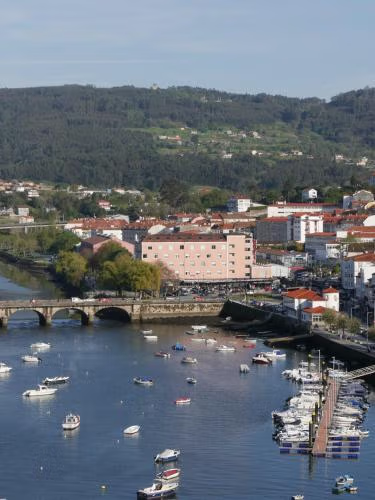
The last five kilometres run downhill all the way: from the day's highest point at Pereiro, 182 metres up, down to the ría. In Cabanas the path leads through pines and past the beach of A Magdalena. Then you stand at the bridge and see Pontedeume on the other side of the Eume, built into the hillside. The bridge is no longer the medieval one, but the crossing is the same: since the 14th century pilgrims have entered town at exactly this spot. The hostel is right at the entrance to town by the harbour, about 200 metres off the waymarks.
In brief: the town of the Andrade
Pontedeume was founded in 1270 under King Alfonso X, where the Eume flows into the ría. The town owes its rise to the Andrade family, who ruled the coast between Ferrol and Betanzos. Fernán Pérez de Andrade, known as „O Bo“, the Good, had a castle built on a hill outside town between 1369 and 1377, a palace in town and, in 1380, the great bridge. It carried two towers, a chapel and a hospital for pilgrims and wayfarers. Anyone who wanted to cross paid a toll to the Andrade.
Of the palace only the tower, the Torreón, still stands. The church of Santiago was built by a descendant, Fernando de Andrade, in the early 16th century. In the 18th century Archbishop Bartolomé Raxoi left his mark: he had a palace, warehouses by the harbour and a new pilgrim hospital built in Pontedeume. Tonight you sleep in his warehouses.
Bridge, tower and church: what to see
Everything lies between the harbour and the church, a few minutes apart.
- The bridge over the Eume: The medieval bridge of 1380 had dozens of arches; sources vary between 68 and 79. Between arches 20 and 22 stood the chapel and the hospital. It was rebuilt between 1860 and 1890 and now has 15 arches. For you as a pilgrim it is the real reason this town exists: anyone heading north or south had to cross the river here. Only two stone figures survive from the old bridge, a bear and a boar, the heraldic animals of the Andrade.
- Torreón dos Andrade: The late 14th-century tower is about 18 metres high and all that is left of the Andrade town palace. Today it houses the tourist office and an exhibition space. Climb up to the battlements: from the top you see the ría, the bridge, Cabanas and the harbour, in other words the way you came.
- Igrexa de Santiago: The early 16th-century church stands at the top of the old town, right on the Camino. Inside sits a granite Saint James from the end of the 14th century, older than the church itself, with a Renaissance altarpiece of 1530 behind him. A remnant of the town wall from 1619 runs around the atrium. We did not find opening hours; you pass it tomorrow morning anyway.
- Convento de San Agustín: Fernando de Andrade founded the monastery outside the walls in 1538. It was dissolved in 1835 and is now the town's cultural centre. According to one source, the bear and the boar from the old bridge are kept here.
- Pazo do Arcebispo Raxoi: A two-storey house with balconies and the archbishop's coat of arms, built in the second half of the 18th century.
Eating and drinking
The local speciality is costrada, an empanada made of several layers of dough. Add fish and seafood from the ría: sardines, clams, smoked sprats (parrochos de fume). For afterwards there are melindres, almond pastries and the manguito eumés. Since the hostel has no kitchen, you will be eating out anyway. You will find bars and restaurants in the old town.
Honestly
- The hostel has no kitchen and no heating. There are blankets, but on cold evenings it gets damp. And you cannot cook.
- You do not check in at the hostel but at the tourist office. It closes at midday. Arrive at the wrong time and you wait.
- Twenty beds, no reservations. The public hostel is small. The private hostel by the river only opens from mid-March to the end of October.
- The morning starts hard. Right behind the old town begins the steepest climb on the whole Camiño Inglés. It is short, but it comes on cold legs.
- The Fragas do Eume are close and yet far. Without a car, a taxi or the summer boat from Cabanas, you cannot get there.
Where pilgrims sleep
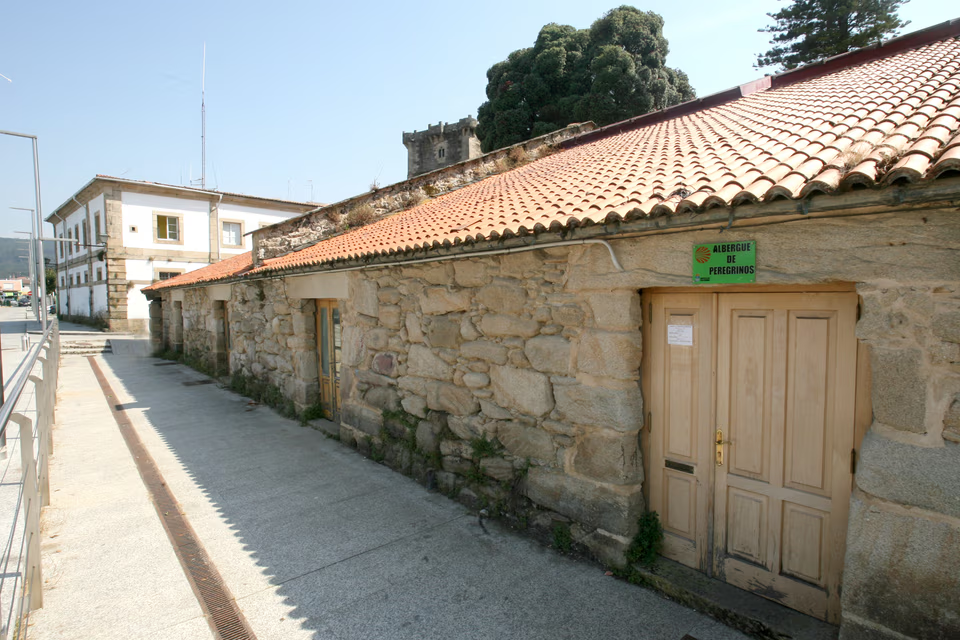
The Albergue de Peregrinos de Pontedeume belongs to the town and occupies Archbishop Raxoi's old warehouses right on the harbour. It has been open since 2010, has 20 beds in one dormitory and takes no reservations. Check-in and payment go through the tourist office. It is open all year except between 25 December and 1 January. There is no kitchen and no washing machine.
There is also a private hostel by the river, about 500 metres from the old town, open from mid-March to the end of October, and several guesthouses in the old town. There is no donativo or parish hostel. For some years the town has been converting the old 18th-century pilgrim hospital into a second public hostel. Whether it has opened yet, we could not confirm.
Ninja tips
- Check in at the Torreón and climb straight up. The tourist office where you register for the hostel is inside the Andrade tower. That way you combine paperwork with a view.
- Plan to eat out. With no kitchen at the hostel, it pays to find out right after arrival where they serve costrada.
- Take tomorrow's climb slowly. Around 165 metres of ascent in 1.8 kilometres, straight after waking up. After that it gets easier, even if a few more hills come before Betanzos.
- Fragas do Eume in summer: In season a boat runs from Cabanas to the Fragas, but only with a reservation.
- Bring a sleeping bag. The hostel has no heating.
Practical tips for pilgrims
- Tourist office: in the Torreón, phone 981 430 270. Tuesday to Saturday 10:30–14:00 and 16:00–19:00, Sundays and holidays 11:00–14:00 (as given by the source; check-in times for the hostel may differ).
- Supplies: Bars, restaurants, shops, a pharmacy and an ATM are all in town.
- Getting here and away: Buses and trains link Pontedeume with Ferrol and A Coruña.
- Festivals: A medieval fair takes place in the first week of July, the Festa de As Peras in early September.
Onward: up and over to Miño
The arcaded Rúa Real takes you past the church of Santiago and out of town, and then it is steeply uphill: in 1.8 kilometres you climb from the harbour to 167 metres. At the top the path runs through fields and eucalyptus, then back down to the coast at Miño (km 37.4), with beaches and a small hostel. Via A Ponte do Porco (km 41.1) you reach Betanzos (km 49.8). The whole stage is 20.3 kilometres long, with 733 metres of ascent and 710 metres of descent, more than on the first day.
What awaits you tomorrow
Betanzos. You come over the old bridge on the Mandeo and through a town gate into an old town considered one of the most interesting in Galicia. In the church of San Francisco lies the tomb of Fernán Pérez de Andrade, the man who built the bridge at Pontedeume. Yesterday you crossed his bridge; tomorrow you stand at his grave.
Deep dive: The lord of the bridge
A short read, in case you want to learn more about Pontedeume. About three minutes' reading.
A river everyone had to cross
Pontedeume means bridge over the Eume. The name says it all: the town owes its existence to a crossing. The Eume comes down from the mountains, opens into a wide ría here and separates the coast of Ferrol in the north from the coast towards Betanzos and A Coruña in the south. Anyone travelling along this coast in the Middle Ages, merchant, soldier or pilgrim, had to cross here. King Alfonso the Tenth founded a town on this spot in 1270.
Fernán Pérez de Andrade
The man who turned the crossing into a monument was Fernán Pérez de Andrade. His family ruled the coast between Ferrol and Betanzos. People called him O Bo, the Good. Between 1369 and 1377 he had a castle built on a rock outside town, a palace in town, and in 1380 he began the bridge. It was around 850 metres long, rested on dozens of arches and carried two towers, a chapel and a hospital. In that hospital pilgrims and wayfarers found a bed, right above the water. Whoever used the bridge paid a toll to the Andrade. So it was both: a work of piety and a source of income.
Bear and boar
The Andrade coat of arms showed a bear and a boar. Both stood on the bridge as stone figures. When the medieval bridge was replaced in the nineteenth century, only these two animals remained. They are the last piece of the structure pilgrims walked across for five hundred years.
What Pontedeume gives you
When this text was written, in autumn 2026, pilgrims in Pontedeume slept in an archbishop's warehouses, two hundred metres from the bridge. You have your first day behind you, and at the end of that day stood a bridge. Fernán Pérez de Andrade lies buried in Betanzos, the goal of your next stage. His bridge has outlived him, even if it is no longer the same one. Perhaps that is all one can ask of a building: that it carries people across, long after its builder is gone.
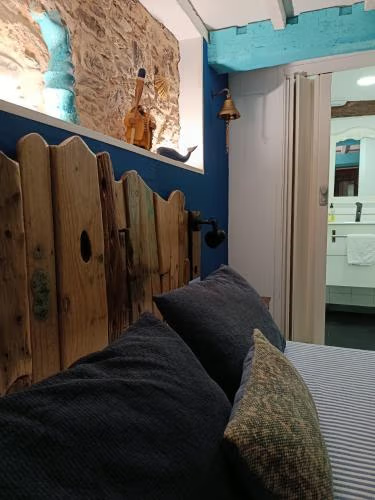
Where to stay in Pontedeume
The places pilgrims rate highest in Pontedeume come first.
- Top #1
 Open
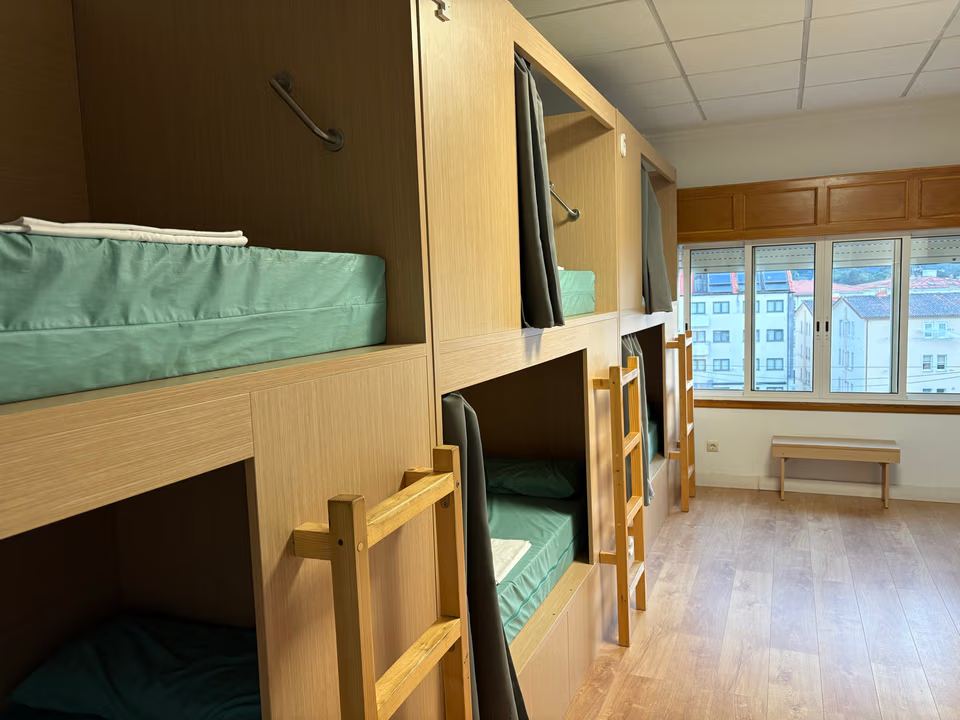
Albergue-Hostel Río Eume
- Top #2
 OpenReservations accepted
A Casa da Toura
- Top #3
 OpenReservations accepted
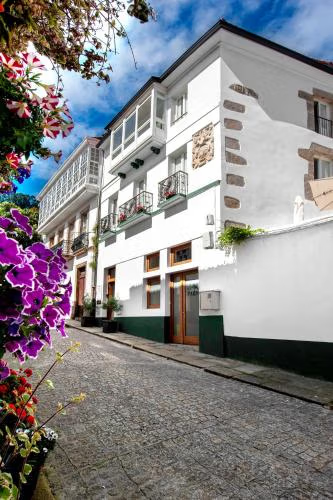
SNÖ Hotel Camino do Eume Apartamentos

Services in Pontedeume
What you can find in town before the next stage.
- ATM
- Café
- Shop
- Tobacco
- Pharmacy
- Fountain
- Post office
- Train station
- Restaurant
Source: © OpenStreetMap contributors · updated November 2025
Town 3 of 8