

Town on the Camino
Potes
Spain
- places to stay
- 14
- Caminos
- 3
- Elevation
- 293 m
Potes is the hub of the Liébana: three routes end here, and from here it is about three kilometres up to the monastery of Santo Toribio with the Lignum Crucis. The small town between the Deva and the Quiviesa has bridges, a 15th-century defensive tower and a Monday market. An afternoon is enough if you visit the monastery without your backpack.
How long to stay?
An afternoon is enough, but plan on the night. Potes is small, and you will have seen the old town within an hour. The real reason to stay lies three kilometres further up: many pilgrims sleep in Potes, leave their backpack at the albergue and walk to the monastery of Santo Toribio and back without luggage. If you are here on a Monday, you get the weekly market as a bonus.
Potes in Ninja numbers
What the numbers say about the town:
- 3 routes: The Camino Lebaniego Leonés from Portilla de la Reina and the Camino Lebaniego Castellano from Palencia end in Potes, and the Camino Vadiniense & Lebaniego stops here.
- 64 kilometres is the distance back to the coast at San Vicente de la Barquera according to Camino Ninja, and 156 to Mansilla de las Mulas on the Camino Francés.
- About 3 kilometres and a good 250 metres of climbing separate Potes from the monastery of Santo Toribio.
- 15,800 pilgrims were registered by the Fundación Camino Lebaniego in the Holy Year of 2017.
- About 290 metres above sea level, Potes is the lowest point of the Leonés. If you came over San Glorio, you have descended a good 1,300 metres since the pass.
Arriving: between two rivers
Potes lies where the Quiviesa flows into the Deva, on the N-621 from Unquera to León. From the north you come along the Lebaniego through the Deva valley, from the south over San Glorio and Porcieda or via Pesaguero on the Castellano. If you come over San Glorio, you enter the town across the Puente de San Cayetano and are immediately in the old town. It has been protected as a Conjunto Histórico since 1983.
In brief: the main town since the 15th century
Potes was resettled under Alfonso I of Asturias and first mentioned in 847; the church of San Vicente already belonged to the monastery of Santo Toribio in 947. In the 15th century the Mendoza family, the Marqueses de Santillana, made Potes the main town of the Liébana and built the defensive tower now called the Torre del Infantado. In 1937 the old town burned down in the Civil War; much of what you see today has been rebuilt.
Potes: what to see
Everything is close together, and without a backpack you can do the circuit in an hour.
- Torre del Infantado: The 15th-century defensive tower is the town's landmark. Inside, an exhibition tells the story of Beatus of Liébana, the monk who wrote his commentary on the Apocalypse at Santo Toribio in the 8th century; his illustrated copies were reproduced all over Europe. From the roof you can see over the town as far as the Picos. In summer open daily 9:30 am to 7:30 pm (as of summer 2026); it is unclear whether the tower is currently being restored, so check on the spot.
- Puente de San Cayetano: The old stone bridge over the Quiviesa is the town's classic photo spot; the Leonés leaves Potes across it towards San Glorio. Sources date it differently.
- Old church of San Vicente: The medieval parish church now serves as the tourist information office and Centro de Estudios Lebaniegos. This is where you get the stamp, and where you can leave large luggage.
- New church of San Vicente: The current parish church was begun in the late 19th century and houses Baroque altarpieces from the old church and from the demolished convent of San Raimundo.
- Monday market: Every Monday morning the weekly market fills the old town; you can buy Liébana cheese, honey and orujo straight from the producer.
Food and drink
The Liébana has a cuisine of its own, and Potes is its shop window. The cocido lebaniego is a chickpea stew in two courses: first the broth, then chickpeas with meat, sausage and cabbage. The quesucos de Liébana are small cylindrical cheeses made from cow's, sheep's or goat's milk, often smoked. And the orujo de Liébana, a pomace brandy, has its own designation of origin and its own festival: on the second weekend of November, a Fiesta de Interés Turístico Nacional since 2012.
Honestly
What you should know:
- Potes is touristy. In summer and at weekends the town is full of day trippers, and prices are above what pilgrims from the hinterland are used to. It is quieter in April, May, September and October.
- The albergue is not always reliably open. According to our database it is open all year, but one pilgrim report mentions a temporary closure in May 2025. Call the Pilgrim Office Potes beforehand: +34 942 738 126.
- Bring cash. On the Lebaniego from the coast there are hardly any cash machines before Potes.
- The way to the monastery follows the road. Part of the climb runs alongside the road, which gets many tourist coaches in summer.
Where pilgrims sleep
The Albergue de Peregrinos de Potes is the municipal pilgrim albergue, only for pilgrims with a credencial, 52 places according to our database (another source says 60). A pilgrim report mentions 5 euros per night, check-in from 12 noon, sleeping bag required, no Wi-Fi and a kitchen without a stove; a second night is only possible in a private room (as of 2025). The albergue at the monastery of Santo Toribio is being renovated and, according to one source, currently only takes registered groups of ten or more. Besides that, Potes has many pensions and hotels; in high season book a week ahead.
Ninja tips
Small things that make the day better:
- To the monastery without a backpack: Leave your luggage at the albergue or the tourist information office and take the climb up to Santo Toribio easy.
- Back via San Miguel: From the monastery it is a few minutes to the Ermita de San Miguel with one of the best views over the Liébana; then back down to Potes.
- Pilgrim Mass at noon: There is Mass every day at midday at Santo Toribio. If you set off early from Potes, you will make it.
- Stamp in the old church: At San Vicente, now the tourist information office, you get stamps and information for all three routes.
When it rains
Potes gets about 600 millimetres of rain a year, on around 90 days. Places to go instead:
- Torre del Infantado with the Beatus exhibition (summer 9:30 am to 7:30 pm, as of summer 2026).
- Centro de Estudios Lebaniegos in the old church of San Vicente (summer 9:30 am to 7:30 pm, as of summer 2026).
- Monastery of Santo Toribio with church, chapel of the Lignum Crucis and cloister, free entry.
Practical tips for pilgrims
What else helps:
- Credencial: The red folding booklet of the Camino Lebaniego is free; an ordinary Camino credencial is valid too.
- Certificate: The certificate is issued by the pilgrim office next to the monastery of Santo Toribio (telephone +34 633 349 684), not in Potes.
- Buses: Regular buses connect Potes with Santander every day.
- Holy Year: The next Holy Year begins on 16 April 2028; expect considerably more pilgrims and full albergues then.
Onward: three directions from Potes
If you want to continue, you have a choice. To the west and south, the Camino Vadiniense leads via Fuente Dé and Riaño to Mansilla de las Mulas on the Camino Francés. The shorter line to León is the Camino Lebaniego Leonés over the Puerto de San Glorio to Portilla de la Reina, 37.6 kilometres in the opposite direction. To the north, the Lebaniego runs through the Deva valley back to the coast and to the Camino del Norte.
Deep dive: The town below the monastery
A short read, in case you want to learn more about Potes. About 3 minutes' reading.
A main town without a bishop
Potes was never a church town, even though one of Spain's holiest sites is on its doorstep. The monastery of Santo Toribio lies three kilometres further up the slope, and for a long time Potes was above all the market where the villages of the Liébana sold their cattle and cheese. As early as the year 947, the town's church belonged to the monastery. The town lived under the monastery, literally and figuratively.
The Mendoza and their tower
In the fifteenth century power came from outside. The Mendoza family, Marqueses de Santillana and later Dukes of the Infantado, made Potes the main town of the whole Liébana and set a defensive tower right in the middle of it. It was meant to show who ruled the valley. In 1468 the town received its first ordinances of its own. The tower later served as a town hall and today tells the story of Beatus, the monk from the monastery.
Fire and reconstruction
In the Spanish Civil War, a large part of the old town burned in 1937. The lanes, wooden balconies and bridges you see today were largely rebuilt after the war. In 1983 the old town was placed under protection.
What Potes gives you
Potes is the place where you arrive before you arrive. Here you put down your backpack, and you walk the last stretch to the monastery lightly. Many routes end here, and for a few hours you share the town with day trippers who came by car. But you came on foot, over a pass or along the Deva. You notice the difference on the climb to the monastery.
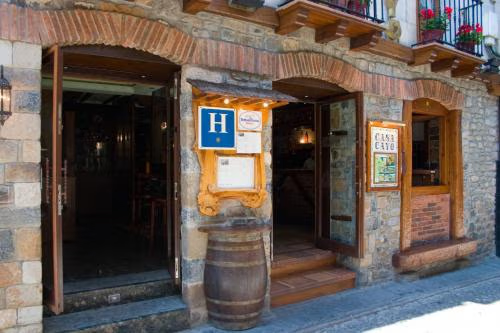
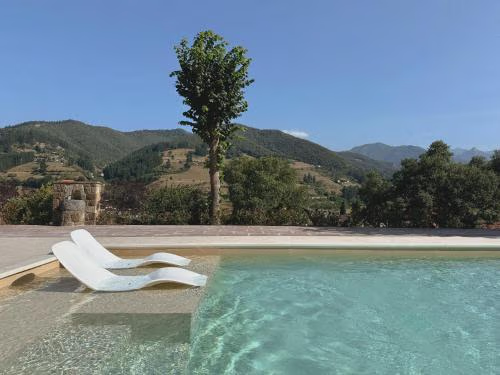
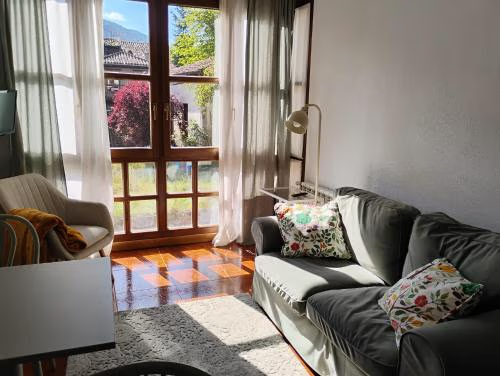
Where to stay in Potes
Places to stay in Potes.
 Open
Albergue de Peregrinos de Potes
Donativo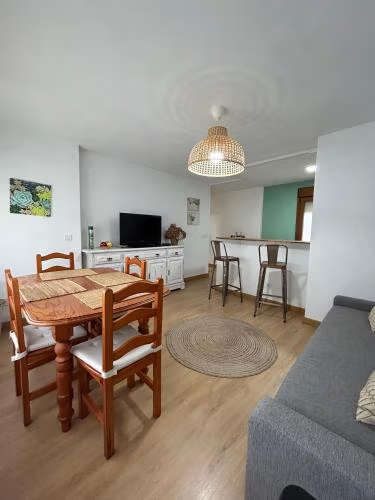 OpenReservations accepted
Apartamento El Ferial
- OpenReservations accepted
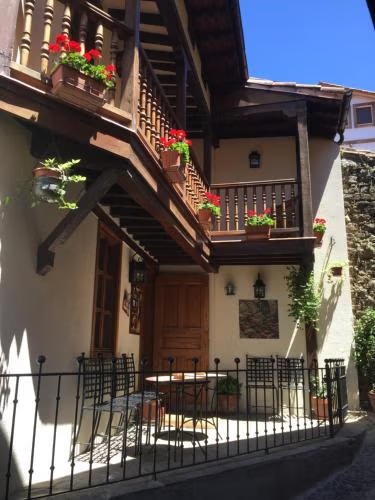
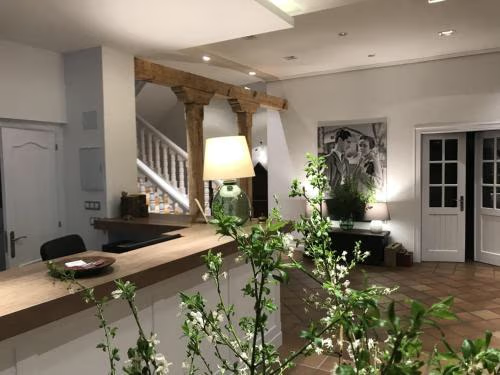
Hotel Arha Potes
Town 2 of 5