

Town on the Camino
Salir
Faro, Portugal
- places to stay
- 5
- Camino
- 1
- Elevation
- 245 m
According to legend, Salir means “out!”, and that is exactly what you do here: beyond the village with its Moorish rammed-earth castle at 256 metres, the Serra do Caldeirão begins. 43.1 kilometres beyond Faro, Salir is the last village in the Barrocal. An afternoon is enough, but the castle museum is open on weekdays only.
How long to stay?
An afternoon is enough, if it is a weekday. After 20 kilometres from Loulé there is time enough for the castle remains, the small museum on the excavation site and the parish church. Salir has no more programme than that, and you need no more before the way into the Serra. But the museum closes at weekends and at 5 pm. If you arrive on a Saturday or Sunday, you see the castle only from outside.
Salir in Ninja numbers
- 43.1 kilometres since Faro, and 409.7 kilometres to the end of the Way in Benfica do Ribatejo (according to Camino Ninja). Almost a tenth is done.
- 256 metres is the height of the limestone hill the castle stands on. From the top you see the Rocha da Pena.
- 4 towers of rammed earth have survived eight centuries. Clay, not stone.
- 1968 is when the Festa da Espiga was founded, the festival of the ear of wheat, held in May. In 2017 Salir celebrated the 50th edition.
Arriving: from the hills to the edge of the mountains
From Loulé the Caminho Português Central do Sul takes you 20 kilometres north, via Aldeia da Tôr and with a good 400 metres of climbing. Salir lies on the Beira Serra, the fringe between the Barrocal with its limestone hills and the Serra do Caldeirão of slate. The castle remains lie in the west of the village, built in among the houses, on a hill of 256 metres. The Via Algarviana, the long-distance walking trail across the Algarve, also passes through Salir.
In brief: a castle of earth
The castle was built in the 12th century under the Almohads, as part of a ring of fortifications meant to protect Loulé and the hinterland. Its Arabic name was “Selir”. King Sancho I is said to have conquered the place once before, in 1189. It was finally taken by Paio Peres Correia, Master of the Order of Santiago, in 1248 or 1249, after he had taken Tavira and the coastal castles. Afterwards Salir served the army of Afonso III as a base for the conquest of Faro. The parish at first belonged to São Clemente in Loulé and became independent in the 16th century.
Salir means “out”
The finest story of the place is a legend, and it explains the name. When the Portuguese advanced, the Moorish lord of the castle, Aben-Fabilla, had the castle evacuated. He buried his treasure to fetch it later, which never happened. His daughter, however, did not want to flee. “Salir!”, out, cried those fleeing and the attackers, and she cried it too. But she stayed. Her father turned her to stone, and some say that on certain nights she still appears among the wall remains.
For you the story is a pointer. The daughter stayed, you go. Tomorrow morning you leave the Barrocal and go out into the Serra that separates the Algarve from the Alentejo.
Out onto the castle hill: what to see
Everything worth seeing lies close together, you need no plan.
- Castle of Salir and museum: Of the Almohad castle, sections of wall and four towers of rammed earth survive, and many wall sections are built into later houses. The complex covered about 4,200 square metres. Excavations brought to light dwellings around courtyards, with alcoves, kitchens, an oven and water channels, plus grain silos cut into the rock. On the excavation site there is now a small museum of the Museu Municipal de Loulé, and a walkway leads over the remains. For pilgrims it is worth it because here you see how the people lived who inhabited this land before the knights of Saint James. It is open Monday to Friday from 9 to 1 and 2 to 5, closed at weekends and on public holidays; we have not found an admission price (Largo Pedro Dias, tel. +351 289 489 137). A procedure is now under way to classify the castle as a monument of public interest.
- View to the Rocha da Pena: From the castle hill you see the Rocha da Pena, a limestone plateau about two kilometres long and around 480 metres high, designated a local protected landscape. One tale links the rock with Moors who fled the troops of Paio Peres Correia.
- Parish church: The Matriz on the Largo da Igreja has been through a lot. The earthquake of 1755 destroyed it completely, and the quakes of 1856 and 1969 again did serious damage. So what you see is rebuilding on top of rebuilding. We have not found opening or Mass times.
Honestly
- No pilgrim hostel. We have found none in Salir. Camino Ninja knows only private houses and holiday flats here, so book ahead.
- The museum is a weekday museum. At weekends and on public holidays it stays shut, and on weekdays it closes at 5 pm. Plan your arrival if the castle matters to you.
- The stage to here is no walk in the park. The 20 kilometres from Loulé have a good 400 metres of climbing, and the first 100 kilometres from Faro are considered the hardest part of the whole Way. The Serra is still to come.
- We could not confirm a stamp or the church opening. Ask at the tourist information office whether they stamp.
Where pilgrims sleep
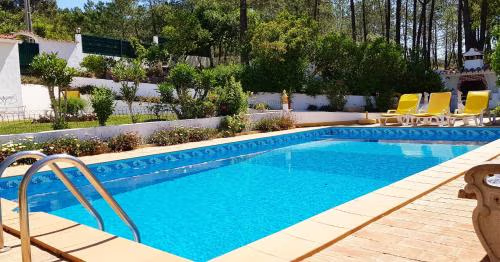
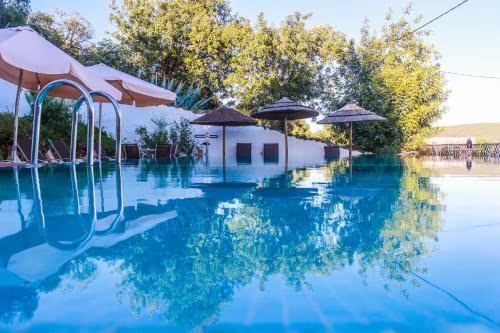
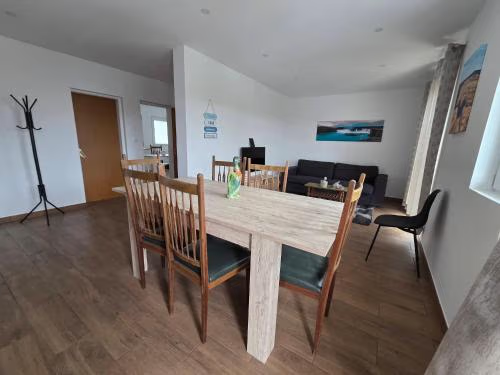
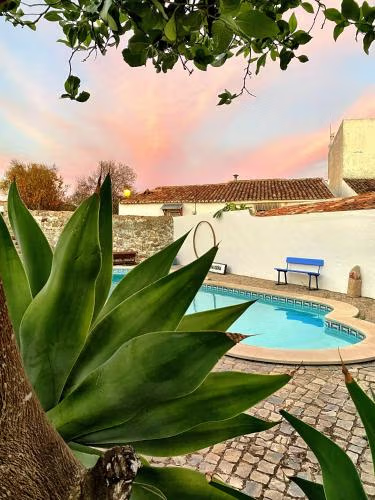
There is no pilgrim hostel, municipal or church-run, in Salir according to our research. The accommodation Camino Ninja knows is private houses and holiday flats; the page lists them below. The nearest pilgrim accommodation we know is the simple hostel of the Junta de Freguesia in Ameixial, 22.6 kilometres further on.
Ninja tips
- Arrive on a weekday before 4 pm. Then you have an hour in the castle museum.
- Shop in the evening. Beyond Salir the Serra begins, and on this route cafés are often missing for over 20 kilometres. Take water and food for the whole next stage.
- The tourist information office is in the old primary school on the main road. It was last open Monday to Friday from 9 to 1 and 2 to 5 (as of the source: 2017), ask there about a stamp and shopping.
- The Festa da Espiga is in early summer. It belongs to the holiday of the municipality of Loulé on Ascension Day, with concerts and a parade in traditional costume; in 2017 the programme ran for three days at the end of May, until after midnight. If you arrive then, you may fall asleep later.
- In summer Salir plays at the Middle Ages. At the festival “Salir do Tempo”, parades, jousting tournaments and a market recall the conquest of the Algarve, in July in 2017. In summer you should avoid the Way anyway.
Onward: out into the Serra do Caldeirão
Beyond Salir the Caminho Português Central do Sul leaves the Barrocal and climbs into the slate mountains of the Serra do Caldeirão. After 6.1 kilometres you reach Alganduro, after 11.9 Sarnadinha and after 16.6 kilometres Portela, which belongs to Ameixial. Ameixial itself lies slightly off the Way; Camino Ninja lists it at 22.6 kilometres from Salir. Near Ameixial the Way reaches its highest point in the Serra, at 415 metres.
What awaits you tomorrow
Ameixial, a village in the Serra, and a bed meant for pilgrims. When volunteers marked the way between Salir and Almodôvar with yellow arrows in 2017, they took a rest in Ameixial, shopped there and slept in the Junta’s hostel. Susana Sousa, whose master’s thesis gave rise to the waymarking, called the hostel a model. That is a good sign for a Way on which pilgrim beds are rare.
Deep dive: Out of Salir
A short read, in case you want to learn more about Salir. About 4 minutes' reading.
A castle of earth
When you stand on the castle hill of Salir, you stand on earth that people pounded into walls with their own hands. The castle that arose here in the twelfth century was not a stone building. Its walls and towers are made of rammed earth on foundations of limestone. Four towers survive to this day, after more than eight hundred years. The castle was built under the Almohads, the last great Muslim dynasty to rule in the south of the Iberian Peninsula. It belonged to a ring of fortifications meant to protect Loulé and the rural hinterland against pressure from the Christian north. Its Arabic name was Selir.
Houses around a courtyard
The castle was not just a fortress, it was also a place to live. During the excavations archaeologists found houses laid out around courtyards, with sleeping niches, kitchens, an oven and channels for water. The inhabitants had cut silos into the rock, in which they stored grain. Not far from Salir a gravestone from Islamic times was also found, dated to the years 1016 and 1017. It now stands in the Museu Municipal de Faro. The castle protected not only soldiers but a farming hinterland.
The knights of Saint James
For pilgrims on the way to Santiago the conquest of Salir has a special note. King Sancho the First is said to have taken the place once already in 1189. But Salir only became definitively Portuguese in 1248 or 1249. The man who took the castle then was Paio Peres Correia, Master of the Order of Santiago, that is, of the knights who bore the sign of the apostle James. He had previously conquered Tavira and other castles on the coast. From Salir the army of King Afonso the Third then planned the conquest of Faro and Loulé. The historian Luís Filipe Oliveira of the University of the Algarve, however, gave a lecture in 2017 on the misunderstandings that have formed around the role of the Order in the conquest of the south. How large the share of the knights of Saint James really was is therefore a question you may well leave open.
The daughter who did not go
The people of Salir tell the story differently, and their version is the legend of the enchanted Moorish woman. When the Portuguese advanced, the Moorish lord of the castle, Aben-Fabilla, realised he could not hold the castle. He sent his daughter away to the other women on the hill, buried his treasure and fled. But the daughter stayed. The soldiers found her praying. A young knight begged her to flee, and everyone called the same word: Salir, out. She refused, raised her arms and froze to stone. Her father never returned to his treasure. To this day, they say, she suffers under the enchantment among the remains of the old castle, guarded by a great lion. The legend links the name of the village with this cry. That the castle was already called Selir under the Moors takes nothing from the legend’s power.
A village that was rebuilt again and again
The castle was probably burnt down twice and rebuilt, and today only remains stand. The church in the village has not had a quiet life either. The great earthquake of 1755 destroyed it completely, the quakes of 1856 and 1969 damaged it again. The parish itself is old; it at first belonged to São Clemente in Loulé and became independent in the sixteenth century. Its festivals honour Saint Sebastian and Saint Louis and, in August, Nossa Senhora do Pé da Cruz, Our Lady at the Foot of the Cross.
Pilgrims in Salir
For a long time the sources tell nothing of pilgrims to Santiago in Salir. That changed only a few years ago. Since 2016 volunteers have been marking the way from Faro northwards with yellow arrows. In March 2017 they brought the waymarking from Salir through the Serra as far as Almodôvar, in constant rain and wind, wading through streams. A master’s thesis at the University of the Algarve thus became a way. When this text was written, in autumn 2026, Salir was one of the stage towns of this young Way, still without a pilgrim hostel of its own.
What Salir gives you to take along
Salir is a place on the edge. Behind you lie the hills you have been climbing since Faro, ahead the mountains that separate the Algarve from the Alentejo. The legend tells of a woman who stayed when everyone went. You are here to go. Perhaps you will take something from her all the same: that setting out also means knowing what you leave behind.
Where to stay in Salir
Places to stay in Salir.
 OpenReservations accepted
Casa da Mae
 OpenReservations accepted
Casa da Tita
 OpenReservations accepted
Appartement Algarve Salir Loulé
Town 4 of 24