

Stage town on the Camino
Santarém
Distrito de Santarém, Região do Centro, Portugal
- places to stay
- 6
- Caminos
- 2
- Elevation
- 105 m
Santarém is the first town on a hill after days on the Tagus plain: 93.6 kilometres out of Lisbon, the day ends with a climb of around 100 metres into the capital of Portuguese Gothic. The discoverer of Brazil is buried here, and you leave town through the Gate of Saint James. An afternoon is enough, a rest day is worth it.
How long to stay?
An afternoon is enough, but a rest day pays off here more than elsewhere. You arrive after more than 30 kilometres of flat land with a steep climb still in your legs. An afternoon is enough for a walk to the Portas do Sol, a look inside the Igreja da Graça and the sunset over the Tagus. If you want to see the Gothic churches at leisure, stay a day longer; pilgrims recommend exactly that.
Santarém in Ninja numbers
- 93.6 kilometres lie behind you since Lisbon on the Camino Portugués Central. It is still 525.7 to Santiago.
- Around 100 metres of climbing come in the last two kilometres or so. Before that, the way has been almost completely flat since Lisbon.
- 1147, on 15 March, Afonso Henriques, the first king of Portugal, took the town from the Moors.
- 1500 was the year Pedro Álvares Cabral became the first European to set foot in Brazil. His grave is here, under a plain slab.
- 58,671 people lived in the municipality of Santarém in 2021.
Arriving: from the plain up the hill
The stage from Azambuja is long and lonely. You walk on the dyke along the Tagus as far as Valada and Porto de Muge, then between fields, with no shade and no supplies. At some point the silhouette of the town appears on its plateau, and it stays in the distance for a long time. Only at the very end do you climb: in a little over two kilometres you rise around 100 metres from the river plain into the old town. Carry water for the whole day.
In brief: court, convents, Gothic
The Romans called the place Scalabis, and Caesar had a camp here in 61 BC. After the Visigoths and the Moors, who called it Shantarin, Afonso Henriques conquered the town in 1147. Legend says the name goes back to Saint Iria, whose body the Tagus is said to have carried here. In the Middle Ages the Cortes, the assemblies of the realm, met in Santarém several times, and the court often stayed here. The result is the largest and most varied group of Gothic churches in Portugal; the town calls itself the capital of Portuguese Gothic. Earthquakes in 1531 and 1755 and plundering by Napoleonic troops destroyed a lot, but not everything.
The Gate of Saint James: out towards the Tagus
For pilgrims, Santarém has a gate that seems built just for them. The Porta de Santiago, the Gate of Saint James in the old town wall, is a little hidden next to the gardens of the Portas do Sol, opposite the church of Santa Maria de Alcáçova. The Camino leaves town through this gate, and beyond it a dirt path runs down along the wall to the river. This is also where the ways part: the Caminho do Tejo turns north towards Fátima, while the Way of Saint James follows the Tagus to the northeast.
Gothic above the Tagus: what to see
The old town is small enough for an afternoon on foot. We have not found verified opening hours for the churches.
- Portas do Sol: A park on the site of the old Moorish castle, with remains of walls and towers high above the Tagus. From here you look out over the plain you came through and the one you will walk through tomorrow. In the evening the sunset here is the finest moment of the day. The Gate of Saint James is right next to it.
- Igreja da Graça: This Gothic convent church from the 14th and 15th centuries is the best known in town. Near the main chapel, under a plain slab, lies Pedro Álvares Cabral, who reached Brazil in 1500. For pilgrims from Brazil it is a special stop, for everyone else a quiet space in which to arrive after the long plain.
- Igreja do Santíssimo Milagre: The church of Santo Estêvão keeps a Eucharistic miracle from the 13th century and is still a place of pilgrimage today. Here you meet a devotion that is older than Fátima.
- Sé: The cathedral was a 17th-century Jesuit church and has only been the bishop's church since the 1970s. It stands where the royal palace stood in the Middle Ages.
- Igreja de Marvila: A 16th-century church with a Manueline portal and walls covered in painted tiles from the 17th century.
- São João de Alporão: The Knights Hospitaller built the church in the 12th and 13th centuries; today it is a museum. Inside stands the tomb of Duarte de Meneses, who died in North Africa. It is almost empty: only a single tooth was buried.
- Torre das Cabaças: A tower of the medieval wall, now with a small museum about time.
Food and drink
In the old town you will find restaurants and taverns in every price range; in their comments pilgrims mostly praise the traditional taverns. After a stage without supplies, the first hot meal here is a real reward.
Honestly
- The stage before is a slog. More than 30 kilometres of plain with no shade and no bar, and the steep climb comes right at the end.
- A real pilgrim hostel is not guaranteed. The Misericórdia hostel was the cheap option for years; we could not confirm whether it is open today. Expect to stay in a hostel.
- Hostels here cost more than a pilgrim albergue. And some hotels are one to two kilometres out of town, which is far after this stage.
- The way out is poorly marked. The arrows to the Gate of Saint James are hard to find.
Where pilgrims sleep
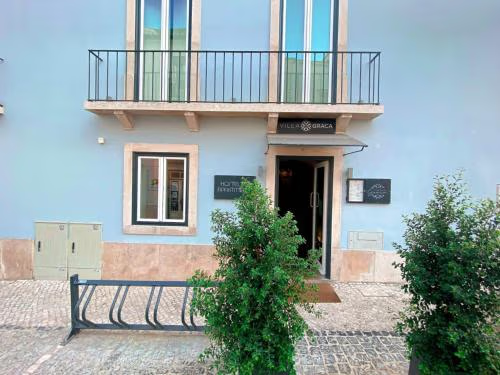
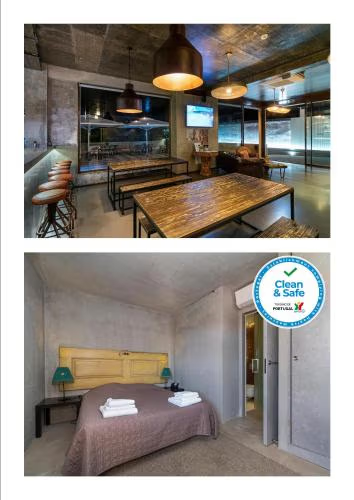
We have not found a confirmed municipal or parish albergue in Santarém. The Santa Casa da Misericórdia ran a simple pilgrim hostel on Largo Cândido dos Reis, according to a pilgrim portal with 24 places for €5, no reservations and closed at weekends. We could not confirm whether it takes pilgrims in autumn 2026; call ahead (+351 243 305 260). The hostels in town are a safe bet: Villa Graça in the old town, which pilgrims praised in 2025 and 2026 for clean beds with their own socket and a lockable locker, and the N1 Hostel, about 400 metres from the centre and the Camino. A dorm bed there costs between just over €20 and €30 (as of October 2026). There are also guesthouses and hotels, some on the edge of town.
Ninja tips
- Go to the Portas do Sol in the evening. The sunset over the Tagus is the reason the climb was worth it.
- Find the Gate of Saint James the evening before. From the Portas do Sol a small staircase leads down on the left to a square; the Porta de Santiago is on the left. If you have seen it in daylight, you will find it in the dark in the morning.
- Take enough water for the stage from Azambuja. After Porto de Muge there are no supplies until Santarém.
- Call the Misericórdia before you count on it. At weekends it is closed anyway.
- Watch out at the fork. Pilgrims heading to Fátima also leave from Santarém. For Santiago, follow the yellow arrows, not the blue ones.
Practical tips for pilgrims
- Shopping and cash: As a district capital, Santarém has supermarkets, pharmacies and cash machines.
- Silence: Pilgrims report that the churches are happy to allow quiet prayer.
- On to Golegã: The next stage is again around 30 kilometres; start early.
Onward: through the Gate of Saint James down to the Tagus
Beyond the Porta de Santiago the way drops steeply along the wall to Ribeira de Santarém (km 95.8). Then it follows farm tracks between vineyards and maize fields via Vale de Figueira (km 104.9) to Azinhaga (km 117.1), birthplace of the Nobel laureate José Saramago. The stage ends in Golegã (km 124.5): 30.9 kilometres, 87 metres of ascent and 170 metres of descent, almost all of it on the plain.
What awaits you tomorrow
Golegã, the capital of the horse. Every November, breeders of the Lusitano meet here for the National Horse Fair, and the village church has a Manueline portal that makes the walk through the fields worthwhile.
Deep dive: The town of Gothic
A short read, in case you want to learn more about Santarém. About two minutes' reading.
A hill above the river
Santarém sits on a plateau above the right bank of the Tagus, and that has shaped its history. Whoever held the hill controlled the river and the fertile plain below. The Romans called the place Scalabis, and Julius Caesar had a camp here in the year 61 before Christ. Then came the Visigoths, and in the eighth century the Moors. They called the town Shantarin. Legend says the name goes back to Saint Iria, a young woman from Tomar whose body the river is said to have carried all the way here.
A morning in March
On the fifteenth of March 1147, Afonso Henriques, the first king of Portugal, took the town. It was a turning point of the Reconquista, and Lisbon fell in the same year. For Santarém a great age began. The kings often held court here, the Cortes of the realm met in the town several times, and religious orders and nobles built churches and convents. The Knights Hospitaller built São João de Alporão, the Franciscans their convent, the Augustinians the church of the Graça. Because all this went up within a few generations, Santarém today has the largest group of Gothic churches in Portugal.
Graves of men who went far
In these churches lie people who spent their lives far from here. In the Graça rests Pedro Álvares Cabral, who in the year 1500 was meant to sail with his fleet to India and became the first European to reach the coast of Brazil. In São João de Alporão stands the tomb of Duarte de Meneses, who died in North Africa. Only a single tooth of his came back, and for that tooth they built an entire tomb.
Earthquakes and return
The earthquakes of 1531 and 1755 hit the town hard, and at the beginning of the nineteenth century Napoleonic troops plundered it. Much was lost, and the Jesuit church only became the cathedral in the twentieth century. But the Gothic churches still stand, and so does the small gate in the wall that bears the name of the apostle.
What Santarém gives you
When this text was written, in autumn 2026, pilgrims came up here after days on the plain and stood at the Portas do Sol in the evening. Below them was the river that had been with them since Lisbon. Santarém is the first place where you look down on your way from above. The next morning you go back down through the Gate of Saint James. Then the way no longer lies behind you, but ahead of you.
Where to stay in Santarém
The places pilgrims rate highest in Santarém come first.
- Top #1
 OpenReservations accepted
Villa Graça -Hostels and Apartments
- Top #2
 OpenReservations accepted
N1 Hostel Apartments & Suites
- Top #3
 OpenReservations accepted
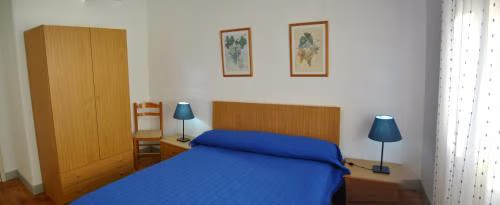
Tagus Host


Services in Santarém
What you can find in town before the next stage.
- ATM
- Café
- Shop
- Tobacco
- Medical clinic
- Pharmacy
- Fountain
- Post office
- Train station
- Bus station
- Airport
- Restaurant
Source: © OpenStreetMap contributors · updated January 2026
Town 4 of 43