

Town on the Camino
Santoña
Cantabria, Spain
- places to stay
- 8
- Caminos
- 2
- Elevation
- 7 m
Santoña sits on a spit of land between marsh and sea, with the rocky Monte Buciero at its back. You arrive by boat from Laredo, walk through a fishing town whose anchovies all of Spain knows, and past a church that, according to legend, Saint James himself founded. A bed in the municipal albergue costs €7.54.
Right now in Santoña (as of October 2026)
- Municipal albergue: open all year except the first week of January. Reception is only staffed from 9:00 to 13:00 and from 15:30 to 19:00.
- Boat from Laredo: only runs in season. Outside the season you reach Santoña by the land route via Colindres.
How long to stay?
An afternoon is enough, if you sleep here. Most pilgrims simply walk on after the morning crossing; Santoña is only 5.7 kilometres beyond Laredo. If you stay the night, you have a quiet afternoon for the harbour promenade, the church of Santa María del Puerto and a plate of anchovies. For the lighthouse below Monte Buciero you need more time and no backpack.
Santoña in Ninja numbers
- 606.8 kilometres are still left from here to Santiago.
- Around 600 metres of water separate Santoña from El Puntal in Laredo.
- 7.54 euros is the price of a bed in the municipal albergue (as of August 2026). For that you get one of 68.
- 1907 is the year the El Dueso prison was built; you pass its walls on the way out of town.
Arriving: by boat
The boat drops you at the seafront promenade. From there you walk straight inland, past the Plaza San Antonio and the Parque de Manzanedo. The town has water on three sides and a mountain on the fourth: Monte Buciero holds it from behind, with the marshes and the bay in front. If you come in winter or early in the morning without a boat, you reach Santoña via Colindres and the marshes from the back.
In brief: monastery, forts, fishermen
The 13th-century church of Santa María del Puerto stands on the site of an 8th-century Benedictine monastery. In the 17th century the bay was given forts, San Carlos and San Martín; under Napoleon further redoubts and batteries were added on Monte Buciero. Juan de la Cosa came from Santoña, owner and captain of the Santa María on Columbus's first voyage, who drew the first map to show the New World. Today Santoña is a fishing and canning town; the factories at the harbour are still working.
Between rock and marsh: what to see
Santoña is small; everything important lies at the harbour and at the foot of the mountain.
- Santa María del Puerto: The Romanesque church from the 13th century, around 400 metres from the centre, belonged to a Benedictine monastery founded in the 8th century. According to legend, a church founded by Saint James in the year 37 already stood here. That is not historically documented, but it makes this church a quiet place of Saint James in the middle of the Norte. We have not found opening hours.
- The monument to Juan de la Cosa: At the harbour a monument commemorates the cartographer from Santoña. His world map is the only map of the New World made by someone who was on Columbus's first voyage.
- The forts of San Carlos and San Martín: Both were built in the mid-17th century to protect the bay. San Martín is now a cultural centre. A fishing-heritage trail, a good eight kilometres long, links the forts with the promenade.
- Faro del Caballo: The disused lighthouse lies at the foot of Monte Buciero's cliffs, reached by several hundred steps cut into the rock. It is an outing for a rest day, not with a backpack. In summer an excursion boat also goes there.
- The marshes: The Marismas de Santoña are a nature reserve and an important stopover for migrating birds. The municipal albergue lies right in the middle of them.
Food and drink
Here you have to eat anchovies. Santoña's anchoas are known throughout Spain, the canneries at the harbour are still working, and in May there is a dedicated Feria de la Anchoa. The centre is lined with bars and restaurants. There is no food at the municipal albergue, so shop beforehand.
Honestly
- The albergue is not on the route. The municipal albergue is around a kilometre out of town on the road to Cicero. The next morning you walk back.
- You have to arrive at the right time. Reception is only staffed in the morning and from 15:30 in the afternoon. If you arrive at midday, you wait.
- The way out is oppressive. The route passes the high walls of El Dueso. During the Civil War, in 1937, Republican prisoners were held here, and many were shot at these walls. The prison is still in use today.
- The lighthouse is not a detour. The steps are steep and narrow, and in the cooler months fog often lies over the mountain.
Where pilgrims sleep
- Albergue de Santoña: The municipal albergue has 68 places in eight rooms with 4 to 18 beds and costs €7.54 (as of August 2026). It lies in the marshland nature park on the road to Cicero, about a kilometre from the route. Reservations by email one day ahead, credencial required. It also serves as a youth and sports centre.
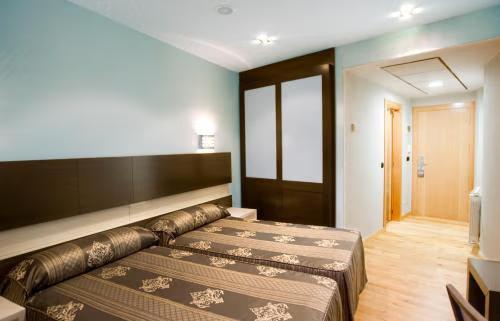
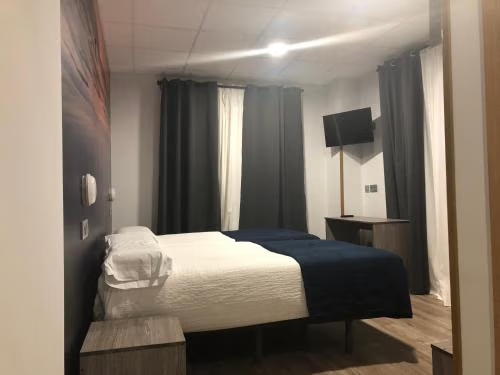
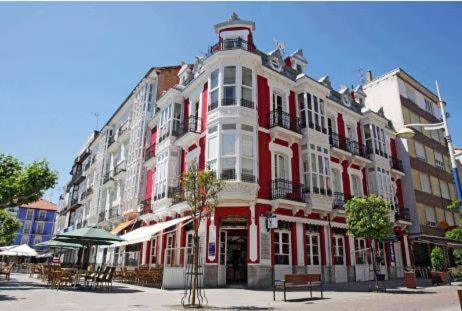
- Private guesthouses and hostales in the centre cost around €35 to €80 for a room. We have not found a private albergue with a dormitory in the centre.
- There is no donativo or parish albergue in Santoña.
Ninja tips
- Take anchovies home for dinner. There is nothing to eat at the municipal albergue. A jar of anchoas from the centre and some bread make the right dinner in Santoña.
- Book the municipal albergue by email. One day ahead is enough, so you do not have to walk the kilometre out on the off chance.
- Shop before the albergue. Out in the marshes there is nothing.
- Along Berria beach. Beyond El Dueso you can walk on the sand or on the paths alongside.
Onward: over El Brusco to Noja
From town the way passes El Dueso to the beach of Berria, 2.6 kilometres. At the western end of the beach it goes briefly and steeply over sand, earth and rock up the hill of El Brusco, then down and along the coast to Noja, 8.3 kilometres from Santoña. From there the Camino del Norte leads via Castillo and Bareyo to Güemes, 24.3 kilometres and around 470 metres of climbing from here.
What awaits you tomorrow
A day between beaches and hills; the highest point is only 120 metres. In the evening an albergue awaits in Güemes that is run by volunteers and has no fixed price: dinner and breakfast are included, and you give what you think is right.
Deep dive: An apostle's church and a mapmaker
A short read, in case you want to learn more about Santoña. About two minutes' reading.
The apostle at the harbour
If you look for Saint James in Santoña, you find him in a legend. On the site of the church of Santa María del Puerto, a church is said to have stood as early as the year 37, founded by the apostle himself. That is not documented. What is documented is a Benedictine monastery from the eighth century and the Romanesque church from the thirteenth that stands there today. The legend still tells something true: that people on this coast wanted to know early on that the apostle had been here too.
A man who drew the world
Juan de la Cosa came from Santoña. He was owner and captain of the Santa María, the ship on which Columbus set out in 1492. Later, on behalf of the Catholic Monarchs, he drew a world map. It is the only map of the New World made by an eyewitness of the first voyage. At the harbour, where you arrived by boat, stands his monument.
What Santoña gives you
Juan de la Cosa wrote down where he had been so that others could find the way. That is also the work of the yellow arrows. Today you walk on a way that others have drawn before you, and when you write in your notebook in the evening, you draw it a little further for yourself.
Where to stay in Santoña
Places to stay in Santoña.
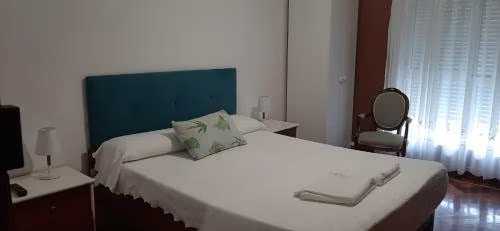 OpenReservations accepted
ALOJAMIENTO CASA LEÓN
 OpenReservations accepted
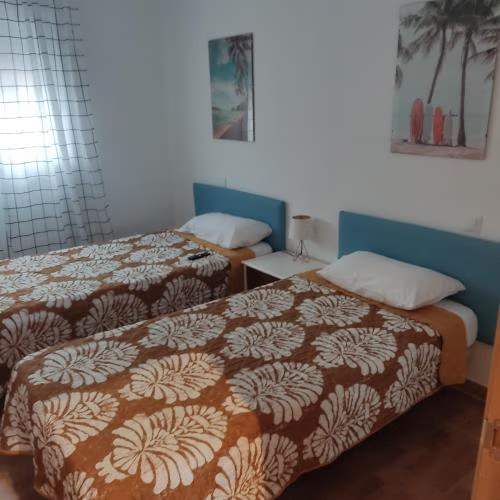
Albergue Juvenil de Santoña
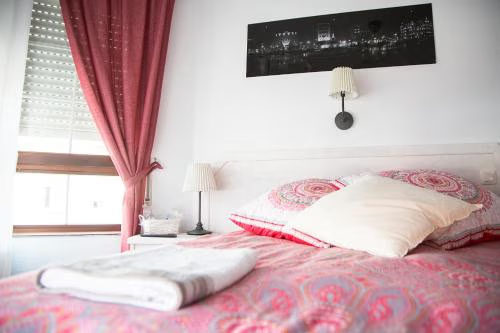 OpenReservations accepted
Alojamiento Miramar
Services in Santoña
What you can find in town before the next stage.
- Café
- Shop
- Medical clinic
- Pharmacy
- Fountain
- Post office
- Train station
- Restaurant
Source: © OpenStreetMap contributors · updated February 2026
Town 18 of 49