

Town on the Camino
Laredo
Cantabria, Spain
- places to stay
- 9
- Caminos
- 2
- Elevation
- 8 m
Laredo was the port of great farewells: here Isabella the Catholic saw two of her daughters off to foreign lands, and here Charles V came ashore in 1556 on his way to die at Yuste. For you, beyond the old town lie a good four kilometres of beach, and at its end a small boat crosses to Santoña.
Right now in Laredo (as of October 2026)
- Boat to Santoña: The ferry from El Puntal only runs in season and not early in the morning. We have not found a fixed timetable; in September 2026 pilgrims reported departures every 10 to 15 minutes into the late afternoon. If no boat is running, the land route via Colindres remains.
- Casa Loopez: This private albergue is only open from 15 March to 15 November.
How long to stay?
An afternoon is enough. The Puebla Vieja, the medieval old town, is small and can be explored in an hour; the Gothic church at the top of the slope is its goal. After that the afternoon belongs to the beach. If you come from Castro-Urdiales you have done enough anyway: according to our track it is 35.7 kilometres with almost 1,000 metres of climbing. Plan your start the next morning around the boat, not the alarm clock.
Laredo in Ninja numbers
- 612.5 kilometres are still left from here to Santiago. A good third of the Camino del Norte lies behind you.
- A good four kilometres of sand separate the old town from El Puntal, the spit where the boat lands. Laredo's beach is one of the longest on the Cantabrian coast.
- Around 600 metres of water separate El Puntal from Santoña. The crossing is short; the wait can be longer.
- One week is how long Charles V rested in Laredo in September 1556 before moving on to Yuste. You will probably stay one night.
- 10 euros is the price of a bed with the Trinitarian Sisters in the old town (as of August 2026).
Arriving: over the pass of Liendo
From Castro-Urdiales the way follows the coast to Islares and then turns inland into the valley of Liendo. The highest point of the day is just before Laredo at 242 metres; after that it is downhill into town. You walk straight into the old town: the Trinitarian Sisters' albergue is at the entrance to the Puebla Vieja, a few metres from the town hall.
In brief: the port of farewells
Laredo was one of the four coastal towns of Cantabria that received special privileges from Castile. In the 15th and 16th centuries it was the largest port of Castile and a base of the royal fleet. From here Isabella the Catholic saw off her daughter Joanna to Flanders in 1496 and her daughter Catherine to England in 1501. In September 1556 Charles V landed here on his last voyage from Flanders, rested for a week and then travelled overland to the monastery of Yuste, where he died. Every year at the end of September, hundreds of Laredanos re-enact the landing on the beach in period costume.
Through the Puebla Vieja: what to see
The old town sits on the slope above the harbour, with narrow lanes, houses, palaces, towers and convents. The arrows lead past it rather than through it, so go in on purpose.
- Santa María de la Asunción: The Gothic church with three naves dates from the 13th century and was extended in the 16th and 17th centuries; it has been a protected monument since 1931. Inside is a 15th-century Flemish winged altarpiece in chestnut wood, now set into a Baroque altar with twisted columns; the designs are said to go back to Rogier van der Weyden. According to legend, chains broken by Admiral Bonifaz at the conquest of Seville in 1248 hang here, next to a votive ship. For pilgrims this is a familiar language: sailors hung their thanks in the church, just as pilgrims leave their stones and shells along the way. We have not found opening hours.
- The lanes of the Puebla Vieja: A 17th-century town hall, the 16th-century church of San Francisco and several tower houses and town palaces, among them the Casa-torre de los Gutiérrez de Rada. Not a museum, but a quarter where you simply walk.
- Playa de La Salvé: The long beach is your way to the boat the next morning. In the afternoon, if the weather plays along, it is also the best place to swim and cool your feet.
Food and drink
Laredo has good anchovies, even if Santoña across the bay is more famous for them. From Cantabria come sorropotún, a fish stew with tuna and potatoes, and sobaos, butter cakes for breakfast. Laredo's own sweet is named after the emperor: Caprichos del Emperador, with chocolate, almond praline and grains.
Honestly
- The boat decides your morning. It does not run at dawn. If you set off early, you will stand at El Puntal and wait.
- Four kilometres of beach are four kilometres of beach. First the promenade, at the end sand down to the water. Beautiful, but tough after a long stage.
- No towel, no washing machine. The Trinitarian Sisters provide neither towels nor soap and there is no washing machine, only washing lines.
- Fixed closing time. The albergue closes at 22:00, in spring and summer at 22:30; after that you cannot go out again.
Where pilgrims sleep
- Albergue Casa de la Trinidad: The Trinitarian Sisters' religious albergue at Calle San Francisco 24 has 45 places, costs €10 and is open all year (as of August 2026). No reservations, credencial required, check-in from 14:00. There is a kitchen, a common room, a garden terrace and a covered space for bikes.
- Private albergues: The Bajamar Hostel in the centre is large and open all year; Casa Loopez at the entrance to the old town is small and only open from March to November. Both can be booked; a bed costs around €18 to €23 (as of August 2026).
- There is no municipal or donativo albergue in Laredo. The next public albergue is in Santoña, an hour further on.
Ninja tips
- Ask at the tourist office about the boat. There you get the current departure times for the next morning. That way you know when to get up.
- Go to the water, not to a pier. The boat lands on the sand and folds out a gangway. At the end of the beach by the Tiburón restaurant, turn left over the wooden walkway onto the sand.
- Bring small change. Depending on the year, pilgrims paid between €2 and €3.50 for the crossing. Bikes travel for a surcharge.
- No boat? Then via Colindres. The land route goes via Colindres and the Treto bridge over the Asón; it is then almost 14 instead of almost 6 kilometres to Santoña.
- Post office: Correos on Calle Padre Ignacio Ellacuría is open Monday to Friday from 8:30 to 14:30.
Onward: across the water to Santoña
In the morning you walk along the beach promenade to El Puntal and cross to Santoña; that is 5.7 kilometres including the crossing. After that the way passes the El Dueso prison to the beach of Berria, over the small, steep hill of El Brusco and along the coast to Noja. The classic stage ends in Güemes, 30 kilometres and a good 500 metres of climbing from Laredo. You continue on the Camino del Norte towards Santander.
What awaits you tomorrow
The best comes early: a few minutes on the water, Laredo's beach behind you, Santoña ahead. And in the evening, if you make it to Güemes, an albergue regarded as a lighthouse of the Camino in Cantabria: a large house, run by volunteers, with a shared dinner and a price you decide yourself.
Deep dive: The emperor who came ashore to die
A short read, in case you want to learn more about Laredo. About two minutes' reading.
A port for queens
When you walk along Laredo's beach today, it is hard to believe that the largest port of Castile was once here. In the fifteenth and sixteenth centuries the royal fleet lay in this bay, and Laredo was one of the four coastal towns to which Castile granted special rights. In 1496 Isabella the Catholic stood at the harbour and watched her daughter Joanna sail to Flanders, where she was to marry. Five years later she said goodbye here to her daughter Catherine, bound for England.
An emperor's last journey
In September 1556 a ship came the other way. On board was Charles the Fifth, the emperor in whose realm the sun never set. He had given up his crowns and was returning from Flanders to Spain to withdraw from the world. In Laredo he came ashore and stayed for a week. Then he travelled on overland, to the monastery of Yuste in Extremadura. There he died. Every year at the end of September Laredo re-enacts the landing, with hundreds of residents in period costume, on the same beach you will walk along to the boat tomorrow morning.
What Laredo gives you
People set out from here who did not know what awaited them, and here one man arrived who knew it was his last journey. You stand somewhere in between. A good third of the way lies behind you, more than six hundred kilometres still lie ahead. At El Puntal a small boat is waiting, not a ship of the Armada. But you too leave something behind here and cross over.
Where to stay in Laredo
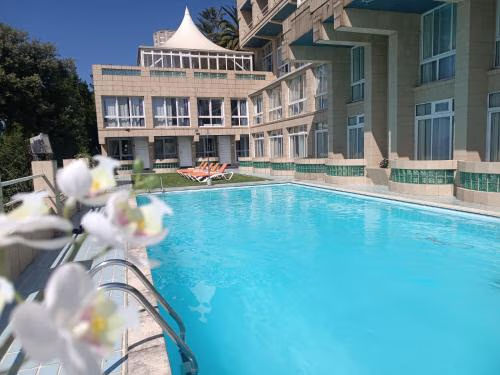
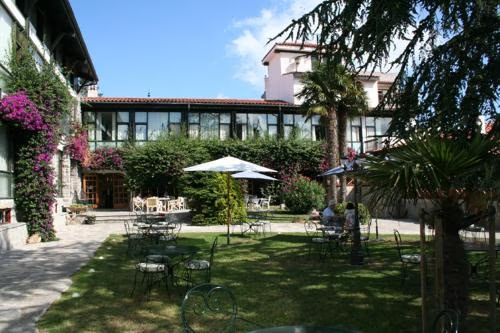
Places to stay in Laredo.
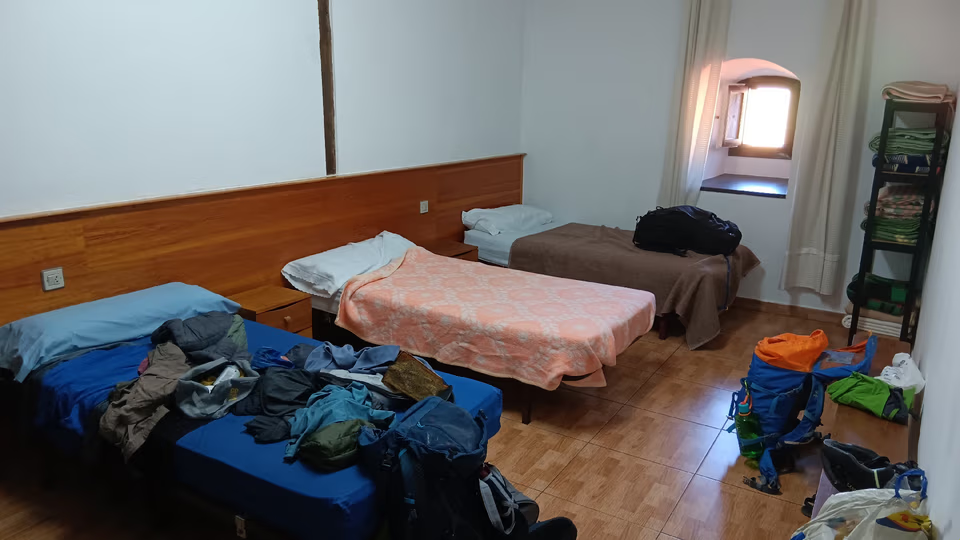 OpenReservations not accepted
Albergue Casa de la Trinidad
 OpenReservations accepted
Hotel Cosmopol
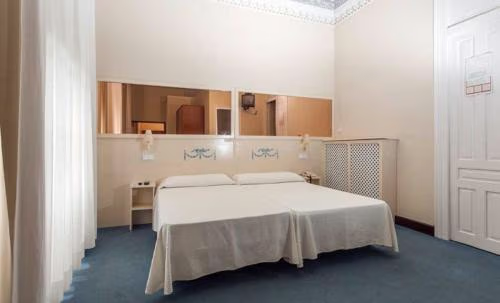 OpenReservations accepted
Hotel Ramona
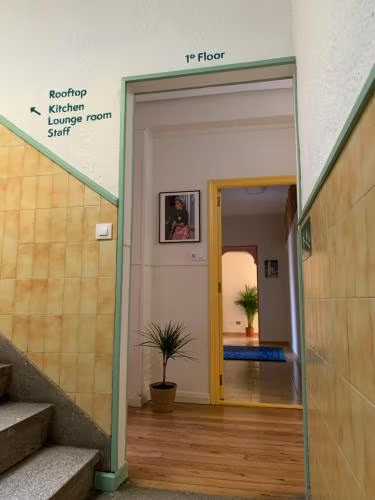
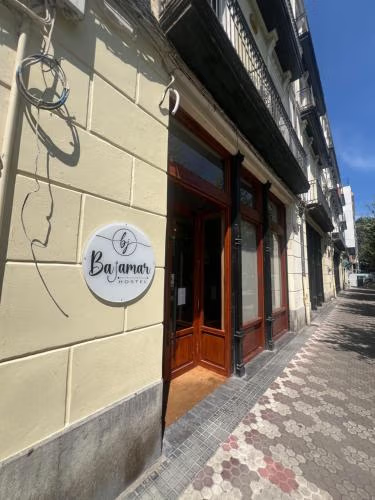

.png?tr=w-960,c-at_max,f-avif,q-85)
Services in Laredo
What you can find in town before the next stage.
- Café
- Shop
- Tobacco
- Medical clinic
- Pharmacy
- Fountain
- Post office
- Train station
- Restaurant
Source: © OpenStreetMap contributors · updated February 2026
Town 17 of 49