

Town on the Camino
Trancoso
Portugal
- places to stay
- 10
- Caminos
- 2
- Elevation
- 847 m
Trancoso is the handover: after 661.2 kilometres the Via Nascente ends here, and the Camino Torres carries on to Santiago. Behind the Porta d'El Rei awaits a walled town where King Dinis married Isabel of Aragón in 1282 and Christians and Jews lived door to door. There is no pilgrim hostel.
How long to stay?
Worth a rest day, above all if your Camino ends here. Behind you lie 661.2 kilometres from the Algarve, and Trancoso has enough for a whole day without a rucksack: the castle and keep, the lanes of the old Judiaria with their marks on the doorposts, the Centre for Jewish Culture, the house of the cobbler-prophet Bandarra, several churches and, two kilometres outside the town, the battlefield of 1385. If you carry on along the Camino Torres, you have earned a rest day after the long way anyway. We found opening times for none of the museums; ask at the Posto de Turismo.
Trancoso in Ninja numbers
- 661.2 kilometres since Tavira. According to Camino Ninja that is the whole Via Nascente, it goes no further.
- 195.2 kilometres are behind you if you come from Salamanca on the Camino Torres. 225.7 kilometres are left from here to Ponte de Lima, where the Torres joins the Caminho Português Central (according to Camino Ninja).
- 7 of 16: that many towers of the town wall from the 14th and 15th centuries are still standing.
- Over 500 people made up the Jewish community in the 15th century. That made it bigger than that of the town of Guarda.
- 29 May 1385: on this day a small force from Trancoso beat a larger Castilian army, two and a half months before Aljubarrota.
Arriving: uphill once more, then the wall
The last stage of the Via Nascente leads 18.8 kilometres north from Celorico da Beira, via Forno Telheiro and Fiães, and it ends as it deserves to: uphill once more, until you stand in front of the town wall. The main gate is the Porta d'El Rei, an arch between two towers. Whoever walks through here has the Algarve, the Alentejo and the Beiras behind them on foot.
For pilgrims on the Camino Torres, on the other hand, Trancoso is a stop in the middle of the way. They come from the east, from Pinhel, and carry on to the north-west. The way is named after Diego de Torres Villarroel, a professor from Salamanca who passed through Trancoso on his pilgrimage in 1737.
In brief: a frontier town with a wedding
Trancoso first appears in an account of the campaigns of Almansor: the Moorish commander camped in the autumn of 981 in front of “Tarankuša”. The castle is older still, it dates from the 8th or 9th century. Afonso Henriques, the first king of Portugal, gave the place its town charter between 1162 and 1165, and Afonso III allowed it a free market. From that came the Feira de São Bartolomeu, which Gil Vicente made immortal: “Vou-me à feira de Trancoso.”
In 1282 King Dinis married Isabel of Aragón here, who was later venerated as the Rainha Santa. Dinis had the walls built that still enclose a town in which Christians and Jews lived side by side. Manuel I renewed the town charter in 1510. Hard times followed: with the Inquisition from 1536 the large Jewish community was persecuted, and in the 19th century came the French invasions and the fighting between Liberals and Absolutists.
One gate, two ways
Trancoso is a place where one way hands the word over to another. The Via Nascente, which began by the sea in Tavira, stops here. The Camino Torres takes over the rest to Santiago, and for the Compostela you still lack the last 100 kilometres before Santiago. Whoever arrives here therefore stands at the end and in the middle of the way at the same time.
A woman who celebrated her wedding here fits that. Isabel of Aragón, who became Queen of Portugal in Trancoso in 1282, herself made a pilgrimage to Santiago after her husband's death in 1325. The town of her wedding now lies on two Caminos.
Behind the wall: what to see
Almost everything lies inside the wall and can be done on foot in a few hours without a rucksack.
- Castle and keep: The castle has five rectangular towers on a ring of wall, and its keep dates from the 10th century and is considered a unique testimony of Mozarabic power in the north. Entry is free. Whoever climbs the tower sees over the walled town and, on clear days, as far as the Serra da Estrela. We did not find opening times.
- Porta d'El Rei and the gates: The King's Gate is the main entrance. Besides it there are the Portas do Prado, do Carvalho, da Traição and do Olhinho do Sol and the Postigo do Boeirinho, a narrow slip-through. Between the Traitor's Gate and the Gate of the Little Sun's Eye a piece of the outer wall from the time of King Fernando, around 1370, still stands. A round from gate to gate is the nicest way to get to know the town.
- Casa do Gato Preto and the Judiaria: The House of the Black Cat on the Largo Luís de Albuquerque is the most magnificent Jewish house in the town. On the doorway the Lion of Judah and a gate of Jerusalem are carved; it is assumed that a rabbi lived here, perhaps it was the synagogue. In the lanes around it, in the Rua da Estrela, the Rua dos Cavaleiros and the Rua do Bandarra, you find crosses, Stars of David and Hebrew marks on doorposts, traces of Jews and New Christians. On the Praça D. Dinis a hidden scroll with the Shema Yisrael prayer was found in a wall in the 1980s.
- Centro de Interpretação da Cultura Judaica Isaac Cardoso: The centre opened on 20 October 2012 in the former Jewish quarter, designed by the architect Gonçalo Byrne. It tells the history, faith and persecution of the Sephardic community, has a memorial for the victims of the Inquisition and a small synagogue, Beit Mayim Hayim, the House of Living Waters. Isaac Cardoso was a Jewish doctor born in Trancoso at the beginning of the 17th century. We did not find opening times or admission.
- Casa do Bandarra and Igreja de São Pedro: Gonçalo Annes Bandarra was a cobbler and poet in Trancoso in the 16th century. His prophetic verses later fed Sebastianism, the Portuguese dream of the returning king. His house is now a small interpretation centre with a courtyard in which his verses sound from a well. He is buried in the Igreja de São Pedro on the Praça D. Dinis, next to the 16th-century pillory. A cobbler as prophet: after 661 kilometres you will come to appreciate his trade.
- Capela de São Bartolomeu: The chapel was rebuilt in 1778 on the town's commission. A tile panel commemorates the royal wedding of 1282.
- Igreja de Nossa Senhora da Fresta: The church was founded in the 12th century, has Romanesque-Gothic features and frescoes from the 15th and 16th centuries.
Food and drink
The speciality is the Sardinhas doces de Trancoso, sweet “sardines” whose recipe is said to go back to the Santa Clara convent. They have nothing to do with fish. Inside the wall there are restaurants, cafés and supermarkets, and at least one place offers a pilgrim menu.
Honestly
- No pilgrim hostel. At the end of 661 kilometres no albergue awaits you, only private guesthouses and hotels. Book ahead.
- No railway station. Trancoso has no train. Whoever stops here takes the bus or goes to Celorico da Beira or Guarda for the nearest station. Check the bus timetables beforehand.
- No Compostela. For the certificate in Santiago only the last 100 kilometres count. Whoever stops here has made a great journey, but without Santiago.
- Opening times are a mystery. For the Jewish centre, the Casa do Bandarra and the churches we found no reliable times. Plan your tour through the Posto de Turismo.
Where pilgrims sleep
We found no pilgrim hostel in Trancoso, whether municipal, church-run or run by the Bombeiros (as of November 2026). Pilgrims sleep in private guesthouses, holiday flats and hotels. You find the accommodation in the app under Trancoso. If you are looking for a cheap solution for pilgrims, ask at the Posto de Turismo.
Ninja tips
- Stamp and advice at the Posto de Turismo. Turismo de Trancoso: +351 271 811 147, turismo@cm-trancoso.pt. Here you get current opening times and can ask for a stamp for your credencial.
- Take on the gates. The round from the Porta d'El Rei via the Portas do Prado to the Olhinho do Sol is the best way to make up for the last climb, without a rucksack and without hurry.
- Look at the doorposts. The marks of the Jews and New Christians are small and easy to miss. Walk slowly through the Rua da Estrela and the Rua dos Cavaleiros.
- Detour to São Marcos. The battlefield of 1385 lies about two kilometres before the old town by the chapel of São Marcos. You do not see much, only the ruins of a medieval chapel that the King of Castile had set on fire. For an evening stroll on your rest day it is enough.
Onward: on the Camino Torres to the north-west
The Via Nascente ends here. Whoever wants to go on to Santiago takes the Camino Torres: it leaves the old town to the north-west on the N226, then you follow the arrows. According to Camino Ninja you pass Sintrão, Montes, Benvende and Lezíria and come after 20.7 kilometres to Ponte do Abade and after 27.0 kilometres to Sernancelhe. To Ponte de Lima, where the Torres meets the Camino Portugués Central, it is 225.7 kilometres.
Deep dive: The town behind the King's Gate
A short read, in case you want to learn more about Trancoso. About three minutes' reading.
At the end of a long way
When you walk through the Porta d'El Rei into the town, you have walked from the coast of the Algarve to the mountains of the Beira, more than six hundred and sixty kilometres. Trancoso is a worthy place for such an ending, because for centuries this town was itself a place on the frontier. Already in the autumn of the year 981 the Moorish commander Almansor camped here, and the tower that stood then still stands today as the keep above the town.
A wedding and a wall
In the year 1282 King Dinis married the young Isabel of Aragón in Trancoso. Dinis had the wall built that you see today, sixteen towers strong, of which seven remain. Behind this wall Christians and Jews lived side by side, and the Jewish community grew in the fifteenth century to more than five hundred people. Isabel, though, the bride of Trancoso, herself went as a pilgrim to Santiago after her husband's death in the year 1325. Portugal venerates her as the holy queen.
A victory before Aljubarrota
On the twenty-ninth of May 1385, in the middle of the struggle for Portugal's independence, a small force under Gonçalo Vasques Coutinho, the castellan of Trancoso, faced a larger Castilian army and won. The battlefield lies two kilometres outside the town by the chapel of São Marcos. Two and a half months later the decision of the war fell at Aljubarrota.
The hidden marks
With the Inquisition, which was active in Portugal from 1536, coexistence turned into persecution. Many Jews had been forced to be baptised and counted as New Christians. On their houses they left marks, a cross, a star, a Hebrew word, and in a wall on the main square a hidden prayer was found in the 1980s. In the same town the cobbler Bandarra composed his prophecies in the sixteenth century, which later let generations of Portuguese hope for the return of a lost king. Since 2012 a centre has commemorated the Jewish community, with a small synagogue called the House of Living Waters.
What Trancoso gives you
Diego de Torres Villarroel came through Trancoso as a pilgrim in the year 1737, and the way that goes on from here is named after him. For you Trancoso can be both, goal or stop. If you stop here, you have completed a way that began by the sea in Tavira. If you go on, you have a new beginning ahead of you. In both cases it is worth sitting for an evening by the wall and looking back, to the south, where you came from.
Where to stay in Trancoso
Places to stay in Trancoso.
 OpenReservations accepted
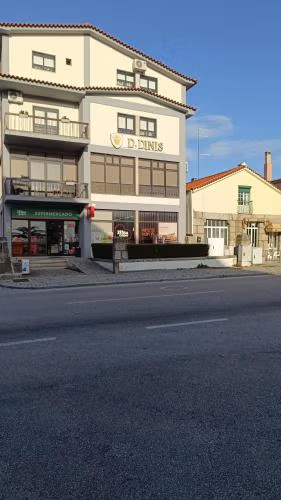
Alojamento Local S. Bartolomeu
 OpenReservations accepted
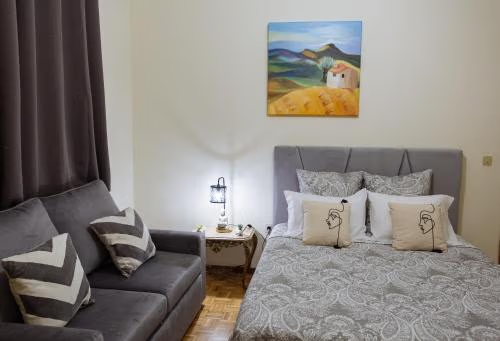
Dom Dinis
 OpenReservations accepted
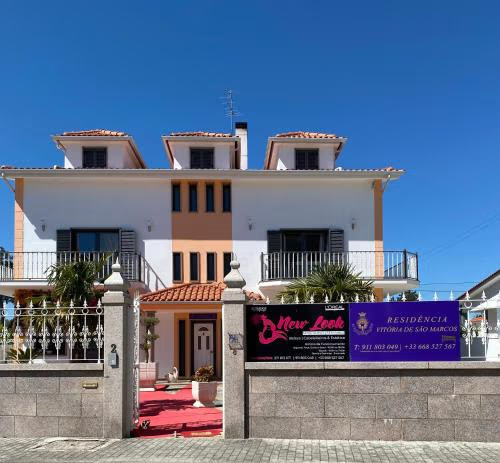
Vale a Pena - Alojamento Local




Town 1 of 3