

Town on the Camino
Villalba
Lugo, Spain
- places to stay
- 9
- Caminos
- 2
- Elevation
- 481 m
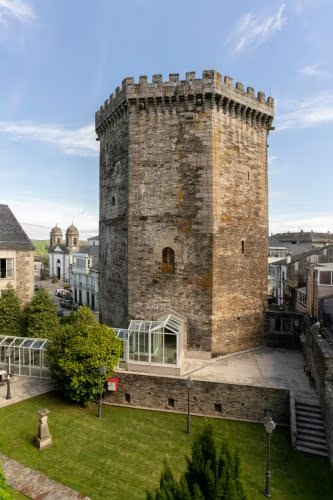
Vilalba is the county town of the Terra Chá, the wide plateau in the north of Lugo province: an octagonal tower of the Andrade family, a large Xunta albergue and cheese from San Simón da Costa. From here it is 120.4 kilometres to Santiago, and this is your last night in a town before the land empties out.
How long to stay?
An afternoon is enough. Vilalba is a small town with everything you need after the stage from Abadín, and with daily buses to Lugo, A Coruña and Santiago. You can see the Andrade tower, the parish church and the small museum in one afternoon. After that come thinly populated stages, so use the evening to shop.
Vilalba in Ninja numbers
- 120.4 kilometres are left from here to Santiago de Compostela on the Camino del Norte.
- 20.5 kilometres from Abadín, with 340 metres of ascent and 367 metres of descent across the plateau.
- 48 beds in the Xunta albergue, open all year.
- Eight corners on the Andrade tower, the only thing left of their castle.
- 1966 is when, according to Paradores, the tower joined the state hotel chain.
Arriving: across the Terra Chá
Beyond Abadín the land becomes wide and flat. The Terra Chá, the "flat land", is a plateau at almost 500 metres with small hamlets. Via As Paredes, Martiñán and O Campo do Cristo you reach Vilalba. The Xunta albergue is right on the way, a good kilometre before the town centre.
In brief: the town of the Andrade
The Andrade family, who ruled large parts of northern Galicia in the late Middle Ages, had a castle in Vilalba. Only its tower remains, with an octagonal floor plan and a crown of battlements. Today it belongs to a Parador, a state-run hotel. The county town grew up around the tower and still lives mostly from the land: cheese, capons, potatoes and grelos.
The tower and the plateau: what to see
Everything is in the centre, close together.
- Torre dos Andrade: The octagonal tower is the town's landmark and what remains of the Andrade castle. It is part of the Parador; the historic rooms are open to visitors, but we did not find opening times. For pilgrims it is a picture of the Galicia you are now walking through: the land of the great families who built roads, bridges and castles.
- Igrexa de Santa María: The parish church replaces an older Romanesque building; it got its present form in the second half of the 19th century. We did not find mass times.
- Museo de Prehistoria e Arqueoloxía: A small permanent exhibition on the early cultures of the north-west of the Iberian Peninsula, in the same building as the tourist office. We did not find opening times.
- Paseo fluvial along the Madalena: A riverside path past old mills to the river beach. Good for your legs after the stage.
Food and drink
Vilalba is the home of San Simón da Costa cheese, a smoked, pear-shaped cow's milk cheese with its own designation of origin. The cheese fair takes place on the first Sunday in April, the capon fair in the days before Christmas. Try the cheese; this is where it comes from.
Honestly
- The Xunta albergue is outside the centre. It is a good kilometre to the shops and bars, and back again in the morning.
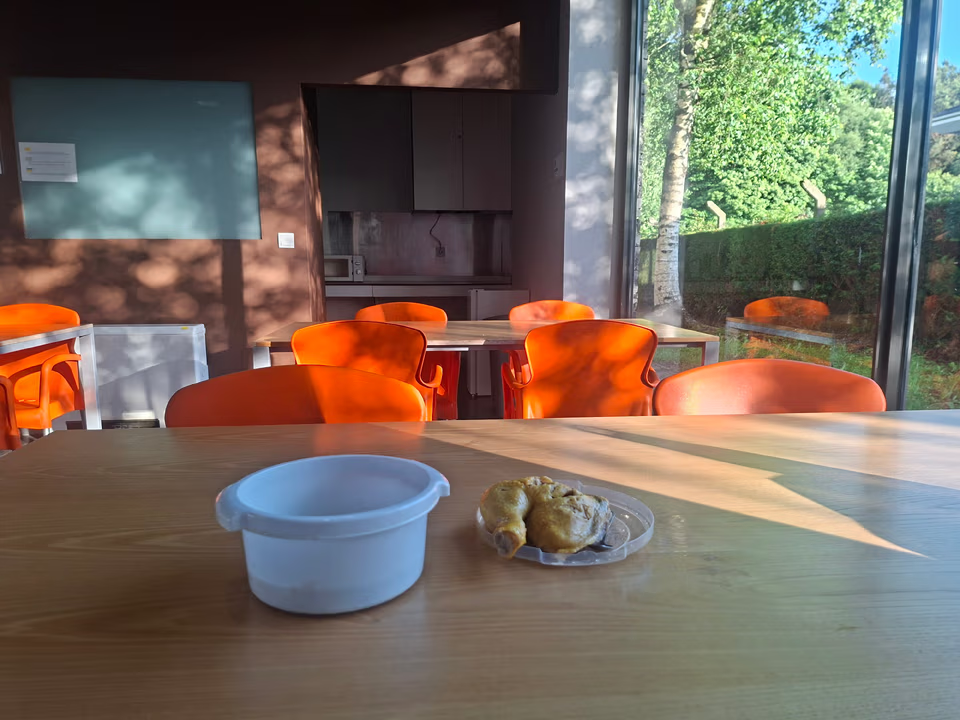
- Kitchen without utensils. The albergue kitchen has a microwave, but no pots, no cutlery and no fridge.
- After this it gets lonely. Between Vilalba and Arzúa there are only villages and hamlets. Buy what you need for the next few days here.
Where pilgrims sleep
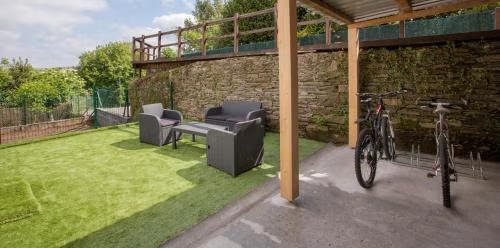
The Albergue de peregrinos de Vilalba belongs to the Xunta de Galicia and is run by Civil Protection staff. 48 places, €10, open all year, check-in from 1 pm to 10 pm, no reservations (as of August 2026). There is a washing machine and dryer, heating and a garden.
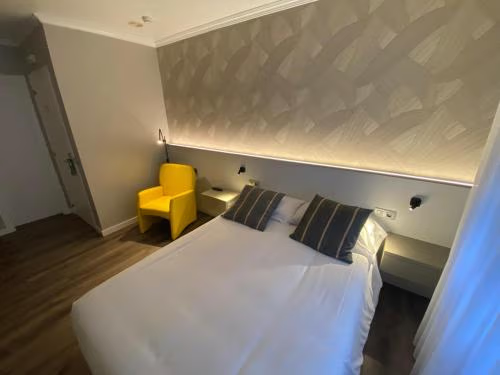
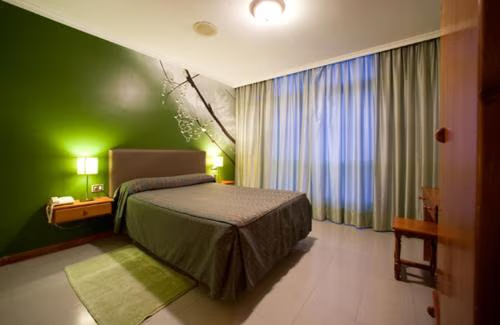
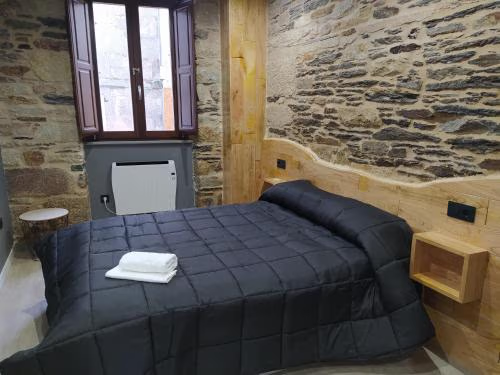
Two private albergues in town are open only in season: the Albergue Castelos Vilalba (38 places, from €15, April to September) and the Albergue As Pedreiras (27 places, from €16, mid-March to mid-November). There are also guesthouses and the Parador.
Ninja tips
- Have some cheese wrapped up. A piece of San Simón is the best provision for the empty stages to Sobrado.
- Shop in the evening. Until Baamonde there are only hamlets on the way.
- In winter, the Xunta albergue counts. The private albergues close in autumn; the public one stays open.
Onward: to Baamonde
Beyond Vilalba the way climbs once more to 520 metres at kilometre 780.9 and then drops via San Xoán de Alba and Pedrouzos into the valley of the Parga. 19.6 kilometres to Baamonde, with 319 metres of ascent and 394 metres of descent.
Deep dive: The flat land
A short read, in case you want to learn more about Vilalba. About two minutes' reading.
A land without mountains
If you come from Asturias, you have weeks of climbing behind you. In the Terra Chá that changes. The plateau in the north of Lugo province lies at almost five hundred metres, and it is so flat that the Galicians simply call it the flat land. In between lie small villages and a lot of open country.
The Andrade
In the late Middle Ages a large part of northern Galicia belonged to the Andrade family. They built castles, towers and bridges, and their tower still stands in Vilalba. It has an octagonal floor plan, which is rare in Galicia, and a crown of battlements at the top. The rest of the castle has disappeared. Today the tower is part of a Parador, one of Spain's state-run hotels.
What Vilalba gives you
Vilalba is the last small town before a quiet stretch. What comes next are hamlets, a monastery and finally Arzúa, where you meet the Camino Francés and the ways become full. If you walk through the streets here in the evening, it is a good moment to take in the calm of the past weeks once more.
Where to stay in Villalba
Places to stay in Villalba.
 OpenReservations accepted
Albergue As Pedreiras
 OpenReservations accepted
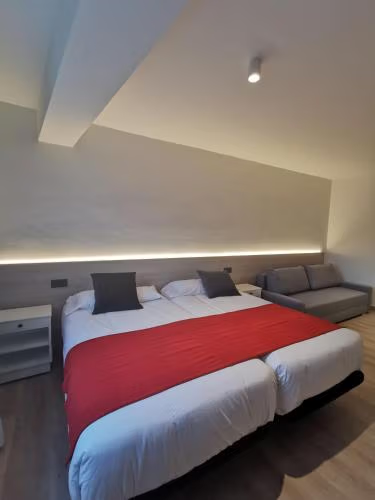
Seijo
 OpenReservations accepted
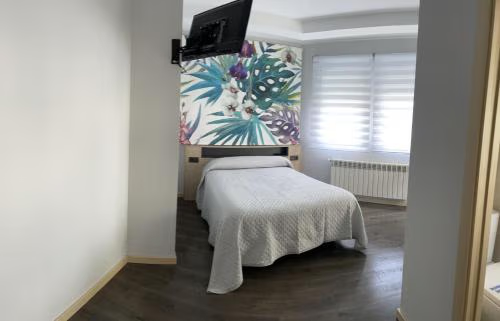
Pensión A Carballeira

Services in Villalba
What you can find in town before the next stage.
- Café
- Shop
- Pharmacy
- Fountain
- Train station
- Restaurant
Source: © OpenStreetMap contributors · updated February 2026
Town 42 of 49