

Town on the Camino
A Armenteira
Pontevedra, Galicia, Spain
- places to stay
- 8
- Camino
- 1
- Elevation
- 288 m
A Armenteira is where the first day of the Variante Espiritual ends: a 12th-century Cistercian monastery in the woods, 20.6 kilometres from Pontevedra and after the steepest climb of the route. It is the setting of the legend of the monk Ero, who listened to a bird and lost three hundred years. The pilgrim hostel is small, so book ahead.
How long to stay?
One evening is enough. You arrive tired after the climb over Monte Castrove, look at the monastery church and go to bed early. The real reward is the next morning: right behind the monastery the Ruta da Pedra e da Auga begins, the most beautiful section of the whole variant.
A Armenteira in Ninja numbers
- 20.6 kilometres it is from Pontevedra to here, with 704 metres of ascent, most of it after Combarro.
- 422 metres was the day's highest point, 2.5 kilometres before the monastery. A Armenteira itself lies at 288 metres.
- 300 years the monk Ero is said to have listened to a bird's song. That is what Cantiga 103 by King Alfonso X says.
- 1989 is when religious women moved back in: Cistercian nuns have lived in the monastery ever since.
- 6.5 kilometres long is tomorrow's Ruta da Pedra e da Auga, past more than thirty restored mills.
Arriving: over the hill to the monastery
After Combarro the Variante Espiritual turns inland. For a good seven kilometres it climbs over the ridge of Monte Castrove, partly on forest tracks, partly on concrete ramps, past the petroglyphs of Chan de Valdedeus. The highest point is at 422 metres, then the path drops to the monastery in the valley. Once you arrive here, you have the most demanding stage of the variant behind you.
In brief: a courtier becomes a monk
Around 1150 Ero, a courtier of King Alfonso VII, founded the monastery of Armenteira on his own land. Bernard of Clairvaux sent him four monks, and in 1162 the link to the Cistercian order is documented. Ero became a monk himself and later abbot. According to tradition, the Cistercians of Armenteira brought Albariño, the white wine of the area, to the Salnés. In the 19th century the monastery fell into ruin after the state seized the monasteries. In 1961 Carlos Valle-Inclán, son of the poet from Vilanova de Arousa, set its rescue in motion. Since 1989 Cistercian nuns have lived here again.
Ero and the bird
Ero asked the Mother of God to grant him a glimpse of paradise. He went into the woods, sat down and listened to a bird that sang so beautifully that he forgot everything. When he returned to the monastery, nobody knew him any more. King Alfonso X the Wise included the story in the 13th century as Cantiga 103 in his songs to the Virgin Mary, with a melody. The heading states the length precisely: „Esta é como Santa María fez estar ao monge trezentos anos ao canto da passarýa.“ Three hundred years, not two hundred, as you often read.
The refrain goes „Quena Virgen ben servirá, a Parayso irá“: whoever serves the Virgin well will go to paradise. The scholar Xosé Filgueira Valverde from Pontevedra wrote his doctoral thesis on this one Cantiga. In 1907 Valle-Inclán retold the legend in his collection of poems „Aromas de leyenda“. If you hear a bird in the woods behind the monastery tonight, you know what to think of.
In the monastery: what to see
The monastery is the place; everything else is forest.
- Monastery church of Santa María: A Cistercian church in the austerity Bernard of Clairvaux wanted for his order: three naves, a rose window with lobed arches and, rare in Galicia, a dome over the crossing. After the climb this is where you find the quiet the variant is named for. We did not find opening or prayer times; ask at the monastery.
- Cloister: Built between 1575 and 1778, long after the founding. We have not checked whether and when it can be visited.
- The nuns' soap: The Cistercian nuns make soap and run the monastery guesthouse.
- The start of the Ruta da Pedra e da Auga: Right behind the monastery the mill path along the Río Armenteira begins. You can walk the first metres this evening; tomorrow morning the route leads you through it.
Food and drink
There is no shop in A Armenteira, only vending machines at the hostel and bars at the monastery. If you want to cook, you have to shop beforehand. A glass of Albariño in the evening is part of this place's history: the monks of this monastery are said to have brought the grape to the valley.
Honestly
- The pilgrim hostel is small. There is exactly one, and on public holidays it is practically full. Without a booking your day may end with a search.
- No shop. If you have not planned ahead, you depend on vending machines and bars.
- The monastery guesthouse rarely fits. The nuns require at least two nights, three in summer and Holy Week.
- The climb is serious. If you planned the variant as a flat coastal walk, this is where you notice it is not.
Where pilgrims sleep
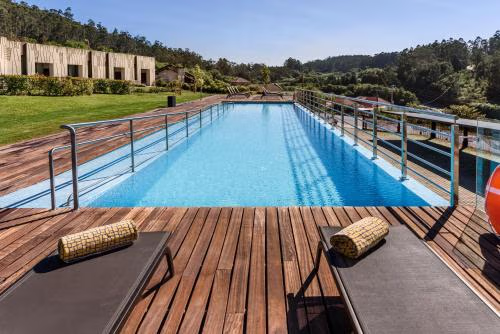
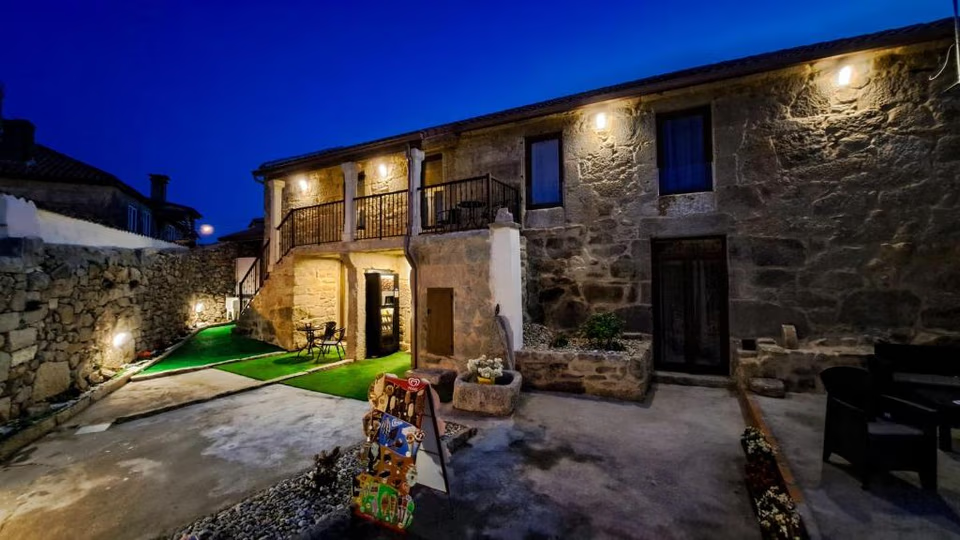
The only pilgrim hostel is the Albergue San Ero: €10 per bed, reservations from one day ahead, sleeping bag compulsory (as of October 2026). The guesthouse of the Cistercian nuns in the monastery has 25 places in 13 rooms but only takes guests for at least two nights, three from July to September and in Holy Week. There are also several private hostels in the village with beds from about €25 to €29, and country houses. New pilgrim hostels have been announced, one of them in the monastery; until they open, the rule is: secure your first night in advance.
Ninja tips
- Book the day before. The Albergue San Ero takes reservations from one day ahead. Call from Pontevedra.
- Shop in Pontevedra. There is no shop up here.
- Pack your sleeping bag. It is compulsory in the pilgrim hostel.
- Set off early tomorrow. In Vilanova de Arousa you need to sort out the boat for the next day in the afternoon, and 24.4 kilometres lie ahead of you before that.
Practical tips for pilgrims
- Credencial: The pilgrim office in Santiago does not recognise the Variante Espiritual as a route of its own. If you want the Compostela, you need 100 walked kilometres, for example from Tui.
- Stamp: Ask at the hostel and in the monastery.
- Boat: From November to March the boat from Vilanova de Arousa to Pontecesures only runs for groups of ten or more. Plan this before you continue from here.
Onward: through the mill gorge into the Salnés
Behind the monastery the Ruta da Pedra e da Auga runs 6.5 kilometres down along the Río Armenteira, past more than thirty restored mills, small waterfalls and stone bridges. Below, the Val do Salnés opens up with its vines on granite posts. Via Barrantes, Ribadumia and Ponte Arnelas you reach Vilanova de Arousa, 24.4 kilometres from here, with 272 metres of ascent and 556 metres of descent. About 15 kilometres after Armenteira there is a stamp in a chapel.
What awaits you tomorrow
Vilanova de Arousa, the fishing village where Valle-Inclán was born, the poet who put the legend of Ero into verse. From there the boat leaves the next morning across the ría and up the Ulla, past 17 stone crosses in the water.
Deep dive: Three hundred years to the song of a bird
A short read, in case you want to learn more about A Armenteira. About three minutes' reading.
A monastery in the woods
If you stand in front of the monastery church of Armenteira in the evening, you are standing at a place founded by a man of the world. Ero was a courtier of King Alfonso the Seventh. Around 1150 he endowed a monastery on his own land and asked Bernard of Clairvaux for monks. Bernard sent four. In 1162 the link to the Cistercian order is documented. Ero did not remain just a founder; he became a monk himself and later abbot.
The legend
The story Armenteira is known for is about this abbot. He asked the Mother of God to grant him a glimpse of paradise. Then he went into the woods and listened to a bird. He listened only briefly, or so it seemed to him. When he returned to the monastery, nobody knew him any more. Three hundred years had passed. King Alfonso the Tenth, the Wise, had the story included in the thirteenth century in his songs to the Virgin Mary, as song number 103, with music. In it the number is stated explicitly: three hundred years to the song of the little bird.
Decline and return
In the nineteenth century the Spanish state seized the monasteries, and Armenteira fell into ruin. In 1961 the rebuilding began, set in motion by Carlos Valle-Inclán, son of the poet who had retold the legend in 1907. In 1989 Cistercian nuns moved in. They still live here, make soap and take in guests.
What A Armenteira gives you
When this text was written, in autumn 2026, Armenteira was the first night for most pilgrims on the Variante Espiritual. Today you have the steepest climb behind you. Tomorrow you walk down through a gorge full of mills, and the day after you travel on the water. The legend of Ero tells of a man who listened so well that he forgot time. Perhaps this evening in the woods is the chance to try it for a few minutes.
Where to stay in A Armenteira
The places pilgrims rate highest in A Armenteira come first.
- 1st place
 OpenReservations accepted
Albergue CAROI HOSTEL & ROOMS Armenteira
- 2nd place
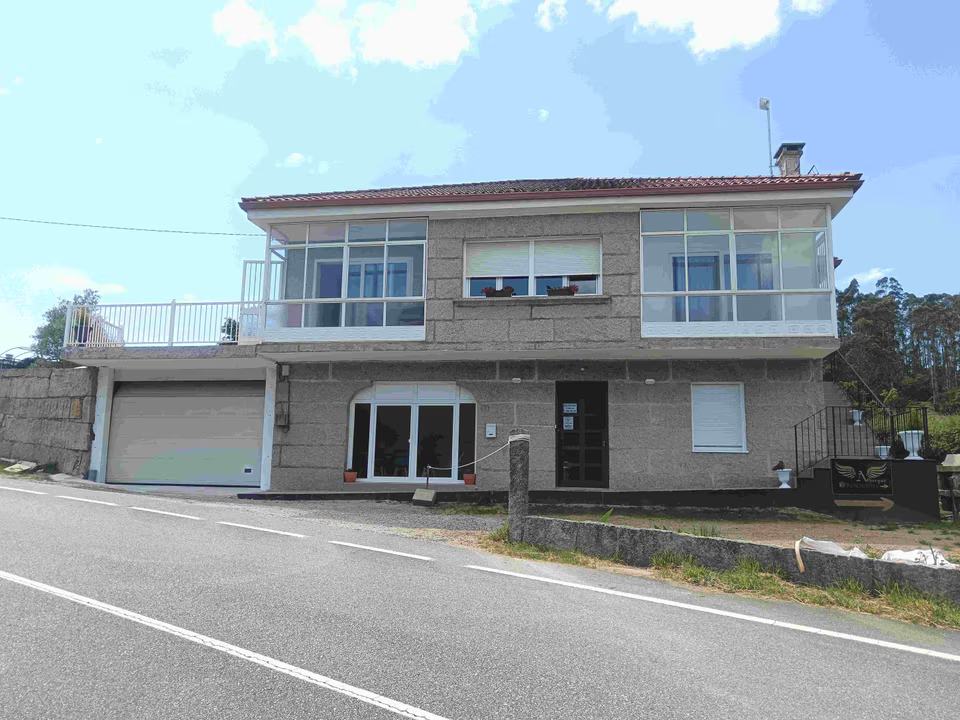 OpenReservations accepted
Albergue Armenteira
- 3rd place
 OpenReservations accepted
Albergue San Ero de Armenteira

Services in A Armenteira
What you can find in town before the next stage.
- Café
- Shop
- Fountain
- Restaurant
Source: © OpenStreetMap contributors · updated November 2025
Town 2 of 6