

Town on the Camino
A Coruña
Spain
- places to stay
- 50
- Camino
- 1
- Elevation
- 10 m
A Coruña is the port where pilgrims from England, Ireland and northern Europe came ashore, and the second starting point of the Camino Inglés. From the Romanesque church of Santiago it is 73.0 kilometres to the cathedral, too few for the Compostela unless you have already walked at home. Plan an afternoon in the old town before you set off.
How long to stay?
An afternoon is enough, ideally the one before you start. The old town is packed with things for pilgrims: the church where the way begins, the sailors' church, María Pita's square and the garden with the grave of a British general. If you want to add the Roman lighthouse, you need more time. The first stage is short, so you can still walk through the old town in the morning before the way leads you out of the city.
A Coruña in Ninja numbers
- 73.0 kilometres separate you from the cathedral of Santiago de Compostela: 29.6 on the Camino Inglés from A Coruña to Herves, where you join the way from Ferrol, then another 43.4 on the Camino Inglés.
- 27 kilometres are therefore missing from the 100 that the Pilgrim's Office requires for the Compostela.
- December 2016 is when the cathedral chapter of Santiago decided that the Compostela is possible from A Coruña too, under conditions.
- 2.2 per cent of pilgrims on the Camino Inglés started in A Coruña in 2024; 96 per cent started in Ferrol.
- 453 metres above sea level lies Herves. That is how far you climb from the harbour over the first and second days.
Arriving: at the church by the harbour
The Camino begins at the Iglesia de Santiago in the Ciudad Vieja, the old town. The church was built in the 12th century close to the harbour to receive the pilgrims of the English Way who arrived here by ship. Next to it there was a pilgrim hospital. There you get your credencial and your first stamp, or alternatively at the tourist office on the Plaza de María Pita. You will find the first waymark in the Rúa Santiago directly behind the church.
In brief: pilgrims by sea, enemies by sea
For centuries A Coruña was the port where pilgrims from England, Ireland and the north of Europe came ashore. During the Hundred Years' War between England and France (1337 to 1453), the sea route to Galicia was the way to Santiago for the English, with the Crown's permission.
In 1589 the English came differently: Francis Drake attacked the city on behalf of Elizabeth I, according to the city with 12,000 soldiers against 4,000 inhabitants. Gregorio de Racamunde fell in the fighting, and his wife María Pita carried on the defence. Her cry "Quen teña honra, que me siga", whoever has honour, follow me, has come down to us to this day. In 1809 a Briton died outside the city: General Sir John Moore fell in the Battle of Elviña and lies buried in the garden of San Carlos.
From the harbour into the old town: what to see
The first four sights are in the Ciudad Vieja, the old town.
- Iglesia de Santiago: The oldest church in the city, Romanesque, from the second half of the 12th century, protected as a historic monument since 1972. It was built for the pilgrims who came from the harbour and is still the starting point of the way. You can get your credencial and stamp here. Opening hours are given differently, sometimes mornings and evenings daily, sometimes only weekday mornings and Thursday evenings; plan on the morning.
- Colegiata de Santa María del Campo: Romanesque-Gothic, built from the 12th into the 14th century. It was the church of the sailors and merchants, the people who kept alive the port through which the pilgrims came.
- Plaza de María Pita: The large square of more than 10,000 square metres has borne the name of the heroine of 1589 since the 19th century; her bronze statue weighs 30 tonnes. The tourist office on the square also issues credencials and stamps.
- Jardín de San Carlos: In the 14th century a fortress outside the walls, turned into a garden in the 18th century. Sir John Moore, who fell at Elviña in 1809, lies here.
- Torre de Hércules: The oldest Roman-era lighthouse still in operation, a UNESCO World Heritage Site. For pilgrims from A Coruña its stamp counts among the city's Jacobean stamps.
Honestly
- The Compostela is complicated here. 73.0 kilometres are not enough. Without a previous section at home or residence in A Coruña you will not get a Compostela in Santiago. That is why almost everyone starts in Ferrol.
- No pilgrim hostel. There is no public hostel in A Coruña. The first one is 20.0 kilometres away in Sergude.
- The first day is asphalt. Around 90 per cent of the stage runs on pavements and roads, part of it along the national road.
- After O Burgo it gets empty. After that there are hardly any supplies, followed by a long climb to the Alto de Peito.
Where pilgrims sleep
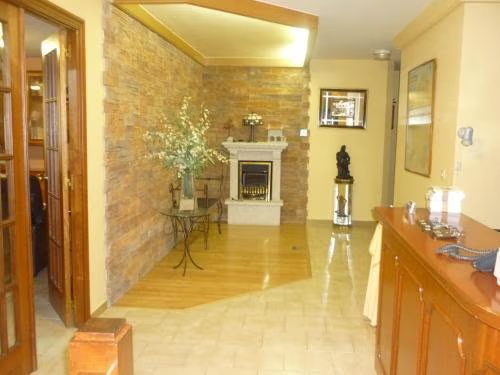
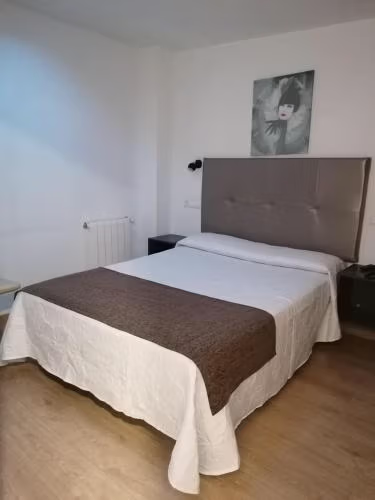
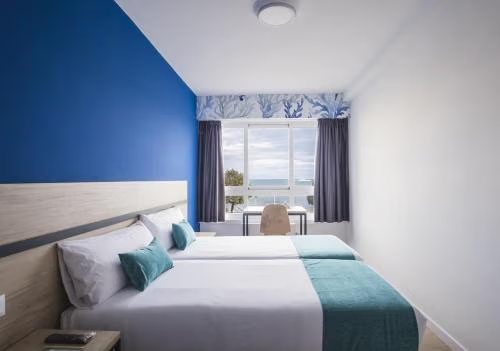
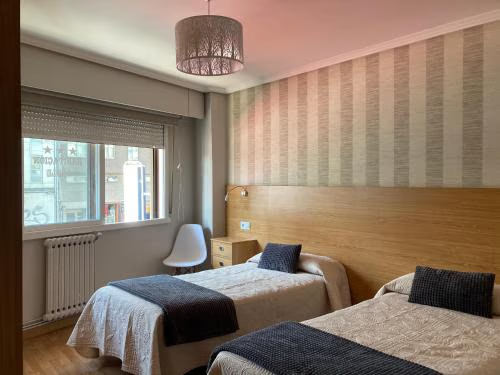
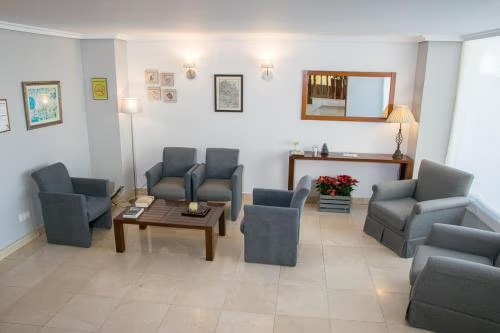
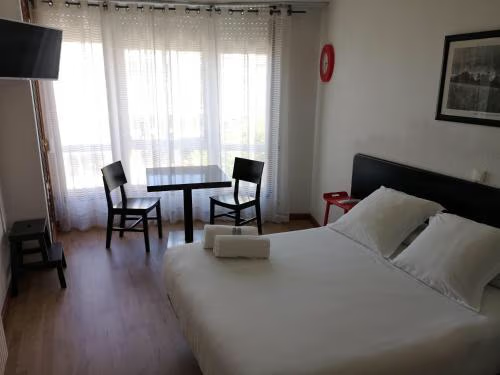
There is no pilgrim hostel in A Coruña. You sleep in guesthouses, hostales or hotels, many of them in the old town and the centre; single rooms in guesthouses start at just over €40 (as of October 2026). The first public Xunta hostel is in Sergude, 20.0 kilometres from the start; it is considered one of the most modern and best kept on the way. If you keep going, the next one is in Hospital de Bruma, 32.3 kilometres from A Coruña.
Ninja tips
- Sort out the Compostela before you travel. Some sources require at least 25 kilometres on a Way of St James in your home country, others that both sections together add up to 100 kilometres. With 27 kilometres or more, stamped in the same credencial, you are on the safe side. If in doubt, ask the Pilgrim's Office in Santiago.
- Do you live in A Coruña? Then your ID card is enough as proof, plus two stamps from Jacobean sites in the city, such as the Iglesia de Santiago and the Torre de Hércules.
- Take the estuary variant at O Burgo. It spares you 1.6 kilometres along the national road and is only 400 metres longer: after the N-550 turn left into the Calle Río de Quintas, and after 1.3 kilometres you are back on the official way.
- Shop in A Coruña or O Burgo. After that there is hardly anything until Sergude; there a bar 400 metres before the hostel opens at 8:30.
- Get your stamp at the tourist office if the church is closed. It opens at 9:00 on weekdays and at 10:00 at weekends.
Practical tips for pilgrims
- Credencial: At the Iglesia de Santiago or at the tourist office on the Plaza de María Pita.
- Stamps: Two a day are recommended, especially if you want to justify the Compostela with a section walked at home.
- Shopping and water: Before you start or at the latest in O Burgo; after that it gets thin.
Onward: out of the city to the estuary
Behind the church the waymarks lead along the Avenida de la Marina beneath the Galerías, through the Cantones to the Plaza de Cuatro Caminos. The first kilometres are city. After O Portadego (km 6.6) the estuary opens up, and in O Burgo (km 10.0) you cross it on a medieval bridge. In the 12th century two settlements grew up here: the north bank belonged to the cathedral of Santiago, the south bank to the Templars, who were to protect the harbour. At Sigrás stands a church of Santiago with a former pilgrim hospital. Then it becomes rural, and the way climbs to the Alto de Peito before it reaches Sergude. By Herves at kilometre 29.6 you have climbed from the sea to 453 metres; there you join the way from Ferrol.
What awaits you tomorrow
Sergude, a small place with one of the most modern Xunta hostels. There is not much to do there: a bar on the way, and 500 metres further on the well-preserved church of San Xiao with its cemetery. Well-known bread comes from the municipality of Carral. After a day on asphalt, that is just right.
Deep dive: The way that begins at the water
A short read, in case you want to learn more about A Coruña. About three minutes' reading.
Arrival from the sea
Most Ways of St James begin at a front door. The English Way began at a quay wall. Anyone in the Middle Ages who wanted to travel from England, Ireland or Scandinavia to Santiago took a ship and came ashore in a Galician port, in Ferrol or here in A Coruña. For these pilgrims a church was built close to the water in the twelfth century and given the apostle's name: Santiago. Next to it stood a hospital where they could stay after the crossing. Their last kilometres to Santiago were short. The long part of their pilgrimage already lay behind them, on the sea.
Friends and enemies
The Hundred Years' War shows how closely pilgrimage and politics were tied together here. As long as England and France were fighting each other, the land route through France was difficult for the English, and the sea route to Galicia became all the more important. Later the English also came as enemies. In the year 1589 Francis Drake attacked the city. The defenders were heavily outnumbered, and when María Pita's husband fell, she took his place. Her words, that whoever had honour should follow her, are still quoted today, and the city's largest square bears her name. Two hundred and twenty years later a British general, Sir John Moore, fell outside the city fighting Napoleon's troops. The city buried him in the garden of San Carlos.
The question of kilometres
For a long time the rule was: whoever sets off in A Coruña gets no Compostela in Santiago, because the distance is shorter than one hundred kilometres. In December 2016 the cathedral chapter of Santiago changed that at the city's request. Anyone who has previously walked a Way of St James in their home country can have that distance counted, and anyone who lives in A Coruña only needs their ID card. In March 2017 the first two Compostelas were issued to pilgrims from A Coruña. The rule ties in with the old reality: the medieval pilgrims, too, had most of their journey behind them when they came ashore here.
What A Coruña gives you
If you set off here, the way is short, and the question of whether it is enough is part of it. Perhaps that is the real lesson of this harbour: what makes a pilgrimage is decided not at the kilometre stone, but by how you walk. When this text was written, in autumn 2026, only a small share of the pilgrims on the English Way began here. Those who do begin where pilgrims have arrived since the Middle Ages.
Where to stay in A Coruña
Places to stay in A Coruña.
 OpenReservations accepted
Pensión Roma
 OpenReservations accepted
Hotel Francisco Javier
- Open
Saudade Hostal Cafetería

Town 1 of 1
Continue along the Inglés A Coruña
A Coruña is the last popular town on the Inglés A Coruña.