

Town on the Camino
Alter do Chão
Portugal
- places to stay
- 8
- Camino
- 1
- Elevation
- 271 m
Alter do Chão is the village of horses: since 1748 the royal stud farm here has bred the Alter Real, which Turismo Alentejo says has stayed in the same place without interruption. In the middle of the village stands the castle that Pedro I had built in 1357. An afternoon is enough; if you want to see the stud farm, plan around the 3 pm tour.
How long to stay?
An afternoon is enough, but for the stud farm plan a fixed appointment. After 25.4 kilometres from Fronteira you want to arrive, and the important things in the village are close together: the castle in the centre, the remains of the Roman villa right beside it, a few churches. The stud farm shows itself only on guided tours, Tuesday to Sunday at 10:30 am and 3 pm. If you arrive early, you can make the afternoon tour. On Mondays it is closed. Tomorrow it is only 15.9 kilometres to Crato, so you can also take the morning tour and set off afterwards.
Alter do Chão in Ninja numbers
- 393.4 kilometres lie behind you since Tavira, according to Camino Ninja. It is another 267.8 to Trancoso.
- 25.4 kilometres was today's stage from Fronteira, with Cabeço de Vide as the only place in between. Tomorrow it is much shorter, 15.9 kilometres to Crato.
- 1748 is when King João V founded the stud farm of Alter. To this day it is dedicated to the Alter Real breed, a line of the Lusitano horse.
- €19 is the price of the tour of the stud farm with a subsequent bird-of-prey display for adults (as of the 2026 price list).
- 22 September 1357: This is the date the inscription above the castle gate gives for the construction under King Pedro I.
Arriving: from the springs onto the plain
Coming from Fronteira you pass, after 11.3 kilometres, through Cabeço de Vide, whose thermal springs the Romans already used. From there it is another 14.1 kilometres to Alter do Chão. The name explains the landscape: "do Chão" means "of the plain" and distinguishes the town from Alter Pedroso, a settlement on a rocky height nearby. You are walking on the Via Nascente, and here you are a good 25 kilometres along the route north of Fronteira, where Nuno Álvares Pereira won his first battle at Atoleiros in 1384. King João I later also gave him Alter do Chão as a lordship.
In brief: Abelterium, Alter, Alter do Chão
The Romans already had a town here, Abelterium, which is named in the road register of Antoninus Pius. From Abelterium it became Alteiru and finally Alter. The first settlement charter was given in 1232 by Bishop Vicente of Guarda; in 1249 King Afonso III followed with a new one and the order to rebuild the castle. The castle that stands today was built by Pedro I. Later the lordship passed to Nuno Álvares Pereira and from him to the House of Bragança, whose foundation owns the castle to this day. In 1662 Spanish troops under Juan José de Austria took the town and castle. Since 1910 the castle has been a national monument.
A village that breeds horses
In 1748 João V founded the stud farm on the grounds of the Coutada do Arneiro, which belonged to the Crown. It supplied the horses for the royal riding school. Turismo Alentejo calls it the oldest stud farm in the world that has operated without interruption in the same place. To this day the breed is the Alter Real, a Lusitano of this line.
For a pilgrim this is a rare encounter: you have been on foot for weeks, and here a whole village stands in the sign of the animal that for centuries was the faster way to travel. Tuesday to Friday the mares leave the yard with their foals for the pasture between 3:30 and 4 pm and return in the morning between 10 and 11 am. If you take the afternoon tour on a weekday, you see them set out.
Castle and horses: what to see
Castle and Roman villa lie in the centre, the stud farm lies in the municipality, but how far it is from the path we haven't checked. We haven't reliably found the castle's opening times or the churches' Mass times.
- Castelo de Alter do Chão: The castle stands in the middle of the village, with cafés and restaurants all around. It has a square ground plan with six towers, and above the gate sits a coat of arms with the building inscription of 1357. In the 15th century it became a noble seat under the House of Bragança. Since 1910 it has been a national monument and is in good condition. For you it is the central point to get your bearings from, and the place where Nuno Álvares, the victor of Atoleiros, left his mark as lord of Alter.
- Casa da Medusa: The remains of a Roman villa from Abelterium lie only a few hundred metres from the village centre, with its own bath complex nearby. They can be seen only on occasional guided tours; you find out the date at the Palácio do Álamo on +351 245 612 385. Call beforehand, or you will be standing in front of the fence.
- Coudelaria de Alter: The stud farm shows itself on guided visits of about 90 minutes, followed by 45 minutes of falconry. You see the mares' yard, the Hof João VI, the stallion stables and the carriage house. At weekends and on public holidays the tours are shorter, because mares and working horses are not to be seen then. Booking is recommended, on +351 245 610 060.
- Igreja do Senhor Jesus do Outeiro: A Baroque church with a richly decorated façade, a bell tower with four openings and wrought-iron balconies. We haven't found a date.
- Ermida de Santo António dos Olivais: The chapel lies north-west of the village and mixes Renaissance, early Baroque and rural style, with painted rib vaults and blue-and-yellow tiles.
Honestly
- There is no pilgrim hostel. You sleep privately; book before you set off from Fronteira.
- The stud farm costs time and money. Reckon on €19 and about two hours. On Mondays, on 1 January, on Christmas Eve and on Christmas Day there are no tours.
- The Roman villa is mostly closed. Without a call to the Palácio do Álamo you see it only from outside.
- The day's stage from Fronteira is long. 25.4 kilometres in the Alentejo is no stroll in the heat. Tomorrow, by contrast, it is only 15.9.
Where pilgrims sleep
We haven't found a pilgrim hostel, municipal or church-run, in Alter do Chão. According to Camino Ninja there is a private house with dormitory places, the Casinhas de Santo António. Besides that there are holiday flats and guesthouses in the village.
Ninja tips
- Take the 3 pm afternoon tour. On a weekday you then see the mares move out to pasture.
- Call about the Casa da Medusa before you arrive. The tours are rare, and the Palácio do Álamo hands out the appointments.
- If you still have energy, climb up to Alter Pedroso. The castle ruin on the height is, according to one pilgrim guide, a worthwhile detour with a view over the valley. We haven't measured the detour; the fortress was conquered by Afonso I in 1160 with the help of the Templars.
- The basics are here. You will find a cash machine, post office, grocery shop, pharmacy and doctor's surgery in the village.
Onward: on the Via Nascente to Crato
Tomorrow you walk on the Via Nascente 15.9 kilometres to Crato, the old seat of the Order of St John in Portugal. Only 2.1 kilometres beyond lies Flor da Rosa with its fortified church. Camino Ninja describes the Alentejo section of the Via Nascente together with Turismo do Alentejo e Ribatejo.
What awaits you tomorrow
Crato is a short stage away and was the seat of the Hospitallers in Portugal, a knightly order. The eight-pointed cross of the order, later called the Knights of Malta, you can still see there in the paving. And because you arrive early, there is time for the afternoon walk to Flor da Rosa, where Nuno Álvares's father is buried.
Deep dive: The place of horses
A short read, in case you want to learn more about Alter do Chão. About two minutes' reading.
A town on the Roman road
When you stand in front of the castle of Alter do Chão, you stand in a place the Romans already knew. They called it Abelterium, and it stood in the great road register of the empire. The road from Lisbon to Mérida ran through the area, and in the municipality there still stands a Roman bridge of that road, with six arches. At the edge of today's village stood a villa with baths, which is now called the House of Medusa. From Abelterium came Alteiru, from Alteiru came Alter. The village got its addition to tell it apart from Alter Pedroso, the stony Alter on the height. This one is the Alter of the plain.
The king's castle
In 1357 King Pedro the First had the castle built that you see today. The inscription above the gate gives the twenty-second of September. A few decades later, after the wars of independence against Castile, King João the First gave the lordship of Alter to his commander Nuno Álvares Pereira. He had won his first great victory at Atoleiros, not far from Fronteira, which you walked through yesterday. From Nuno, Alter passed to the House of Bragança, and its foundation owns the castle to this day.
The king's stud farm
In 1748 King João the Fifth founded a stud farm here. It was meant to supply horses for the royal riding school, and it stood on land that belonged to the Crown. Since then horses called Alter Real, the royal Alter, have been bred here. The tourism authority of the Alentejo calls the stud farm the oldest in the world that has operated without interruption in the same place. When this text was written, in autumn 2026, the mares with their foals went out to pasture on weekday afternoons and came back the next morning.
What Alter do Chão gives you
For centuries the horse was the fastest way to get through this country. Here its breeding was made into an art. You walk more slowly, step by step, and arrive all the same. Perhaps that is the thought for this evening: not every way has to be fast to be walked well.
Where to stay in Alter do Chão
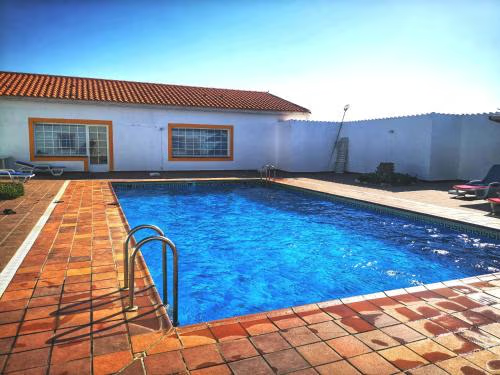
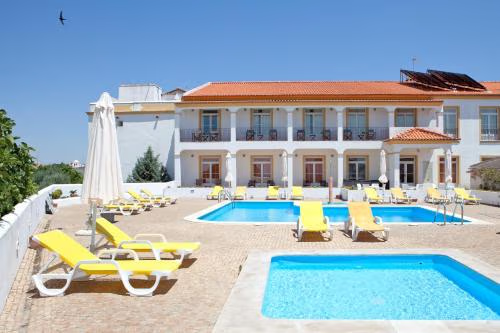
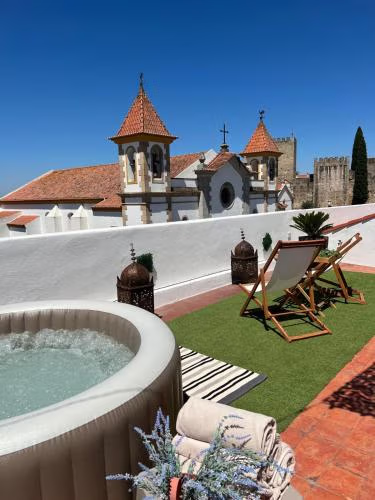
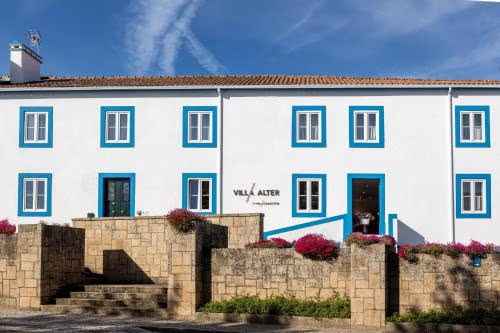
Places to stay in Alter do Chão.
 OpenReservations accepted
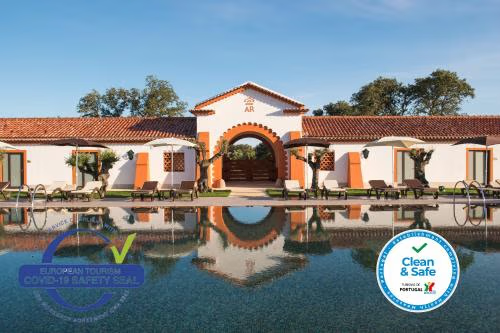
Varandas de Alter Hotel & SPA
 OpenReservations accepted
Hotel Convento D'Alter by Asite Hotels
 OpenReservations accepted
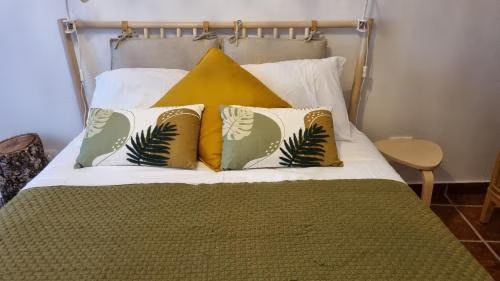
Alter Village Apartments


Town 13 of 25