


Partner
Turismo do Alentejo e Ribatejo, E.R.T.
The tourism board of the Alentejo and Ribatejo created Portugal's first certified Camino with 16 municipalities. Partner for six routes: the South, Via Nascente, Via Atlântico, Lisbon–Tomar and two new routes from Spain.
The Caminos on the map
Caminos of this partner
 Camino Portugués CentralThe Camino Portugués Central is the second most walked Camino in the world: 100,835 pilgrims arrived in Santiago along it in 2025. On the Camino Ninja map it starts at Lisbon Cathedral and measures 619.6 kilometers, but most people join in Porto, at kilometer 375.4, which still leaves 244.2 kilometers in 11 stages. Along the way lie the Templar town of Tomar, Coimbra with the tomb of the pilgrim queen Isabel, Barcelos and its rooster, the bridge of Ponte de Lima, the fortress of Valença, Pontevedra, and Padrón, where the Apostle's boat is said to have moored.Explore this Camino
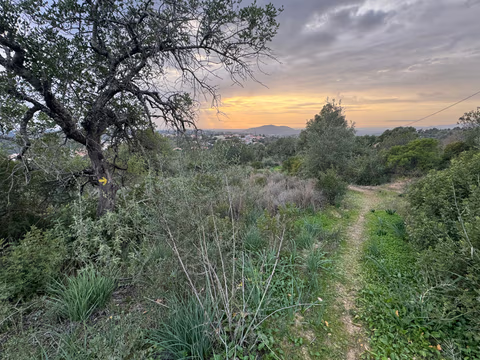 Camino de Faro – From the Algarve to the TagusThe Camino de Faro runs 466 kilometres from the cathedral in Faro over the Serra do Caldeirão, through the grain steppe of Castro Verde, the Order town of Santiago do Cacém and the cork oak forests around Grândola to Santarém on the Tagus. There it joins the Camino Portugués Central from Lisbon; Santiago is still 524 kilometres away. 20 stages, a good 4,000 metres of ascent, very few pilgrims and even fewer pilgrim hostels – but this is the road on which the Order of Santiago helped conquer Portugal.Explore this Camino
Via Nascente – From the Algarve to TrancosoThe Via Nascente runs 661.6 kilometers from Tavira on the Algarve across eastern Portugal to Trancoso in the Beira Alta. It follows the Guadiana north, crosses the wide open Alentejo via Mértola, Beja, Évora and Estremoz, crosses the Tagus at Vila Velha de Ródão and climbs via Castelo Branco, Fundão and Belmonte to Guarda, at 1,024 meters its highest point. 28 stages, 8,237 meters of ascent, hardly any pilgrim hostels and hardly any other pilgrims; in Trancoso the Camino Torres takes over toward Santiago.Explore this Camino
Caminho Central Via AtlânticoThe detour to the sea in southern Portugal: 136 kilometres from Castro Verde through the steppe of the Campo Branco and the cork-oak montado to the coast at Porto Covo and Sines, then up to Santiago do Cacém. Seven stages, hardly any pilgrims, no albergues, but Portugal's founding myth at the start and a castle of the Order of Santiago at the finish.Explore this Camino
Badajoz - EstremozA short border route from Spain into Portugal: 74.7 kilometres from Badajoz across the border river Caia to the fortress city of Elvas, on through Vila Viçosa and Borba across the marble country to Estremoz, where it meets the Via Nascente. Three stages, one of them 31.7 kilometres long, no known pilgrim hostels, but a UNESCO World Heritage Site on the first evening.Explore this Camino
Valencia de Alcántara - AlpalhãoThe short mountain route from Spain into the Alentejo: 56.3 kilometres from Valencia de Alcántara across the border at La Fontañera up onto the rock of Marvão, at 819 metres the highest point, down to Castelo de Vide and via Alagoa to Alpalhão, where it meets the Via Nascente. Three stages, 967 metres of ascent, no known pilgrim hostels, but two Jewish quarters and a castle village above the clouds.Explore this Camino
Who is behind the routes
The Turismo do Alentejo e Ribatejo, E.R.T. is the regional tourism authority for the Alentejo and the Ribatejo, based in Beja. It is not a pilgrims' association, yet it has done more for the Camino routes in southern Portugal than almost any other body: together with 16 municipalities it developed the Caminho Português de Santiago Central – Alentejo e Ribatejo, 435 kilometres in 19 stages from Ameixial on the Algarve border to Tomar.
In March 2021 this route became the first Camino in Portugal to be officially certified by the state, and the certification was renewed in 2025. Since then the tourism authority has run the route under a management plan that governs waymarking, maintenance and pilgrim infrastructure together with the municipalities. A whole network has grown up around this route: the Caminho Nascente through the east of the Alentejo, the Via Atlântico to the coast, the digitally guided Caminho da Raia along the Spanish border and, since 2026, two short routes that bring pilgrims from Spain into the Alentejo.
The routes of the Turismo do Alentejo e Ribatejo
On Camino Ninja the tourism authority is the partner for six routes. For three of them it is responsible for one section, for the other three the whole route.
- Camino de Faro – From the Algarve to the Tagus – section from Ameixial (km 65.7) to the Tagus: about 387 km on the certified Caminho Central via Almodôvar, Castro Verde, Santiago do Cacém, Grândola, Alcácer do Sal, Vendas Novas, Benavente and Salvaterra de Magos; the Algarve part from Faro is looked after by the Associação Espaço Jacobeus
- Camino Portugués Central – section Vila Franca de Xira – Tomar (km 41.3 to 155.0, about 114 km): first the “Caminho Central via Tejo” via Azambuja to Santarém, then the last stages of the certified Caminho Central via Golegã to Tomar
- Via Nascente – From the Algarve to Trancoso – section in the Alentejo: about 385 km from Mesquita on the Algarve border via Mértola, Beja, Évora, Estremoz and Alpalhão to the Tagus; the whole route runs from Tavira to Trancoso
- Caminho Central Via Atlântico – whole route: 135.5 km from Castro Verde via Ourique to the coast at Porto Covo and Sines and up to Santiago do Cacém, opened in December 2023
- Badajoz - Estremoz – whole route: 74.7 km from Badajoz in Spain via Elvas, Vila Viçosa and Borba to Estremoz, where it meets the Via Nascente
- Valencia de Alcántara - Alpalhão – whole route: 56.3 km from Valencia de Alcántara in Spain up to Marvão and via Castelo de Vide to Alpalhão, where it meets the Via Nascente
Together they form a network on which you can cross the Alentejo from the south, from the west and from Spain, and which keeps converging at Estremoz, Alpalhão, Castro Verde and Santiago do Cacém. The routes lead through areas where pilgrims are rare – cork oak forests, cereal steppe, marble country, white villages and border castles – and therefore depend on good waymarking and reliable information.
What the tourism region does for pilgrims
Together with the municipalities, the tourism authority provides signposts and information boards, publishes route guides and names the places for stamps and the credencial. In the Ribatejo it has also renewed the waymarking of the Caminhos de Fátima. On its portals you will find stages, accommodation and events along the routes. The two new routes from Spain are so recent that you will find their course, stages and elevations first here at Camino Ninja.
Contact
The Turismo do Alentejo e Ribatejo is based at Praça da República 12 in Beja. You can reach it by email at geral@turismodoalentejo-ert.pt and by phone on +351 284 313 540. Information on the Caminos is available at visitalentejo.pt and visitribatejo.pt. An authority that has taken the pilgrim route for what it can be in the south: a reason to walk slowly through a quiet land.