

Town on the Camino
Ansião
Distrito de Leiria, Região do Centro, Portugal
- places to stay
- 5
- Caminos
- 2
- Elevation
- 210 m
Ansião lies on the Nabão, and the town likes to explain its name with a legend: the holy Queen Isabel is said to have given alms here to an old man, an "ancião". After 13 short kilometres from Alvaiázere, an afternoon is enough for the bridge, the pillory and the church. A pilgrim bed is only to be found north of the town.
How long to stay?
An afternoon is enough. From Alvaiázere it is only 13 kilometres according to Camino Ninja, so you get here early. The important things lie close together: the Ponte da Cal over the Nabão, the pillory in front of the old counts' palace, the Padrão of 1686 and the main church. If you only take a break and carry on, you do not lose much. If you stay, it is because of the short stage before and the long day after: it is 46.8 kilometres to Coimbra.
Ansião in Ninja numbers
- 199.8 kilometres lie behind you since Lisbon according to Camino Ninja. It is still 419.5 to Santiago.
- 13 kilometres is the stage from Alvaiázere. One of the shortest on this section, and an invitation either to walk on or to put your feet up early here.
- 18 kilometres to Rabaçal, the village with the Roman villa and the cheese, and 46.8 to Coimbra.
- 1686 is when the town council of Ansião had the Padrão put up, a monument to a count who had fought in the war against Spain.
Arriving: along the Rua da Mina to the Nabão
The stage from Alvaiázere leads through the Serra de Ariques, between holm oaks, olive trees and old oaks, via Venda do Negro and past the church of Chão de Couce. At the end it goes downhill through woodland and along a farm track to the first houses. You enter the town along the Rua da Mina. Ansião lies between the Nabão and the limestone massif of Sicó, and from here you have company: the Fátima Way Caminho do Norte also runs through the town, only in the opposite direction. The blue arrows point south, the yellow ones north.
In brief: an estate called Ansion
According to the municipality, the name first appears in 1175, when the monastery of Santa Cruz in Coimbra bought the estate "Ansion". The name is therefore of Germanic origin. In 1216 a foral followed for this family estate, in 1465 Afonso V made the place an administrative seat, and on 4 July 1514 Manuel I raised it to a Vila. In the 12th and 13th centuries the area lay on the line between Christian and Muslim territory. In 1673 Ansião went to Luís de Meneses, the third Count of Ericeira, as a reward for his services in the war of independence against Spain. His palace on the square is now the town hall.
The old man and the queen
Local tradition tells the name differently. The holy Queen Isabel, whom you know as a pilgrim from Santiago, is said to have bathed her feet here in the Nabão and met an old man who begged for alms. She gave him money, and over the years "ancião", the old man, became Ansião. The river's water was afterwards held to be miraculous, and in earlier times people took "holy" baths in basins near the place where she is said to have passed. In 1937 Virgílio Rodrigues Valente painted the scene as an azulejo picture. Whether the queen was ever here, nobody knows. But the Ponte da Cal too belonged to the old road to Coimbra, where Isabel is buried.
On the Nabão: what to see
The centre is small, and you can see everything on foot in an hour. We found no opening or service times for any church.
- Ponte da Cal: The 17th-century bridge spans the Nabão with two round arches. It belonged to the road that linked Ansião with Coimbra, and so to the axis along which you carry on tomorrow. You cross the river the next morning on the footbridge beside it; take a good look at it in the evening. The Nabão carries very different amounts of water depending on the season.
- Pelourinho and Padrão: The pillory stands in front of the palace of the Counts of Ericeira, now the town hall. Right beside it stands the Padrão that the town council had put up in 1686 for Luís de Meneses, in thanks for his campaigns, including the battles of Ameixial and Montes Claros, and for 18 years in the service of the community. It has been a protected monument since 1980. You will know Montes Claros if you come from the Alentejo: that is where the war against Spain was decided in 1665.
- Igreja Matriz: The main church is dedicated to Nossa Senhora da Conceição and has a Baroque portal. Inside you will find Renaissance figures, gilded altars and a relief in the style of the Coimbra Renaissance with a 16th-century Calvary.
- Azulejo picture of the Rainha Santa: The tile picture from 1937 shows the queen with the old man, the legend said to have given the town its name. For a pilgrim who meets Isabel's footsteps at the end of the Portuguese Way, it is the loveliest foretaste of Coimbra.
- Conjunto Monumental de Santiago da Guarda: Within the municipality but not on your route stands the manor house of the Counts of Castelo Melhor, a national monument since 1978 and, according to the municipality, the only Manueline building in the region. The 14th-century tower stands on a Roman villa of the 4th and 5th centuries that came to light in 2002. Its coloured mosaics, including a large field of oak leaves, are according to the municipality the largest of their kind on display in Portugal. We have not found current opening times; call before a detour (+351 236 672 025).
Food and drink
Ansião has cafés, a few supermarkets and restaurants. The cooking of the Sicó is hearty: kid and lamb, blood sausage, migas with grass peas and cacholada, a stew of pork offal. With it goes the sheep's and goat's milk cheese that may be made throughout the municipality of Ansião and is called Queijo do Rabaçal after the neighbouring village. For something sweet there are pastéis with pine nuts and "lesmas", a cake with cinnamon and olive oil.
Honestly
- There is no pilgrim hostel in the town. The only dorm bed lies north of Ansião in Sarzedela, away from the route, and has only six places. Call ahead.
- The stage from Alvaiázere is short, the one after is long. 13 kilometres to get here, 46.8 to Coimbra. If you still have energy, walk on, to Alvorge (10.2 kilometres) or Rabaçal (18 kilometres).
- The way into town is tricky. Where the route meets the main road into the town, you do not follow the road but turn left onto a path. The turn-off is badly marked; look out for a very small chapel by the roadside.
- The best of the municipality is not on the route. You reach Santiago da Guarda with its mosaics only by a detour.
Where pilgrims sleep
There is no public, church-run or donativo hostel in Ansião. The nearest pilgrim hostel is the private Albergue do Gérard in Sarzedela, which opened in 2025: a dorm with six beds, €15 per bed, shared kitchen and washing machine, open all year from 3 pm (as of November 2026). According to Gronze it lies about a kilometre off the route, and according to pilgrim reports about two kilometres north of the town, parallel to the Camino. You can book on the German number +49 162 697 7831. In the town itself there are a few private guesthouses and rooms, with single rooms from about €40 according to Camino Ninja (as of November 2026).
Ninja tips
- Eat at Gérard's. The pilgrim voices in Camino Ninja almost all praise the host and the shared dinner he cooks himself, by the fireplace in winter. It costs €5.50 to €8.50 (as of November 2026).
- Leave the blue arrows alone. They lead to Fátima, so back south. At unclear junctions they help all the same: where the blue ones come from, you are going.
- First break in Freixo. A good six kilometres after Ansião, at the petrol station in Freixo, there is a bar with a restaurant, the first good break of the day.
- Do not take the shortcut after Alvorge. At the last junction you can go straight on and save 1.5 kilometres, but then you miss Rabaçal with its villa, museum and cheese.
Practical tips for pilgrims
- Supplies: Ansião is a town with everything you need, cafés and supermarkets included. Buy your supplies here for the next stage.
- Public holiday: The municipal holiday is Ascension Day, called "Dia da Espiga" here, the day of the ear of wheat.
- Stamp and Mass: Where you are sure to get a stamp and when Mass is held, we have not found reliably. Ask at the tourist information office in the town.
Onward: over the Nabão into the limestone country of Sicó
In the morning you leave Ansião over the footbridge beside the Ponte da Cal, pass suburbs and a football pitch, and after about 250 metres go under the motorway. According to Camino Ninja you reach Freixo after 6.1 kilometres, Alvorge with its parish hostel after 10.2 kilometres and Rabaçal after 18 kilometres. Between Junqueira and Alvorge a steep climb awaits. It is 29.2 kilometres to the ruins of Conímbriga and 46.8 to Coimbra. You stay on the Camino Portugués Central.
What awaits you tomorrow
Rabaçal, 18 kilometres on, is a village that is easy to underestimate. At the Lugar da Ordem lie the remains of a Roman villa of the 4th century, built around an octagon with 24 columns, and its mosaics show the four seasons as noble women. And the cheese you may already have tried in Ansião takes its name from there.
Deep dive: The old man and the queen
A short read, in case you want to learn more about Ansião. About 3 minutes' reading.
Two explanations for a name
When you stand at the bridge over the Nabão in Ansião, you are standing at a river about which two stories are told. One is written in charters, the other on tiles. Both try to explain where the town got its name.
What the charters say
In the year 1175 the monastery of Santa Cruz in Coimbra bought an estate that appears in the papers as Ansion. The municipality takes the name to be Germanic, presumably after an earlier owner. At that time the area was not far from the border between the Christian north and the Muslim south. In 1216 the estate received a foral, in 1465 it became an administrative seat, and on 4 July 1514 King Manuel the First raised the place to a Vila. After the war against Spain, Ansião went in 1673 to Luís de Meneses, the third Count of Ericeira, who had fought in the battles of Ameixial and Montes Claros. The town council thanked him in 1686 with the Padrão, which still stands on the square today.
What the tiles say
Local tradition knows a lovelier story. The holy Queen Isabel, wife of King Dinis, is said to have rested here by the river on her way and bathed her feet in the Nabão. An old man asked her for alms, and she gave him money. From the word for the old man, ancião, Ansião is said to have come. Afterwards the water was held to be miraculous. People held festivals in honour of Saint Peter and the queen and bathed in basins near the place where she is said to have passed. In 1937 Virgílio Rodrigues Valente painted the encounter as an azulejo picture.
Which story is true?
Probably the one from the charters. The estate was already called Ansion when Isabel had not even been born. But the legend is not worthless for that. It tells what mattered to the people here: that a queen stops when an old man speaks to her. And it ties Ansião to the road to Coimbra, on which the Ponte da Cal stood and at whose end Isabel lies buried.
What Ansião gives you
In these days you are yourself someone who depends on others: on a bed, a dinner, an arrow at the right corner. Perhaps that is the quiet message of the place. The story people prefer to tell here is not the one about landholding, but the one about an encounter by the river. If someone asks you for something tomorrow, you know how it ended.
Where to stay in Ansião
The places pilgrims rate highest in Ansião come first.
- Top #1
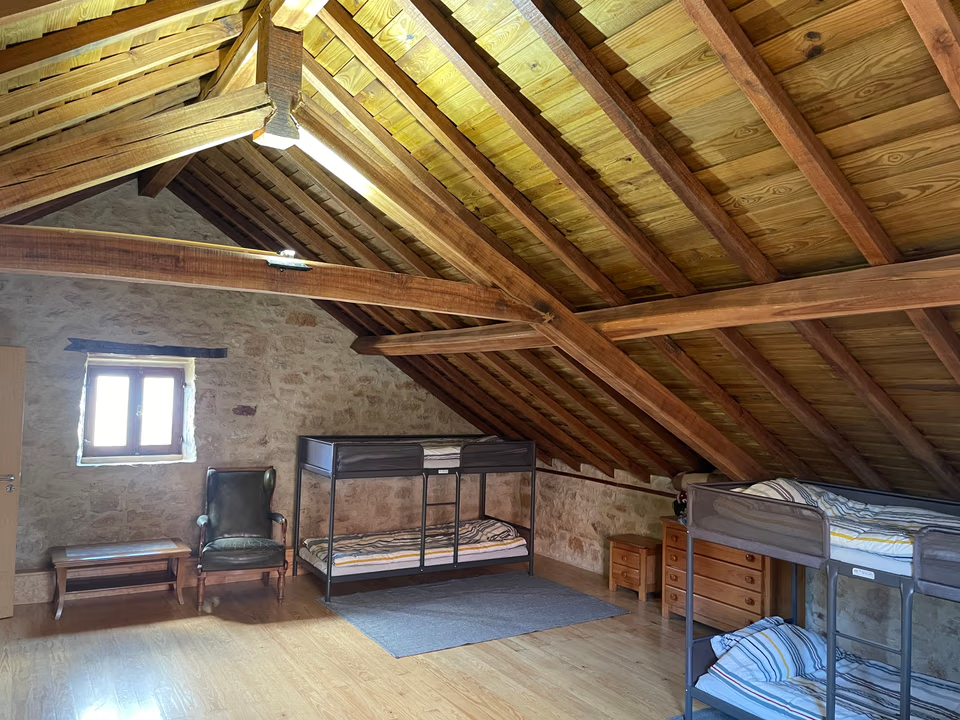 OpenReservations accepted
Albergue do Gérard
- Top #2
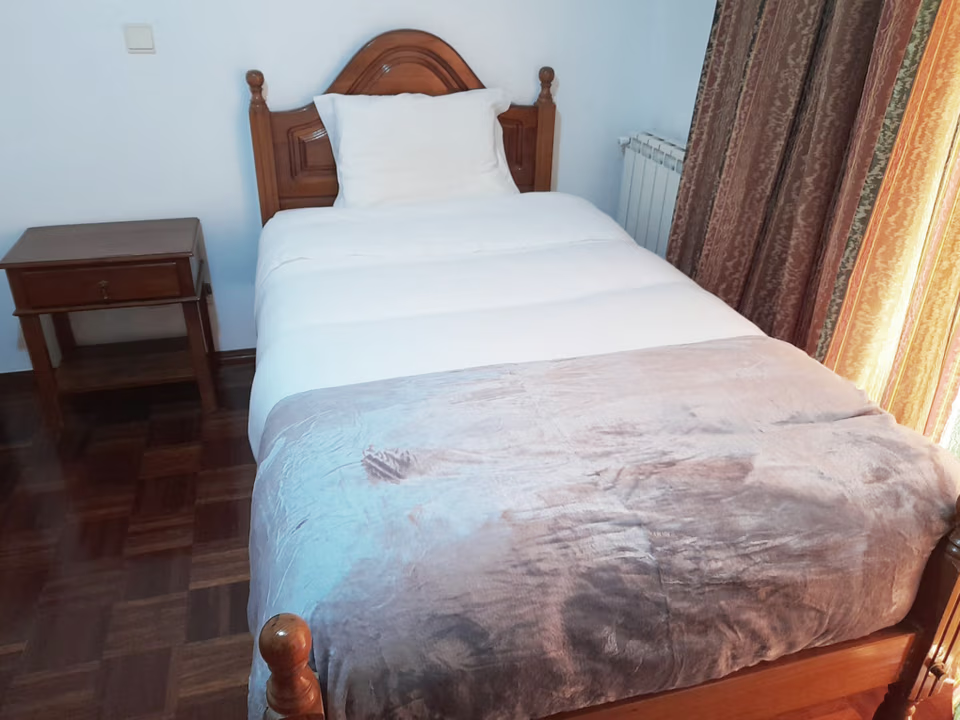 Open
Residencial Solar Da Rainha - Fernando Freire Castela, Lda.
26€ - Top #3
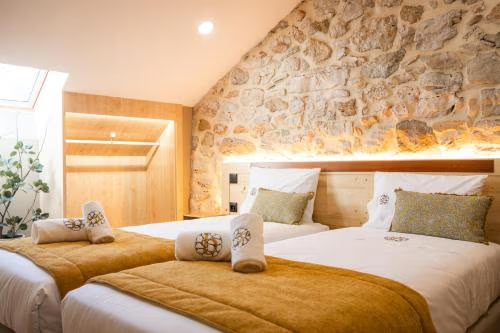 OpenReservations accepted
versão b


Services in Ansião
What you can find in town before the next stage.
- ATM
- Café
- Shop
- Tobacco
- Medical clinic
- Pharmacy
- Fountain
- Restaurant
Source: © OpenStreetMap contributors · updated January 2026
Town 9 of 43