

Stage town on the Camino
Coimbra
Distrito de Coimbra, Região do Centro, Portugal
- places to stay
- 27
- Caminos
- 2
- Elevation
- 26 m
Coimbra is the city of the pilgrim queen: in 1325 Isabel left a crown in Santiago and came back with a pilgrim staff that lay on her coffin in 1612. 246.6 kilometres out of Lisbon, a short stage brings you to a university city with a cathedral, royal tombs and a monastery the Mondego flooded. Worth a rest day.
How long to stay?
Worth a rest day, and the afternoon you arrive already counts. From Cernache it is only 11.4 kilometres, so you are here around midday. The afternoon is enough for the two Santa Clara monasteries on your side of the river and a first walk through the lower town. For the university with the Biblioteca Joanina, the Old Cathedral and Santa Cruz you need a second day, because the library only lets you in with a time slot. Don't plan your rest day for a Monday: Santa Clara-a-Velha is closed then.
Coimbra in Ninja numbers
- 246.6 kilometres lie behind you since Lisbon on the Central Portuguese Way. 372.7 kilometres are still left to Santiago de Compostela. So you have done just under two fifths.
- 176 metres down over the last four and a half kilometres, from the highest point of the day at 196 metres to the Mondego at 20 metres.
- 1325 is the year Queen Isabel of Portugal walked to Santiago, arriving in July, a few days before the feast of Saint James.
- 14 scallop shells decorate the pilgrim staff found on her coffin in Coimbra in 1612.
- Around €13.50 is the price of the full university tour including the Biblioteca Joanina (as of September 2026).
Arriving: the city from above
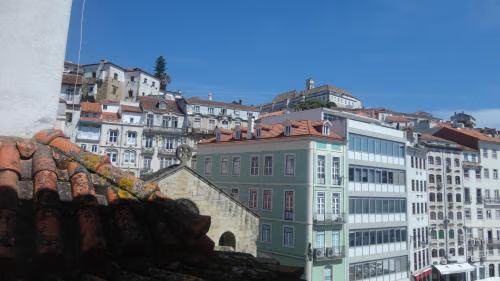
The stage from Cernache is short and mostly on asphalt. After Cruz dos Morouços you cross the IC2 expressway, pass an old aqueduct and climb once more into the Santa Clara and Mesura districts. Then the path drops steeply, and Coimbra lies before you on the far bank, the university right at the top of the hill. On your left is the pilgrim hostel in the annex of the Santa Clara-a-Nova monastery. In front of the church, beneath the statue of the Rainha Santa, the Holy Queen, is a viewpoint over the Mondego. The steep Calçada de Santa Isabel takes you down to the bridge and across to the Largo da Portagem, where tolls on goods were once collected. This is where the old town begins, and where the tourist office gives you a city map.
In brief: the first capital
Coimbra was Portugal's first capital after the country broke away from León in 1139. Around 1131, Augustinian canons led by Saint Teotónio founded the monastery of Santa Cruz outside the city gates; the first king, Afonso Henriques, and his son Sancho I were later buried there. Between 1162 and 1184 the Old Cathedral was built like a fortress, because the war against the Moors was still being fought in the south. The university has been a UNESCO World Heritage Site since 2013.
Crown and staff: the queen who walked to Santiago
Isabel of Aragon was the wife of King Dinis. In the summer of 1325, as a widow, she went on pilgrimage to Santiago. She is said to have walked the last mile before the city on foot. At the Apostle's tomb she offered one of her finest crowns, precious fabrics and vestments. According to tradition, the archbishop gave her a pilgrim staff and a scrip in return. Which road she took is not documented; most likely it was roughly the one you are walking, via Porto, Barcelos, Ponte de Lima, Tui and Padrón.
Isabel died in 1336 and was buried with the Poor Clares of Coimbra, whose convent she had supported. When her tomb was opened in 1612 during the canonisation process, the staff and the scrip lay on the coffin. The staff is made of wood, partly clad in silver, with 14 scallop shells and a T-shaped handle set with reddish jasper, originally about 1.43 metres long. Shortly afterwards it was given its own reliquary, which belongs to the Confraternity of the Rainha Santa at Santa Clara-a-Nova. The queen gave up her crown in Santiago and came back with a staff. You arrive in Coimbra with a staff. What you leave in Santiago is up to you.
Crown and staff: what to see
The two Santa Clara monasteries are on your side of the river, everything else is across in the old town, and tomorrow the Camino takes you past two of the churches.
- Santa Clara-a-Nova: The monastery next to your hostel was built from 1649 because the old one kept flooding; the church was consecrated in 1696. The nuns brought the queen's Gothic tomb with them. Today Isabel lies in a shrine of silver and crystal in the high altar, commissioned in 1614. On her tomb effigy she wears the signs of a pilgrim to Santiago. For pilgrims this is the place in Coimbra: here lies a woman who walked your route 700 years ago. You can visit the 18th-century cloister for a fee; we have not found a current price.
- Santa Clara-a-Velha: Down by the river stands the monastery where Isabel was first buried. She had it refounded and enlarged in 1314. The Mondego flooded it again and again, and in 1677 the nuns gave up. The Gothic church has been excavated and can be visited with a visitor centre, Tuesday to Sunday 10:00 to 18:00, from April to mid-October until 19:00, closed on Mondays (as of October 2026). As recently as February 2016 the water was back inside the monastery.
- University and Biblioteca Joanina: The Paço das Escolas at the top of the hill was once a royal palace. The full tour with the Baroque library and the Capela de São Miguel costs around €13.50, reduced around €10. From March to October it is open 9:00 to 19:30, from November to February 9:30 to 13:00 and 14:00 to 17:30 (as of September 2026). You can only enter the Joanina with a time slot and in small groups. Get your ticket first thing in the morning; in season the slots go quickly.
- Sé Velha: The Old Cathedral was built between 1162 and 1184 by Master Robert, with narrow windows and battlements like a castle. Afonso Henriques paid for it. You reach it from the Portagem via the steep Rua de Quebra-Costas, whose name, "back-breaker", is no exaggeration.
- Igreja de São Tiago: The small Romanesque church of Saint James on the Praça do Comércio was built at the end of the 12th century under Sancho I, modelled on the Old Cathedral. Look at the portal and the capitals with plants, animals and geometric patterns. The Camino passes right by it tomorrow morning. We have not found opening hours.
- Santa Cruz: The monastery church holds Afonso Henriques and Sancho I, the first two kings of Portugal. Little remains of the Romanesque church; in the early 16th century King Manuel I had Diogo de Boitaca rebuild it. You pass here tomorrow too.
Honestly
- The hostel is on the wrong bank. It is quiet and has a lovely view, but it sits at the top of the hill, about a kilometre from the old town. In the evening the only way back is uphill.
- Your credencial will be checked strictly. Pilgrims have reported for years that the hostel wants to see dated stamps, and in October 2026 again with a demand for two stamps a day. People with too few have been turned away.
- The bathrooms are showing their age. Camino Ninja pilgrims said so too in 2026.
- The old town is steep. Cobblestones, stairs and ramps lead to the sights on the hill, and on a rest day that takes more energy than you expect.
- The farewell is ugly. The way out of the city runs under a motorway viaduct, through a narrow tunnel under the railway and across a wide road you have to cross with care.
Where pilgrims sleep
The Albergue de Peregrinos Rainha Santa Isabel belongs to the Confraternity of the Rainha Santa Isabel and has been open since 2014, in the annex of Santa Clara-a-Nova right on the Camino. It has 30 places in dormitories for €10, sheet, pillowcase and blanket included (as of October 2026). You cannot reserve, it takes pilgrims only, check-in from 14:00. There is a kitchen with fridge and microwave, a courtyard and a shelter for bikes; a laundromat is about 100 metres away. It is closed on 24, 25 and 31 December and on 1 January. If you would rather be in the old town in the evening, there are several private hostels with dormitories in the lower town, mostly for €18 to €29 (as of October 2026). There is no donativo or parish hostel in Coimbra.
Ninja tips
- Leave your pack at the hostel, then head down. The hostel is on the way into the city; without luggage the old town's stairs are easier.
- Keep your credencial tidy. Dated stamps, ideally two a day, spare you a discussion at the door.
- Get the Joanina ticket in the morning. Time slots are limited, and in season the afternoon is soon booked out.
- Take in the view from the square in front of Santa Clara-a-Nova. Beneath the queen's statue you have the best view of the city you will walk through the next day.
- Pick up the city map at the Portagem. The tourist office is exactly where you come off the bridge.
- Shop for the hostel kitchen. A Lidl is within walking distance of the hostel.
Practical tips for pilgrims
- Credencial: The hostel sells it for €2.
- Rest day: Santa Clara-a-Velha is closed on Mondays; in winter the university closes for lunch from 13:00 to 14:00.
- Laundry: Self-service laundromat about 100 metres from the hostel.
- Arrival and departure: Coimbra-B station lies right on the Camino tomorrow morning.
Onward: through the lower town to Mealhada
From the Portagem you walk through Rua dos Gatos and Rua Adro de Cima to the Praça do Comércio with the church of Saint James, then past Santa Cruz and the town hall and along Rua da Sofia with its three churches. Via Avenida Fernão de Magalhães, under the motorway and through the tunnel under the railway, you reach a cycle and footpath that is also waymarked for the way to Fátima. It leads past Coimbra-B station and along an irrigation canal to Adémia de Baixo (km 252.9). In Trouxemil a statue of Saint James the pilgrim stands by the church. After Santa Luzia you walk about 800 metres on the shoulder of a fast national road, then roughly a kilometre and a half on fine sand through pine and eucalyptus. Mealhada is at km 270.0, 23.4 kilometres after Coimbra, with 183 metres of ascent; Sernadelo, where many end the stage, is 1.8 kilometres further. Between the two, one restaurant after another serves suckling pig.
Deep dive: The queen with the staff
A short read, in case you want to learn more about Coimbra. About three minutes' reading.
A princess from Aragon
Isabel was born the daughter of the King of Aragon and came to Portugal young, as the wife of King Dinis. She became queen of a country whose first capital was Coimbra. Here, outside the old city gates, Augustinian canons had founded the monastery of Santa Cruz around the year 1131, and here the first kings lay buried, Afonso Henriques and his son Sancho. On the hill above the river stood the cathedral Afonso Henriques had paid for, with battlements like a castle, because there was still war in the south.
A convent by the river
On the left bank of the Mondego, across from the city, there was a small convent of Poor Clares. It had already had a difficult start in the thirteenth century. In 1314 Isabel had it refounded and enlarged. She stayed close to this community of women without becoming a nun herself. The convent stood right beside the river, and that was its misfortune. The Mondego burst its banks again and again. Again and again the water stood in the church.
The last mile
In the summer of 1325 Isabel was a widow. She set out for Santiago. No contemporary source records which road she took, but much points to the way you are on now: via Porto, Barcelos and Ponte de Lima to Tui and on through Pontevedra and Padrón. She arrived in July, a few days before the Apostle's feast. It is said that she got off her horse shortly before the city and walked the last mile. At the tomb she laid down one of her finest crowns, together with precious fabrics and vestments. Tradition tells that the Archbishop of Santiago gave her a pilgrim staff and a scrip in return. The records of this archbishop say nothing about it. The story was told all the same, and it received a proof that only appeared centuries later.
What lay on the coffin
Isabel died in July 1336 and was buried with her Poor Clares by the river. Her Gothic tomb shows her with the signs of a pilgrim to Santiago. On 26 March 1612, while her canonisation was being pursued, the tomb was opened. On the coffin lay a staff and a scrip. The staff was made of wood, partly clad in silver, set with fourteen scallop shells and with a T-shaped handle holding a reddish jasper, originally about one metre forty-three long. Shortly afterwards a reliquary was made for it. In 1614 a new shrine of silver and crystal was also commissioned for the queen.
A convent moves house
The river won. From 1649 a new convent was built higher up the slope, Santa Clara-a-Nova, and in 1677 the nuns left the old one for good. They took their queen with them, the Gothic tomb and her body. In 1696 the new church was consecrated. There Isabel lies to this day in the high altar, in the shrine of silver and crystal. The old convent stood abandoned by the river until it was excavated at the end of the twentieth century. As recently as February 2016 the water was back inside it.
What Coimbra gives you
When this text was written, in the autumn of 2026, pilgrims slept every night in the annex of the convent where the queen lies. They come down the hill tired, many with a stick in their hand, and most of them do not know that behind the wall lies a woman who did exactly the same seven hundred years ago. Isabel went to Santiago as a queen and left her crown there. She came back with a staff. Perhaps that is the simplest description of what the Camino does to people. You leave behind something that is heavy and shines, and you take away something you can lean on.
Where to stay in Coimbra
Places to stay in Coimbra.
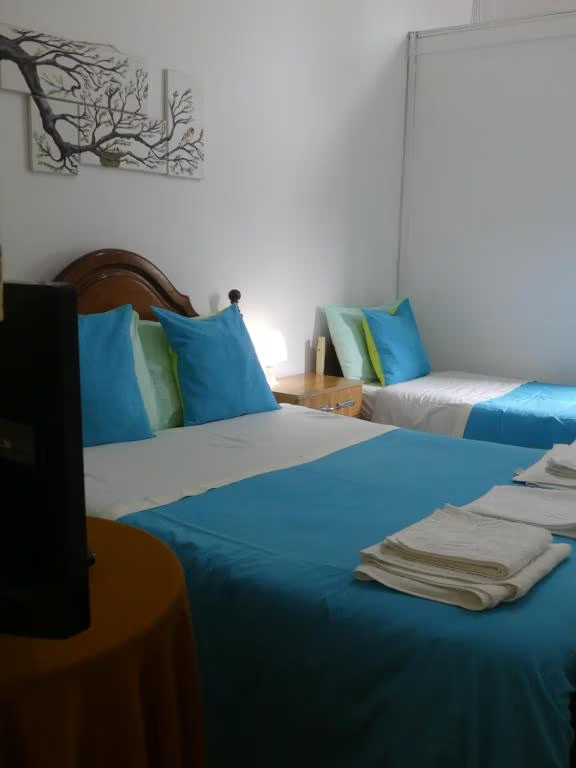 OpenReservations accepted
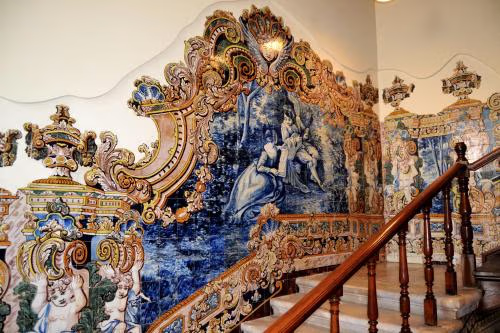
Pensão Santa Cruz
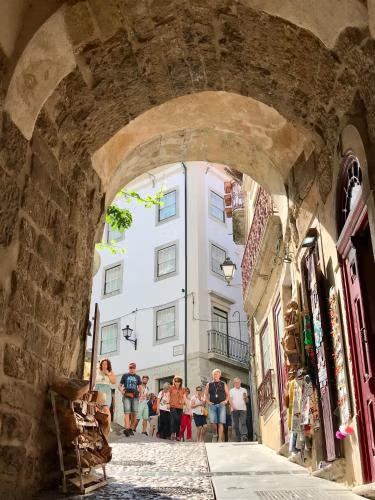 OpenReservations accepted
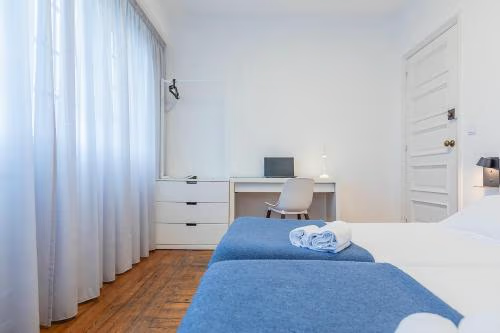
Change The World Hostels
 OpenReservations not accepted
Albergue de peregrinos Rainha Santa Isabel

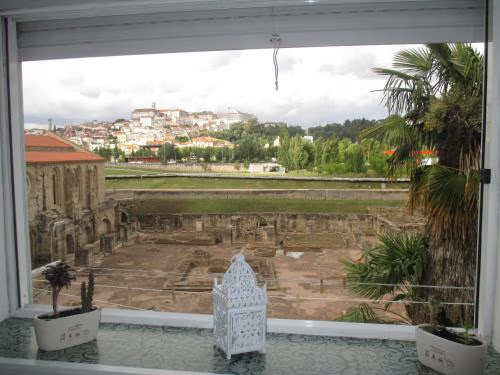
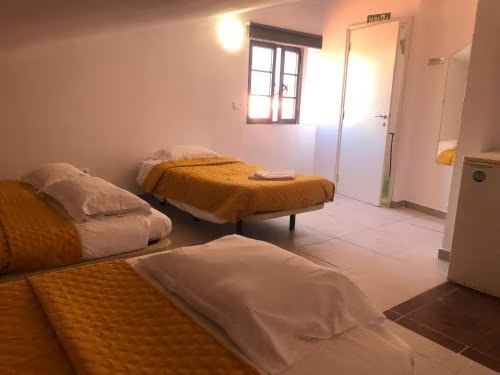
Services in Coimbra
What you can find in town before the next stage.
- ATM
- Café
- Shop
- Tobacco
- Medical clinic
- Pharmacy
- Fountain
- Post office
- Train station
- Bus station
- Restaurant
Source: © OpenStreetMap contributors · updated January 2026
Town 13 of 43