

Stage town on the Camino
Alvaiázere
Distrito de Leiria, Região do Centro, Portugal
- places to stay
- 4
- Camino
- 1
- Elevation
- 315 m
Alvaiázere is the reward after a dry stretch: 31.8 kilometres from Tomar, lots of ups and downs, hardly a bar. The little Vila, with its town charter from 1200, has an Arabic name that tells of a falconer, and it eats grass peas. An afternoon is enough, and tomorrow it's only 13 kilometres to Ansião.
How long to stay?
An afternoon is enough, and after this stage you will need it. You arrive from Tomar after 31.8 kilometres with plenty of climbs, so what counts now is a shower, food and a bed. Alvaiázere is small, but it has everything you need. A museum and a few lanes with old houses fill the rest of the day. Tomorrow brings a short stage, so you can start the day without any rush.
Alvaiázere in Ninja numbers
- 31.8 kilometres is the distance from Tomar to here according to Camino Ninja, with little in the way of supplies in between.
- 186.8 kilometres lie behind you since Lisbon, and 432.5 still ahead of you to Santiago.
- 13.0 kilometres to Ansião: tomorrow is almost a rest day.
- 1200 is when King Sancho I gave the town its first charter.
Arriving: after the dry stretch
The stage from Tomar is hard going. It climbs and drops all the time, along riverside paths on the Nabão, a stretch of Roman road and long sections of asphalt. There is little on the way: a small café in Casais, a bar with a shop in Calvinos, a petrol station with a minimarket near Tojal, a little way off the route. From Cortiça on, the supplies stop, and you will not find a toilet until Alvaiázere. Shortly before the finish, a paved road between stone walls leads to Outeirinho, and from there it is still 4.7 kilometres.
Alvaiázere is the first town in a long while with new housing estates on its edge, while the Vila proper has narrow lanes with whitewashed houses, manor houses and old noble residences. The town has a cash machine, post office, grocery shop, health centre, pharmacy and a public swimming pool. You are on the Camino Portugués Central, and according to Camino Ninja this is the only route that passes through the town.
In brief: the falconer's town
The name comes from Arabic. Which word lies behind it is disputed. Some scholars derive it from Al-Baiaz, the falconer, and that is the reading most sources prefer. The coat of arms shows a sword crossed with a Saracen scimitar, with a flax flower above.
When the area was resettled after the Reconquista, Alvaiázere received its first town charter from King Sancho I in 1200. In 1388 King João I raised the place to a Vila, and in 1514 King Manuel I renewed the charter. Older than all of that are the traces on the Serra de Alvaiázere: there was a Bronze Age settlement there, and near Ramalhal lies a group of megalithic tombs.
Alleys and Serra: what to see
The town is small, and you can see most of it in an hour without your rucksack. For the Serra you need more time and legs that still want to go on.
- The Vila: The narrow lanes with whitewashed farmhouses, manor houses and old noble residences are what makes Alvaiázere. After a long day on asphalt, a slow stroll here without your rucksack is just the thing.
- Museu Municipal: The permanent exhibition "Tempo, Espaço e Memória" shows traditional crafts, along with archaeological finds from the Palaeolithic to the Middle Ages. According to a stage portal it is open Tuesday to Sunday from 9.30 am to 6 pm and closed on Mondays; the site gives no date for this information. If you arrive in the afternoon, you can still make it.
- Capela de Nossa Senhora de Covões: A small white chapel from the 18th century on the Serra de Alvaiázere. It is not on the route; after 31.8 kilometres it is only for pilgrims who still have the strength for a climb.
Food and drink: grass peas
Alvaiázere calls itself "Capital do Chícharo", capital of the grass pea. The pulse has been grown here for a long time, as fodder and as a vegetable. It comes to the table as a purée, as a side dish with meat, sausages or fish, for example with grilled small sardines or salt cod, best with olive oil, cabbage and bread. A stage portal also recommends migas with peas. After a day with few supplies, a plate like that is just right.
Honestly
- The stage to get here is long and empty. 31.8 kilometres with many climbs and few supplies. Take enough water from Tomar, because from Cortiça on there is nothing.
- One road crossing is dangerous. At Ponte de Ceras the route crosses the N110 on a blind bend on a narrow road. Cross a little before the bend, where you can see further.
- The edge of town is not a pretty welcome. Alvaiázere begins with housing estates. The lovely lanes lie behind them.
- The way out is tangled. Several roads lead out of town. The route is well marked, but if you set off in the dark, look at the way the evening before.
Where pilgrims sleep
There is no municipal or church pilgrim hostel in Alvaiázere. Pilgrims sleep in two private hostels and a few guesthouses.
- Albergue Pinheiro's: Private hostel on Rua Doutor Acúrcio Lopes, close to the route. According to Camino Ninja data, 20 dorm beds from €17.50 (as of November 2026), plus private rooms. In their reviews, pilgrims consistently praise the pool and the host, and above all his stamp (see Ninja tips).
- Retiro do Lavrador: Private hostel south of the centre, so on the side you come in from when arriving from Tomar, about 1.7 kilometres as the crow flies before the town centre. According to Camino Ninja data, 10 dorm beds from €25 (as of November 2026), check-in 3–6 pm.
There are also guesthouses and inns in the town and on its southern edge.
Ninja tips
- Take your time for the stamp at Pinheiro's. The host presses it with hot sealing wax and a handmade embossing, which takes a few minutes. Pilgrims call it one of the most beautiful stamps on the whole Camino.
- Start in Tomar by the river in dry weather. At the edge of town a yellow sun arrow points to the riverside path on the Nabão, and a cloud arrow to the asphalt alternative for rainy days. They meet again after about two kilometres at the Ponte de Peniche. On the riverbank, mosquito repellent helps in summer.
- Keep left at Pereiro. Two wooden posts point in opposite directions there; the left branch is the more direct one.
- Use the blue arrows. The arrows to Fátima also run here, in the opposite direction. At junctions they confirm that you are on the right track.
- Take tomorrow's short day as a gift. After 31.8 kilometres today, it is only 13.0 to Ansião. If you still have energy, add the 18.0 kilometres to Rabaçal.
Onward: the short day to Ansião
You leave Alvaiázere on the road in front of the church and turn right at a large palm tree. Soon after, a steep climb of about 300 metres on asphalt awaits, and then it gets quiet: farm tracks, paths between stone walls, eucalyptus, holm oaks and olives. Some paths are stony. After 4.0 kilometres you pass through Vendas, and after 7.0 kilometres through Venda do Negro with its paved main street and the Capela da Senhora do Pranto from 1673, whose porch gives shade for a break. Then it goes through Chão de Couce, where the high altar of the church of Nossa Senhora da Consolação carries the last completed work of the painter José Malhoa, and down through a patch of woodland to Ansião.
What awaits you tomorrow
Ansião is reached after 13.0 kilometres, and there the Camino also meets the Fátima Way Caminho do Norte. On the edge of town stands the Capela da Constantina from 1623, which is associated with care for pilgrims, and in the town an azulejo picture of the Rainha Santa, the queen who herself made a pilgrimage to Santiago. At the far end of town, the 17th-century Ponte da Cal leads out towards Coimbra.
Deep dive: the falconer and the grass pea
A short read, in case you want to learn more about Alvaiázere. About 2 minutes' reading.
A name from the time of the Moors
When you arrive in Alvaiázere, you hear a foreign language in the name. The Al at the start gives away Arabic. From the year 711, Muslims ruled most of the Iberian Peninsula, and many places in central Portugal still bear names from that time. What exactly the name means is something scholars argue about. Several forms are mentioned, and the loveliest reading, which most also prefer, makes Alvaiázere the land of the falconer. The town's coat of arms recalls that era in another way: a Christian sword crosses a Saracen scimitar in it.
Charter and Vila
After the Reconquista, the land between the Tagus and the Mondego had to be resettled. In 1200 King Sancho the First gave Alvaiázere its town charter, a document of rights and duties meant to attract settlers. In 1388 King João the First made the place a Vila, and in 1514 King Manuel the First renewed the charter, as he did all over Portugal at that time. But the traces go back much further: on the Serra above the town people lived as early as the Bronze Age, and near Ramalhal there are tombs made of great stones.
A town that lives from its fields
Alvaiázere is still a farming town today, with vineyards and olive groves. And with a plant that is almost forgotten elsewhere: the grass pea, in Portuguese chícharo. It has been grown here for a long time, and the town proudly calls itself its capital. For pilgrims that is good news. After a day with few supplies, a simple, hearty meal awaits you here.
What Alvaiázere gives you
Alvaiázere has no cathedral and no famous castle. It is the place where a long, empty stage ends. Perhaps that is enough: a bed, a plate of food, a stamp that someone makes for you with patience. Tomorrow the way is short. Today you may simply have arrived.
Where to stay in Alvaiázere
Places to stay in Alvaiázere.
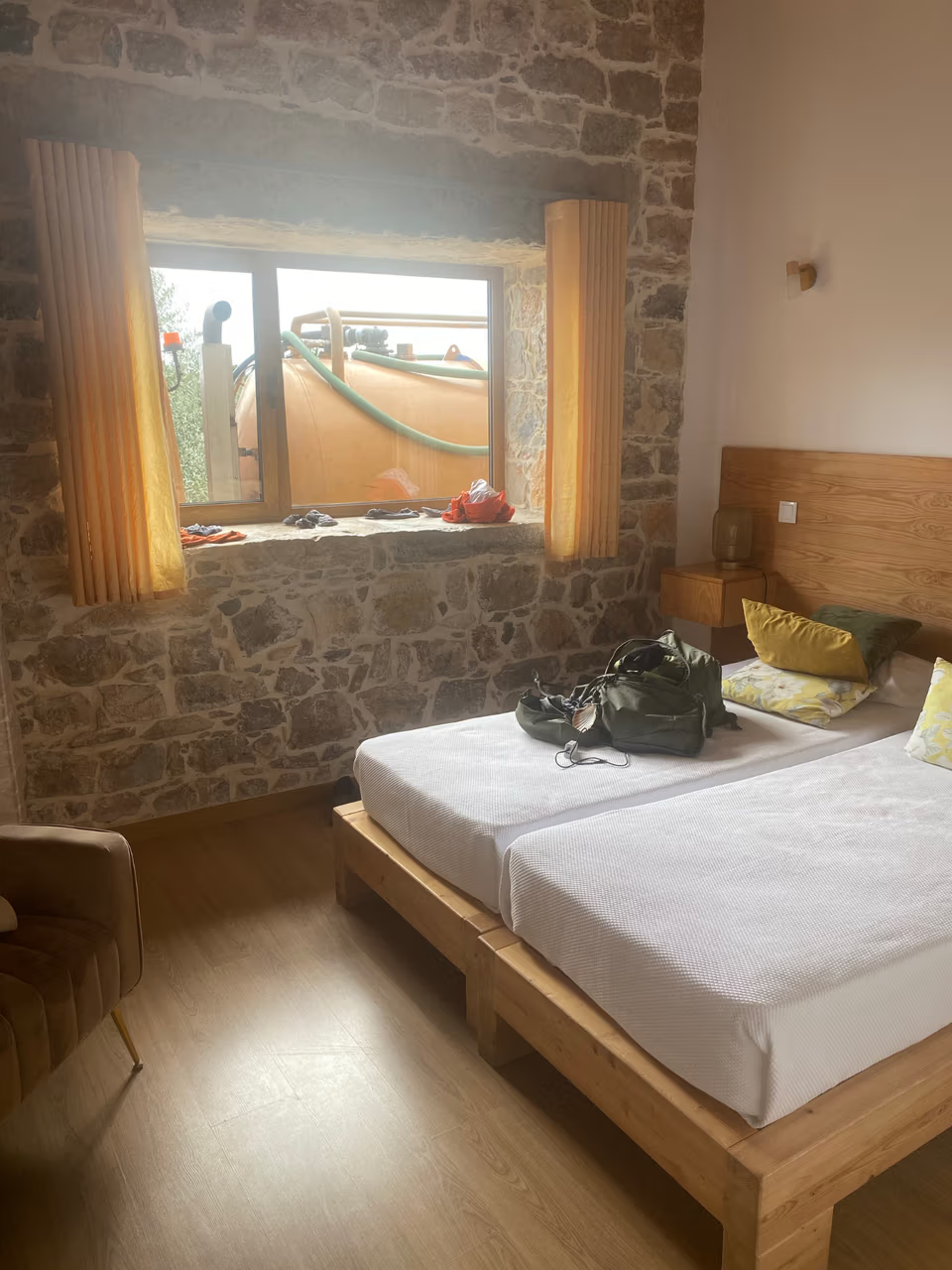 OpenReservations accepted
Albergue Pinheiro's
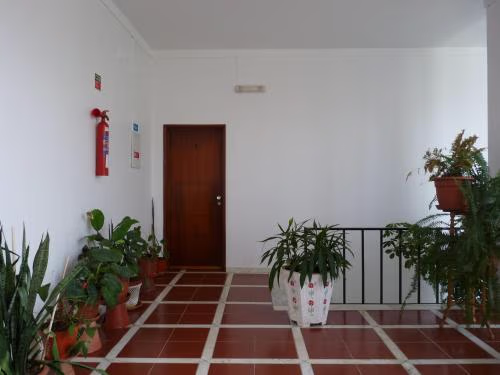 OpenReservations accepted
Residencial o Bras
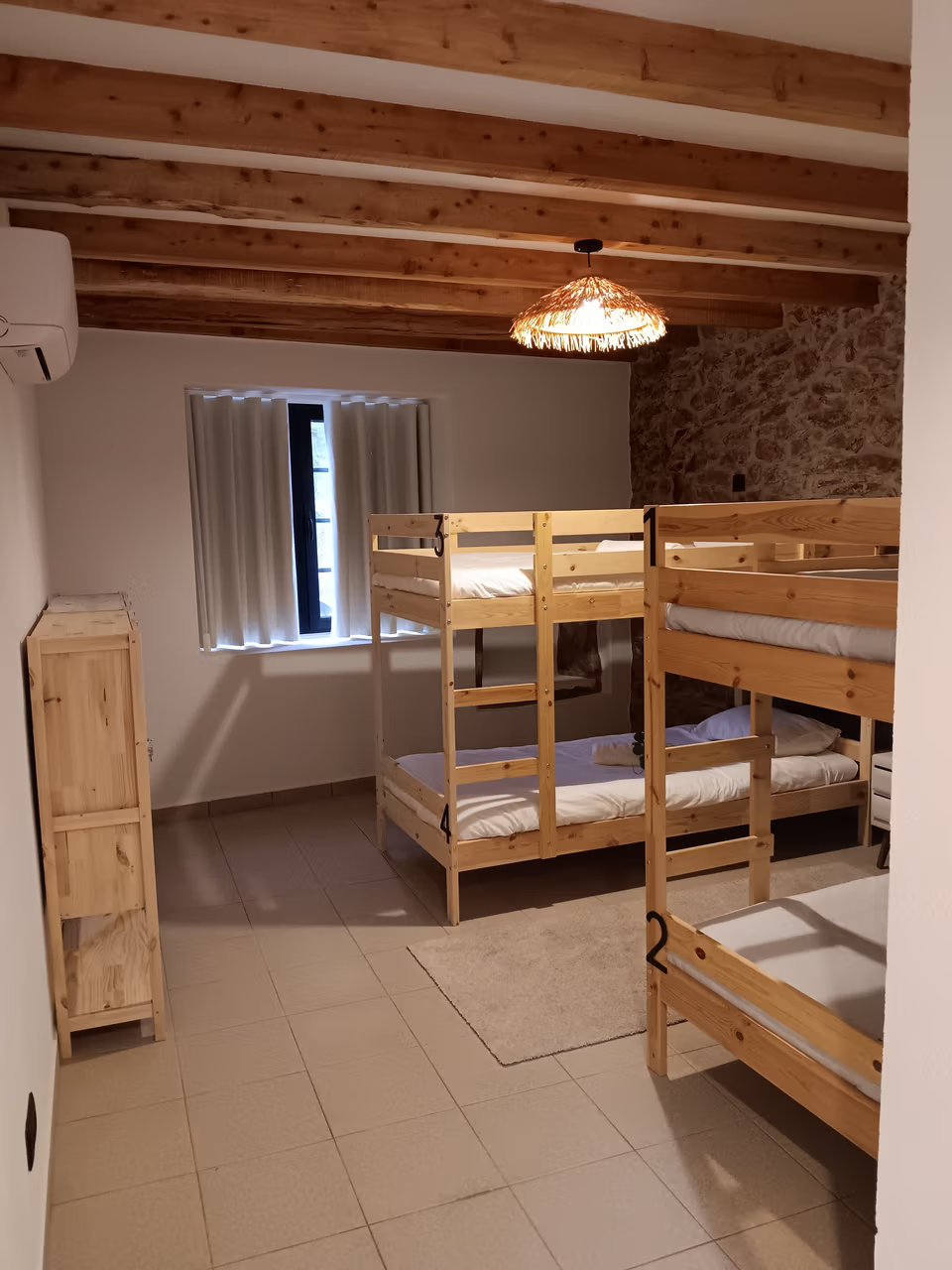 OpenReservations accepted
Retiro do Lavrador

Services in Alvaiázere
What you can find in town before the next stage.
- Café
- Shop
- Tobacco
- Medical clinic
- Pharmacy
- Fountain
- Restaurant
Source: © OpenStreetMap contributors · updated January 2026
Town 8 of 43