

Town on the Camino
Avilés
Asturias, Spain
- places to stay
- 21
- Caminos
- 3
- Elevation
- 17 m
Avilés is where the ways come together again: here the coastal Camino del Norte meets the variant via Oviedo. After a hard industrial day, an old town awaits with arcades, Romanesque churches and the tomb of the founder of St. Augustine in Florida. The pilgrim hostel has 56 places.
How long to stay?
An afternoon is enough. You arrive after the industrial stretch beyond Gijón and are surprised: after Oviedo, the old town is the best preserved in Asturias, with arcaded streets, noble palaces and churches from the 12th and 13th centuries. An afternoon is enough for a walk between the hostel, the Plaza de España and the old fishermen's quarter of Sabugo. If you want to see the Centro Niemeyer, cross the bridge to the other side of the ría in the evening.
Avilés in Ninja numbers
- 326.0 kilometres are still left from here to Santiago on the Camino del Norte.
- 25.4 kilometres lie behind you since Gijón, with 448 metres of ascent, most of it on Monte Areo.
- 29.3 kilometres it is from Oviedo to here on the Norte via Oviedo; if you take that route, you walk 69.6 kilometres from Villaviciosa instead of 56.3 along the coast.
- 1565 is the year Pedro Menéndez de Avilés, a son of this town, founded San Agustín in Florida, the oldest continuously inhabited city of European origin in the USA. His tomb is in the Franciscan church.
- 56 places in the Pedro Solís pilgrim hostel, for 10 € (as of August 2026).
Arriving: from the industrial zone into the old town
The last kilometres from Gijón are not pretty: via Tabaza and Trasona along roads, business parks and industrial plants. Then you come along Avenida de Gijón into Calle Rivero, an arcaded street, and suddenly stand in a different town. Careful: the riverside path along the ría is not the Camino, and the Centro Niemeyer is not on the Way.
In brief: two shores and an estuary
Avilés lies at the mouth of the ría, and it was divided from the start: on one side the fishermen's quarter of Sabugo, on the other La Villa with the nobility. The town is first mentioned in 905, when King Alfonso III of Asturias founded two churches here. In 1479 the Catholic Monarchs granted it a weekly market on Mondays. The bay between the two cores was filled in during the 19th century; the medieval wall had already been torn down in 1818.
Then came the steelworks. From 1953 the state company ENSIDESA built one of Spain's great industrial centres on the ría, and the town grew with workers' districts. That explains the road on which you come in. The old town remained remarkably untouched and was placed under protection in the 1950s.
Under the arcades: what to see
The old town is small; you can do it on foot in an afternoon.
- Iglesia de los Padres Franciscanos: The former church of San Nicolás de Bari is the oldest Romanesque building in town, from the end of the 12th or start of the 13th century, dedicated to the patron saint of sailors and merchants. To the left of the high altar lies Pedro Menéndez de Avilés in a marble tomb from 1924. The Gothic Capilla de los Ángeles, also called Capilla de Pedro Solís, was completed in 1499.
- Calle Rivero and Calle Galiana: The arcaded streets of the old town through which the Way comes in. Under the arches you stay dry, even when it rains.
- Plaza de España and town hall: The town hall was built from 1670 to 1677 to plans by Juan de Estrada. Around the square stand noble palaces such as Ferrera and Camposagrado.
- Palacio de Valdecarzana: From the 14th century, the oldest building in town. According to legend, King Pedro I spent the night here after the end of a siege.
- Iglesia Vieja de Sabugo: The old church of the fishermen's quarter dates from the 13th century and was remodelled in the 17th and 18th centuries. It shows you the other Avilés, that of the seafarers.
- Centro Niemeyer: The white cultural centre by the Brazilian architect Oscar Niemeyer lies across the ría. It is not on the Way, but a short evening walk over the bridge.
Honestly
- The way here is ugly. After Monte Areo you walk for a long time along the N-632, through business parks and industry.
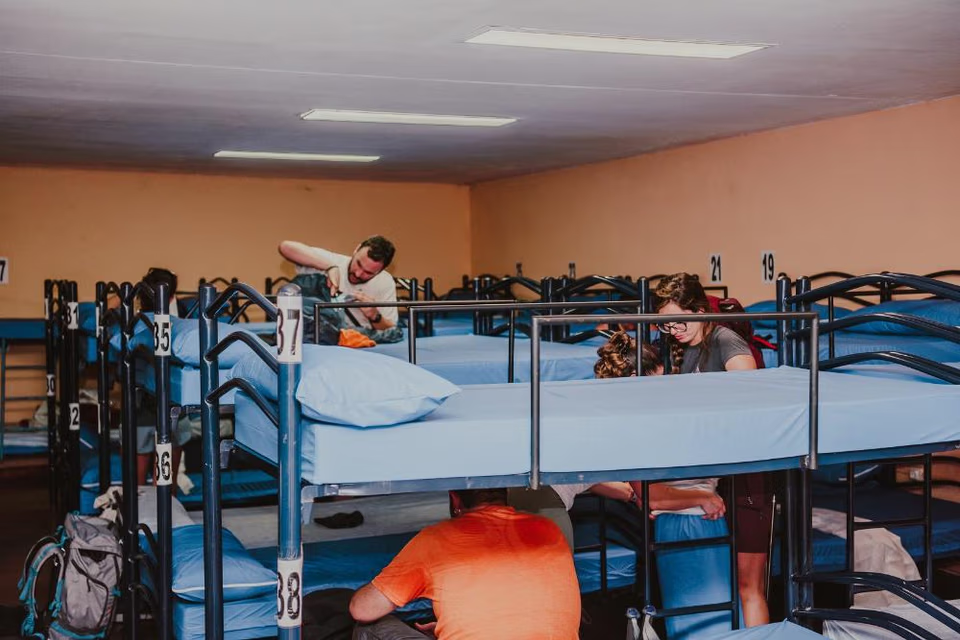
- The hostel is big and basic. Pilgrims in 2026 praised the friendly staff but found the facilities tight for 56 beds. If you arrive early, pick a bed by the wall.
- No reservations. The hostel allocates places on arrival and only to pilgrims with a credential.
- Don't be fooled by the riverside path. The pretty path along the ría is not the Camino.
Where pilgrims sleep
The Albergue de Peregrinos Pedro Solís belongs to the town and is run by the Asociación Astur-Galaica de Amigos del Camino: 56 places, 10 €, open all year, credential only, no reservations (as of August 2026). From November 2025 it moved temporarily to the Edificio Fuero for an energy-efficiency refurbishment; according to the hostel portal it reopened in its usual place on Calle de la Magdalena in 2026. Check before you arrive where it is currently taking pilgrims.
There is no donativo hostel in Avilés. Besides that, you will find guesthouses and hostales around Calle La Fruta in the old town, with double rooms usually from about 35 €.
Ninja tips
- Arrive early. The hostel allocates beds on arrival; whoever is there early gets to choose.
- Bring a sleeping bag, eye mask and earplugs. In a dormitory with 56 beds you don't sleep alone.
- Try a bollo. The cloverleaf-shaped pastry belongs to Avilés.
Practical tips for pilgrims
- Tourist information: Calle Ruiz Gómez 21, Monday to Friday 10:00 to 14:00, at weekends 10:30 to 14:30.
- Credential: The hostel only accepts pilgrims with a credential.
- Festivals: Fiestas del Carmen on 16 July, Fiestas de San Agustín on 28 August.
Onward: to the coast and Muros de Nalón
From Avilés the Camino del Norte runs as one route again: pilgrims from the coast and those who came via Oviedo walk on together. Via Salinas, San Martín de Laspra and Santiago del Monte you reach Soto del Barco and the Nalón, then Muros de Nalón: 23.0 kilometres with 688 metres of ascent, the highest point at 179 metres shortly before the Nalón.
Deep dive: The seaman from Sabugo
A short read, in case you want to learn more about Avilés. About three minutes' reading.
Two towns on a bay
For a long time Avilés was two places. On one shore of a bay lived the fishermen and seafarers, in a quarter called Sabugo. On the other lay the walled Villa with its churches and noble houses. The King of Asturias founded two churches here as early as the year 905. In the nineteenth century the bay was filled in, and two places became one. Whoever walks today from Calle Rivero to the old church of Sabugo walks over this vanished bay.
A boy from the harbour
Pedro Menéndez de Avilés came from this harbour. He became a seaman and admiral in the service of the Spanish king, and in 1565 he founded a settlement on the coast of Florida that he called San Agustín. It became the oldest continuously inhabited city of European origin in the United States. He died far from home, but his remains now lie in the Franciscan church of Avilés, to the left of the high altar, in a marble tomb.
Steel on the ría
In the twentieth century everything changed. From 1953 a huge steelworks rose on the ría, and Avilés became one of Spain's industrial centres. New districts grew for the workers, and the roads on which you come in from Gijón today belong to this story. But the old town survived the decades and was placed under protection. Later the town placed a white cultural centre by Oscar Niemeyer on the opposite shore.
What Avilés gives you
In Avilés two ways meet. Whoever went via Oviedo visited the Saviour in the cathedral; whoever stayed on the coast had the sea. From here you walk on together. Perhaps that is the lesson of this town, itself born of two parts: you can walk different ways and still arrive at the same place.
Where to stay in Avilés
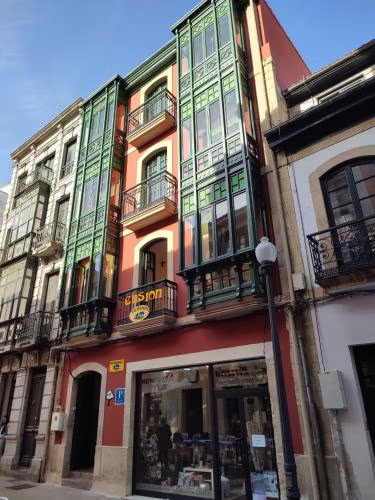
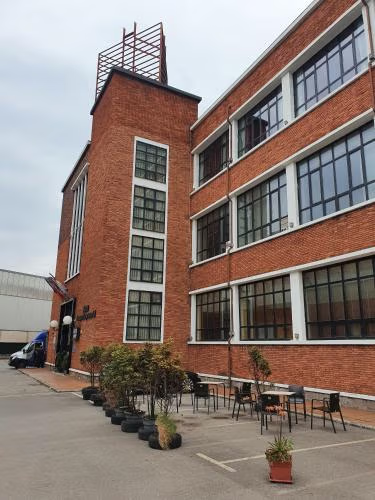
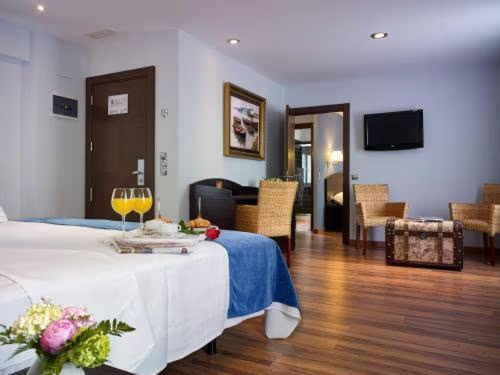
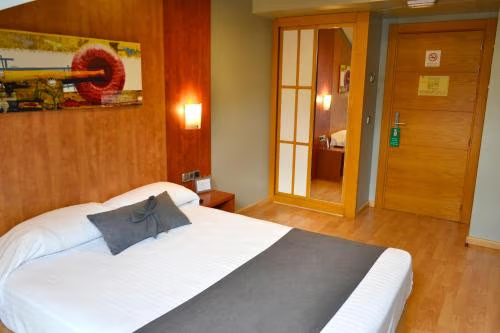
Places to stay in Avilés.
 OpenReservations accepted
Albergue de Peregrinos Pedro Solís
 OpenReservations accepted
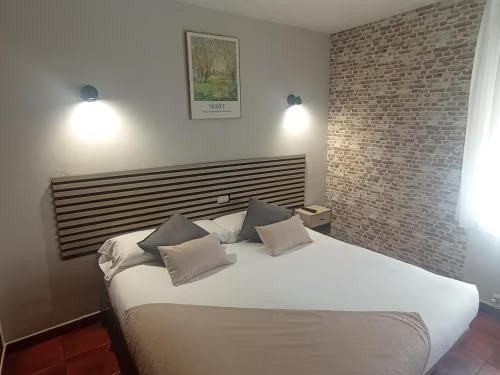
Hostal Puente Azud
 OpenReservations accepted
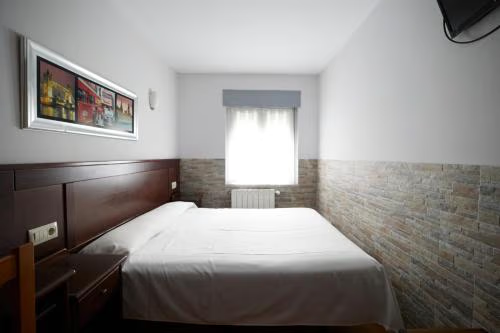
Pensión Serafín
Services in Avilés
What you can find in town before the next stage.
- ATM
- Café
- Shop
- Tobacco
- Medical clinic
- Pharmacy
- Fountain
- Post office
- Train station
- Bus station
- Restaurant
Source: © OpenStreetMap contributors · updated February 2026
Town 32 of 49