

Town on the Camino
Barrosinha
Setúbal, Portugal
- places to stay
- 5
- Camino
- 1
- Elevation
- 4 m
Barrosinha is a village built by a farming estate: founded in 1947 for rice, wine, cork and cattle, with a school, workers' houses, two chapels and two old rice mills. For you it is the last break after 30.6 km from Grândola, before the final 3.2 km to Alcácer do Sal.
How long to stay?
A break is enough, half an hour, or an hour with a meal. You arrive after 30.6 km from Grândola, through sand and rice fields and across the Sado, and it is only 3.2 km more to Alcácer do Sal. Hardly anyone stays the night here, and there is no reason to. But a rest, a look at the estate village and, if it is open, a plate at the estate's restaurant make the last stretch easier.
Barrosinha in Ninja numbers
- 303.5 km lie behind you since Faro according to Camino Ninja, with 149.3 still ahead to Benfica do Ribatejo.
- 30.6 km is the distance from Grândola to here. At 33.8 km, the whole stage to Alcácer do Sal is the longest of this section.
- 3.2 km are still to go to Alcácer do Sal.
- Over 2,000 hectares was the size of the estate in 2020. It was founded in 1947.
Arriving: through the rice fields of the Sado
After the only supplies of the stage in Vale de Guiso, you cross the Sado. After that, according to the regional pilgrim guide, there are still about eight and a half kilometres through rice fields, over hills and along a reservoir to the estate. A pilgrim wrote in the regional newspaper Sul Informação about a large flock of storks, wild boar tracks and so many otter tracks in the riverside mud that he called the area an otter paradise. Halfway along, two barking dogs came towards him. He stood still and calm until the owner called them back.
In brief: a village made by a company
The Companhia Agrícola da Barrosinha was founded in 1947 as a farming and industrial business meant to make use of the wide open land of the Alentejo. They grew rice, wine, cork and pine nuts, and bred cattle as well. A village of its own grew up around the business, where the workers lived with their families. What survives is a primary school, the staff houses, two chapels, a sawmill and two old rice mills. In 2009 a holiday resort worth €600 million was meant to be built here. It never came, and the company behind it went bankrupt. Today the estate, with its farming and wine, belongs to a hotel group that took it over in 2023. The vineyards have shrunk from 300 to 100 hectares.
The estate village: what to see
Barrosinha is not a place of monuments but an ensemble. Since you are taking a break anyway, have a look at two things.
- Capela de Nossa Senhora da Conceição: One of the estate's two chapels, its origins go back to the 17th century, well before the company was founded. We did not find any opening hours.
- Rice mills and workers' houses: The two warehouses where rice used to be hulled are said to become artists' studios. Together with the school and the staff houses, they show you how the rice fields you have just walked through fed a whole village.
Honestly
- No pilgrim bed. There is no pilgrim hostel in Barrosinha, and the beds on the estate and in the surrounding area are private. Alcácer do Sal, 3.2 km further on, has no pilgrim hostel either, but it does have guesthouses in the old town.
- The last stretch is the ugliest. According to the report in Sul Informação, the last three kilometres to Alcácer run along a busy road with a lot of lorries. Walk in single file and make yourself visible.
- The Sado plain can flood. After the storms of February 2026, the broadcaster RTP reported that Barrosinha was accessible again. In winter after heavy rain, ask in Grândola beforehand about the state of the paths.
- The estate is a working business. No source mentions a shop, a pilgrim contact point or Mass times. Don't expect more than a rest.
Ninja tips
- Call before the Sado. Crossing the river at Vale de Guiso depends on the house O Baracinha, and the regional pilgrim guide advises calling ahead: +351 265 637 158.
- Game on the plate. Wild boar, moorhens and partridges live on the estate, and according to the pilgrim guide the estate's restaurant serves them. At lunchtime in 2025 there was a set menu in the Taberna.
- Carry enough water. Between Vale de Guiso and Barrosinha there are about nine kilometres without supplies.
Onward: the last kilometres to Alcácer do Sal
From Barrosinha it is another 3.2 km on the Caminho Português Central do Sul to Alcácer do Sal, the white town on the Sado that was once the seat of the Order of Santiago in Portugal. The long stage from Grândola ends there.
Deep dive: A village by design
A short read, in case you want to learn more about Barrosinha. About 2 minutes' reading.
Founded, not grown
Most villages on the Camino grew up around a church, a bridge, a crossroads. Barrosinha is different. In 1947 businessmen founded the Companhia Agrícola da Barrosinha to make a profit from the wide land along the Sado. They planted rice in the river plain and vines on the slopes, harvested cork and pine nuts and kept cattle. Whoever worked here also lived here, with their family, in houses the company built. The children went to the estate's school. The timber came from its own sawmill, and the rice was hulled in its own mills.
Older than the company
Not everything in Barrosinha is so young. One of the two chapels, the one dedicated to the Immaculate Conception, goes back to the seventeenth century. So the land had been farmed and prayed over long before the company, and the founders built their village around an older sanctuary.
Big plans and a smaller reality
In 2009 the estate was meant to become a huge holiday resort, with €600 million announced for it. It was never built, and the company behind it went bust. Something smaller was built later: a country hotel was created from old buildings, and the vineyards shrank from three hundred to one hundred hectares. When this text was written, in autumn 2026, the estate belonged to a hotel group, and the old rice halls were waiting to become studios.
What Barrosinha gives you
You pass through here at the end of a long day, with sand in your shoes and rice fields behind you. Barrosinha is a reminder that this landscape is not a backdrop but work. Every field you walked through today once fed a village. Have something to drink, then take the last three kilometres.
Where to stay in Barrosinha
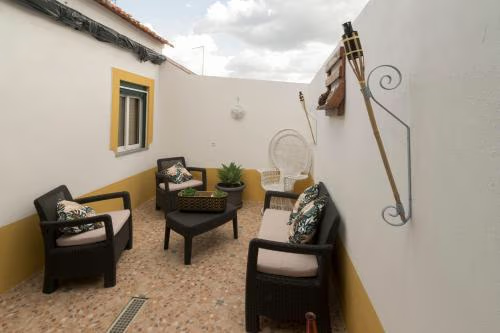
Places to stay in Barrosinha.
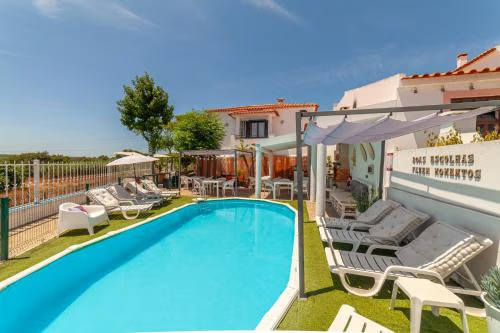 OpenReservations accepted
4Ever Palace Design&Nature
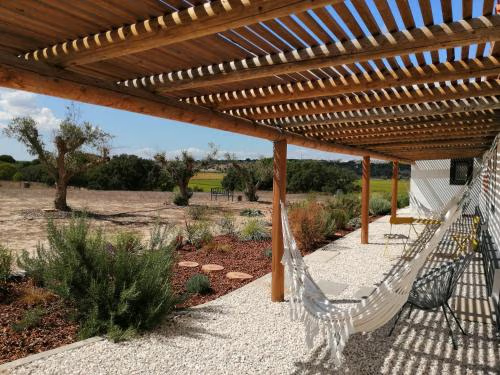 OpenReservations accepted
Castelo de Arez
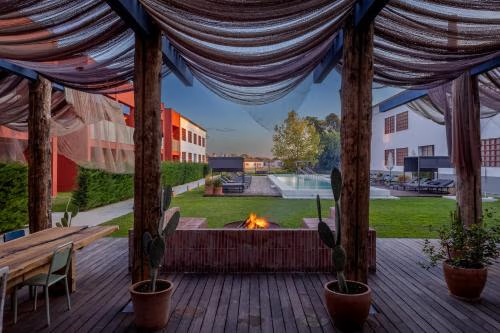 OpenReservations accepted
Hotel da Barrosinha
Town 16 of 24