

Town on the Camino
Grândola
Portugal
- places to stay
- 9
- Camino
- 1
- Elevation
- 102 m
Grândola is the town from the song: after a concert here Zeca Afonso wrote "Grândola, Vila Morena" in 1964, whose beat is made of footsteps on gravel, and at 12.20am on 25 April 1974 it became the signal for the Carnation Revolution. For pilgrims it is the last town before the long stage: 33.8 kilometres to Alcácer do Sal.
How long to stay?
An afternoon is enough, and you should take it. You come down from the Serra de Grândola, and behind you lie, depending on how you split it, 23.6 kilometres from Roncão or 45.8 from Santiago do Cacém. The town is compact: the monument to the revolution, the main church, a museum of sacred art right on the way and the house of the music society without which the song wouldn't exist. You need no more than an afternoon for all that. The evening matters more. Tomorrow awaits the longest stage of the way in the Alentejo, and for that you need sleep, water and an early start.
Grândola in Ninja numbers
- 272.9 kilometres lie behind you since Faro, according to Camino Ninja, with 179.9 still ahead of you to Benfica do Ribatejo. A good six tenths are done.
- 12.20am on 25 April 1974 Rádio Renascença played "Grândola, Vila Morena". It was the second signal for the officers who toppled the dictatorship that night.
- 3am is when the musicians recorded the footsteps for the song in October 1971, on gravel outside a studio in France, because the road was too loud during the day. The pilgrims' anthem that nobody calls that.
- 33.8 kilometres is tomorrow's walk to Alcácer do Sal. After 21.3 kilometres you pass through Vale de Guiso; otherwise there is almost nothing on the way.
- 22 October 1544 Grândola became a town, with its own Carta de Vila from King John III. The town still celebrates 22 October as its municipal holiday.
Arriving: over the Serra into the Vila Morena
The last part of the stage is the most beautiful and the steepest. Beyond Santa Margarida da Serra you go up through dense cork oak forest to the Ermida de Nossa Senhora da Penha de França on the crest of the Serra, with a view over the town. Walkers describe the ascent and descent as no walk in the park. The path leads down into the valley of the Grândola stream, then you cross the IC1 expressway on a footbridge and come into town via the Rua das Pontes and the Rua Vasco da Gama. The stage ends at the square with the Turismo, the Praça D. Jorge.
A note on orientation: one report on this section tells of places where the St James arrows pointed one way and the official GPS track, along with the GR11 waymarking, pointed the other. Keep the track on your phone. Grândola lies only on the Caminho Português Central do Sul; no other Ways of St James cross here.
In brief: from the order's land to the red vila
In the Middle Ages Grândola belonged to the land of the Order of Santiago, which had its seat in Alcácer do Sal. The commandery of Grândola probably came into being under King John I; in 1427 João Falcão is documented as commander. At the end of the Middle Ages about 150 people lived in the village. The inhabitants asked for independence, and on 22 October 1544 King John III separated Grândola from Alcácer do Sal as a town.
After that came a town hall, a prison, a hospital and a Misericórdia. From 1861 the southern railway carried the cork out into the world, and Grândola became a town of cork factories. Under Salazar it was known for strikes and protests. The workers' music society, founded on 1 May 1912, was regarded as a centre of resistance to fascism.
A song made of footsteps
On 17 May 1964 José Afonso, known as Zeca, sang at the Sociedade Musical Fraternidade Operária Grandolense. On the drive home, with the guitarists Carlos Paredes and Fernando Alvim in the car, the words and melody of a song about the town came to him. It was recorded in October 1971 for the album "Cantigas do Maio" in Hérouville near Paris. The rhythm comes not from drums but from footsteps: around three in the morning Afonso, José Mário Branco, Francisco Fanhais and Carlos Correia marched over the gravel outside the studio.
On the night of 25 April 1974, at 10.55pm, a pop song was played first as an advance warning. At 12.20am Rádio Renascença then played "Grândola, Vila Morena", the sign for the troops to march. By the same day the dictatorship was over, almost without bloodshed. A song that begins with footsteps set a country in motion. And you come to the town it is named after on foot.
In time with the Vila Morena: what to see
Grândola is small, and everything lies in the town centre near the end of the stage. We found no opening hours for any of these places. Ask at the Turismo on the Praça D. Jorge before you set off.
- Memorial ao 25 de Abril and Monumento à Liberdade: For the 25th anniversary of the revolution the town unveiled two works in 1999, on 24 April the memorial by the artist Bartolomeu dos Santos, on 25 April the monument to freedom by Jorge Vieira. A monument to José Afonso by António Trindade was added for the same anniversary. If you love the way for its silence, here is the place where this country got its voice back.
- Sociedade Musical Fraternidade Operária Grandolense: The workers' music society was founded on 1 May 1912 and is called "Música Velha" in town. Its first seat was in the Rua Direita; later it moved into the rooms of the former Misericórdia hospital. It still runs a music school today. Without that evening in May 1964 here, the song wouldn't exist.
- Igreja Matriz de Nossa Senhora da Assunção: The main church on the Praça Marquês de Pombal goes back to the Middle Ages. It was dedicated to the Virgin Mary, whom people here also called "Bem Dada". It was repaired in 1513 and extended in the 16th century. Inside stand gilded Baroque altars of the 18th century, and the cross of the Order of Santiago recalls who once owned the land.
- Museu de Arte Sacra: The museum of the Diocese of Beja is in the old Ermida de São Sebastião, and the Way of St James passes just a few metres from it. It shows sculptures, paintings and crafts from churches and brotherhoods of the parish, many rescued from places that could no longer protect them. It opened in 2011 with an exhibition on the Way of St James.
- Igreja de São Pedro: In 1585 the Order of Santiago gave permission for this church. Later the music society rehearsed here for a time, and in 1934 the town bought the building. Since 2018 it has been a small museum.
- Ermida de Nossa Senhora da Penha de França: You pass the chapel on the crest of the Serra on your way in. At the end of May Grândola celebrates the festival of its patron saint here. It is the place for a last look back before you descend into the valley.
Food and drink
- Wild boar on the coat of arms and on the plate: The cooking is Alentejan, with sausages, game, wild boar, pork, lamb and açordas, the bread soups with herbs. The wild boar also appears on the town's coat of arms.
- Sweets: Typical are Bolo das Rosas and Alcomonias.
- Festivals: In June and July the Rota das Tabernas runs with petiscos and music, and on the last weekend of August comes the Feira de Agosto, according to the town the biggest fair of its kind in the Alentejo.
Honestly
- No pilgrim hostel. You sleep in guesthouses or holiday apartments and pay accordingly. Book beforehand.
- Tomorrow is long. It is 33.8 kilometres to Alcácer do Sal, according to the official guide the longest stage of the way in the Alentejo and Ribatejo, along long straight tracks that get ever sandier.
- The Sado is a question mark. According to the region's guide published in 2021, beyond Vale de Guiso the way crosses the river on a short boat crossing, offered by only one business in the village, telephone +351 265 637 158. An alternative is described on the Caminhos website. Whether the crossing is still offered in November 2026 we haven't found out. Call before you set off.
- Opening hours are a matter of luck. For the church, museums and the music society we found no reliable times. The Turismo is your best point of contact.
Where pilgrims sleep
There is no pilgrim hostel in Grândola. Our data lists only private accommodation, mainly guesthouses, suites and holiday apartments in the town centre, plus country estates in the Serra. Booking is advisable. If you want to split the stage tomorrow at Vale de Guiso, ring there beforehand too.
Ninja tips
- Listen to the song on the descent. From the Penha de França down into town you have the best moment for it. Listen for the opening; the beat is set by footsteps on gravel.
- The museum on the way. The museum of sacred art in the Ermida de São Sebastião lies right on the Way of St James and opened in 2011 with an exhibition on the Way of St James. Stop if it's open.
- Ask at the Turismo for the stamp. The Praça D. Jorge is the end of the stage. The Turismo's telephone number is 269 750 429. We haven't reliably found out whether there is a pilgrim stamp there.
- Water for 21 kilometres. On the next stage there is nothing until Vale de Guiso. Best to shop already this evening.
- Vale de Guiso as an emergency exit. If you can't manage 33.8 kilometres, you can stop after 21.3 kilometres in Vale de Guiso. The guide advises calling there beforehand.
- Check the calendar in April. The celebrations for 25 April begin on 24 April with the Corrida da Liberdade, the freedom run. If you come through on those days, you see the town as it sees itself.
Practical tips for pilgrims
- Turismo: Praça D. Jorge 12b, telephone 269 750 429. We didn't find any opening hours.
- Post, money, pharmacy, health: There is a CTT post office, a bank with a cash machine and a pharmacy in town, and you can reach the health centre on +351 269 450 200.
- Train: Grândola is on the Linha do Sul between Lisbon and the Algarve, with Alfa Pendular, Intercidades and regional trains. Handy if you want to stop or get on here.
Onward: onto the Sado plain
From Grândola it gets flat. After about five and a half kilometres you pass under a viaduct of the A2 motorway, then come long straight tracks that get increasingly sandy. After 21.3 kilometres you reach Vale de Guiso, with a Baroque 16th-century church, Nossa Senhora do Monte, with blue-and-white azulejos. Beyond it come Arouca after 22.4 and Maceira after 25.1 kilometres, the Herdade da Barrosinha after 30.6, where the guide mentions a restaurant, and after 33.8 kilometres Alcácer do Sal.
What awaits you tomorrow
Alcácer do Sal was the seat of the Order of Santiago in Portugal between 1217 and 1235, the order that Santiago do Cacém and Grândola had both belonged to. In the Igreja de Santiago there, fourteen azulejo pictures tell the story of the apostle. After the longest stage that is a welcome made to measure.
Deep dive: A song made of footsteps
A short read, in case you want to learn more about Grândola. About three minutes' reading.
A village on the order's land
When you stand on the Praça D. Jorge, you stand on land that once belonged to a knightly order. After the Christian reconquest the Order of Santiago received the area as a reward for its services. It had its seat in Alcácer do Sal and was to settle, defend and farm the land. The best soils were cleared, the rest stayed forest and heath. Probably under King John the First a commandery came into being here, and in 1427 its commander was called João Falcão. Chapels and mills were built, and a settlement became a village. At the end of the Middle Ages about a hundred and fifty people lived there.
On 22 October 1544 King John the Third made Grândola a town. Soon a town hall, a prison, a hospital and a Misericórdia appeared. In 1579 a communal granary was founded that lent seed to poor farmers at low interest, and it did so until about 1880, so for roughly three hundred years. Whoever wonders where this town's reputation comes from may already find a first answer here.
Cork and resistance
In the nineteenth century the railway arrived. The southern line opened in 1861, and with it the cork industry grew. One of the factories employed more than three hundred people. Nearby, pyrite was mined at Lousal. Under Salazar's regime Grândola became known for strikes and protests. One focal point was the workers' music society, the Sociedade Musical Fraternidade Operária Grandolense, founded on 1 May 1912, Labour Day.
An evening in May
On 17 May 1964 the singer José Afonso, whom everybody called Zeca, came to Grândola for the anniversary of this society. On the drive home, with the guitarists Carlos Paredes and Fernando Alvim in the car, the words and melody of a song about the town came to him. It calls Grândola a land of brotherhood, and the word is already in the name of the society where he had sung.
The song was only recorded seven years later, in October 1971, in a studio in a château near Paris. José Mário Branco arranged it. The musicians didn't want to drum the rhythm but to walk it. Around three in the morning, when the nearby road was quiet, Afonso, Branco, Francisco Fanhais and Carlos Correia marched over the gravel outside the studio. In the afternoon Afonso sang the words over it inside.
Twenty past midnight
In March 1974 Afonso sang the song in Lisbon at a gathering of Portuguese singer-songwriters. The officers of the Armed Forces Movement chose it as the second signal of their uprising. At 10.55pm on 24 April a pop song was played on the radio first as an advance warning. At 12.20am on 25 April Rádio Renascença played "Grândola, Vila Morena". None of the presenters knew what they were broadcasting. The troops set off, and by the same day the dictatorship had fallen. People stuck carnations into the soldiers' gun barrels, and that is how the revolution got its name.
Since then the song has been sung every year on 25 April. In 2013 visitors in parliament struck it up and interrupted the prime minister. For the twenty-fifth anniversary in 1999 Grândola received two monuments, and one for Zeca Afonso.
What Grândola gives you
When this text was written, in autumn 2026, just under fourteen thousand people lived in the whole municipality. The town has stayed small, and its most famous song is bigger than it is. For a pilgrim it has a special point. A country freed itself half a century ago to the sound of footsteps on gravel, walked in one night by four men who only wanted to be quiet. Tomorrow morning, on the sandy tracks towards the Sado, you will hear your own.
Where to stay in Grândola
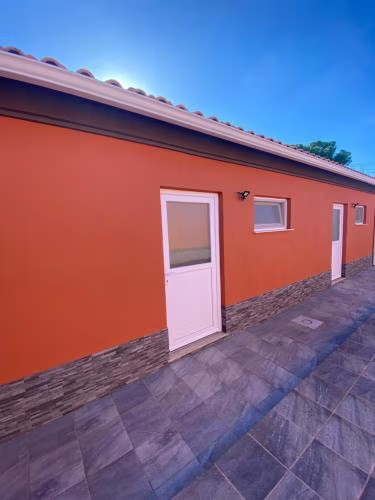
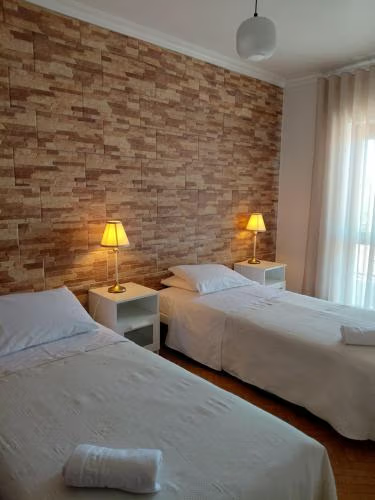
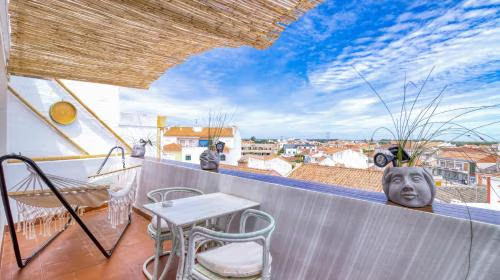
Places to stay in Grândola.
 OpenReservations accepted
Casa dos Diogos II
 OpenReservations accepted
Vila Morena
 OpenReservations accepted
Hotel D. Jorge de Lencastre



Town 15 of 24