

Town on the Camino
Belmonte
Portugal
- places to stay
- 15
- Camino
- 1
- Elevation
- 593 m
Belmonte is the place that preserved: in the Santiago church the apostle has stood for centuries as a fresco above the altar, next to it rest the Cabrals, and the town's Jews lived their faith in secret for almost 500 years, until a synagogue opened in 1996. After 41.1 km from Fundão, a quiet day is well spent.
How long to stay?
Worth a rest day, especially after the long stage from Fundão, just not on a Monday. If you have walked the 41.1 km in one go, you arrive late and tired and see little that evening. The day after, the castle, the Santiago church with the Cabral burial chapel, the Jewish Museum and the Museum of the Discoveries fill the time without effort. The Santiago church is closed on Mondays. If you split the stage at Ferro, you can manage the most important things in one afternoon.
Belmonte in Ninja numbers
- 582.7 km are behind you since Tavira, according to Camino Ninja. To Trancoso, the end of the Via Nascente, 78.5 remain.
- 41.1 km is what Camino Ninja measures from Fundão to here, with no pilgrim hostel except the basic one in Ferro.
- 1240 is when the chapel of Maria Gil Cabral in the Santiago church is said to have been built. So Santiago was already here before Belmonte had a castle.
- 1996 is when the Bet Eliahu synagogue opened, after almost 500 years in which the community had prayed in hiding.
- 12 metres is the height of the Roman tower of Centum Cellas, which you pass shortly after Belmonte.
Arriving: up to the castle
The last stage from Fundão is long, but not high. The altitude swings between around 410 and 700 metres, through Peraboa and Caria, which already belongs to the municipality of Belmonte. In Caria you can get your first stamp, at the Casa da Torre, built in the 16th century for the bishops of Guarda, or at the Padaria Santos bakery. After Malpique the path climbs up to Belmonte at the end, to just under 600 metres.
Belmonte is one of the Aldeias Históricas de Portugal, the historic villages, and after Castelo Novo it is the second on the Via Nascente. It is bigger and more touristy than Castelo Novo. If you come by train, you get off at Belmonte station and still have around three kilometres uphill to the historic centre.
In brief: bishop, castle and the Cabrals
In 1199 King Sancho I granted Belmonte its town charter, to settle the area. The area had been inhabited for a long time: near Caria there is a megalithic tomb, the villa of the Quinta da Fórnea and Centum Cellas date from Roman times, and the Roman road from Mérida to Braga ran past here. In 1258 King Afonso III allowed Bishop Egas Fafes to build a tower in Belmonte. It became the castle.
In 1446 King Afonso V gave the castle to Fernão Cabral I, who made it his residence. From this family comes Pedro Álvares Cabral, who was born in Belmonte and reached Brazil with his fleet in 1500. At the end of the 17th century the west wing of the palace in the castle burned, and afterwards the complex fell into decay.
Five hundred years in hiding
For Belmonte one story matters more than those of all the seafarers. There has been a Jewish community here since the 13th century, and the oldest surviving testimony is a granite reliquary with an inscription of 1297, from the first synagogue. In 1497 King Manuel I ordered the Jews of Portugal to be baptised or leave the country. Many families in Belmonte were baptised and yet stayed what they were. Outwardly they celebrated the Catholic rites; at home they went on praying. They had no rabbis, and the women of the family led the celebrations.
Only in the 20th century did the world learn of it. The Polish-Jewish mining engineer Samuel Schwarz came to Portugal in 1914, studied the community for eight years and in 1925 published his book on the New Christians in Portugal in the 20th century. The community took the step back into open Judaism slowly, over decades: in 1996 the Bet Eliahu synagogue opened, and in 1998 the Jewish Association of Belmonte was founded. In 2008 around 300 Jews lived here; in 2024, according to the English Wikipedia, there were still 40, only some of them permanently. So you walk through a place that kept a secret for half a millennium, and in an alley next to the church of the apostle at that.
Between castle and Judiaria: what to see
The most important things lie close around the castle. For most of the places we found no opening times, only for the Santiago church.
- Igreja de Santiago e Panteão dos Cabrais: The church stands near the castle gate and is a national monument, Romanesque with Gothic and Mannerist features. Above the altar a fresco shows Santiago beside Nossa Senhora da Esperança and Saint Peter, whom some interpret as a likeness of Pedro Álvares Cabral. In addition there is a 14th-century Pietà, which José Saramago considered the finest piece in the church, and a Gothic Our Lady of Sorrows carved from a single block of granite, about one and a half metres tall. In the attached Cabral burial chapel lie members of the family, including Pedro Álvares Cabral. Here you get the pilgrim stamp; the church also serves as the Centro Interpretativo dos Caminhos da Fé. Open in winter 9 to 12.30 and 14 to 17.30, from 15 April to September 9.30 to 13 and 14.30 to 18, closed on Mondays, tel. 275 088 698 (as of November 2026, according to Aldeias Históricas de Portugal).
- Castelo de Belmonte: The castle goes back to the tower of 1258. In the west wall there is a window in the Manueline style, attributed to João Fernandes Cabral. Today it houses a tourist office, a shop and exhibition rooms. Good for an overview and a first question about the stamp.
- Sinagoga Bet Eliahu and Museu Judaico: The synagogue was consecrated on 4 December 1996. The Jewish Museum was created in 2004 as the first of its kind in Portugal and reopened in August 2017, with a focus on secret Judaism. The old Judiaria lay around today's Rua Direita and Rua Fonte da Rosa. For a pilgrim who is himself on the road out of faith or out of a search, the most striking place in Belmonte.
- Museu dos Descobrimentos: In the old manor house of the Cabrals, the museum tells the story of the Portuguese voyages of discovery in 16 rooms with interactive technology. Just the thing for a rest day.
- Ecomuseu do Zêzere: In the old tithe barn of the Cabrals from the 16th and 17th centuries it shows animals and plants along the Zêzere. You cross the river tomorrow at Valhelhas.
- Torre de Centum Cellas: The tower, around 12 metres high, near Colmeal da Torre has been a national monument since 1927. Excavations from 1993 to 1998 suggest that it was the centre of the villa of Lucius Caecilius, a tin merchant, built in the middle of the 1st century. The municipality writes that pilgrims pass it shortly before leaving the municipal area. So you will see it tomorrow morning.
Food and drink
Belmonte has restaurants, cafés and a supermarket. If you are looking for souvenirs: the Museu do Azeite, the olive oil museum, sells wine, olive oil and jams of the area.
Honestly
- The stage from Fundão is too long for many. 41.1 km in one go, with the last climb at the end. If you can, split it at Ferro and arrive rested.
- Belmonte is touristy. More visitors and more shops than in the villages before. In return you have museums that are missing elsewhere on this route.
- Cabral's grave exists twice. Belmonte shows the family's burial chapel, but Cabral died in Santarém, and the Igreja da Graça there also claims his grave. Which remains lie where cannot be settled here. The Santiago church is still worth it, for the apostle above the altar.
- The station is not the town. Whether you arrive or leave, count on around three kilometres uphill between the station and the centre.
- At weekends the municipality cannot be reached. For accommodation questions it refers you to its office, and that is staffed on working days only.
Where pilgrims sleep
There is no pilgrim hostel in Belmonte. The municipality asks pilgrims to contact the town hall for a place to stay overnight: tel. 275 910 010, geral@cm-belmonte.pt, Rua Pedro Álvares Cabral 135, working days 9 to 17, public hours until 16, closed on Saturdays and Sundays (as of March 2025). So call before the weekend. Otherwise you sleep privately: Belmonte has many small guesthouses and holiday flats, plus pensions and hotels.
Ninja tips
- Collect three stamps in one day. Casa da Torre or Padaria Santos in Caria, then the Santiago church in Belmonte. The church is closed on Mondays, so plan your arrival for after that.
- Walk through the old Judiaria. Rua Direita and Rua Fonte da Rosa are the alleys where the community lived in secret for centuries. Give yourself ten minutes without hurry.
- Look for Centum Cellas tomorrow morning. By our calculation the Roman tower lies close to the path, just beyond Belmonte. A good reason not to set off in the dark.
- Celebrate on 25 July. Belmonte marks St James's Day. If you are walking in high summer, you can celebrate the day here with the town.
Onward: to Valhelhas and up to Guarda
Beyond Belmonte the Via Nascente leads past Centum Cellas and down into the valley of the Zêzere. According to Camino Ninja you reach Valhelhas after 10.3 km, Famalicão after 16.0 and Maçainhas after 30.5. In Valhelhas there is a river beach on the Zêzere, after which you cross the Ponte Filipina and pass the Caldeirão reservoir. The municipality of Belmonte also names the Via da Estrela from Cáceres, which joins the same route at Caria.
What awaits you tomorrow
Guarda, after 35.8 km. The day begins at the river at around 470 metres and ends at around 1,000 metres. According to Camino Ninja, this is the highest-lying place on the whole Via Nascente, and you notice that on the last climb into the town.
Deep dive: what a place preserves
A short read, in case you want to learn more about Belmonte. About 3 minutes' reading.
A hill on the Roman road
When you stand at the top by the castle of Belmonte, you stand in a place the Romans already knew. Their road from Mérida to Braga ran past here, and a rich tin merchant named Lucius Caecilius had an estate with a stone tower built for himself in the first century. The tower still stands, and people called it Centum Cellas, a hundred chambers. In 1199 King Sancho the First gave the place a town charter, and in 1258 the Bishop of Guarda was allowed to build a tower here. It became the castle.
The Cabral family
In 1446 King Afonso the Fifth gave the castle to Fernão Cabral. The family made it a residence and built a burial chapel next to the old Santiago church. In this family Pedro Álvares Cabral was born, who in 1500 landed with his fleet on the coast of Brazil. In the choir of the Santiago church frescoes were painted: the apostle, the Mother of God and Saint Peter. Some see in Peter a likeness of the seafarer, perhaps as a gift from him or for him. That is an interpretation, not proof.
The disputed question
Whether Cabral really lies here is not as certain as the burial chapel suggests. He died in Santarém, and there too a church shows his grave. Belmonte says the ashes of the seafarer and his family rest in the Cabral chapel. Perhaps the truth lies somewhere between the two places. For you as a pilgrim, another figure in this church is more important anyway: the apostle you are walking to, painted here long before anyone thought of Brazil.
Faith in the cellar of time
The most astonishing story of Belmonte has no monument of stone. Jews had lived here since the thirteenth century. In 1497 King Manuel the First ordered all Jews of Portugal to be baptised or leave the country. Many families in Belmonte stayed and outwardly became Christians. Outwardly they celebrated the Catholic rites. And at home, behind closed doors, they went on saying the old prayers. There were no rabbis. It was the women who led the celebrations.
Only a stranger brought this to light. Samuel Schwarz, a Jewish mining engineer from Poland, came to Portugal in 1914. He spent eight years studying the New Christians and in 1925 wrote a book about them. After that it took decades before the community dared to step into the open. In 1996 the Bet Eliahu synagogue opened. Today the community has become small.
What Belmonte gives you to take along
You are travelling with a rucksack, and perhaps you yourself do not know exactly what you believe. Belmonte tells you of people who for five hundred years preserved something they were not allowed to show anyone. Right next to it stands an apostle on a church wall, who has waited here until you pass by. You do not have to say aloud everything that matters to you. Some things you simply carry on, the way you carry your own way to Guarda tomorrow.
Where to stay in Belmonte
Places to stay in Belmonte.
 OpenReservations accepted
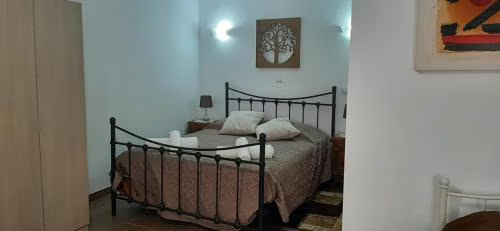
Casa das Matriarcas - Casa da Avó Elisinha
 OpenReservations accepted
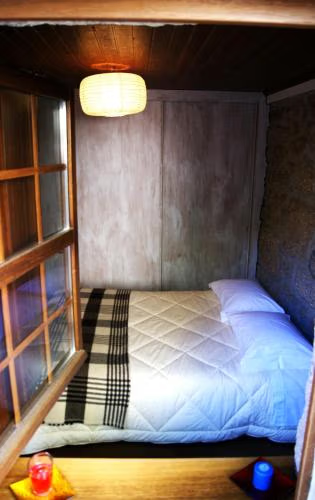
Cantinho Santiago
 OpenReservations accepted
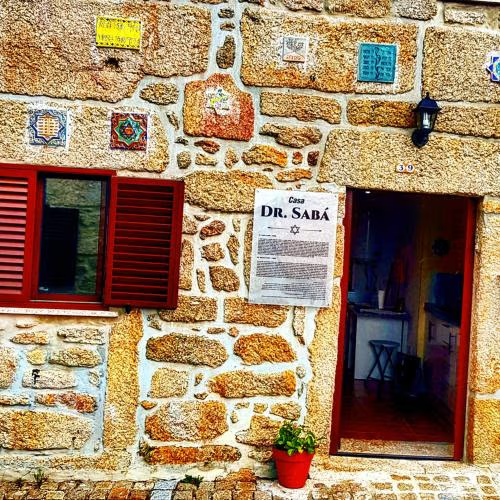
Casa Dr. Saba



Town 22 of 25