

Town on the Camino
Fundão
Portugal
- places to stay
- 3
- Camino
- 1
- Elevation
- 490 m
Fundão is the cherry town beneath the Serra da Gardunha: this morning you climbed to around 990 metres at Castelo Novo and came down 500 metres through the cherry orchards of Alcongosta. Below waits a town of the 1764 wool factory and of cherries with protected origin. An afternoon is enough, and tomorrow brings a long stage.
How long to stay?
An afternoon is enough, and you will need it for your legs. The stage from Castelo Novo is only 12.6 km long, but it takes you over the Gardunha and steeply down. So you arrive early and have time for the main church, the old shopping street and the Archaeological Museum. There is little reason for a rest day, except for the cherry blossom in spring or the Cherry Festival in June. Better to go to bed early: tomorrow it is 41.1 km to Belmonte.
Fundão in Ninja numbers
- Around 990 metres is how high the path climbs over the Gardunha between Castelo Novo and Fundão, according to Camino Ninja. Fundão itself lies at around 490 metres. You will feel that half-kilometre of height difference in your knees.
- 541.6 km are behind you since Tavira, according to Camino Ninja. To Trancoso, the end of the Via Nascente, 119.6 remain.
- 41.1 km to Belmonte, the next big stage town. In between lie seven villages, but only one basic pilgrim hostel.
- 1764 is when the royal wool factory opened. Today the building houses the town hall.
- 1994 is when the Fundão cherry received its protected geographical indication. The town calls itself the cherry capital of Portugal.
Arriving: down through the cherry orchards
The day starts in Castelo Novo and goes uphill straight away. In the first five kilometres you climb from around 620 to almost 990 metres, then it is down over Alcongosta to Fundão. On the descent to Alcongosta, the Centro de Portugal tourist region urges you to take double care, and a pilgrim portal recommends a zigzag path instead of the road the arrows lead you onto, shortly before the white domes of a glamping site.
Alcongosta, just under four kilometres before Fundão, is the real cherry village. Cherries lie in the paving as a mosaic, the Casa da Cereja is housed in the old primary school, and the fruit is ripe at the end of May. After that the valley opens up between the Gardunha and the Serra da Estrela, and in the middle of it lies Fundão, the biggest town between Castelo Branco and Guarda.
In brief: wool, faith and a town in the valley
On the hill of São Brás near Fundão there was a Lusitanian settlement, and under today's centre lie the remains of a Roman villa. The place is first mentioned in writing only in 1307, with 32 houses. After the expulsion of the Jews from Spain in 1492, many Sephardic Jews settled here, and their craftsmen and merchants made Fundão a trading place. The Inquisition brought arrests, executions and expropriations, and trade collapsed.
In 1747 Fundão became a municipality of its own. In the late 18th century the Marquis of Pombal lifted the restrictions on the New Christians, and the wool industry recovered. In 1764 the Real Fábrica de Lanifícios opened, a plain, symmetrical three-storey building. Cloth from Fundão went to northern Europe again. In the Napoleonic wars the town was plundered. Today cherries, peaches and olive oil live here, and the Panasqueira tungsten mines lie within the municipality.
Under the cherry mountain: what to see
The old town is small, and everything is close together on foot. We found no opening times for any of these places.
- Igreja Matriz de São Martinho: The main church is fitted out inside with gilded Baroque carving, and according to Turismo de Portugal it is worth a look inside. According to the same source, the fado singer Amália Rodrigues was baptised here. We did not find Mass times.
- Capela do Espírito Santo and Capela do Calvário: The 16th-century Holy Spirit chapel stands next to the Calvary chapel. The pilgrim guide of the Centro region lists them as a stop in Fundão. A quiet place for a few minutes after the descent.
- Rua da Cale and Praça Velha: The Rua da Cale is considered the oldest shopping street in the town. Here and on the old square stand manor houses with coats of arms from the 16th to 19th centuries. The right walk for the evening, if you need to shop.
- Real Fábrica de Lanifícios: The royal wool factory of 1764 on the Praça do Município is now the town hall. It tells you what Fundão lived on again after the Inquisition.
- Museu Arqueológico Municipal José Monteiro: The Archaeological Museum is housed in a 16th-century manor house and shows how the area was settled over thousands of years. For a pilgrim who crosses a Roman bridge tomorrow, good preparation.
- A Moagem: The modern cultural centre in an old mill shows exhibitions and performances and has an information centre on the milling of rye.
Food and drink
Fundão has supermarkets, restaurants, banks and pharmacies, so you will find everything you need for tomorrow's long stage. Cherries are naturally the theme: the town celebrates them with a festival in June, and there are more gastronomy festivals through the year. The cherries are ripe from the end of May; if you come in autumn, you only see the trees.
Honestly
- The descent is harder than the climb. Almost 500 metres of descent in a few kilometres goes straight into the knees. Take your time and use poles if you have them.
- It gets crowded at the Cherry Festival. According to a pilgrim portal, the Cherry Festival at the end of May or beginning of June attracts over 100,000 visitors. If you come then, book your bed long in advance.
- The way out is not pretty. You cross the railway and walk along a busy road with one or two roundabouts before it becomes rural again. The arrows cross the tracks further north than the station, so follow them rather than old descriptions.
- It is a long way to Belmonte. 41.1 km in one day is too much for many, and the only pilgrim hostel on the way is in Ferro. Plan the stage tonight.
Where pilgrims sleep
There is no pilgrim hostel in Fundão. You sleep privately, in guesthouses, pensions or hotels of various price ranges; they can be booked through the usual portals. If you do not want to walk 41 km tomorrow, the basic hostel in Ferro after 17.8 km is the alternative (see Onward).
Ninja tips
- Do the descent in the morning. The stage is short but steep. If you set off early, you are down before the midday heat and have the afternoon for Fundão.
- Look out for the cherries in the paving. In Alcongosta they lie as a mosaic in the Portuguese cobblestones. At the end of May they hang on the trees too.
- Shop here for tomorrow. In Valverde there is a supermarket just beyond the town, then it gets thinner: a small shop in Ferro, bakeries and a pharmacy in Peraboa, a few cafés in Caria, nothing in Malpique.
- Get your stamp in Caria. The municipality of Belmonte names three stamp points: the Casa da Torre and the Padaria Santos bakery in Caria, and the Santiago church in Belmonte.
Onward: 41 km to Belmonte
Beyond Fundão the Via Nascente leads northeast through the valley. According to Camino Ninja, on the way to Belmonte you pass Valverde (3.7 km), Peroviseu (11.4 km), Ferro (17.8 km), Peraboa (24.5 km), Caria (30.0 km) and Malpique (33.5 km). The altitude swings between around 410 and 700 metres, and at the end you climb up to Belmonte.
In Peroviseu, according to a pilgrim portal, there is a Roman bridge with three arches and old paving. In Ferro there is a basic hostel in the former parish house, with a kitchen. Call ahead to ask whether it is open: +351 964 302 817. Caria has a 16th-century Casa da Torre, built for the bishops of Guarda.
What awaits you tomorrow
Belmonte, after 41.1 km. There stands a church dedicated to Santiago, with an old fresco of the apostle above the altar, and next to it lies the family of the man who reached Brazil in 1500. And there is a synagogue that opened in 1996, after the Jews of the town had lived their faith in secret for almost 500 years.
Deep dive: wool, faith and cherries
A short read, in case you want to learn more about Fundão. About 2 minutes' reading.
A town in the valley
When you come down from the Gardunha, you see why a town arose here. Between two mountain ranges a valley opens up, sheltered and fertile. On the hill of São Brás there was already a fortified Lusitanian settlement in the Iron Age, until the Romans destroyed it. Below, where the centre lies today, the Romans built a villa with houses for the workers. In the Middle Ages it became a fortified estate. Fundão appears in writing only in the year 1307, as a place of 32 houses.
The time of the New Christians
The great turning point came from outside. In 1492 the Catholic Monarchs expelled the Jews from Spain, and many crossed the border into Portugal. Numerous Sephardic families settled in Fundão. Craftsmen and merchants made the place in the valley a centre of trade and wool. But five years later Portugal too forced the Jews to be baptised, and with the Inquisition came persecution. New Christians were arrested, tortured, executed, their property confiscated. Trade declined.
The factory and the wool
Only in the eighteenth century did that change. In 1747 Fundão received its own municipal administration. Under the Marquis of Pombal the laws against the New Christians were repealed, and the state founded factories to revive the crafts. In 1764 the royal wool factory opened, a severe three-storey building. Cloth from Fundão went to northern Europe again. Today the mayor rules in this building. The Napoleonic wars and the civil wars of the nineteenth century hit the town hard, and it was plundered several times.
What Fundão gives you to take along
Today Fundão lives on what the slope yields, above all cherries. In spring hundreds of orchards around the town blossom, and in June there is celebrating. Perhaps you will take this away from here: a town that lost everything several times, its trade, its factories, its people, has always planted anew. Tomorrow you have a long day ahead. Take it on the way the people here take on their trees: patiently.
Where to stay in Fundão
Places to stay in Fundão.
 OpenReservations accepted
Hotel Samasa Fundao
 OpenReservations accepted
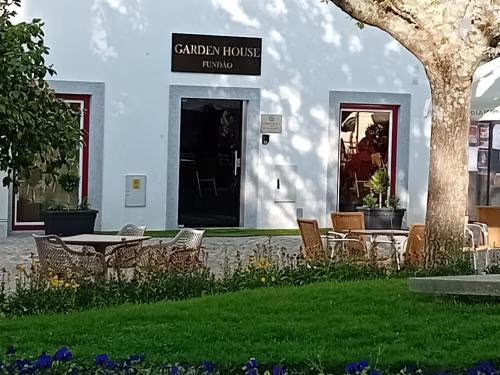
Garden House Fundão
 OpenReservations accepted
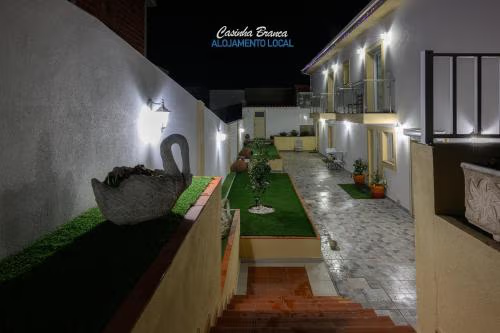
Casinha Branca
Town 21 of 25