

Town on the Camino
Bilbao
Biscay, Basque Country, Spain
- places to stay
- 38
- Caminos
- 3
- Elevation
- 36 m
Bilbao is the big city on the Camino del Norte: 213 steps take you down from the Basilica of Begoña into the old town, to a cathedral that belongs to the Apostle and has a pilgrims' door with a shell. From here it is still 699.7 kilometres to Santiago. A rest day pays off, and afterwards the ría leads you down to the sea.
Right now in Bilbao (as of October 2026)
- Pilgrim hostel only in summer: The new Zabalbide hostel is open from 1 May to 30 September. From October to April you sleep in private hostels in Bilbao.
- Guggenheim closed on Mondays: Since 20 September the museum has been closed on Mondays, except on 31 October and on 5 and 26 December.
How long to stay?
Worth a rest day, if your rhythm allows it. After San Sebastián, Bilbao is the next big city on the way, and it holds more than one evening can take in: the old town with the Siete Calles, the cathedral with its cloister, the Basilica of Begoña above the city, the Guggenheim on the ría. The stage from Lezama is short, so you arrive early. If you don't want to take a rest day, you will still see the essentials in an afternoon. Plan around the closing days: the cathedral is closed on Sundays, the Guggenheim on Mondays outside the summer.
Bilbao in Ninja numbers
- 699.7 kilometres are still left from here to Santiago de Compostela. Just under a quarter of the Camino del Norte lies behind you.
- 213 steps lead down the Calzadas de Mallona from Begoña into the old town. In the evening you climb them again if you sleep in the pilgrim hostel.
- 60 beds for a donation: that is the pilgrim hostel that opened in an old water reservoir in June 2026.
- Around 10,000 pilgrims pass through Bilbao each year on their way to Santiago, according to the St James association of Bizkaia.
- 1,260,894 visitors came to the Guggenheim in 2025. Most of them were not pilgrims, but you are allowed in anyway.
Arriving: over Monte Avril and down to Begoña
From Lezama it is 12.7 kilometres. The only real climb is Monte Avril, about 300 metres of ascent over a good three kilometres, the last part on a paved path from the 14th century. At the top, at 354 metres, Bilbao lies below you with the Ría del Nervión, and on a clear day you can make out the sea. The descent is all asphalt. Through the upper districts of Arabella and Begoña you pass the basilica, then you go down the 213 steps of the Calzadas de Mallona, and suddenly you are standing in the narrow lanes of the old town, a few steps from the cathedral.
The pilgrim hostel is not down below but up at the entrance to the city, a good 200 metres off the route and 1.2 kilometres before the old town. If you sleep there, drop your rucksack before you take the steps.
In brief: a city that belongs to the Apostle
Bilbao received its town charter around 1300, and the church at the heart of the town was dedicated to Saint James. After a fire in 1374, work on today's Gothic church began around 1397 and went on for a good century. Pilgrims travelling along the coast to Santiago passed through here. On the north side the Puerta del Ángel, also called the Puerta de los Peregrinos, bears a scallop shell. The church has only been a cathedral since the Diocese of Bilbao was created in 1949; it was consecrated as a cathedral basilica in 1955.
Above the city stands the Basilica of Begoña, home of the patroness of Bizkaia. Sailors coming up the Nervión saw its tower first and greeted the Virgin with a prayer. The district from which they first saw it is therefore called La Salve. In 1997 the city gained a second landmark on the river with the Guggenheim, and in 2026 a pilgrim hostel run by the city.
Down the ría: what to see
Most of it lies between Begoña and the river, all within walking distance.
- Basílica de Begoña: The Gothic church was built from the 16th century onwards, its tower only between 1902 and 1907. It is the church of the patroness of Bizkaia, and you walk past it anyway. For pilgrims it is the first stop in the city and a good place to catch your breath after coming down from Monte Avril. Its great feasts are 15 August and 11 October, with pilgrimages and Masses at midnight. We have not found opening hours.
- Santiago Cathedral: Gothic, from the late 14th and 15th centuries, with a neo-Gothic tower of 64 metres from the late 19th century. Look for the Puerta del Ángel with the shell; it leads to the cloister. The cloister dates from the early 16th century, measures 24 by 24 metres and, together with the one in Bermeo, is the only surviving Gothic cloister in Bizkaia. Open Monday to Saturday 10:00 to 18:30, closed on Sundays, no visits during Mass. Adults pay €6 for the cathedral and San Antón together, pilgrims get in free (as of October 2026). This is also where you get your stamp.
- Iglesia de San Antón: The church in the old town is included in the cathedral ticket; on its own it costs €3. You can have your credential stamped here too.
- Casco Viejo, the Siete Calles: The seven lanes are the core of old Bilbao. Here you find many pintxo bars, plus the Mercado de la Ribera from 1929 and the Teatro Arriaga from 1890. This is the place for an evening stroll without your rucksack.
- Museo Guggenheim: Frank O. Gehry's museum on the ría has nothing to do with the Camino, and yet many pilgrims end up standing in front of it. Outside sits Puppy, Jeff Koons's dog made of flowers, and by the water stands Maman, Louise Bourgeois's giant spider; you can see both without a ticket. Since 20 September open 10:00 to 19:00, closed on Mondays (as of October 2026). We have not found a reliable current admission price.
Food and drink
Bilbao eats standing up: pintxos in the bars of the old town are the quickest way to get full, and you can move on from bar to bar. If you want to sit down, try bacalao al pil-pil, cod in a sauce of olive oil and garlic, or marmitako, the tuna and potato stew of the Basque fishermen. For dessert there are carolinas, a pastry with a meringue top.
Honestly
- The pilgrim hostel is only open in summer. From 1 October to 30 April there is no donation hostel in Bilbao, and you pay €16 to €30 for a dormitory bed in the hostels.
- The hostel is up the hill, the city down below. Between Zabalbide and the old town lie 1.2 kilometres and the 213 steps. If you go down for dinner, you climb back up afterwards.
- Watch out in the San Francisco district. The official route runs through it, and it is considered run-down, with frequent thefts. Depending on the time of day, you are better off taking Calle Autonomía.
- The way out is longer and steeper than it looks. It is 19.2 kilometres to Portugalete, and the official route has 674 metres of ascent, more than you would expect along a river mouth.
Where pilgrims sleep
The Albergue de peregrinos de Zabalbide belongs to the city and is run by the St James association of Bizkaia. It has 60 beds in two rooms of 30 each; you give a donation, you cannot book, and it is for pilgrims only. It is open from 1 May to 30 September, check-in from 15:00 to 22:00 (as of October 2026). There is a microwave, fridge, washing machine, dryer, lockers and space for bicycles. The building used to be a municipal water reservoir. It stands at the entrance to the city on the border between the Begoña and Txurdinaga districts, about 200 metres off the route. When it was being planned, the kitchen and dining room were to be run by a social enterprise, open to pilgrims and neighbours alike.
According to a list from 2025, a small parish hostel in Barrio de La Cruz took in pilgrims for a donation in high summer. We have not been able to find out whether it is open in 2026.
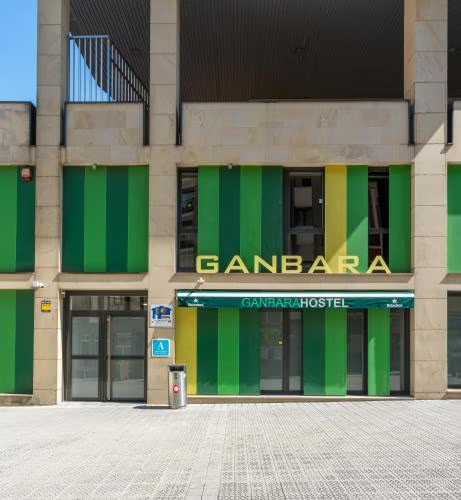
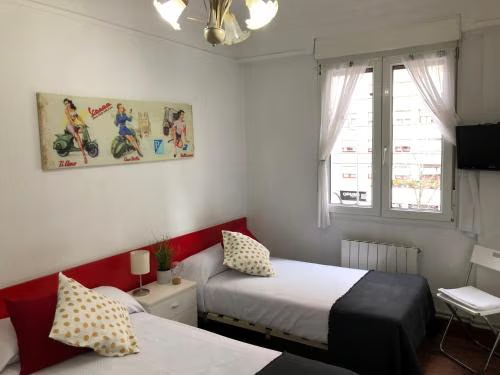
There are also numerous private hostels, open all year, with dormitory beds from about €16 in the old town up to around €30 (as of October 2026). Some are at the entrance to the city, others right on the way out.
Ninja tips
- Leave your rucksack up top. If you sleep at Zabalbide, check in before you go down into the city. That way you carry your pack down the 213 steps only once.
- Show your credential at the cathedral. Pilgrims pay nothing there, and you get your stamp at the same time. It is closed to visitors on Sundays, so don't plan your visit for a Sunday.
- Puppy is free. You need no ticket for the flower dog and the spider by the river. A walk along the ría to the Guggenheim makes a lovely rest day at no cost.
- Choose your way out of the city. Besides the official route to Portugalete there is a variant along the ría. Look at both the evening before.
- A second Camino begins in Bilbao. The Camino Olvidado leads south from here through the mountains to Cacabelos on the Camino Francés. If you want to leave the coast, this is your chance.
Practical tips for pilgrims
- Stamp: Santiago Cathedral and Iglesia de San Antón in the old town.
- Cathedral: Monday to Saturday 10:00 to 18:30, last entry half an hour before closing, closed on Sundays, free for pilgrims (as of October 2026).
- Accommodation in winter: From October to April only private hostels, book in good time.
- Safety: Keep an eye on your bags in the San Francisco district, and in the evening take Calle Autonomía instead.
Onward: down the ría to Portugalete
You leave Bilbao heading for the sea. According to our data it is 19.2 kilometres to Portugalete, with 674 metres of ascent and 664 metres of descent. The highest point, at 191 metres, comes about seven kilometres after Bilbao; after that the route goes via Barakaldo and Sestao to the mouth of the Nervión. Besides the official route there is a variant right along the ría. On the Camino del Norte, Portugalete is the next stage town; for the Camino Olvidado, the way south begins right here.
Deep dive: The city that belongs to the Apostle
A short read, in case you want to learn more about Bilbao. About three minutes' reading.
A place by the river
Coming down from Monte Avril, the first thing you see is the river. The Ría del Nervión is the reason Bilbao exists: here, where the tide carries sea water far inland, ships could moor. Around the year 1300 the settlement on the bank received its town charter. It was just a few lanes, later called the seven streets, and in the middle stood a church dedicated to the Apostle James. So the town was under the protection of the very saint you are walking towards from early on.
A church that started over more than once
In 1374 the old church burned down. Around 1397 work on the new building began, and it went on for more than a century. What you see today is largely this Gothic church. The cloister was added in the first decade of the sixteenth century, the sacristy and the great porch in the same century. The façade with its pointed tower, on the other hand, is young. It was only rebuilt in Gothic style at the end of the nineteenth century, and its tower is sixty-four metres high.
On the north side there is a door called the Puerta del Ángel. It is also known as the pilgrims' door, and a scallop shell is carved above it. Nobody knows exactly how many pilgrims actually passed through it in the Middle Ages. Scholars tend to read the shell as a later declaration by the town of its link to the Way of Saint James. For you it hardly matters. Today you walk through a door that has been meant for people like you for centuries.
The Virgin above the city
Higher up than the cathedral stands the Basilica of Begoña. Its construction began in the sixteenth century, and work on the vaults went on into the seventeenth. It was part of the town's fortifications, and in the nineteenth century it was damaged in the Carlist Wars. The present tower was only built between 1902 and 1907.
For the people of Bizkaia, Begoña holds a special place, because the Virgin of Begoña is their patroness. Sailors coming up the river from the sea looked for the tower on the horizon, and as soon as they saw it, they prayed to the Virgin. The district from which the tower was first seen is still called La Salve, and many fishing boats carry the name of the Virgin.
A city that transformed itself
The church of Saint James became a cathedral late. The Diocese of Bilbao was only created in 1949, and in 1955 the church was consecrated as a cathedral basilica. Forty-two years later, in 1997, the Guggenheim Museum opened by the river, and since then many people have known Bilbao above all as a city of art.
In June 2026 something new arrived for pilgrims. In an old water reservoir above the old town, the city opened a pilgrim hostel run by the St James association of Bizkaia. Sixty beds, for a donation. Around ten thousand pilgrims, the association estimates, pass through Bilbao every year. Now the city has built them a house that is there just for them.
What Bilbao gives you
You come from above, from the Virgin, and climb down two hundred and thirteen steps to the Apostle. Then the way leads you down the river to the sea. Bilbao is a city that has reinvented itself more than once without forgetting to whom it dedicated its church. Perhaps that is a good question for the evening in a pintxo bar: what do you want to change on your way, and what do you want to keep?
Where to stay in Bilbao
Places to stay in Bilbao.
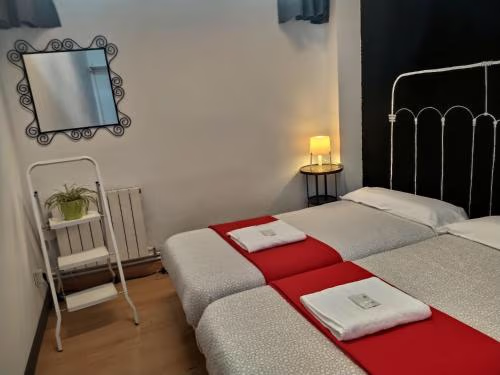 OpenReservations accepted
Bilbao Akelarre Hostel
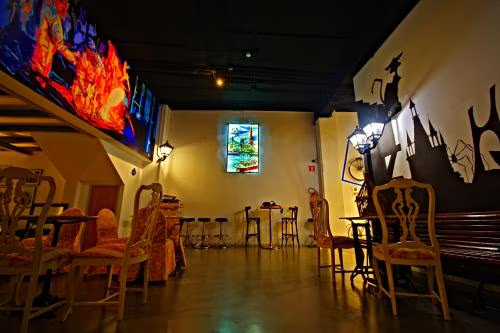 OpenReservations accepted
All Iron Hostel
 OpenReservations accepted
Hostel Latroupe La Granja
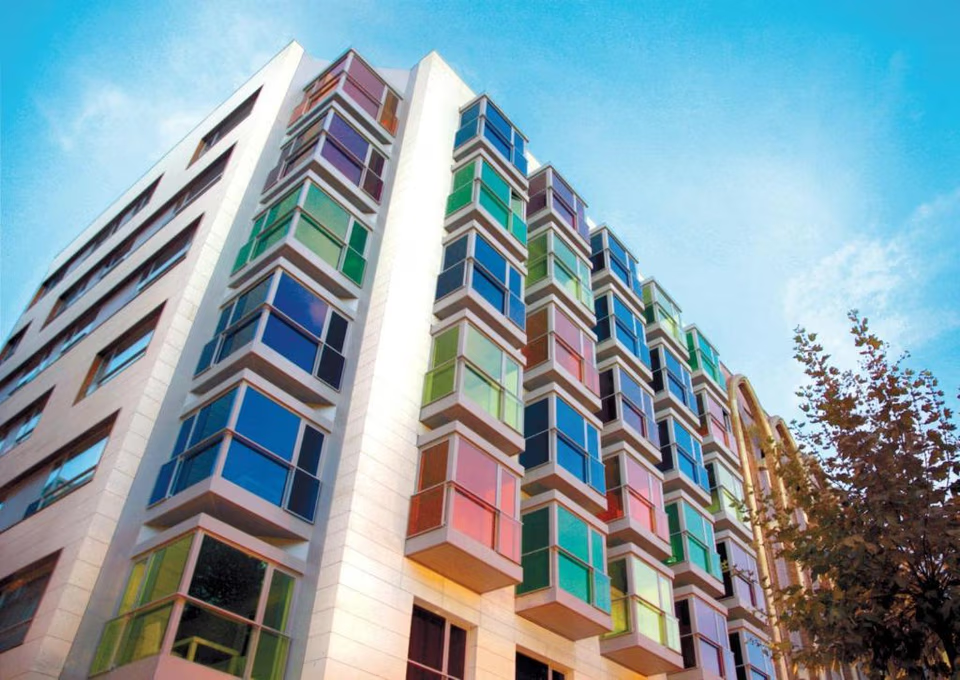
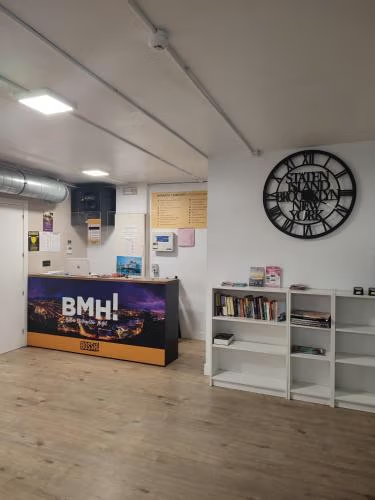


Services in Bilbao
What you can find in town before the next stage.
- ATM
- Café
- Shop
- Tobacco
- Medical clinic
- Pharmacy
- Fountain
- Post office
- Train station
- Bus station
- Airport
- Restaurant
Source: © OpenStreetMap contributors · updated February 2026
Town 13 of 49