

Town on the Camino
Castro Marim
Portugal
- places to stay
- 7
- Camino
- 1
- Elevation
- 7 m
Castro Marim is the castle above the salt: after 26 kilometres from Tavira you stand beneath walls that in 1319 became the first seat of the Order of Christ, and below you the salt pans of a nature reserve gleam with flamingos. An afternoon is enough. Tomorrow the Via Nascente turns north to the Guadiana.
How long to stay?
An afternoon is enough, if you reach the castle before five. You arrive from Tavira after 26.0 kilometres, the first stage of the Via Nascente behind you. The rest of the day is plenty for the castle with its two exhibitions, a look into the main church and the salt pans below the town. From November to March the castle closes at 5pm according to the municipality, in summer at 7pm. If you arrive late, you can see it tomorrow morning from 9am, but then you start late on a long stage.
Castro Marim in Ninja numbers
- 26.0 kilometres is the first stage from Tavira according to Camino Ninja. From here the Via Nascente no longer heads east but north.
- 37.6 kilometres to Alcoutim, the next place with more beds. In between there are only villages.
- 14 March 1319: on this day the Order of Christ, successor to the dissolved Templars, was established in Castro Marim.
- 1975 is when the marshes and salt pans south of the town became a nature reserve, today more than 2,000 hectares.
- 634.6 kilometres still lie ahead of you to Trancoso.
Arriving: from the sea into the salt
Up to Altura you walked along the coast, then the way turns inland. Castro Marim lies on the edge of the Algarve, opposite Spanish Ayamonte, and just south of it begins the Reserva Natural do Sapal de Castro Marim e Vila Real de Santo António on the Guadiana. The salt pans lie directly below the town, above them the castle on its hill and on a neighbouring hill the Fort São Sebastião. Some descriptions of the Via Nascente lead here via Vila Real de Santo António; the Camino Ninja track comes directly from Altura.
In brief: a border castle for the knights
In 1242 Castro Marim passed to Portugal after about 500 years of Moorish rule, King Afonso III had the castle built and gave the town a charter in 1277. King Dinis strengthened the walls and renewed the charter in 1282. Then in 1319 he made Castro Marim the seat of the new Order of Christ. The castle lay on the sea border facing Morocco and close to Islamic Granada, and Dinis justified the order by the defence of the coast against pirates. Under Pedro I the order moved to Tomar, and the town lost inhabitants.
In the 15th century Castro Marim was a garrison for the troops who went to North Africa. Infante Dom Henrique, Henry the Navigator, was governor of the order; an inscription suggests that he lived in the castle. In 1641 João IV had the Fort São Sebastião built and joined it to the castle with walls. The earthquake of 1755 destroyed a large part of the town and the walls. Since 1920 the castle has been a national monument.
White land beneath the castle
Castro Marim has always lived from salt. According to a tourism website it has been harvested here since antiquity, and the salt pans lie directly below the town. The finest kind, the flor de sal, forms as a crust of crystals on the pans and is skimmed off by hand. Around the salt pans, since 1975, lies the reserve, one of the first in Portugal, with mudflats, marsh and lagoons. The best-known residents are the flamingos, along with storks, spoonbills and avocets, some all year round, others on migration between Europe and Africa. Even the rare Mediterranean chameleon lives here.
For you as a pilgrim this is the farewell to the coast. This evening you look from the castle over the white land the salt comes from, tomorrow morning you walk into the dry hills above the Guadiana. Water and salt, you will need both in the coming days.
Castle, fort and salt pans: what to see
Castle and church lie close together in town, the fort on the neighbouring hill. We found no admission prices.
- Castelo de Castro Marim: Afonso III built the castle in the 13th century over an older, probably Moorish structure, the Castelo Velho. What remains are four towers and a gate, the remains of the castellans' palace and some houses. In the castle church, since 2018, a permanent exhibition shows the castle as the first seat of the Order of Christ; in the former powder magazine a second exhibition shows instruments of torture and punishment of the Inquisition. Open according to the municipality from November to March 9am to 5pm, otherwise until 7pm. From the top you can see as far as Spain, according to a pilgrim guide.
- Remains of the Igreja de São Tiago: in the castle stand, according to the encyclopaedia Infopédia, the ruins of a 14th-century church of St James. After Tavira this is the second trace of St James on the second day. Whether it is identical with the church of the exhibition we could not clarify with certainty.
- Igreja Matriz de Nossa Senhora dos Mártires: the main church dates from the 18th and 19th centuries and grew out of an older chapel built under King Fernando in thanks for victories over Castile. According to tradition its name recalls Christians who fell here at the time of the Reconquest. It keeps figures of the Archangel Gabriel from the 15th century and of Our Lady of the Martyrs from the 16th century; a fire destroyed much of its furnishings in 1960. We found no opening or service times.
- Forte de São Sebastião: the 17th-century fort stands on the neighbouring hill and formed a double line of defence with the castle. It is mostly closed, open only during the Dias Medievais at the end of August.
- Salt pans and Sapal: the salt pans lie directly below the town. The reserve begins south of Castro Marim and stretches along the Guadiana; its best-known residents are the flamingos.
Honestly
- There is no pilgrim hostel. You sleep in guesthouses or holiday flats, and in a small town it is worth booking ahead.
- The castle is largely a ruin. If you expect a complete fortress, you will see walls, four towers and a gate. The setting above the salt pans and the history make up for it.
- The fort mostly stays shut. Outside the festival days in August you only see São Sebastião from outside.
- The next stage is lonely. According to a pilgrim guide the shop in Azinhal, 10.1 kilometres on, is the last before Alcoutim. From here it is 37.6 kilometres, and in the villages in between there is hardly anything. Shop in Castro Marim.
- At the end of August the town is full. Thousands of visitors come to the Dias Medievais, one of the biggest medieval festivals in Portugal; in 2026 it ran from 26 to 30 August. If you pass through then, book your bed early.
Where pilgrims sleep
Castro Marim has no pilgrim hostel. There are a few guesthouses and holiday flats, several of them in the old town centre beneath the castle walls. If you don't want to walk the 37.6 kilometres to Alcoutim in one go, find a bed along the way for the next night, for example in Foz de Odeleite; there are only a few beds there according to the route page.
Ninja tips
- Castle first, shower later. In the winter half-year the castle closes at 5pm. If you dawdle after 26 kilometres, you will be standing in front of the gate.
- Take the path through the pines tomorrow. When leaving Castro Marim a pilgrim guide recommends a dirt track through pine woods instead of the official route. It is also the long-distance footpath GR15 along the Guadiana, marked red and white.
- Stock up in Azinhal. It has the last shop until Alcoutim, and in 2024 a pilgrim also found a good café with a bakery there.
- Remember the Order of Christ. When you later pass through Tomar on the Camino Portugués Central, you will be standing at its second seat.
Practical tips for pilgrims
- Supplies: according to a pilgrim guide Castro Marim has small supermarkets, cafés and a pharmacy.
- Castle: from November to March 9am to 5pm, from April to October 9am to 7pm according to the municipality; a tourism portal gives May to September for summer time. Groups and information on +351 281 510 746.
- Waymarking: from Castro Marim the Via Nascente shares parts of its route with the GR15, the Grande Rota do Guadiana. In 2016 the municipality celebrated the inclusion of the GR15 in the Caminhos de Santiago.
Onward: north to the Guadiana
From Castro Marim you walk north into the hill country above the Guadiana. After 6.0 kilometres you come through Castelhanos, after 10.1 kilometres through Azinhal, after 21.2 kilometres to Foz de Odeleite and after 26.1 kilometres to Guerreiros do Rio, where a pilgrim found the next café in 2024 after more than 20 kilometres. You reach Alcoutim after 37.6 kilometres. The route page splits the section into two days, with the stage ending in Foz de Odeleite.
What awaits you tomorrow
Alcoutim lies on the Guadiana, opposite Spanish Sanlúcar de Guadiana, with only the river in between. According to a pilgrim report from January 2024 the way there takes you along narrow paths with "stunning" views of the river. From tomorrow you walk north along the border.
Deep dive: Where the Knights of Christ began
A short read, in case you want to learn more about Castro Marim. About two minutes' reading.
Where you stand
When you stand on top of the castle of Castro Marim, you look south to the white salt pans, east to the Guadiana and Spain beyond. Here, at the farthest corner of the kingdom, began in 1319 the story of a knightly order that would later travel the world on the sails of Portuguese ships.
The end of the Templars
The Order of the Templars had arisen after the First Crusade and for two centuries had grown rich and powerful, in Portugal too, where it played a large part in the Reconquest. Then Pope Clement the Fifth dissolved it. For King Dinis this was a danger. The Templars' great property in his country could have fallen to the Holy See, and that would have weakened his own power. Dinis found a solution: a new order that took over the inheritance and stayed bound to the king.
A new order on the border
On 14 March 1319 this order was established in Castro Marim, with the consent of Pope John the Twenty-second. It was called the Order of Our Lord Jesus Christ, Order of Christ for short. That Dinis placed it here had reasons. The castle had one of the strongest defensive works of the Kingdom of the Algarve, it lay on the sea border facing Morocco and not far from Islamic Granada. Officially the knights were to protect the coast against pirates.
The order did not stay long. Under King Pedro the First it moved to Tomar, and Castro Marim lost inhabitants. But the castle remained linked with it. In the fifteenth century Infante Dom Henrique, whom we call Henry the Navigator, became governor of the order, and an inscription suggests that he lived here. You may know the red cross of the order on the sails of the caravels from pictures; its first address was this hill.
Two orders on two days
Yesterday you set off from Tavira, under the sword of the Order of Santiago, which had conquered the town. Today you sleep beneath the first castle of the Order of Christ. In the Senhor dos Passos chapel in Tavira the crosses of both orders are carved side by side in the wood. In two days you have visited both. Their knights were fighters who lived by a spiritual rule.
What Castro Marim gives you to take along
Of the knights, four towers and a gate remain here. What remains is the salt beneath the castle, which has been harvested since antiquity and whose finest crystals are still skimmed off by hand. Tomorrow you walk away from the sea. Take some of this patience with you.
Where to stay in Castro Marim
Places to stay in Castro Marim.
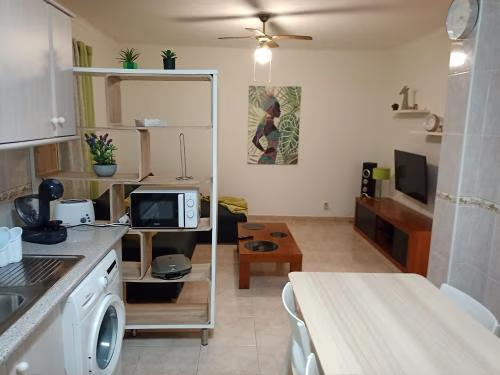 OpenReservations accepted
Casa da Margarida
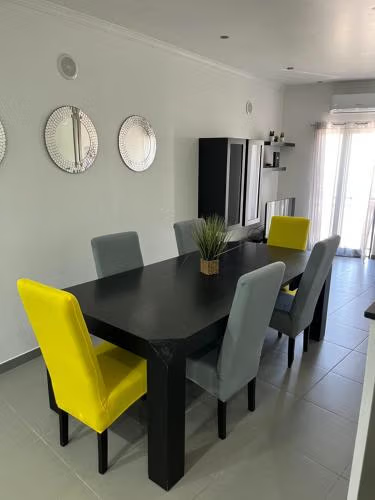 OpenReservations accepted
AL Manas Pereira
KitchenCooktopsMicrowaveAnd more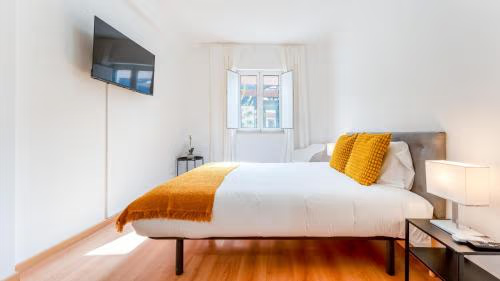 OpenReservations accepted
Modern Retreat in Castro Marim by LovelyStay
KitchenCooktopsMicrowaveAnd more


Town 2 of 25