

Town on the Camino
Cedeira
Spain
- places to stay
- 5
- Camino
- 1
- Elevation
- 2 m
After the Capelada, Cedeira is the place to catch your breath: an old whaling port on a sheltered ría, a small centre with a Gothic church, a fortress above the entrance and, with the Praia da Madalena, a town beach of almost one and a half kilometres. Add percebes, a fisheries museum and harbour bars.
How long to stay?
An afternoon is enough. After the stage from Teixido you arrive early enough to see fortress, old town and beach in peace, and the fishermen's museum is also open in the afternoon, at least from Friday to Sunday. Cedeira is the most pleasant place between Cariño and Ferrol, with plenty of bars, restaurants and accommodation. If the Capelada is still in your legs, it is also the best place for a rest day; beach and harbour are enough for that. Without a car, though, Cedeira does not have a full programme for a second day.
Cedeira in Ninja numbers
- 201.8 kilometres lie between Ribadeo and Cedeira, according to Camino Ninja, and there are still 70.2 kilometres to Ferrol.
- 16.4 kilometres is the distance from Santo André de Teixido to here, according to Camino Ninja, and 19.3 kilometres to Valdoviño.
- 868 is the year Cedeira is first mentioned in a document, as Cetaria.
- 6,547 people lived in the municipality of Cedeira in 2025.
- Over 5,000 shells and snails are counted in the collection of the Museo Mares de Cedeira (as of November 2026).
Arriving: at the entrance to the ría
From Teixido you come south over the foothills of the Capelada. Shortly before the town the white chapel Santo Antón do Corveiro stands above the ría, a viewing balcony over the entrance to the bay. Right after it the way leads past the fortress on the Punta Sarridal down to the fishing harbour. The Ría de Cedeira is narrow and sheltered, the harbour lies in the north-west of the bay. From the harbour you walk along the shore into the small centre around the church of Santa María do Mar.
In brief: whales, counts and Englishmen
Cedeira is old. A document of 868 mentions the church in Cetaria, and in 1114 the name Cideira appears. In the Middle Ages the place was known as a whaling port. From the 14th century the lordship belonged to the House of Lemos, until the seigniorial rights were abolished in 1811. In the 18th century English ships entered the ría and plundered the chapel of Corveiro; in response the Castelo da Concepción was built in 1747. In the 19th and 20th centuries Cedeira lived from salting works and canning factories, of which there are said to have been twelve. Its fishermen sailed as far as South Africa, Newfoundland and the Irish coast. Since the late 1980s Cedeira has also been a seaside resort. Hake, monkfish, octopus and percebes are still fished today.
Ría and fortress: what to see
Most of it lies right on the way or a few minutes from it. Plan a round from the fortress via the harbour and the old town to the beach.
- Ermida de Santo Antón do Corveiro: The white chapel lies shortly before the town right on the way, documented in writing since 1662 and last rebuilt in 1971. The spot counts as one of the finest viewpoints over the ría. In the forecourt stands the stone cross "O Cristo da Ponte" of 1746, which originally stood on a bridge over the river Condomiñas and was moved here in 1968. Inside there is an altarpiece from the 17th century. In mid-June the neighbours celebrate their romería here.
- Castelo da Concepción: The small fortress of 1747 on the Punta Sarridal guards the entrance to the ría, and you walk right past it. In its best days it had 15 cannons and a garrison of about 30 men; in 1809 it repelled an attack from the sea. The ground plan is an irregular hexagon with battlements facing the sea. Today it is a municipal museum with finds from the nearby castro, but above all a magnificent viewpoint over ría and Atlantic. We found no opening times; ask at the tourist office.
- Castro da Punta Sarridal: Right next door lies a settlement from the Iron Age, inhabited from about the 5th century BC into Gallaeco-Roman times and discovered only in 2017. Its sauna is considered the oldest in Galicia, more than 2,200 years old. A nice thought after the Capelada: even then people here knew what tired bodies need.
- Museo Mares de Cedeira: In the Fishermen's House on the Camiño de Arealonga, right on the way, a small museum on over 300 square metres shows how Cedeira lives from the sea. Three traditional boats in original size, including a Galician dorna, old fishing gear, pieces from the former canning factories and, as its showpiece, a collection of over 5,000 shells and snails. It is run by the municipality, the fishermen's guild and an association. Admission costs a small amount.
- Igrexa de Santa María do Mar: The white Gothic parish church dates from the 15th century, the five side chapels from the 16th, the tower with dome from the 19th. The main portal still has its original round arch, and the main chapel is original. Inside you find a Virgen del Parto from the 16th century, a Virgen de la Velilla from the 17th, a tomb from the time of building and a Virgen del Mar of 1917. Our Lady of the Sea is the patron of the town, and her feast is on 15 August.
- Old town: The old core is small. Of its former gates the names have remained: the Porta da Vila, where announcements used to hang, the Porta de Rebordelo, the Porta de Cartas and the Porta do Porto de Ribeira towards the sea. On the Praza Rectoral, the old market square, stands a bandstand, and the former town hall now houses the library. Look out for the manor houses with coats of arms in the narrow lanes.
- Praia da Madalena: The town beach is almost one and a half kilometres long, with fine white sand, calm water, showers and lifeguards in summer. It lies in the sheltered ría, so swimming is more relaxed here than on the open Atlantic beaches. After three days of cliffs and ridge paths it is exactly the right place. Closer to the harbour lies the smaller, sheltered beach of Area Longa.
Food and drink
Cedeira is a place for fish and seafood. Famous are the percebes, the goose barnacles from the rocks of the coast; in July the town celebrates a festival of its own for them. Also typical is Marraxo con patatas, a small shark, traditionally from the plancha, often with parsley or a little lemon. Add hake, monkfish and octopus from its own harbour. Restaurants, bars and tapas places are plentiful, around the harbour and in the old town.
Honestly
- There is no pilgrim hostel here. You sleep in a pension, country house or hotel, and in summer Cedeira is well booked as a seaside resort.
- In July and August it is full. Beach, percebe festival and patron saint's feast draw many guests. If you want quiet, come in spring or autumn.
- The old town is small. If you expect a medieval ensemble as in Viveiro, here you see rather individual houses, a church and a few lanes.
- Opening times are hard to get. For fortress and church we found no reliable times. The tourist office helps further.
Where pilgrims sleep
There is no pilgrim hostel in Cedeira. You stay in pensions, country houses, hostales and hotels, of which there are several in the town. The nearest beds in a dormitory are in Valdoviño, 19.3 kilometres further on, where two surfers' hostels offer dormitories. Book early in summer.
Ninja tips
- Stop at the chapel of Corveiro. The view of the ría is the finest welcome Cedeira can offer you, and it lies right on the way.
- Go to the fortress first, then the museum. Both are on the way, and that way the story of Englishmen, whales and canned fish is told in the right order.
- Order marraxo. Everyone knows percebes; the small shark from the plancha you will hardly get anywhere else like this.
- Feet in the water at the Madalena. The calm beach in the ría is pure recovery after the Capelada.
- Rent a bike in summer. The tourist office then rents out the municipality's bicycles, handy for an outing along the ría.
When it rains
The Museo Mares de Cedeira is the best address. It is closed on Monday and Tuesday, open Wednesday and Thursday from 10:30am to 1:30pm, and from Friday to Sunday also in the afternoon from 4 to 7pm, on Saturdays in the morning until 2pm (as of November 2026). The times change with the season, so ask beforehand if in doubt.
Practical tips for pilgrims
- Festivals: percebe festival in July, patron saint's feast of Nossa Señora do Mar on 15 August, Romería San Antonio in Corveiro in mid-June. In these weeks beds become scarce.
- The tourist office gives information on the opening times of fortress and church and rents out bicycles in summer.
- In the Capelada the Rapa das Bestas takes place every year, when the half-wild horses are rounded up. You learn the date at the tourist office.
Onward: via Porto do Cabo to Valdoviño
From Cedeira it is 19.3 kilometres to Valdoviño, according to Camino Ninja, on the Camino del Mar. On the way, a little off the path, lies the hamlet of Porto do Cabo with a medieval stone bridge, old mills and the Casa da Bastona, once a hostel for pilgrims to Teixido. From Ferrol the Camino Inglés continues to Santiago.
What awaits you tomorrow
A calmer day than the last ones. About five kilometres beyond Cedeira a detour of a good kilometre leads to Porto do Cabo, where local women handed the Teixido pilgrims a bowl of broth until not so long ago. Shortly after, about two kilometres off the path, lies the Ermida da Fame, the chapel where the pilgrims rested. At the end waits Valdoviño with its lagoon and surf beaches.
Deep dive: A port between whales and pilgrims
A short read, in case you want to learn more about Cedeira. About two minutes' reading.
The bay of the salters
The old name of Cedeira is Cetaria. A document from the year 868 mentions a church in Cetaria, along with an island called Selima. Some two hundred and fifty years later it is already written Cideira. The sheltered ría, narrow and cut deep between the mountains, was an ideal harbour. In the Middle Ages the men of Cedeira hunted whales, later the town lived from salting and canning the catch.
The lords from afar
For a long time Cedeira did not belong to itself. From the fourteenth century the lordship was tied to the House of Lemos, one of the powerful noble families of Galicia. Around the year 1423 a nobleman left the town and its taxes to his sister. The lords changed, the fishermen stayed. Only in 1811 were these old seigniorial rights abolished.
Englishmen in the ría
In the eighteenth century English ships sailed into the bay and plundered the chapel of Corveiro, which still stands above the entrance today. The answer was a fortress. In 1747 the Castelo da Concepción was built on the Punta Sarridal. The Crown gave money, cannons that were no longer needed there came from Ferrol, and the inhabitants helped with the building. Fifteen cannons and thirty men guarded the entrance afterwards. In 1809 the fortress withstood an attack from the sea.
A cross from the bridge
Next to the chapel of Corveiro stands a stone cross called the Christ of the Bridge. It dates from 1746 and originally stood on a bridge over the river Condomiñas. The bridge no longer exists. In 1968 the cross was moved to the chapel, where it now looks out over the ría. So stones travel too.
Fishermen to the other end of the world
In the nineteenth and twentieth centuries everything in Cedeira revolved around fish. There are said to have been twelve salting works and canning factories. The fishermen of Cedeira sailed far out, as far as South Africa, Newfoundland and the Irish coast. What they caught, above all tuna, was canned in the town and shipped all over Spain and Europe. Today the fleet is smaller, but hake, monkfish, octopus and percebes still come from the harbour.
The place at the saint's foot
Cedeira was always also the gateway to Teixido. Whoever wanted to reach Saint Andrew came through this area, and the municipality reaches up to the cliffs of the Capelada and the sanctuary. For you it is the other way round: you come down from Andrew and walk on to James. Between the two apostles lies this small town by the sea, with a fortress, a beach and a plate of percebes.
Where to stay in Cedeira
Places to stay in Cedeira.
 OpenReservations accepted
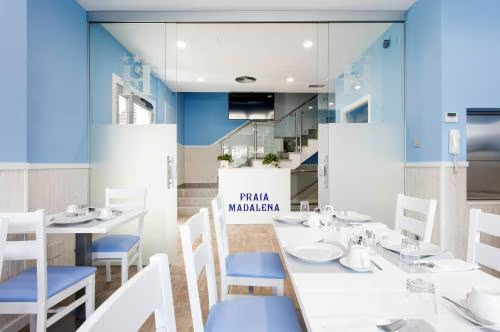
Hostal Praia Madalena
 OpenReservations accepted
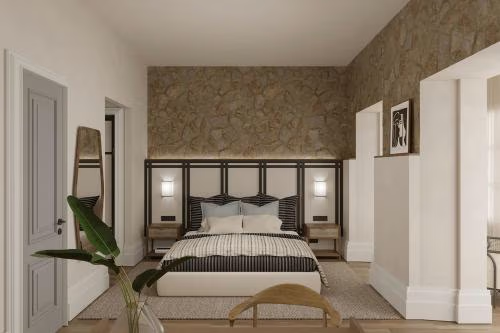
Os Cantís
 OpenReservations accepted
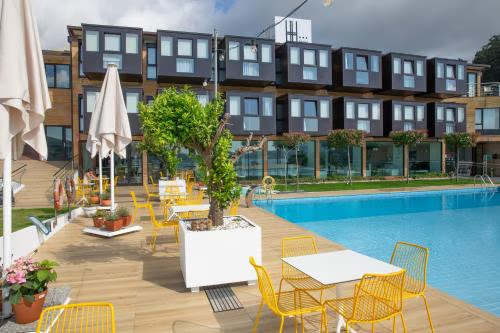
Hotel Herbeira
Town 15 of 17