

Town on the Camino
Conímbriga
Distrito de Coimbra, Região do Centro, Portugal
- place to stay
- 1
- Camino
- 1
- Elevation
- 112 m
Conímbriga is considered the largest Roman ruin site in Portugal, and the Caminho passes right by it, on the line of the old road from Lisbon to Braga. Leave your rucksack behind for a few hours: mosaics, a garden with over 500 water jets, a wall made from the town's own houses. The town gave its name to Coimbra.
How long to stay?
An afternoon is enough, but really give it an afternoon. The ruins and museum are open daily from 10 to 18:00, and the ticket desk closes at 17:15 (as of November 2026). With a coffee break in the museum, we would plan at least two hours. If you are coming from Alvorge or Rabaçal, you can also end your day here: the pilgrim hostel is a good kilometre further on, which leaves you the whole afternoon for the Romans, without a rucksack and without watching the clock.
Conímbriga in Ninja numbers
- 229.0 kilometres is how far you have walked since Lisbon, according to Camino Ninja. There are still 390.3 to Santiago, so you have done a good third.
- 2.1 kilometres from the ruins to Condeixa-a-Nova, 17.6 to Coimbra. The Romans walked this stretch on their road to Aeminium.
- About 14 per cent of the roughly 22-hectare town has been excavated. The rest still lies under the ground.
- Over 500 water jets fill the garden of the Casa dos Repuxos. The word repuxo means fountain.
- €10 is the standard admission to ruins and museum, valid since January 2025 (as of November 2026).
Arriving: on the Roman road
From Rabaçal it is 11.2 kilometres to here, through the limestone country of Sicó. On the way, according to the Centro region's pilgrim guide, you pass the Ponte Filipina at Fonte Coberta, and part of the route follows the old Roman road that linked Tomar with Conímbriga. Conímbriga itself lay on the great road from Olisipo, today's Lisbon, via Aeminium, today's Coimbra, to Bracara Augusta, today's Braga. So here you are not only on the Camino Portugués Central, but on a line that has connected north and south for two thousand years. The ruins are at Condeixa-a-Velha, right next to the track.
In brief: a town that moved on
People were already living on the rocky spur in the 9th century BC. The name combines the native conim, probably "rocky height", with the Celtic briga, "fort". The Romans came around 139 BC; under Augustus the town got a forum, baths and an aqueduct, and under Vespasian, between 69 and 79, the status of a municipium.
At the end of the 3rd century a new wall was built, and for it stones were torn out of the town's own houses, including the Casa dos Repuxos. It did not help: in 465 and in the years after, the Suebi raided the town and carried off its inhabitants. The bishopric, founded in the 6th century, moved to Aeminium by 589, 17 kilometres to the north. The name travelled with the bishop: Aeminium became Coimbra. In 1910 Conímbriga became a national monument, and in 1962 the museum opened.
On foot through the Roman town: what to see
Museum and ruins lie right next to each other. Expect uneven ground and, in summer, plenty of sun.
- Casa dos Repuxos: The showpiece of the ruins, a town house from the 2nd century onwards. In the courtyard there is a garden with water basins and over 500 jets, and the original water pipes survive. The mosaics show hunting scenes, the seasons, sea creatures and figures from mythology, including Medusa and a sea centaur. For you as a pilgrim the sight is doubly worth it: stones from this very house are built into the late town wall, which you see a few steps further on.
- Casa de Cantaber: The largest private house in the town, over 3,000 square metres, with courtyards, halls and its own baths, excavated between 1937 and 1941. It takes its name from a Cantaber, whose family a contemporary chronicler names among the victims of the raid of 465. Whether the house really belonged to him, nobody knows for sure.
- The late town wall: Built between about 270 and 310, five to six and a half metres high. It shows how a town shuts itself in out of fear and builds its own houses into the wall to do it.
- Termas do Sul and aqueduct: The southern baths are the largest of the three public baths, with a palaestra that looks out over the landscape. At the end of the aqueduct stand the insulae, plain apartment blocks of up to three storeys with shops on the ground floor. This is how most people lived, not like Cantaber.
- Museu Monográfico de Conímbriga: Hundreds of finds from the late Bronze Age to the Middle Ages, plus models, sculptures, mosaics and wall paintings. Here you can also see what the forum looked like, of which only the ground plan remains outside. The museum building has a café-restaurant and clean, freely accessible toilets.
Honestly
- The admission is no longer a pilgrim price. There used to be half price with a credencial, but the current price schedule of the state museums has no pilgrim discount. Reductions apply from 65 and for 13- to 24-year-olds. Asking costs nothing anyway.
- The ruins are not accessible for wheelchairs. The museum is, the site is not. If you are walking with knee or foot problems, stay on the main paths.
- The sun burns in summer. Go in the morning or late afternoon and take water in with you.
- It is closed on five days a year: 1 January, Easter Sunday, 1 May, 24 July and 25 December.
Where pilgrims sleep
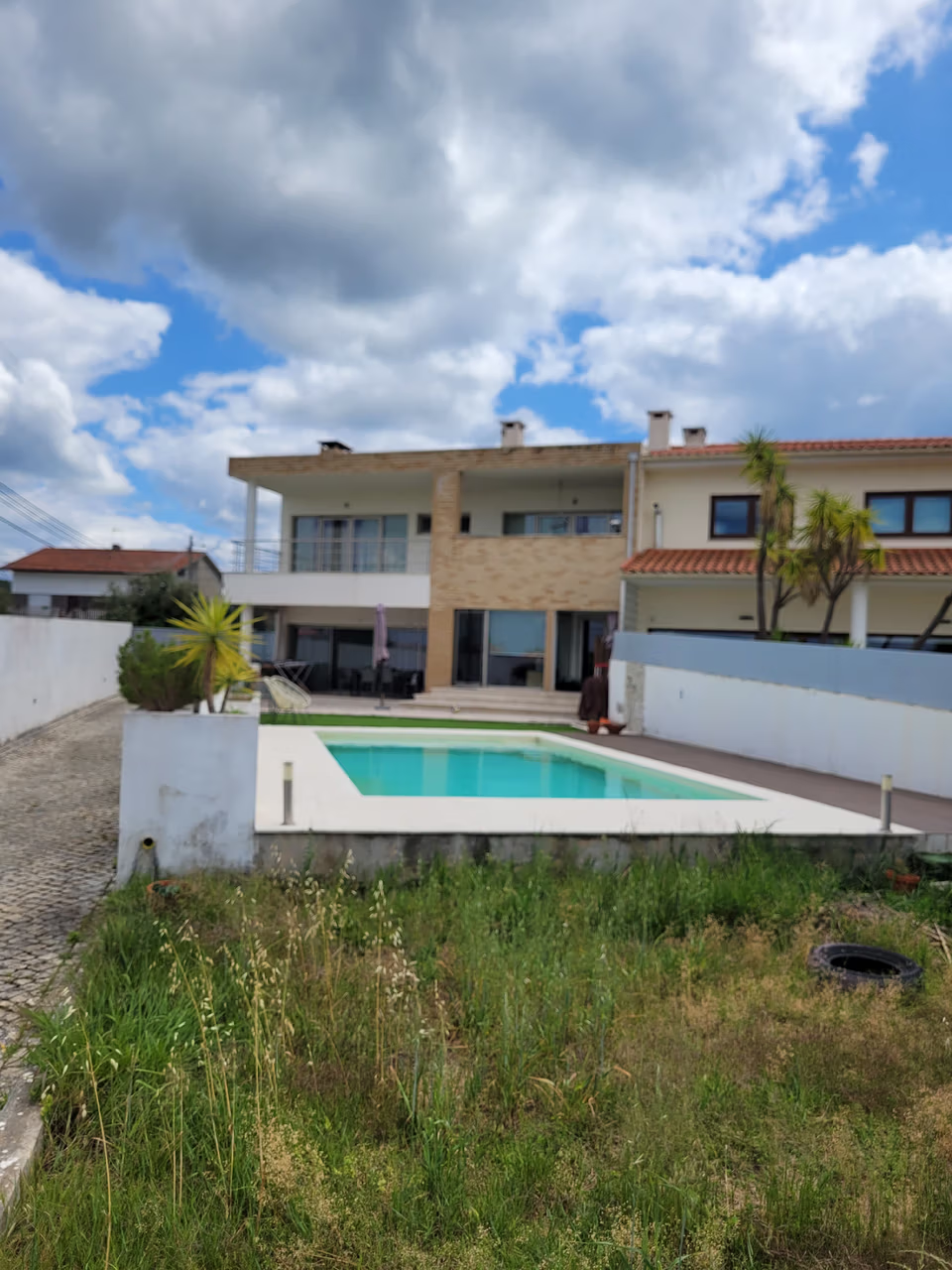
There is no municipal or parish hostel here. The private Albergue de Conímbriga is in the district of Valada, about 200 metres off the route and roughly a kilometre past the ruins; from there it is about ten minutes on foot to the centre of Condeixa. A dorm bed costs €15 (as of November 2026), there is a small kitchen and a washing machine, and you can reserve. It is listed as open all year, but pilgrims have also found the door locked in late summer. So phone ahead: +351 962 870 633.
Ninja tips
- Get your stamp at the museum. That is where pilgrims get it in their credencial.
- Ask for a place for your rucksack. If possible, leave it at reception, and you will walk through the ruins with ease.
- If you are registered in Portugal, go in for free. Residents get 52 free days a year, which they choose themselves; children under 12 accompanied by an adult are always free.
- Sleep in Valada and come back. If you check in at the hostel, you can walk the ten minutes back to the ruins without luggage.
Onward: to Condeixa-a-Nova and Coimbra
After 2.1 kilometres you are in Condeixa-a-Nova, where the route also meets the Caminho do Norte to Fátima, which runs the other way, south. From Condeixa it is another 15.5 kilometres to Coimbra, 17.6 in total from the ruins. There waits the town that carries the name of Conímbriga.
Deep dive: The name that moved on
A short read, in case you want to learn more about Conímbriga. About 2 minutes' reading.
A town on the way
When you stand in front of the mosaics of the Casa dos Repuxos, you are standing on a road that is older than the Way of St James. The Romans built it from Olisipo, today's Lisbon, to Bracara Augusta, today's Braga, and Conímbriga lay on it as the pilgrim places lie on the Caminho today. The town was no capital. It was a prosperous country town with a forum, baths, an aqueduct and a house in whose garden the water leapt from hundreds of small jets.
The wall made from its own houses
At the end of the third century the town became afraid. A new wall was built, tighter than the old one, and for it they took what was there: the stones of their own houses, even those of the finest house in town. It did not protect them. In the year 465 the Suebi came, a chronicler of the time reports captured families, and a few years later they came again.
The bishop goes north
In the sixth century Conímbriga had a bishop. By the year 589 he had moved to Aeminium, a day's journey further north, on the river Mondego. The name went with him. From then on Aeminium was named after the town the bishop came from, and that became Coimbra. Conímbriga itself fell into decay, until digging began in the nineteenth century.
What Conímbriga gives you
Today you walk the same day's journey as the bishop did then, from the ruins to the Mondego. A town can be abandoned, but its name need not be. It goes with those who move on. When you arrive in Coimbra this evening, you will say it without noticing.
Where to stay in Conímbriga
Places to stay in Conímbriga.
 Open
Albergue de Conímbriga
Services in Conímbriga
What you can find in town before the next stage.
- ATM
- Café
- Shop
- Medical clinic
- Pharmacy
- Fountain
- Train station
- Restaurant
Source: © OpenStreetMap contributors · updated January 2026
Town 11 of 43